Keflavík: things to do and what to see
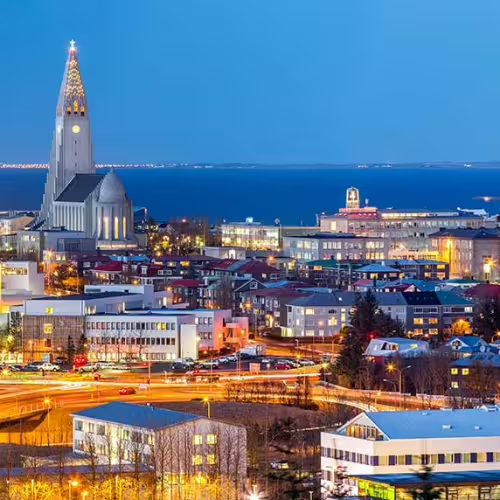
In southwest Iceland, the town of Keflavík lies within the Reykjanes region. It forms part of Reykjanesbær, a municipality encompassing Keflavík, Njarðvík and the village of Hafnir.
Guided tours of Iceland
The guided tour of Iceland’s South Coast and Golden Circle lasts 4 days and 1 hour. It includes Blue Lagoon admission and bathing, a local guide throughout, cabin accommodation and daily meals at local restaurants as described for each day. Also included are guided access to Þórsmörk and Eyjafjallajökull, visits to Glacier Lagoon and Diamond Beach, a Golden Circle tour covering Gullfoss, Geysir and Þingvellir, and guide assistance with the northern lights.
The guided Ring Road tour of Iceland runs for 8 days. It includes 7 nights of accommodation, a professional guide speaking English throughout, coach transport and a glacier hike on the South Coast day. A blue ice cave tour in winter and northern lights outings on winter evenings are also included.
The private Iceland tour covering the Golden Circle, South Coast and Reykjavik lasts 5 days. It includes private transport in a dedicated vehicle, a professional driver and guide throughout, Blue Lagoon entry on the arrival day and guided sightseeing along the Golden Circle. Guided South Coast stops include Seljalandsfoss, Skógafoss and Reynisfjara, alongside a guided orientation in Reykjavik.
What to see on Reykjanes
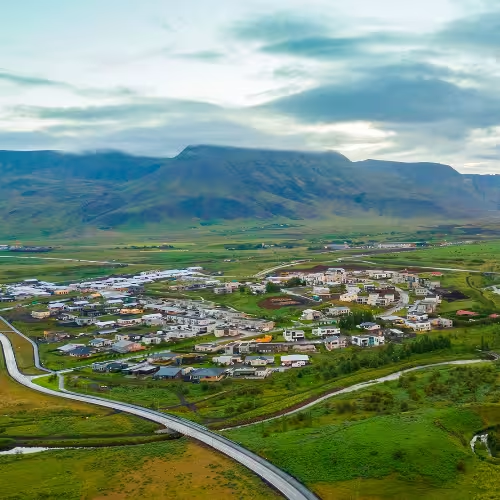
Volcanic processes created the Reykjanes peninsula, where the Mid Atlantic Ridge reaches land. Its UNESCO Global Geopark designation dates to 2015. Keflavík’s local landscape is dominated by basalt rubble fields, interspersed with a few hardy plants and mosses. Tourism promotion presents the Bridge Between Continents as a marker of the division between the Eurasian and North American plates.
Within the geopark, Gunnuhver is near the Reykjanesviti lighthouse. Paths and viewing platforms provide managed access around its active vents and pools of mud. Folklore associates these springs with Gunna’s ghost. Reykjanesviti stands on Bæjarfell.
The Blue Lagoon occupies a lava field approximately 5 km from Grindavík and roughly 20 km from Keflavík International Airport. Its water comes from the neighbouring Svartsengi geothermal power plant as a byproduct. During the eruptions between 2023 and 2025, the lagoon was closed to visitors on some occasions.
Local history and culture
The municipality of Reykjanesbær was formed in 1995 when Keflavík joined with Njarðvík and Hafnir. Keflavík and Njarðvík had developed separately before expanding towards each other over time. Njarðvík has been home to Víkingaheimar, the Viking World museum, since May 2009.
The United States military constructed the airport during the Allied occupation of Iceland. Meeks Field opened on 23 March 1943 on the site still occupied by the airport. During the Cold War, Naval Air Station Keflavik tracked traffic at sea, including submarines. The American base closed in 2006, passing into Icelandic government hands. A development agency subsequently took over the former base site, which received the name Ásbrú.
The airport and Reykjavik
Keflavík International Airport is approximately 3 km to the west of Keflavík and about 50 km by road southwest of Reykjavík.
The private guided car tour of Reykjavik lasts 3 hours. It includes private transport in a modern vehicle, a professional local guide throughout and an itinerary that can be adapted to individual preferences.
Frequently asked questions
Which municipality includes Keflavík?
Keflavík forms part of Reykjanesbær, together with Njarðvík and Hafnir.
Where is the Viking World museum?
Víkingaheimar, the Viking World museum, has been in Njarðvík since May 2009.
What is Gunnuhver associated with?
Folklore connects the springs at Gunnuhver with the ghost of Gunna.
Where does the Blue Lagoon’s water come from?
The water is a byproduct of the nearby Svartsengi geothermal power plant.
How far is Keflavík International Airport from Keflavík?
The airport lies approximately 3 km west of the town.