Last updated:


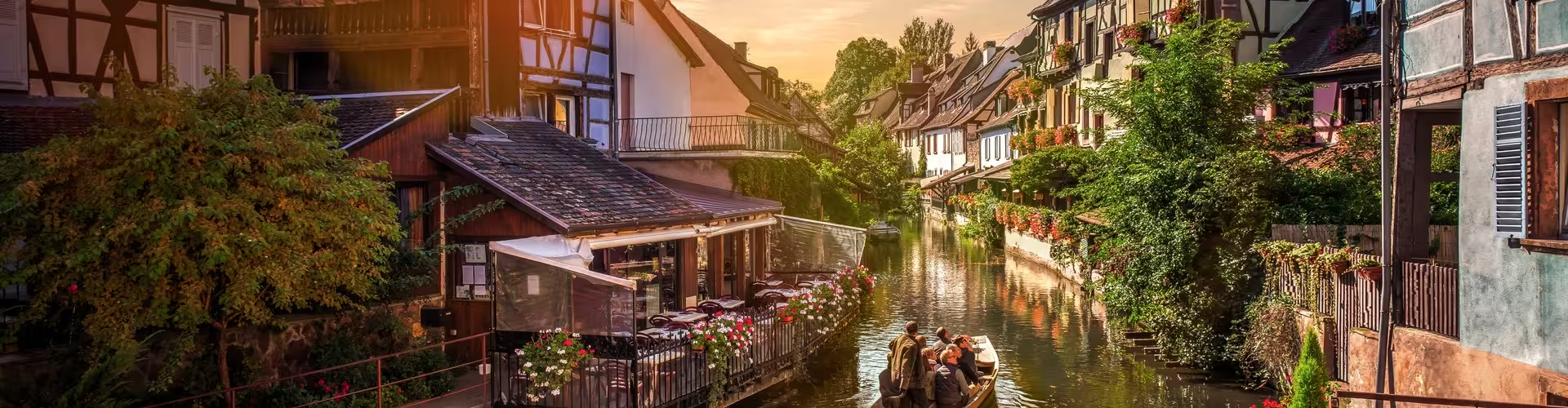
Colmar rewards a visit built around historic houses, churches and art, with the Alsace Wine Route as an option beyond town. In Alsace, in north-eastern France, it lies between the Vosges and the Rhine beside the River Lauch.
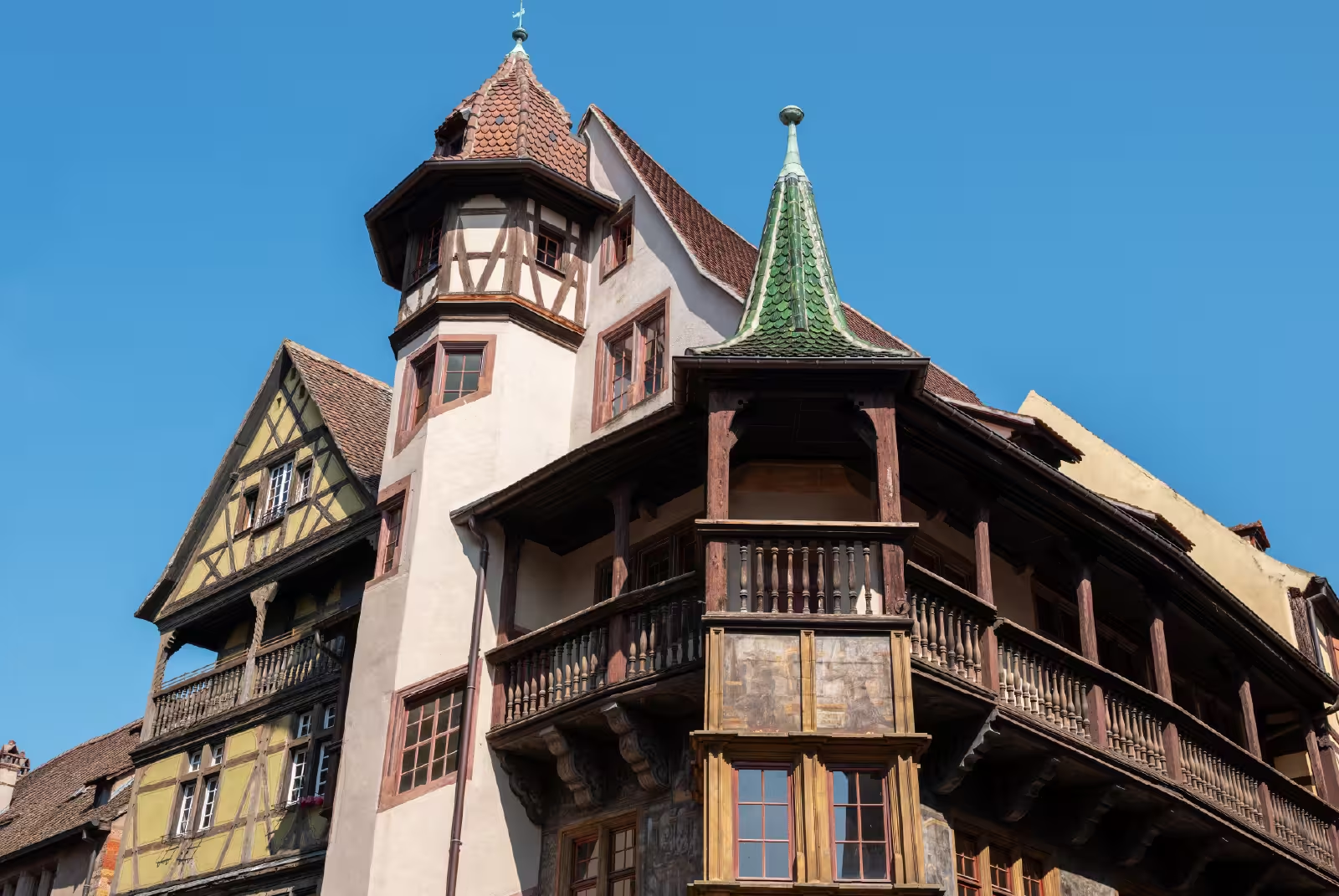
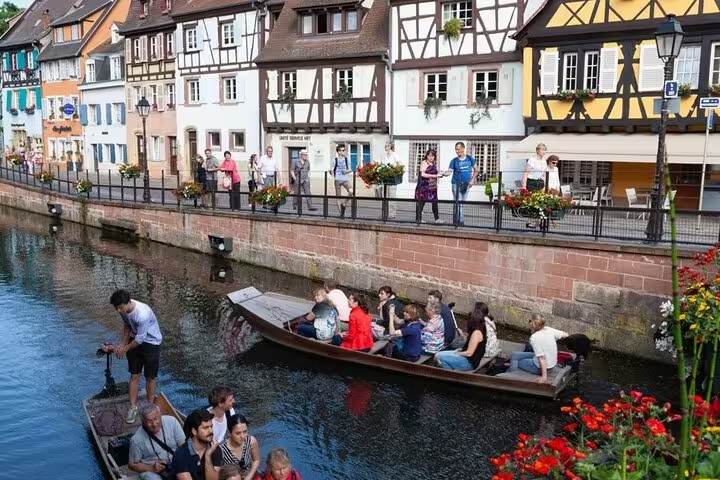
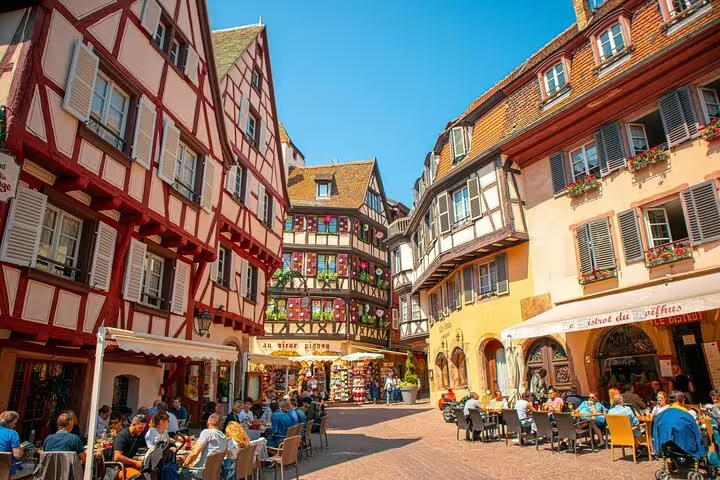
The historic centre is a good focus for a visit centred on architecture. Its protected streetscape includes the half-timbered houses and merchants' homes for which Colmar is known. For details to look for, the Maison des Têtes, built in 1609, takes its name from the more than 100 carved heads and masks on its façade. The Pfister House dates to 1537, while the Koïfhus, or Old Customs, was completed in 1480 and hosted the Décapole's political meetings until 1678.
Art gives you a reason to go beyond the house façades. The Dominican church holds Martin Schongauer's Madonna of the Rose Bower, while the Unterlinden Museum occupies a former Dominican convent. At the Musée Unterlinden, the Isenheim Altarpiece brings together painting by Grünewald and sculpture by Niclaus of Haguenau, made between 1512 and 1516.
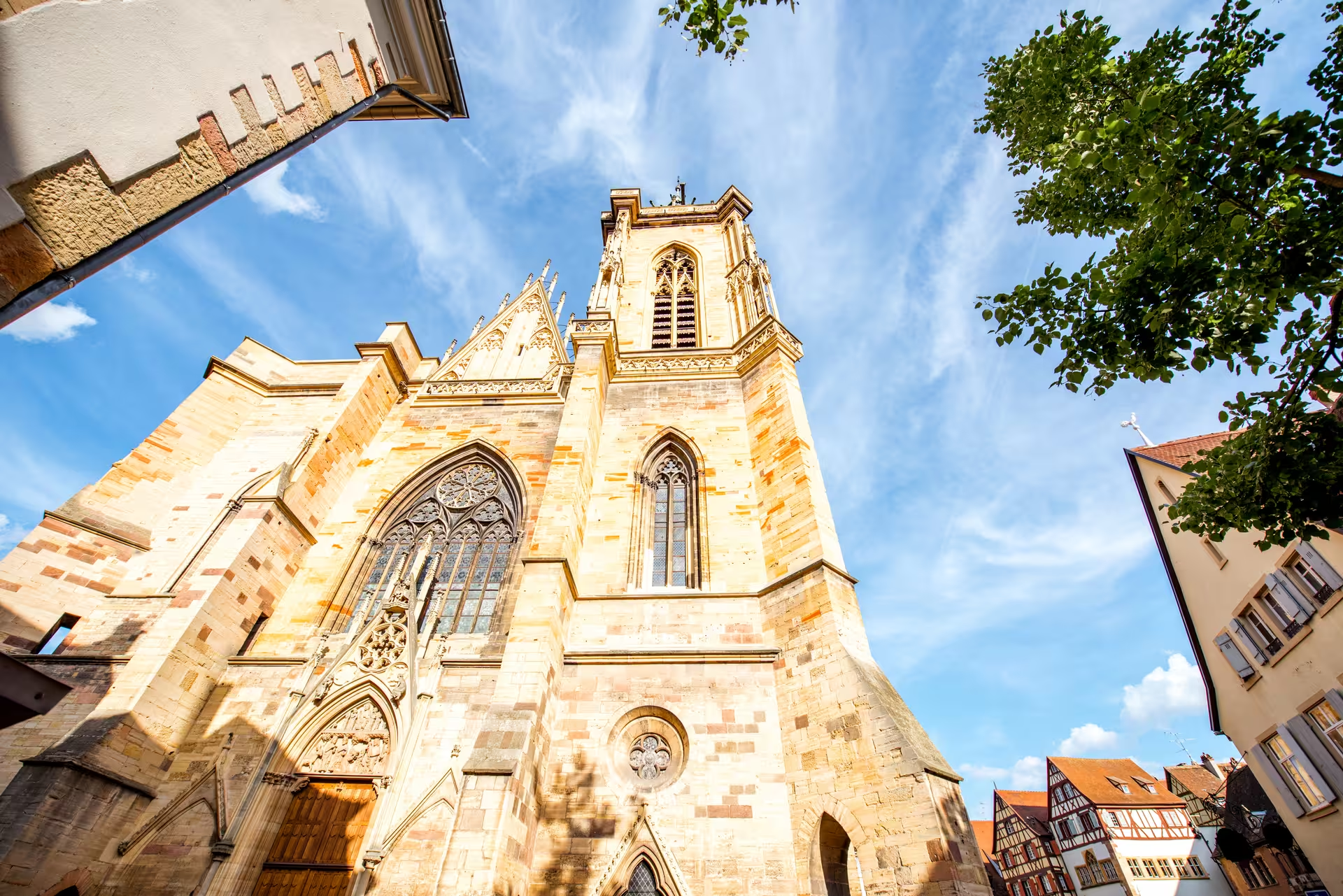
The church and museum give an art-focused visit different settings: a painting displayed in a church, and an altarpiece in a former convent. At Saint-Martin, the building itself is the reason to pause, with a Gothic sandstone exterior and a tower reaching 71 metres. That makes it worth keeping architecture in your plan even if the art collection is your main interest.
Two days would let you separate the historic houses from the churches and museums. For the first day, plan around the Pfister House, Maison des Têtes and Koïfhus. The Colmar self-guided walking tour and scavenger hunt lasts 2 hours and includes a smartphone scavenger hunt with riddles and clues, with content in English, French, Italian and German.
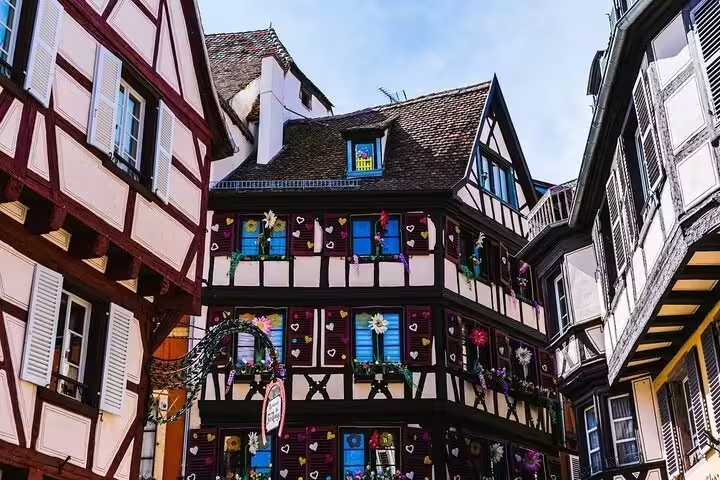
The second day can focus on the Collégiale Saint-Martin, Dominican church and Unterlinden Museum. Sandstone Gothic architecture at Saint-Martin contrasts with the paintings at the other stops. For a visit tied to an artist's life, the Musée Bartholdi occupies three floors of the house where sculptor Auguste Bartholdi was born, in the old town.
Summer is warm and is also the wettest season, so plan shade and rain protection for walking days. Colmar has a sunny microclimate and is one of the driest cities in France, with about 600 mm of rain a year.
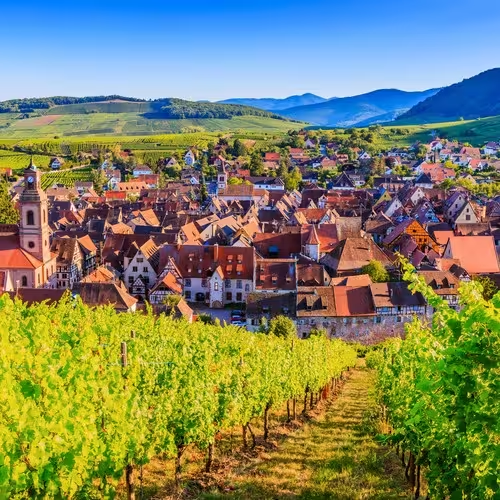
Walking can form part of your town visit, while rail offers connections beyond Colmar. Trains from Colmar's station connect with Strasbourg, Mulhouse, Basel and Besançon, with high-speed services to Paris. For a wine-route excursion, focus on a portion rather than trying to cover the whole route: it extends about 170 km between Marlenheim and Thann.
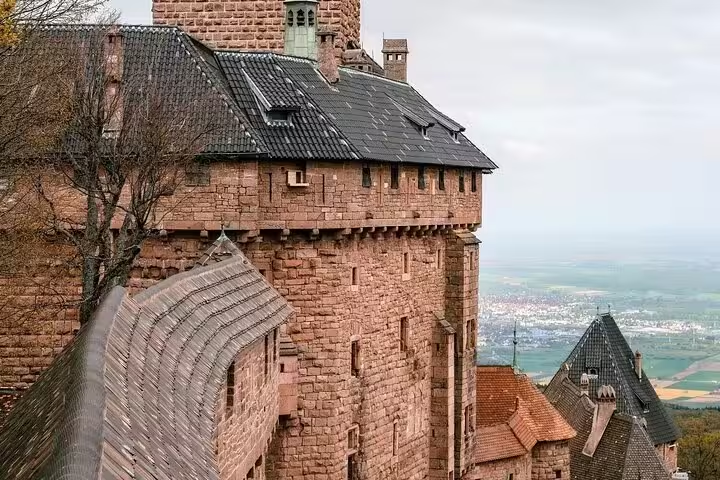
The full-day private tour of Strasbourg, Colmar and Riquewihr lasts 7 hours and includes a private vehicle, a dedicated local driver and a guided tour with stops at Haut-Koenigsbourg Castle, Riquewihr and Colmar.
The historic centre is an area to look at if old houses and museums are your focus. Its architectural heritage and the Musée Bartholdi in the old town give that choice a clear sightseeing focus.
Strasbourg is 64 km north of Colmar, while Basel is 60 km to the south.
A canal links Colmar with the Rhine to the east.
The full restoration started in 2018, and visitors could see the process reach completion in late June 2022.