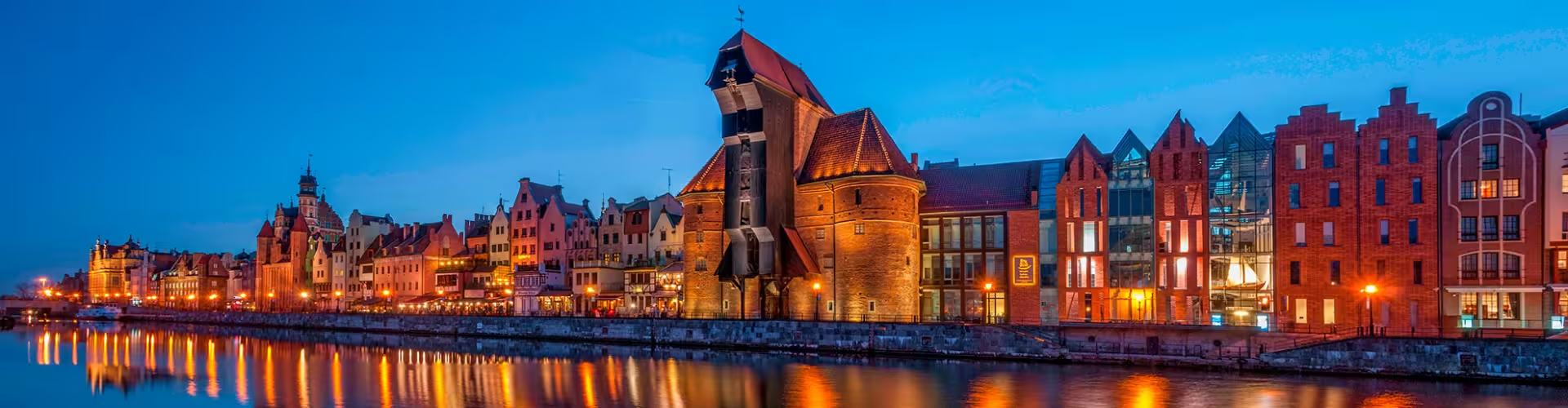
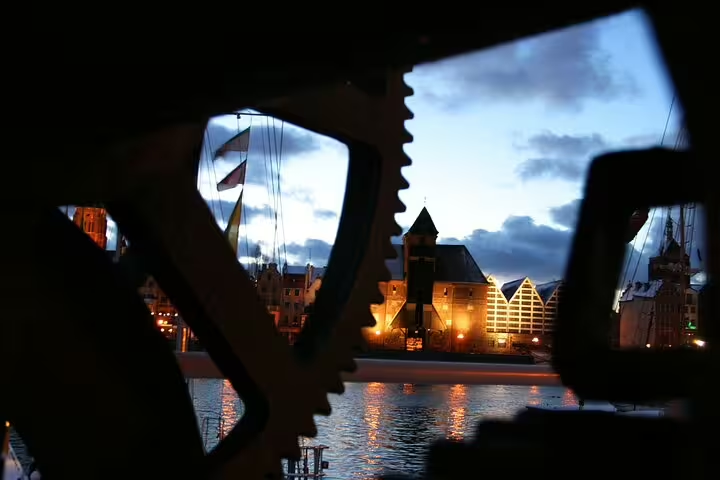
Gdansk is a historic port city located on the Baltic coast of northern Poland, renowned for its striking architecture and rich maritime heritage. The city's colorful merchant houses line the Motława River, while the iconic Mariacka Church and Neptune Fountain stand as symbols of its golden age as a major trading hub.
What to see in Gdansk
Visitors should explore the restored Old Town with its cobblestone streets and Renaissance buildings, including the impressive Artus Court and the European Solidarity Centre. The Oliwa Cathedral and its famous mechanical organ offer another cultural highlight, while the National Museum houses important Polish artworks and historical artifacts.
Things to do in Gdansk
The city offers boat cruises along the Motława River and harbor tours, while nearby beaches in Sopot and Gdynia provide seaside relaxation. Cultural enthusiasts can visit numerous galleries, attend seasonal festivals, or take walking tours through neighborhoods that reveal the city's diverse history and contemporary creative scene.
Gdansk's Amber Heritage
Gdansk has been a center of amber trading for centuries, with Baltic amber highly valued throughout Europe since medieval times. The city's Amber Museum showcases intricate carvings and historical pieces, reflecting the cultural significance this fossilized resin holds in the region's identity and economy.
Gdansk is located on the northern coast of Poland along the Baltic Sea, serving as the country's primary seaport and a major gateway to Central Europe. The city sits at the mouth of the Vistula River and is part of the Pomeranian region, positioned approximately 350 kilometers northeast of Warsaw. Its strategic coastal location has shaped its development as a merchant republic and trading center throughout history.
Gdansk, Poland, Baltic Coast, European City, Heritage Tourism, Port City, Cultural Destination