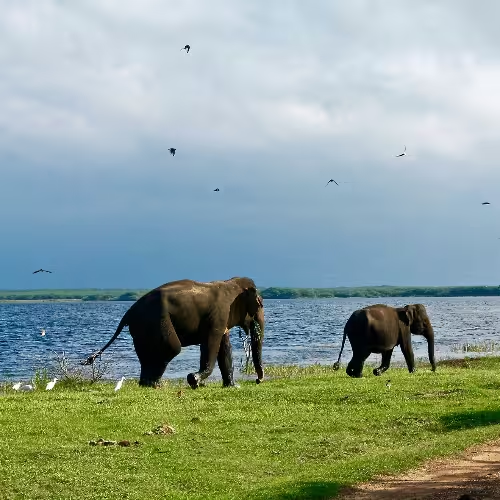
Yala National Park is Sri Lanka's most visited wildlife sanctuary, located in the southeastern region of the island. Home to diverse ecosystems and abundant wildlife, this park offers visitors an unparalleled opportunity to experience nature in its most pristine form, with the park's dry zone landscape providing excellent conditions for wildlife viewing throughout the year.
What to see in Yala National Park
Visitors should not miss the park's substantial leopard population, one of the highest densities of leopards in the world. The park also features herds of wild elephants, spotted deer, sambar deer, and a variety of bird species. Scenic rock formations and coastal views add to the park's natural appeal.
Things to do in Yala National Park
Safari tours are the primary activity, with early morning jeep expeditions offering the best wildlife viewing opportunities. Guided tours can be customized based on visitor interests, and the park's diverse habitats make each visit unique. Birdwatching and photography are popular pursuits for nature enthusiasts.
Safari Experience and Wildlife Conservation
Yala National Park serves as a critical refuge for Sri Lanka's endangered wildlife populations. The park's safari experience is renowned for leopard sightings, making it a destination for wildlife photographers and conservation-minded travelers seeking authentic encounters with big cats in their natural habitat.
Yala National Park is situated in the southeastern region of Sri Lanka, spanning across the Matara, Monaragala, and Hambantota districts. The park encompasses approximately 979 square kilometers and represents one of South Asia's most important protected areas. Its strategic location on the island's eastern coast provides access to both inland forests and coastal habitats, making it accessible from major cities while maintaining its remote wilderness character. The park's position in the dry zone contributes to favorable year-round wildlife viewing conditions.
Yala National Park is recognized internationally as a biodiversity hotspot and critical habitat for endangered species. The park's conservation significance extends beyond Sri Lanka, contributing to regional efforts to protect Asian wildlife. Its designation as a RAMSAR wetland site acknowledges the ecological importance of its water bodies and coastal marshes.