Last updated:


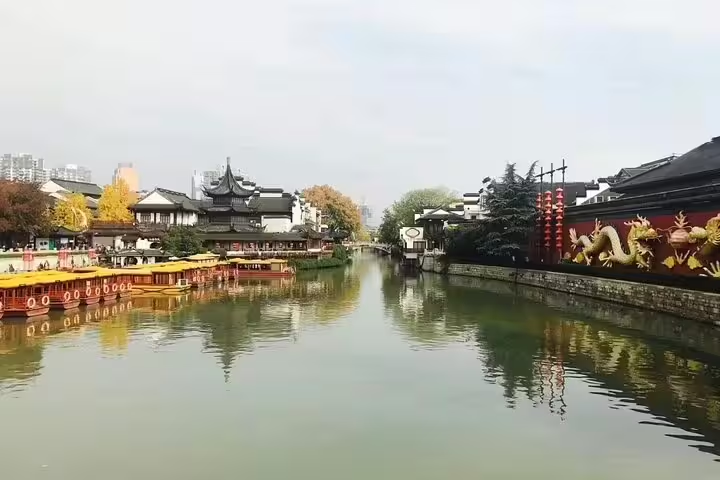
Nanjing rewards a visit that leaves room for imperial history, museums and local food, rather than trying to see only monuments. Jiangsu's capital stands on the lower Yangtze, while the Qinhuai River runs beside its Confucius Temple. Those river names help distinguish the city's setting from the temple area you might put on your itinerary.
Three days would let you divide your visit between historic monuments, museums and the river area. The first day could focus on Ming Xiaoling and the Sun Yat-sen Mausoleum; the second on Nanjing Museum and the Presidential Palace. A third day could bring together the Jiangning Weaving Museum and Confucius Temple, leaving space for local food.
If you want a longer guided introduction to the city's history and culture, a four-day Nanjing tour provides an English-speaking guide throughout.
Ming Xiaoling and the Presidential Palace make a good pairing if you want to understand Nanjing through different chapters of its history. Ming Xiaoling is the burial place of Zhu Yuanzhang, the Ming dynasty's founding emperor, and Empress Ma. Its place within the UNESCO-listed Imperial Tombs of the Ming and Qing Dynasties makes it a clear priority for an itinerary focused on imperial heritage.
The Presidential Palace turns your attention to the Republic of China: Sun Yat-sen took his oath there as provisional president. His mausoleum offers a commemorative stop if you want to continue that thread, rather than move straight to another period.
Nanjing Museum is the choice for a picture of past city life, while the Jiangning Weaving Museum is worth your time if clothing interests you. The Republican-era gallery at Nanjing Museum recreates old Nanjing's streets and everyday urban life. At Jiangning Weaving Museum, Chinese cheongsam is the subject of a permanent exhibition.
Textile lovers can also look out for Nanjing Yunjin brocade, whose materials include silk, gold thread and peacock feathers. UNESCO recognises its craftsmanship as intangible cultural heritage, so there is a craft tradition to explore alongside the monuments. For a museum visit in a historic domestic setting, the Nanjing Folk Customs Museum occupies Ganxi's former home from the Qing dynasty.
Salted duck and duck blood and vermicelli soup offer different ways to explore the city's duck dishes, so it helps to know what each contains. The duck is gently cooked and served cold, whereas the soup brings vermicelli together with jellied duck blood, intestine, liver and gizzards.
Sesame pancakes offer a choice between savoury and sweet: the oval version is savoury and the round version sweet. That distinction helps you pick a pancake without expecting both shapes to taste alike.
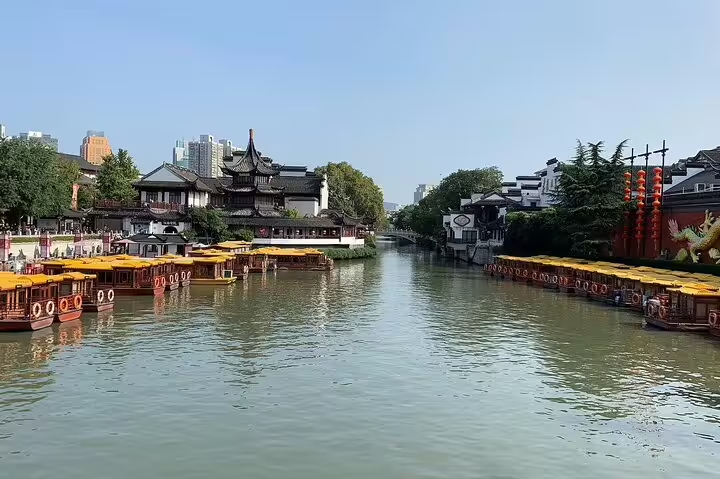
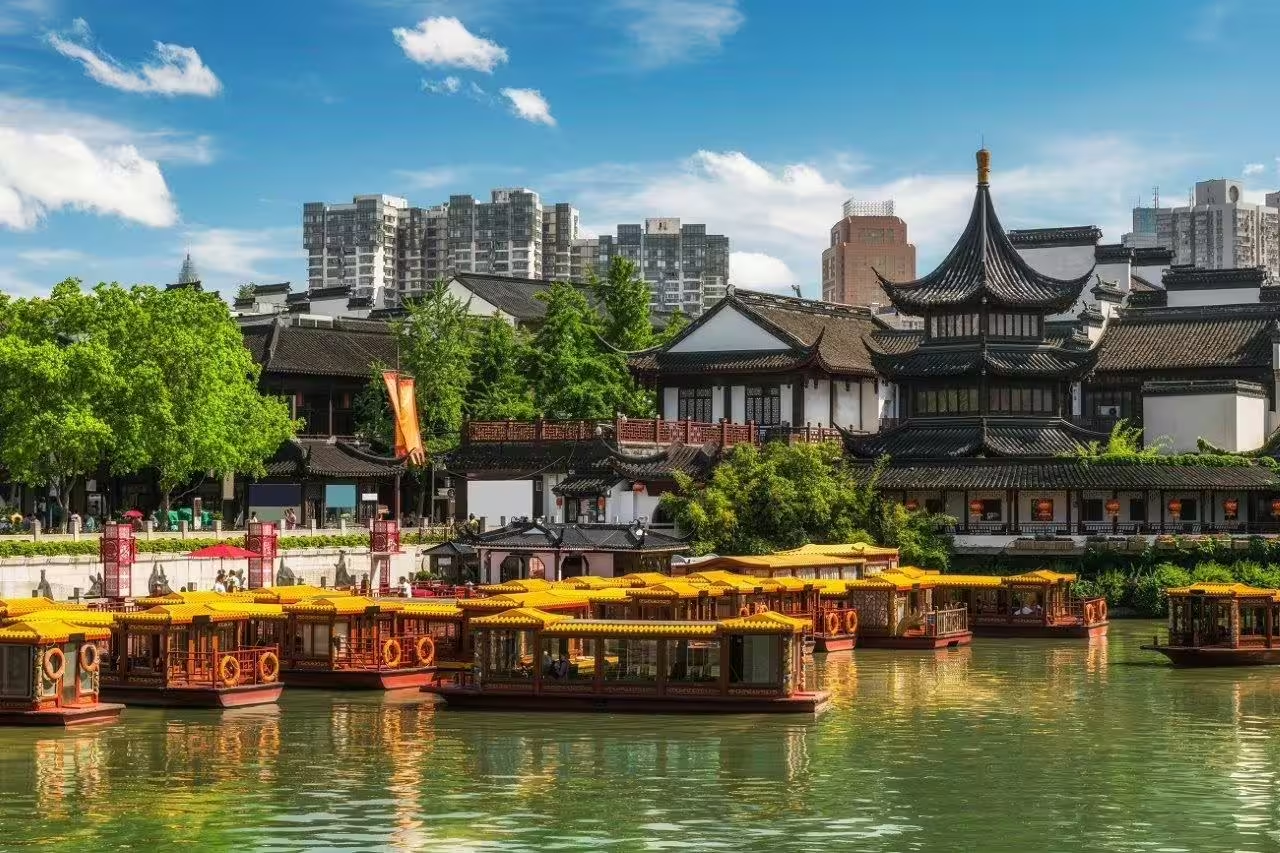
Confucius Temple is a natural anchor for a visit centred on the Qinhuai River because it stands beside the water. If you want a boat outing alongside a museum, temple and mountain day, the guided Nanjing day trip includes a boat trip on the Qinhuai River.
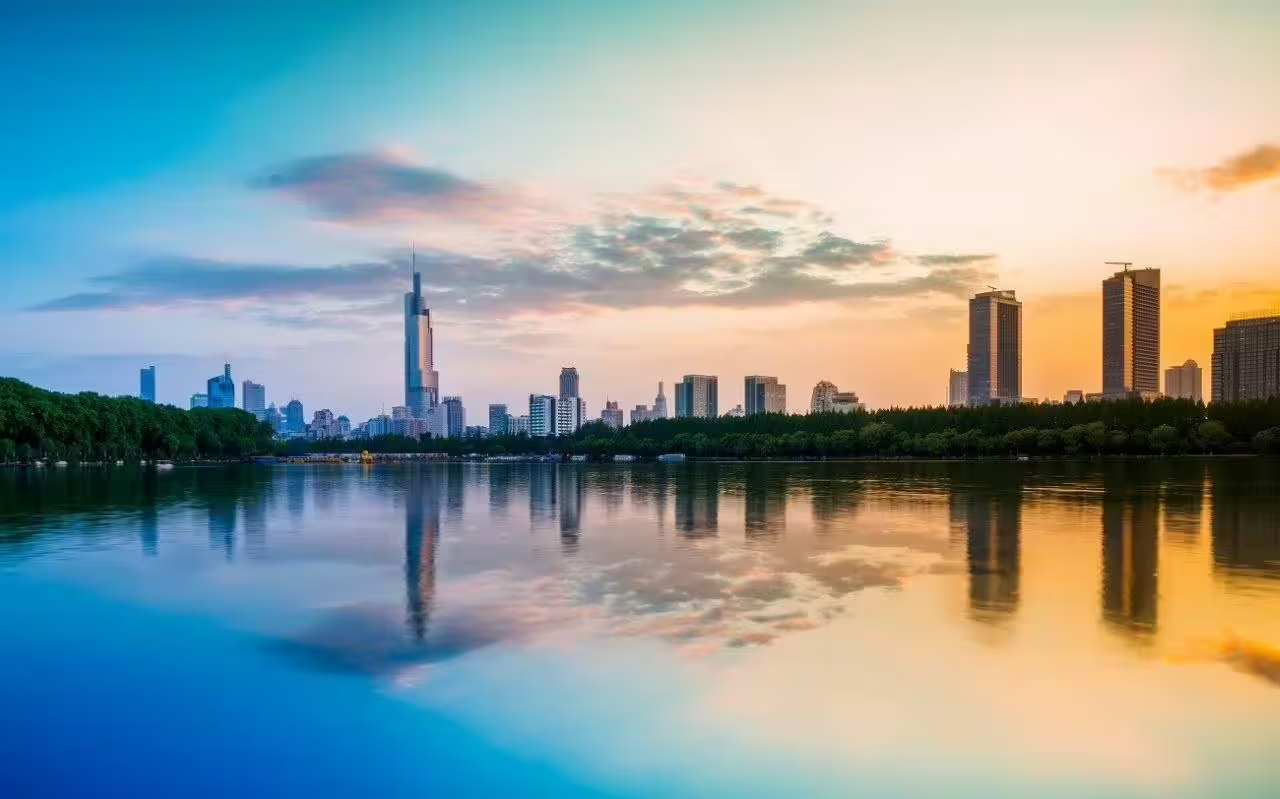
Xuanwu Lake and Laoshan are options for a break from monuments when you want to focus on water or forest. The lake has a surrounding scenic area, while Laoshan is a national forest park in Pukou District. Plant lovers might instead give Meihua Mountain a place on their itinerary for its plum trees and the range of varieties grown there.
January calls for warmer clothing, while July warrants allowing for heat when planning your sightseeing. Average temperatures are 3.2 degrees Celsius in January and 28.4 degrees Celsius in July, a substantial difference if you expect to spend time outdoors.
Yes, Nanjing retains 25.091 kilometres of its historic capital city wall, whose construction began in 1366.
No, Nanjing is the capital of Jiangsu Province, though it was the Ming capital from 1368 until the Yongle Emperor moved the court to Beijing in 1421.
Yes, Nanjing is served by Nanjing Lukou International Airport, code NKG, and the Nanjing Metro S1 line connects it with the city's suburbs.