Tangier: what to see and do
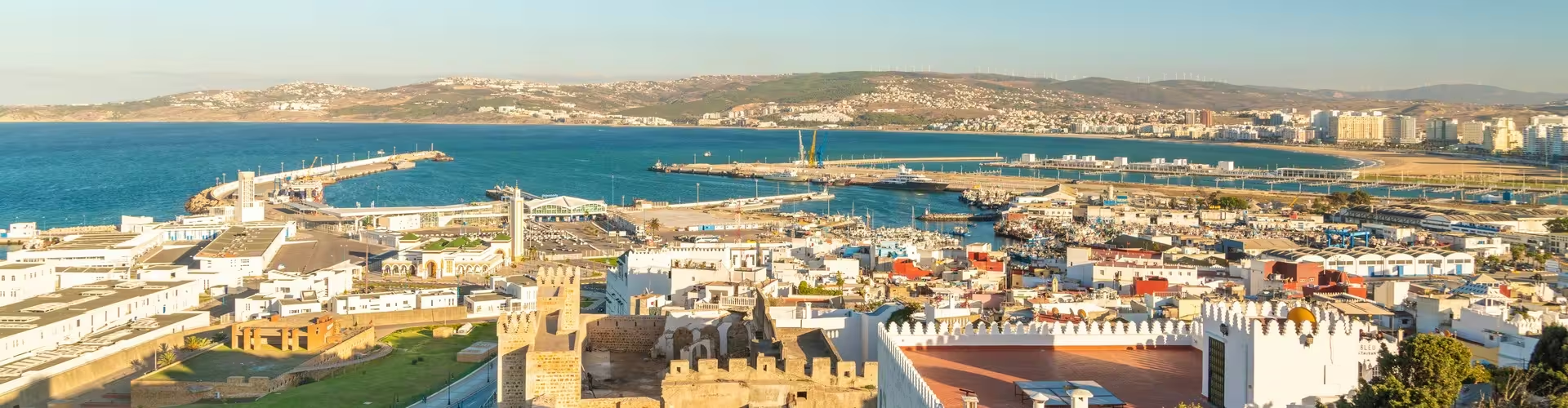
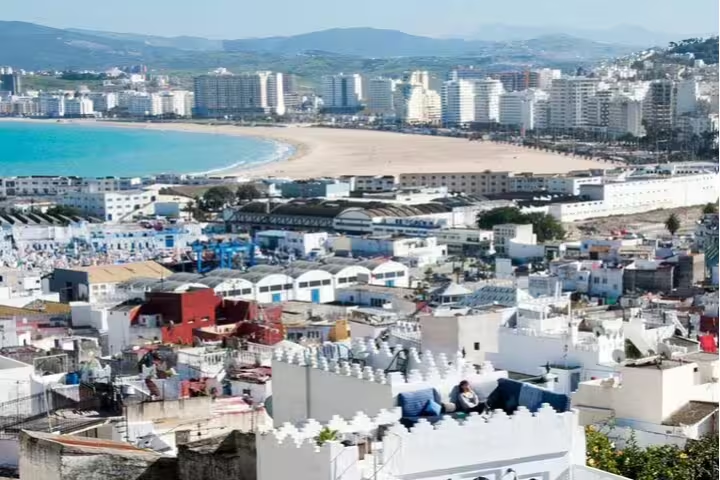
Tangier stands on the southern side of the Strait of Gibraltar.
Things to do in Tangier
The kasbah, Tangier's citadel, occupies the western hill of Tangier. Outside the old city walls, the Grand Socco is a central square that once served as a marketplace. Its shape resembles a roundabout, and it divides the old medina from newer development. Within the lower, southern part of the medina, the Petit Socco forms the central square.
The American Legation building is also in the medina. The mansion that houses the Tangier American Legation Museum was a gift from Sultan Moulay Slimane of Morocco to the United States in 1821. Above the Bay of Tangier, Café Hafa occupies a position on a cliff. The café began welcoming customers in 1921.
Tangier in Morocco: history and culture
The city began as a Phoenician colony, with its foundation possibly dating to the 10th century BCE. Roman Tingis received municipal privileges under Augustus and became a Roman colony under Claudius. On 28 August 1471, Portuguese forces took possession of Tangier without opposition. Under English rule, from 1661 to 1684, the city had a garrison and received a royal charter.
Colonial powers placed Tangier under international administration in 1923. The 1923 convention that created the international zone was signed by France, Spain and the United Kingdom; other powers later joined its administration. A protocol signed on 29 October 1956 restored full Moroccan sovereignty over the zone.
Tangier was the birthplace of the traveller Ibn Battuta in 1304. His account of his journeys is generally known as the Rihla. Henri Matisse stayed twice in Tangier, in 1912 and in 1912 to 1913, both times at the Grand Hotel Villa de France. William S. Burroughs spent four years living in the city.
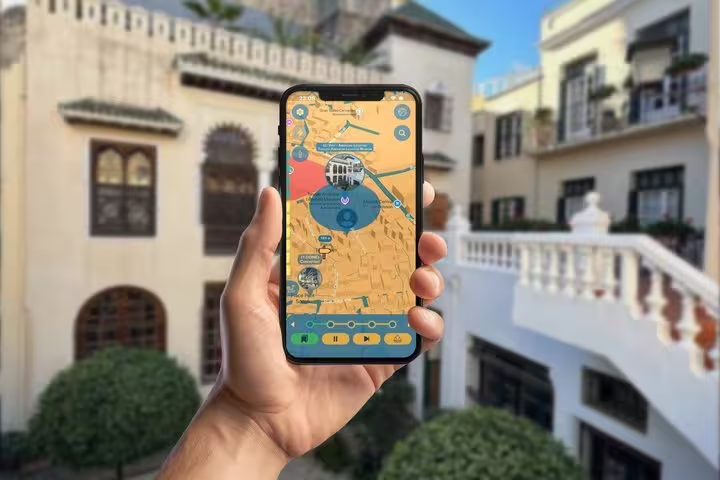
The self guided GPS walking tour of the international zone lasts 1 hour and 30 minutes and includes access to a mobile app with GPS guidance, puzzles and challenges at each stop, audio and visual content, historical information for seven locations and prompts for photo missions along the route.
Tangier day trip: Cape Spartel and the caves
On the Atlantic side, Cape Spartel marks the southern entrance to the Strait of Gibraltar. The cape is described as a meeting point for Atlantic and Mediterranean waters. At the end of a cliff stands a lighthouse built by Sultan Muhammad IV in 1864. The Caves of Hercules open towards both the land and the sea. Viewed from the sea, the seaward opening has the outline of Africa. Natural formations and human intervention have both shaped the caves.
Longer tours in Morocco
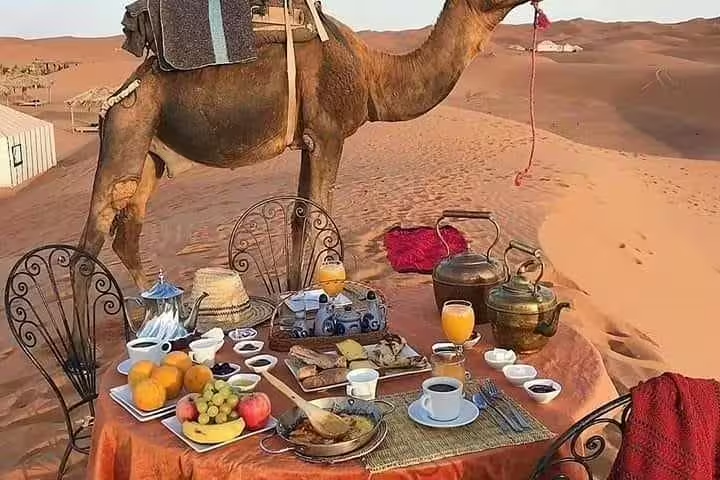
The Morocco tour covering Tangier, Fes, the Sahara and Marrakech lasts 9 days and includes breakfast daily, dinner at the Berber camp in Merzouga, camel rides to and from the camp, a professional driver and guide who speaks English, and visits to Chefchaouen, Fes, Volubilis, Meknes, Merzouga, Todra, Ait Benhaddou and Marrakech.
The Morocco tour of desert, kasbahs, beaches and mountains lasts 12 days and includes transport in a vehicle with air conditioning, a professional driver who speaks English and local guides, breakfast and dinner as specified in the itinerary, a camel ride at Erg Chebbi, guided city tours in Fes and Marrakech, and a Berber desert camp experience with live Gnawa music.
Connections to Tangier
Al Boraq connects Casablanca and Tangier by fast rail over a route of 323 km. The line was inaugurated on 15 November 2018.
Where is the kasbah in Tangier?
The kasbah occupies the western hill of Tangier.
What is the Grand Socco?
The Grand Socco is a central square outside the old city walls that previously served as a marketplace.
What is the connection between Tangier and Ibn Battuta?
Ibn Battuta was born in Tangier in 1304, and his travel account is generally known as the Rihla.
What are the Caves of Hercules like?
The caves combine natural formations with human alterations and have openings towards the sea and the land.
Which rail service connects Casablanca and Tangier?
Al Boraq links the cities over a 323 km route.
Frequently asked questions