




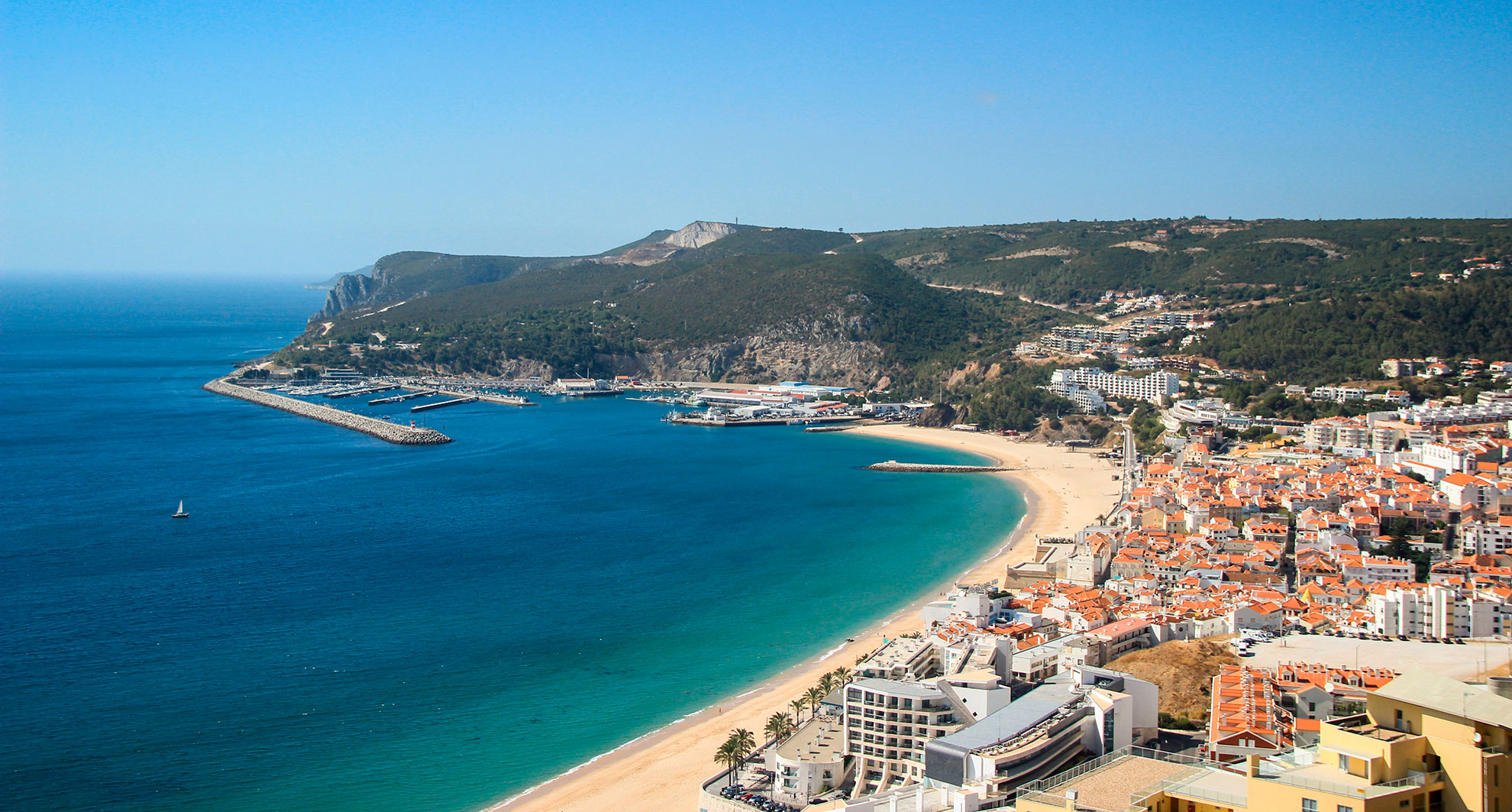
The sheltered bay of Sesimbra, framed by the limestone Serra de Arrábida and its centuries-old Moorish fortification above.
The Blue Bay
Gold Sands and Silver Scales: The Timeless Allure of Sesimbra's Shores
A salt-cured fishing village tucked beneath limestone cliffs, Sesimbra rewards those who trade Lisbon's pavements for the quiet ritual of tide and table.
Forty minutes south of Lisbon, on the windward side of the Arrábida peninsula, Sesimbra sits in a natural crescent so sheltered that its waters turn a shade of green more associated with the Caribbean than the Atlantic. The village has been harvesting that calm for centuries — first for sardines and sea bream, now for the swimmers, divers, and kayakers who follow the same coastline with rather less urgency.
What makes Sesimbra worth the drive is the density of contrasts packed into a small geography. The bay beaches — Praia da California and Praia de Santiago — offer flat, warm water ideal for families and unhurried afternoons. A short walk uphill brings you to a Moorish castle perched above 200 metres of cliff, its ramparts framing a panorama that sweeps from Cabo Espichel in the west to the Serra de Arrábida in the east. And at the western extremity of the municipality, the cape itself — Cabo Espichel — stands as a geological and spiritual counterpoint: raw, windswept, anchored by an 18th-century sanctuary and prehistoric dinosaur trackways pressed into the limestone foreshore.
"In Sesimbra the fishermen still bring the catch ashore by hand in the early morning. The scales on the dock, the smell of charcoal from the lunch restaurants — these are not performances for tourists. They are simply Tuesday."
The gastronomy here is built around that catch. Grilled gilt-head bream and cherne (wreckfish) dominate the menus along Avenida dos Náufragos, typically paired with rough local wine poured from a ceramic jug. Seek out the Farinha Torrada, a regional sweet — roasted flour mixed with sugar and cinnamon — sold in paper cones from market stalls. It is one of those edible souvenirs that travels poorly and tastes best standing up, slightly wind-burned, within earshot of the sea.
On the Water: Kayaks, Boats, and the Azure Depths
Sesimbra has a well-established reputation among Portuguese divers. The marine protected area of Arrábida hosts dense posidonia meadows, abundant sea life, and visibility that regularly exceeds fifteen metres. For non-divers, the same underwater topography — rocky outcrops, sea arches, and hidden coves — is equally compelling from a kayak or a glass-bottomed boat. The beach of Ribeiro do Cavalo, reachable only by sea, has become the emblem of this coastline: a strip of white gravel beneath vertical cliffs, accessible by a short paddle or a demanding cliff path.
Water-Based Tours & Coastal Experiences
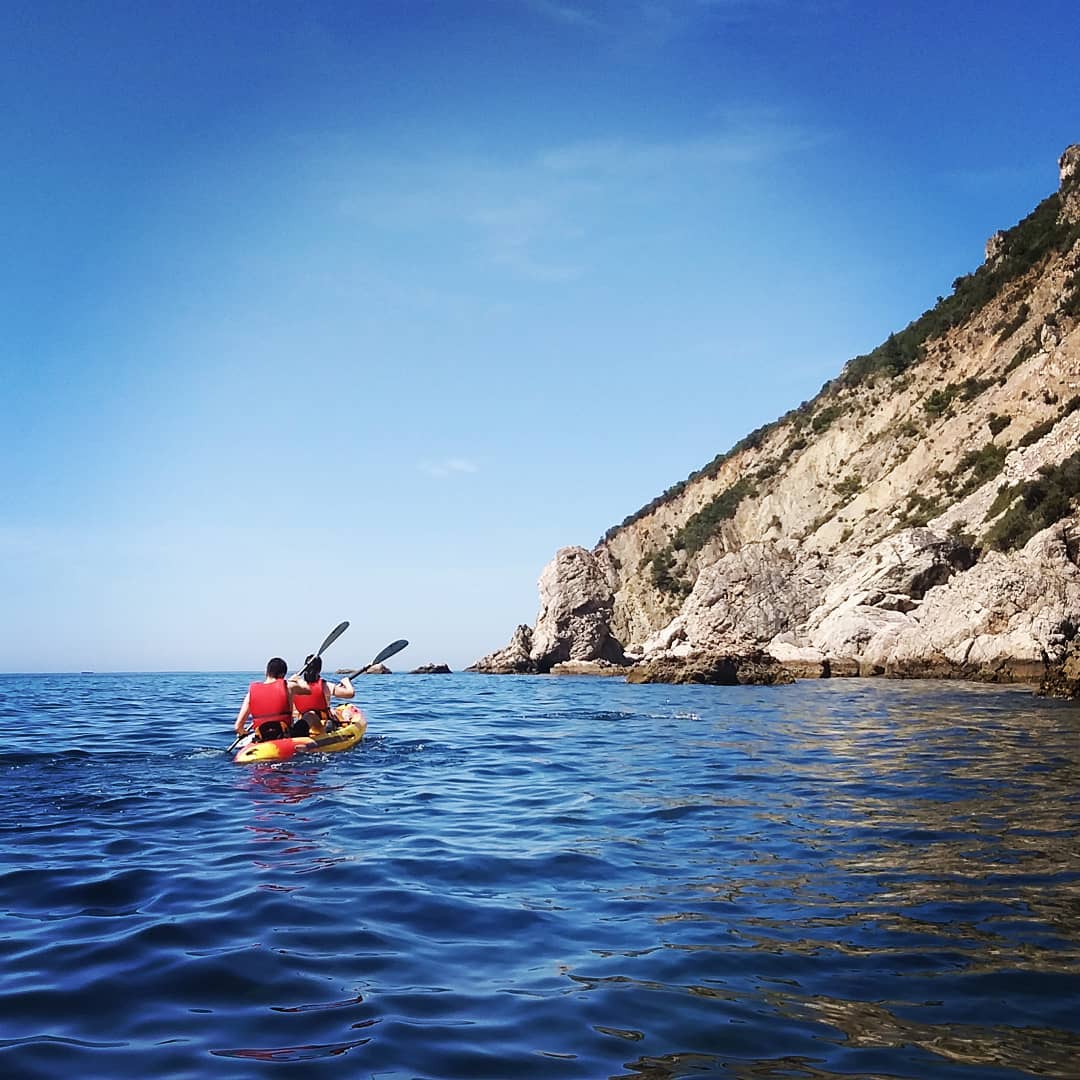
The limestone cliffs of the Arrábida Natural Park meet the Atlantic at angles best appreciated from sea level — kayaks allow access to coves closed to larger vessels.
Off-Road & Overland Excursions
Sesimbra offers tours for every pace — from a two-hour boat circuit to a full-day overland traverse of Arrábida. Browse the complete list of available departures and filter by date, group size, and activity type.
See all Sesimbra tours →From Lisbon: Day Trips That Cover the Whole Peninsula
The Setúbal Peninsula — which contains both Sesimbra and the Arrábida massif — is compact enough to explore meaningfully in a single day from the capital. Guided itineraries typically string together the natural park, the village of Sesimbra, a local winery, and a cheese stop in the interior, covering geography that would otherwise require independent navigation across unmarked rural roads. The advantage of a guided format here is access: certain viewpoints and cellar doors are not signposted and receive visitors only by prior arrangement.
"The Serra de Arrábida is among the last places in continental Europe where the original Mediterranean forest — cistus, strawberry trees, and wild olive — survives largely intact above a working coastline. Walking through it in early spring, when the cistus is in flower, is a particular experience."
Full-Day & Multi-Stop Tours from Lisbon

The Arrábida Natural Park preserves one of Europe's last intact Mediterranean forest ecosystems — a backdrop to the coast that changes register entirely with the seasons.
Culture, Craft, and the Slower Hours
Not every hour in Sesimbra needs to be spent in motion. The village centre — a compact web of whitewashed lanes climbing from the waterfront — holds a 16th-century fortress at sea level (the Fortaleza de Santiago, distinct from the Moorish castle above), a daily fish market near the harbour, and a handful of ateliers offering craft workshops. Tile painting — azulejo decoration — is one of the oldest continuities of Portuguese visual culture, and workshops in Sesimbra typically use traditional cobalt-and-white pigments on pre-fired biscuit tiles, pairing the session with a tasting of local wines.
Cultural & Artisan Experiences
Whether you're planning a cultural afternoon in the village or a full-day traverse of the Arrábida coast, ToursXplorer lists departures with live availability. Filter by interest, group size, or duration.
Browse all experiences in Sesimbra →Frequently Asked Questions
How far is Sesimbra from Lisbon, and how do I get there?
Sesimbra is approximately 40 kilometres south of Lisbon — around 40 to 50 minutes by car via the A2 motorway and the IC33. There is limited public bus service (Transportes Sul do Tejo) from Cacilhas or Setúbal, but most visitors arrive by car or on an organised tour that includes transport from the capital.
When is the best time of year to visit Sesimbra?
The bay is swimmable from late May through October, with July and August being the warmest and most crowded months. April to June offers mild temperatures, uncrowded beaches, and the Arrábida forest in full flower. November to March is quiet, with most restaurants and boat operators still open on weekends, though tour schedules are reduced.
Is Sesimbra suitable for families with young children?
Yes. The bay beaches — Praia da California in particular — are shallow, calm, and sheltered from swell. The Moorish castle is a short uphill walk with good safety walls and panoramic views that children tend to appreciate. Several boat tours accept children from age four or five; check individual tour listings for minimum age requirements.
What should I eat in Sesimbra?
Fresh grilled fish is the default order — sea bream (dourada), seabass (robalo), and wreckfish (cherne) are local staples. Shellfish — percebes (barnacles) and amêijoas (clams) — appear on most menus. For a sweet finish, look for Farinha Torrada, a local roasted-flour confection sold from market stalls and small pastry shops near the harbour.
How does Sesimbra compare to other coastal towns near Lisbon?
Sesimbra is more sheltered and calmer than Cascais or Ericeira, which face the open Atlantic and produce surf conditions unsuitable for casual swimming on many days. The village retains a working-fishing-port character that larger resorts have lost. The proximity of the Arrábida Natural Park — a protected area with strict development controls — keeps the surrounding landscape relatively intact.
Do I need to book tours in advance?
During July, August, and holiday weekends in June and September, popular departures — particularly kayak tours and clear-boat trips — can fill two to three weeks ahead. In shoulder season (April–May, October), a few days' notice is generally sufficient. Private tours that include Lisbon pickups are often more flexible on short notice than group departures.