




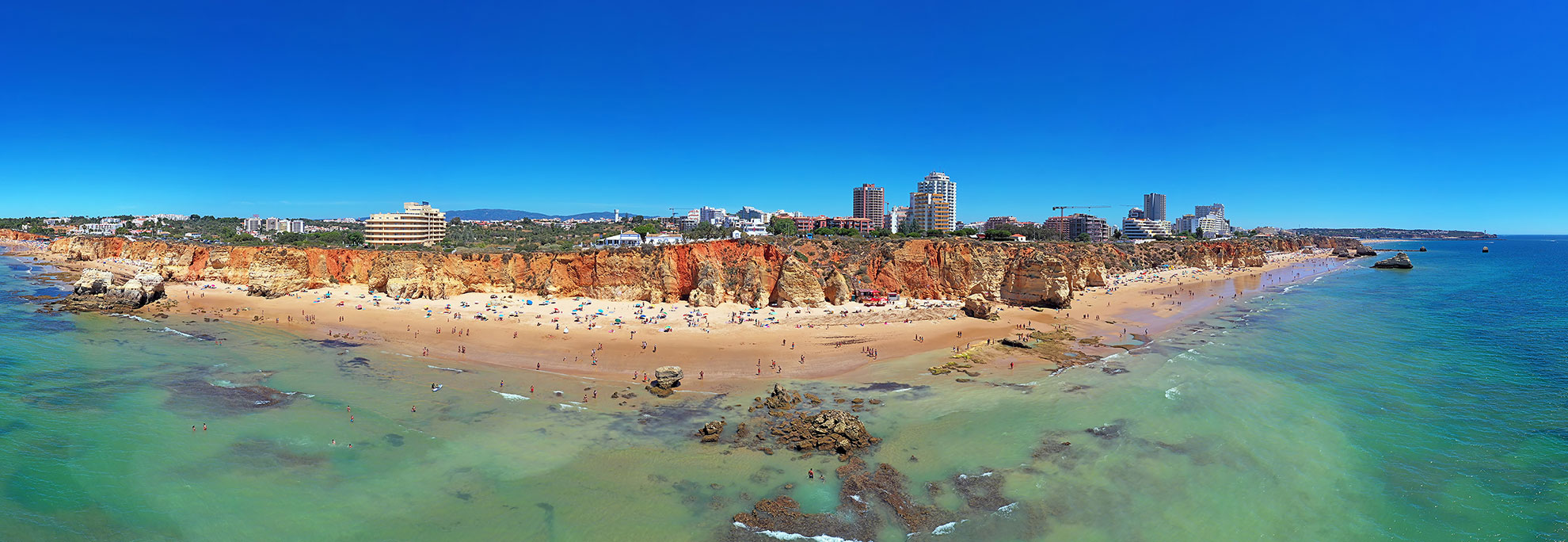
The towering ochre cliffs of Praia da Rocha frame one of the Algarve's most recognisable shorelines.
Golden Sands & City Lights
From Sun-Drenched Cliffs to Riverside Charms: The Many Faces of Portimão
More than a beach resort, Portimão is a working Algarve city with a sardine-scented quayside, an award-winning museum, and a marina that dispatches boats to some of the most photographed sea caves in Europe.
There is a moment, standing on the old iron bridge over the Arade at dusk, when the charcoal-grilled aroma of fresh sardines drifts up from the riverside stalls and the last amber light catches the terracotta rooftops across the water — and Portimão stops feeling like a holiday destination and starts feeling like somewhere people actually live. That is precisely its appeal.
Portugal's fourth-largest city by area, Portimão is often shortchanged as merely the gateway to Praia da Rocha. It is far more layered than that. The bustling quayside of the Zona Ribeirinha pulses with the rhythm of a genuine fishing port; the Museu de Portimão — a former sardine cannery reborn as a cultural institution — has won European museum prizes; and the marina sends a daily fleet of boats westward toward the cathedral-ceilinged Benagil Cave and eastward up-river toward the Moorish ramparts of Silves. Choose your own adventure, as the locals say.
"Portimão doesn't perform for tourists — it simply gets on with being a city, and lets visitors observe it at close range. That candour is rarer than any beach view."
Praia da Rocha: Where the Algarve's Geology Does the Heavy Lifting
The beach itself needs little introduction — roughly 1.5 kilometres of firm golden sand backed by dramatic sandstone promontories that glow a deep ochre in afternoon light. What distinguishes Praia da Rocha from its neighbours is the sheer scale of those formations: freestanding rock stacks rise directly from the waterline, creating a natural obstacle course for the azure waves that roll in from the Atlantic. The clifftop boardwalk that runs from the Fortaleza de Santa Catarina westward is the best vantage point, and in the early morning, before the sun-loungers appear, it feels like an entirely different place — quiet, geological, almost austere.
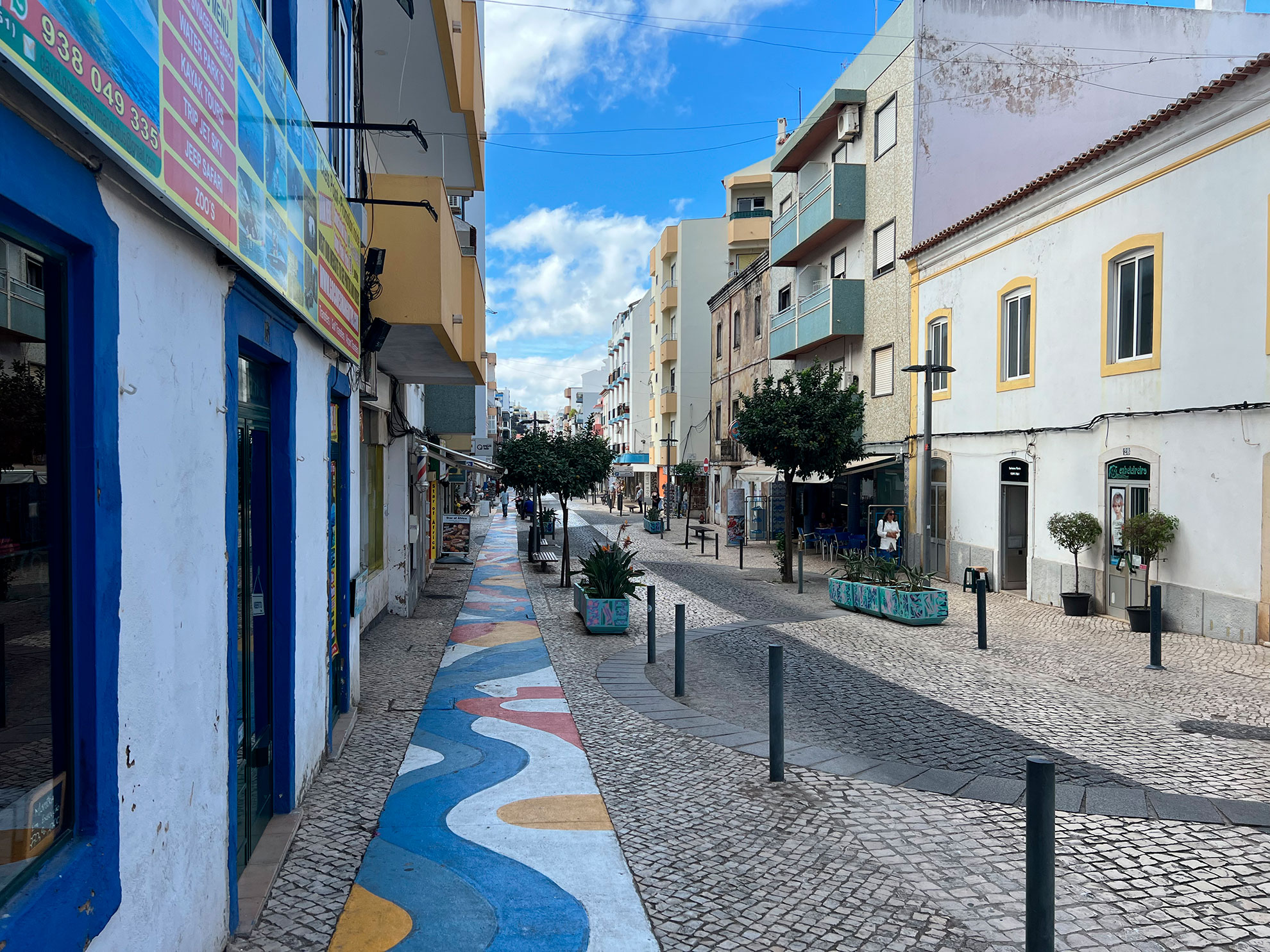
The Zona Ribeirinha at dusk: fishing boats at rest, tascas firing up, the iron bridge glowing in warm light.
The Arade Riverfront: Sardines, History, and a Slower Pace
Walk ten minutes north from the beach and the tourist economy gives way to the city's working identity. The Zona Ribeirinha — the old riverside quarter — is where Portimão earns its title of Sardine Capital of the Algarve. Between June and September, the grills along the waterfront produce a near-continuous column of fragrant smoke; a plate of charcoal-grilled sardines with coarse salt and fresh bread is the de facto meal here, and it costs almost nothing. The Museu de Portimão anchors the cultural end of the same strip: housed inside a cannery that processed tuna and sardines from the 1930s, its permanent exhibition on the canning industry is genuinely affecting — the rusted machinery, the workers' testimonies, the tins that once reached every corner of the empire.
Caves, Coast & Dolphin Encounters
Sunset & Social Experiences on the Water
Portimão's marina launches tours in every direction — sea caves, dolphin grounds, riverside castles, and open Atlantic. Browse the full range of experiences available from the city and the wider Algarve coast.
Explore all Portimão tours →Culture Below Ground: The Museu de Portimão
The museum occupies the shell of a 1924 sardine cannery on the riverfront, a building that was still operational until the mid-1990s. Its design is unusual: rather than gutting the industrial infrastructure, the architects preserved the production floor largely intact, leaving rusted conveyor belts, pressure cookers, and tins mid-process as if the workers had simply walked out. Three levels of exhibition explain the fishing economy that shaped the city, the Moorish and Roman layers beneath it, and the river ecology of the Arade. It won the Council of Europe's Museum Prize in 2010 and remains one of the more intellectually honest local history museums in Portugal — not a celebration of heritage so much as a candid account of labour.
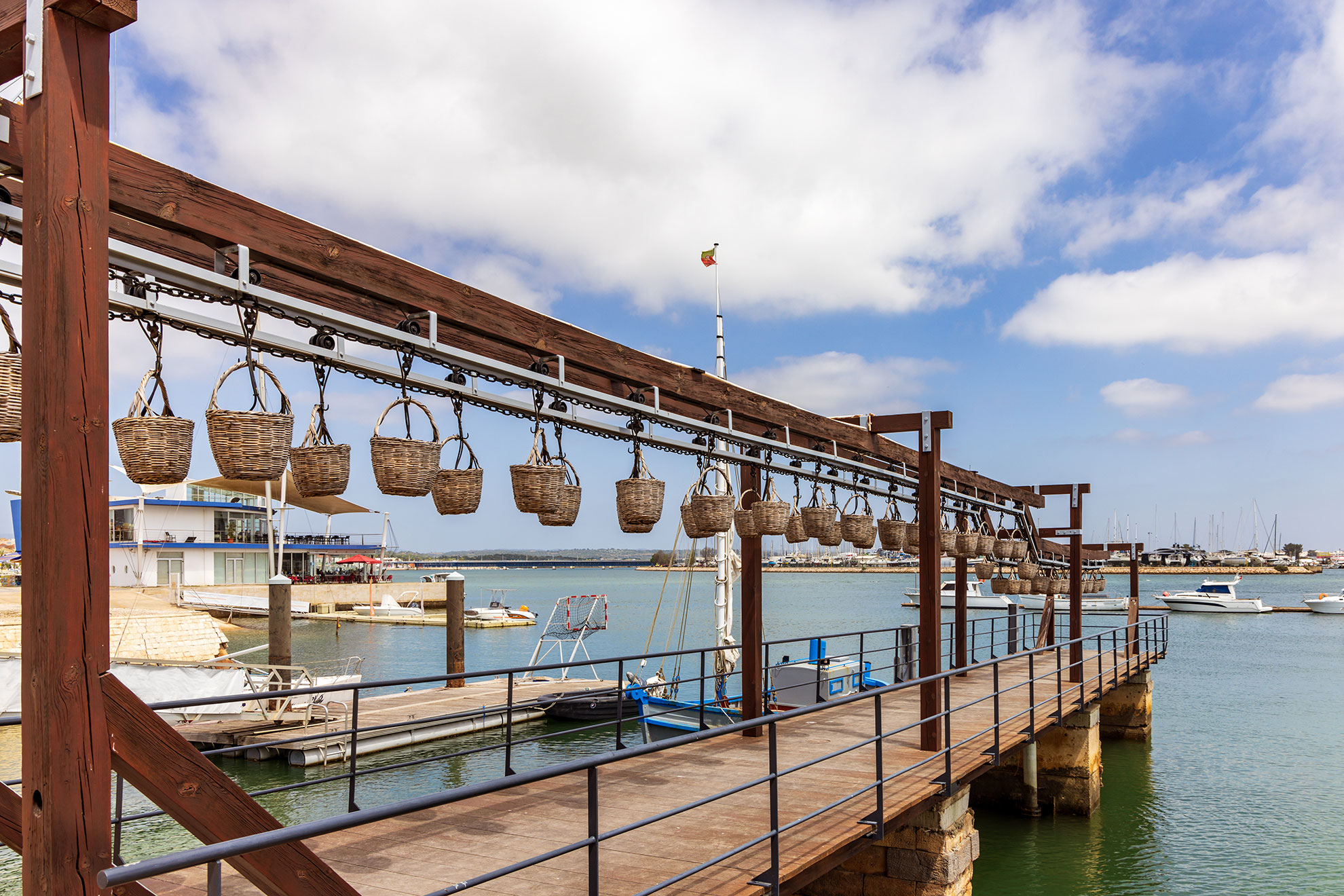
The Museu de Portimão's preserved cannery floor: machinery left mid-process, an unusual curatorial decision that works.
Portimão as a Base: The Practical Geography
One of the city's underrated virtues is its position. Sitting at the mouth of the Arade, Portimão is within 30 minutes of Silves (the former Moorish capital, reached by riverboat or road), 15 minutes of Lagos and its own clifftop coast, and within easy reach of the quieter inland villages of the Serra de Monchique. The marina functions as the practical hub: car hire, ferry connections, and nearly every organised water tour in the western Algarve departs from or connects to it. Visitors who base themselves here, rather than in a single-purpose beach resort, tend to see considerably more of the region.
"The Arade River splits Portimão in two — on one bank, the modern marina and its tourist economy; on the other, older, quieter streets where the daily fish market still operates at dawn."
When to Go and What to Expect
July and August bring the highest footfall to Praia da Rocha — sun-lounger density is real, and the clifftop bars stay open past midnight. June and September offer the same reliable weather with noticeably thinner crowds on the beach and shorter queues at the marina. Outside those months, the city's own rhythm reasserts itself: the riverside restaurants fill with locals, the museum is easier to explore at leisure, and hotel rates drop considerably. Winter is mild by northern European standards — afternoon temperatures regularly reach 16–18°C — and the cliffs and coastal trails are genuinely pleasant on calm days.
Whether you're after a morning inside Benagil Cave, a riverside afternoon in the Sardine Capital, or a private sunset on the water, Portimão has a tour departing for it. Find your match below.
See all tours from Portimão →Frequently Asked Questions
Is Portimão suitable for visitors who don't just want a beach holiday?
Yes. Beyond Praia da Rocha, the city has a functioning riverside market, an award-winning industrial museum, a cathedral, Roman archaeological remains, and direct riverboat access to Silves. It works well as a base for exploring inland Algarve, including the cork-forested hills of Serra de Monchique.
How far in advance should I book Benagil Cave tours?
During peak summer (late June through August), 48–72 hours in advance is a reasonable minimum. Some operators sell out a week ahead for popular weekend departures. Outside summer, same-day availability is often possible but not guaranteed.
What is the difference between boat and kayak access to Benagil Cave?
Boat tours enter by navigating close to the cave opening and allowing passengers to view the interior from the water. Kayak tours require paddling through the cave's ground-level entrance — a more physically involved experience that puts you directly inside the chamber at water level. Both have merit; the choice depends on fitness and group composition.
Where do most tours depart from in Portimão?
The vast majority of boat tours depart from Portimão Marina, located at the mouth of the Arade River. It is well-signposted and has parking nearby. A smaller number of kayak and paddleboard tours depart directly from Praia da Rocha or from beaches closer to Benagil itself.
Is the Museu de Portimão worth visiting?
For visitors with any interest in social history or industrial heritage, yes. The preserved cannery machinery is genuinely unusual, and the exhibition on the fishing industry that shaped the city adds real context to the riverside experience. Allow 1.5 to 2 hours. Closed on Mondays.
What is the best time of day to visit Praia da Rocha?
Early morning (before 9am) and late afternoon (after 5pm) are when the beach is least crowded and the light is most interesting on the cliff formations. The ochre rock stacks cast long shadows in low light that photographs considerably better than the flat midday sun.