Last updated:
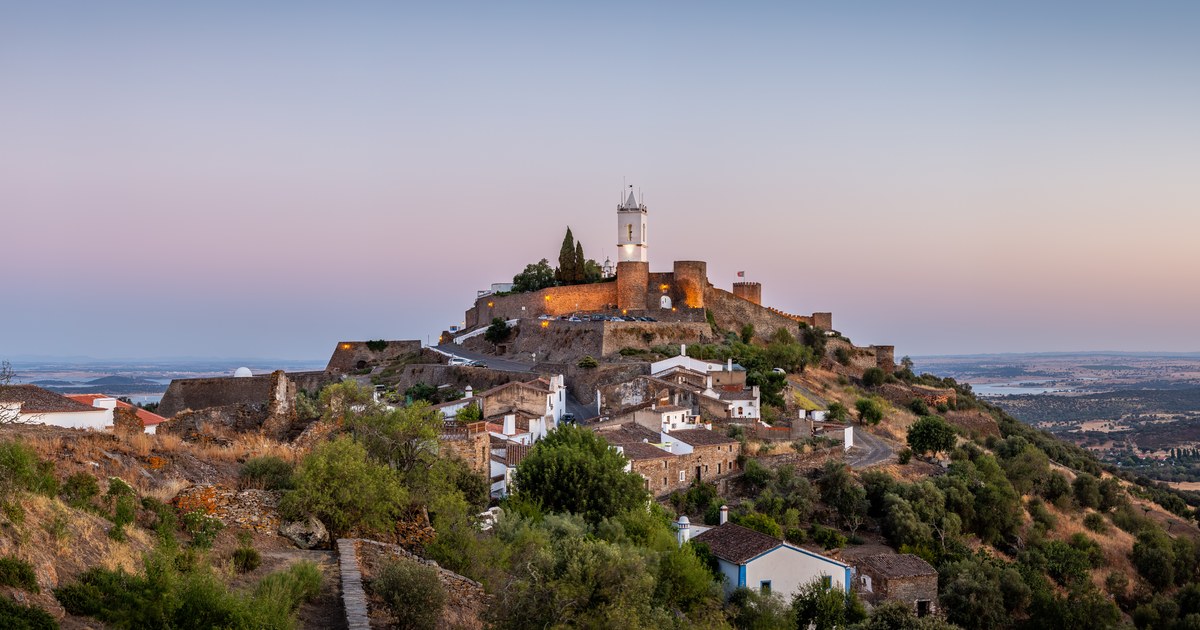
Monsaraz is a walled village on a hilltop in the Alentejo, and Alqueva is the great lake at its feet. Monsaraz sits at more than 300 m (984 ft), above the surrounding plain, and gives the best views of the Alqueva lake. Come for the lanes inside the walls, then stay for the standing stones in the fields, a swim or a boat trip on the water and, after dark, a sky made for stargazing.
The Christian reconquest reached Monsaraz in 1167, with an expedition from Évora led by Geraldo Sem Pavor. In 1232 King Sancho II, helped by the Knights Templar, brought Monsaraz under Christian rule for good and gave it to the Order of the Temple.
The castle keep was built in the reign of King Dinis. After Portugal's independence from the Spanish Crown in 1640, Vauban-style walls built for artillery were raised around the castle. The seat of the municipality moved from Monsaraz to Reguengos in 1838 and settled there for good in 1851.
Monsaraz is small, so walk it slowly and look at the details: the doorways, the chimneys and the views through every gap in the walls. The Monsaraz travel guide has more on the village.
In the old audience hall, now the Museu do Fresco, a late 15th-century fresco of the Good and the Bad Judge was hidden behind a brick partition for centuries and rediscovered in 1958. The fresco is unique in Portugal for its secular subject.
Local tradition says the Casa da Inquisição was an Inquisition court, but Monsaraz never had one; the house is now an interactive centre on the history of the village's Jewish community, already recorded in the charter of 1276. The parish church of Nossa Senhora da Lagoa dates from 1561 and is a Renaissance hall church with three naves on four columns.
Around 1830, when the old buildings of the castle's parade ground lay in ruins, the people of Monsaraz began to build their own bullring, reusing materials from those buildings. Climb onto the castle walls late in the afternoon, when the low light turns the lake silver.
If you are staying in Évora, the Évora to Monsaraz: Private Walking Tour with Driver & Guide pairs a guided walk through the village with a stop at a megalithic site on the way.
The municipality of Reguengos de Monsaraz holds more than 1,500 archaeological sites left by people who lived here more than 6,000 years ago, and its group of 276 megalithic monuments is one of the largest in Europe.
The Menir do Outeiro, known locally as Penedo Comprido, rises more than 5.6 m (18 ft), about 5 km (3.1 miles) north of Monsaraz, and is a National Monument. It is one of the most impressive standing stones in the Iberian Peninsula.
The Cromeleque do Xerez, 55 stones around a central menhir 3.6 m (12 ft) high, was moved in 1998 because the rising waters of the Alqueva dam would reach it, and now stands near the Convento da Orada, in the village of Telheiro.
The PR1 walking trail, Escritas de Pedra e Cal, is a 10.8 km (6.7 miles) loop of 3 to 4 hours that passes the Convento da Orada, the Cromeleque do Xerez and the Menir do Outeiro. Carry water and a hat, and in summer start early in the morning.
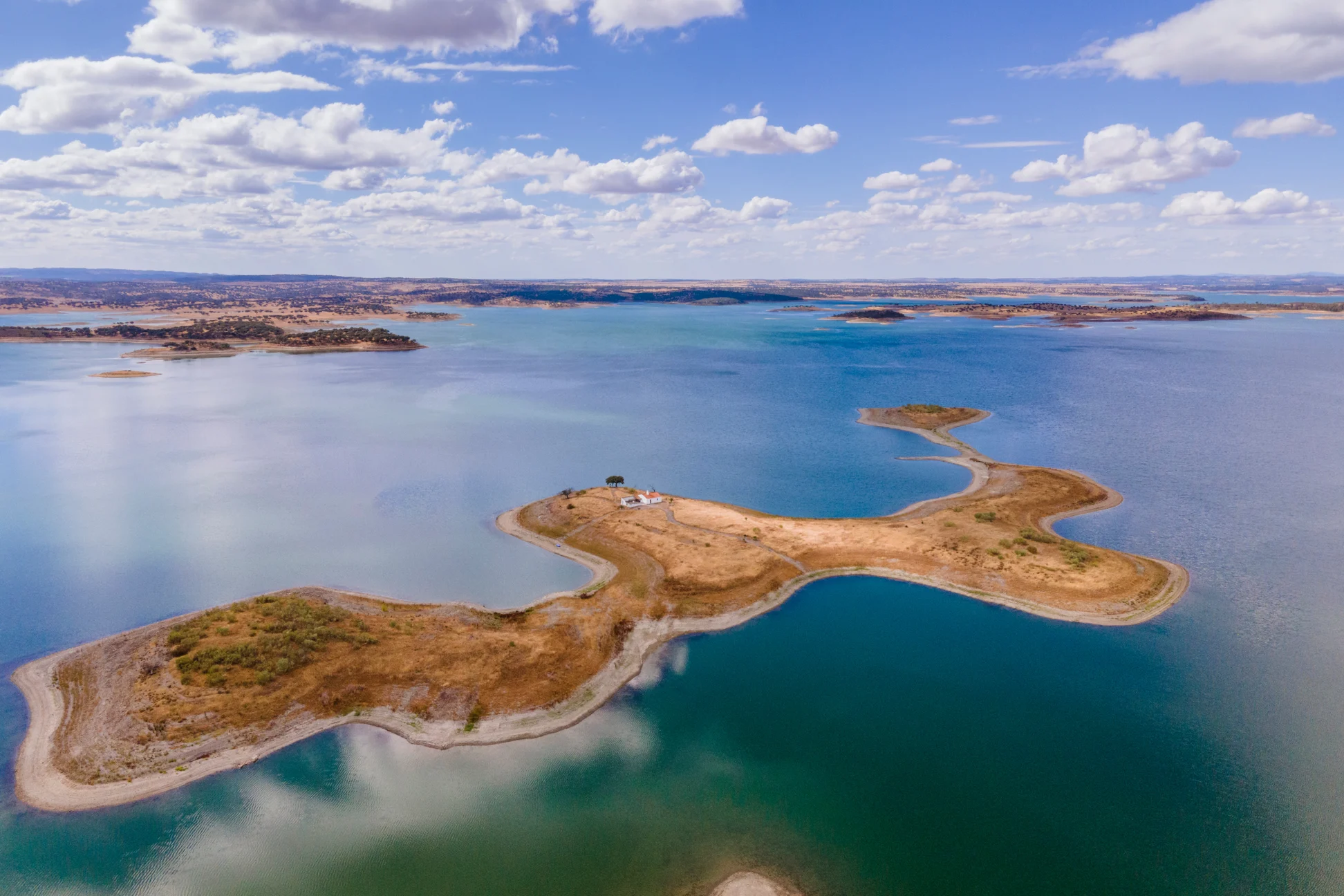
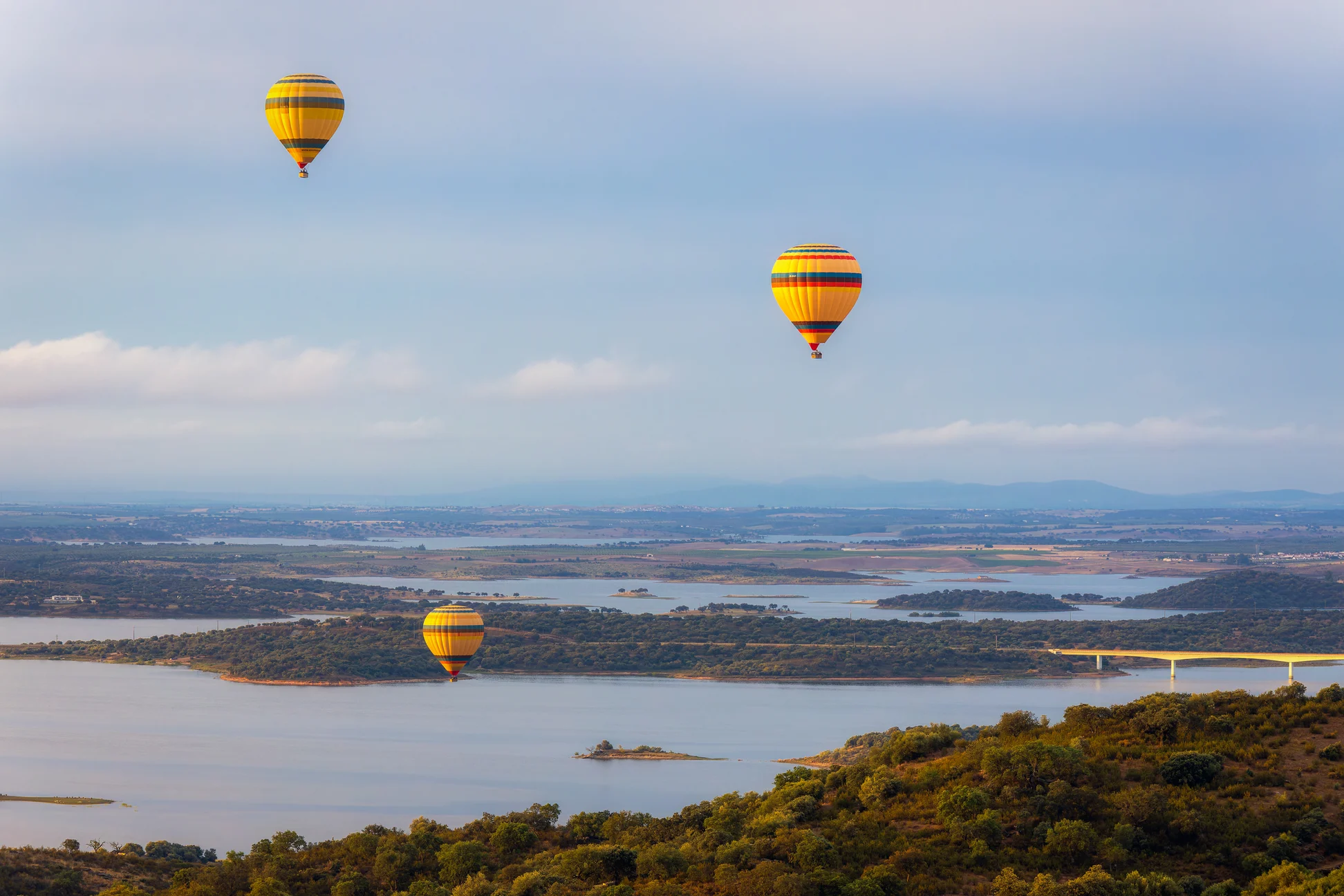
The Alqueva reservoir is the largest artificial lake in Europe, 83 km (52 miles) long and 250 square kilometres in area, and it touches five municipalities: Moura, Portel, Mourão, Reguengos de Monsaraz and Alandroal. More than 200 km (124 miles) of the lake's shores lie within Reguengos de Monsaraz, where boat trips weave among hundreds of islands.
The Praia Fluvial de Monsaraz was the first river beach on the Alqueva reservoir; its bathing season is set each year, between June and September.
For a full day on and around the water, the Full-Day Tour to Moura & Alqueva Dam with Boat Cruise combines a cruise on the reservoir, a jeep ride through the countryside and a visit to the old town of Moura.
Next to the Alqueva dam, the Alqueva Centre explains the project and is open from Tuesday to Sunday. The village of Aldeia da Luz was submerged when the Alqueva dam was built and was rebuilt elsewhere, and the Luz Museum, in Mourão, tells the story of that change. Together they explain how the lake reshaped the landscape you see from the walls of Monsaraz.
The Alqueva lake was the first destination in the world to hold the Starlight Tourism Destination Certification, granted by the Starlight Foundation with the support of UNESCO, the World Tourism Organization and the Instituto de Astrofísica de Canarias. The Dark Sky Alqueva territory takes in parts of Portuguese and Spanish municipalities.
Night-sky activities here include telescope sessions, night walks on foot or on horseback, canoe trips after dark and watching birds and wildlife at night. For the most stars, choose a night close to the new moon, move away from the village lights and give your eyes time to adjust.
The Évora district has around 250 bird species, and more than 100 of them can easily be seen around the Alqueva lake. Bring binoculars, especially in the cooler months.
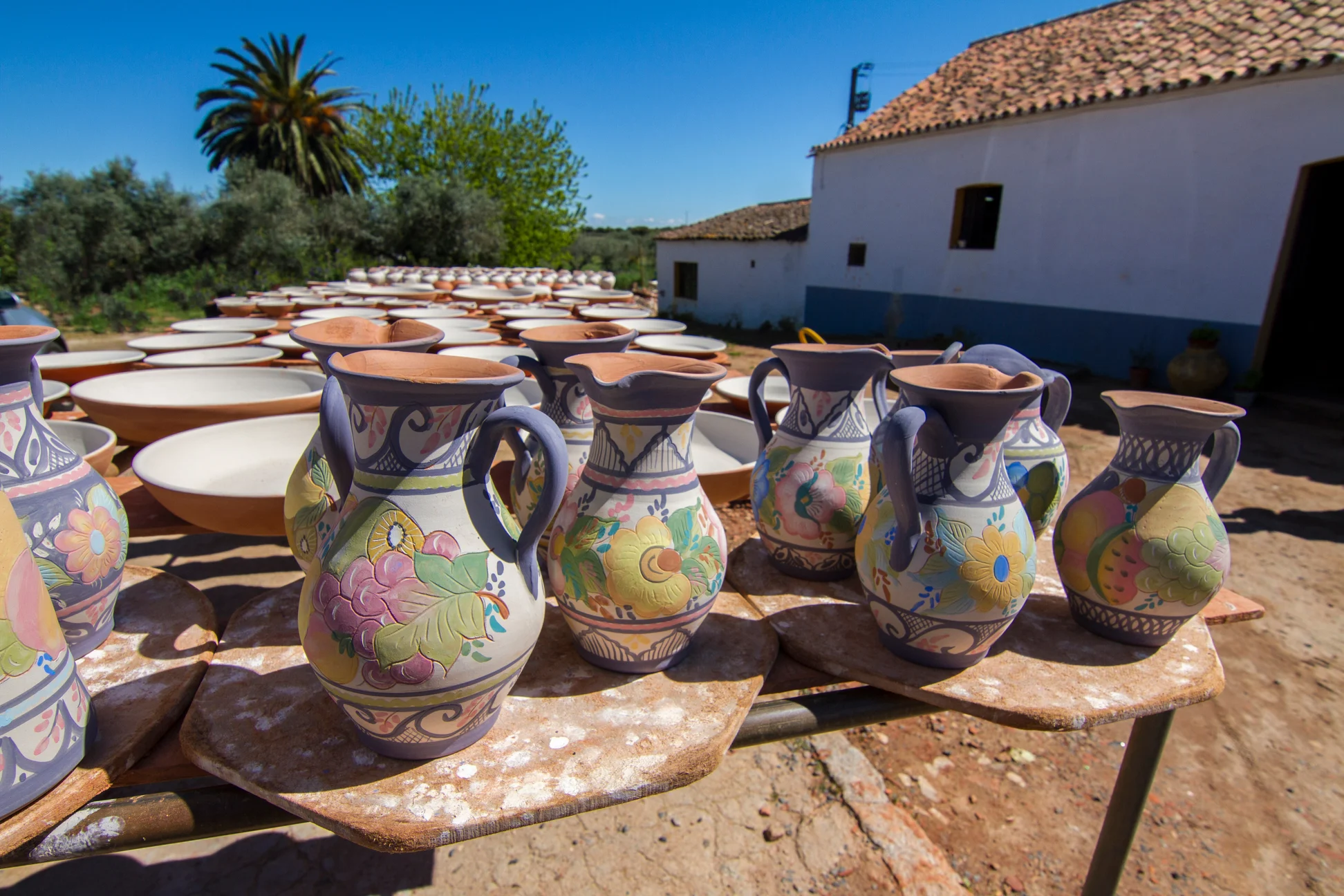
With more than two dozen potteries at work, São Pedro do Corval is the largest pottery centre in Portugal and one of the largest in the Iberian Peninsula. Pottery in São Pedro do Corval goes back to prehistoric times, thanks to the local clay.
The grapes grown around Reguengos include Touriga Nacional, Trincadeira, Aragonez, Antão Vaz and Roupeiro, and you can taste them at the wine estates of the municipality. From Lisbon, the Full-Day Tour of Evora & Monsaraz with Wine Tasting brings together Évora, a wine estate and Monsaraz in a single day.
A car gives you the most freedom here, because the village, the stones, the beach and the dam are spread across the countryside. You can come from Évora for half a day or from Lisbon for a long day, but if you can, sleep in or near the village: sunset over the lake and the night sky are best once the day visitors have gone.
If you would rather not drive and prefer to travel with your own guide, the Private Full-Day Tour to Évora & Monsaraz from Lisbon covers Évora and Monsaraz from Lisbon.
Yes, at the Praia Fluvial de Monsaraz, below the village. The municipality fixes the swimming season every summer, so check the dates before you go.
No. The Museu do Fresco and the Casa da Inquisição are closed on Mondays.
Yes. It was the first place anywhere to receive the Starlight certification for tourism destinations, so the night sky is a good reason to stay overnight.
Yes, on a guided tour from Évora or Lisbon, which also takes care of the trip out to the village. On your own, a car is the simplest way to link the village, the stones and the lake.