Last updated:
Yes, if you plan for the season. Winter means short afternoons, and the official figures for Larissa, a Thessalian city, show cool days and more rain days than in summer. The trade-off is the heat: Larissa's July average high is 33.1 °C (92 °F), while from November to March the same averages sit far lower, as the figures below show. That makes the steps and paths between the monasteries less of an effort than on a summer afternoon.
The rocks and the monasteries do not change with the season. What changes is how you plan the day: earlier starts, a waterproof layer, and a plan B in case a monastery is closed on the day you visit.
The WMO climate service has no page for Meteora itself, so the figures below are averages for Larissa, a city in the same region of Thessaly, from the Hellenic National Meteorological Service. Conditions at Meteora itself may differ.
The mean daily maximum in Larissa is 15.8 °C (60 °F) in November, 11.1 °C (52 °F) in December, 9.8 °C (50 °F) in January, 12.0 °C (54 °F) in February and 14.7 °C (58 °F) in March. The mean daily minimum is 5.8 °C (42 °F) in November, 2.0 °C (36 °F) in December, 0.7 °C (33 °F) in January, 1.3 °C (34 °F) in February and 3.3 °C (38 °F) in March.
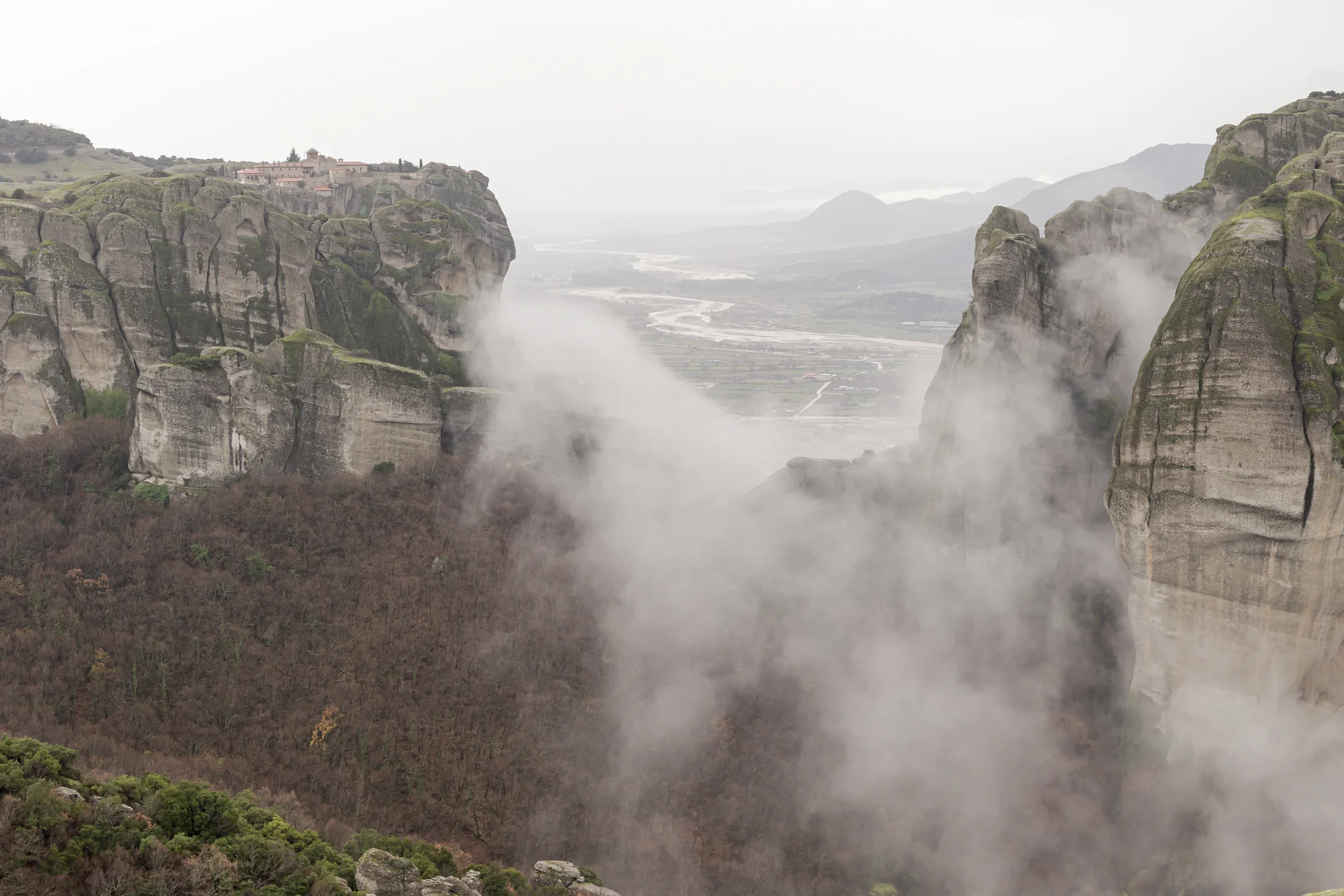
From November to March, Larissa averages between 12.1 and 13.2 rain days a month, against 4.7 in July and 4.3 in August. Pack a warm layer, a waterproof jacket and shoes with grip for wet stone, and keep one free half day in case of a grey morning.
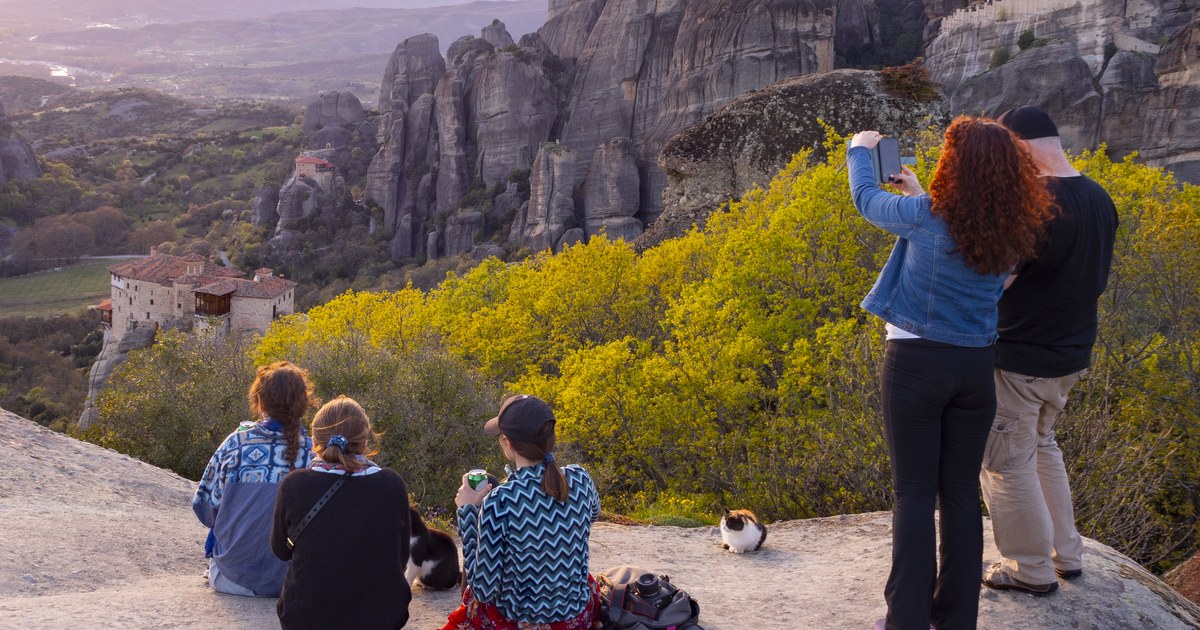
Meteora means "suspended in the air" in Greek. From the 11th century onwards, monks settled on the sandstone peaks that UNESCO calls "heavenly columns", in a region that was almost impossible to reach. By the late 12th century, monks were already living on one of the rock columns, and a small church, the Panaghia Doupiani or Skete, went up at its foot.
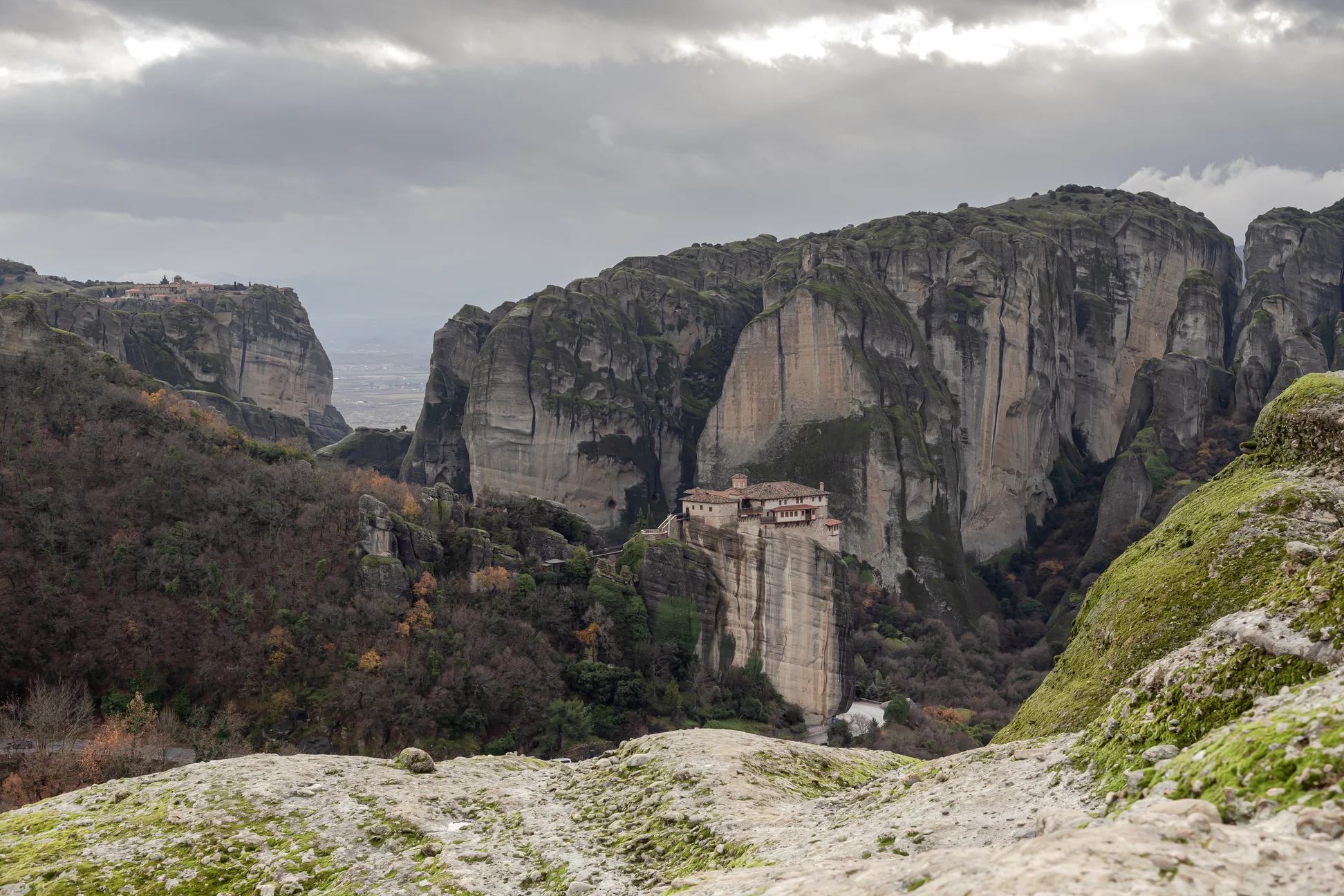
In the unsettled politics of 14th-century Thessaly, monks began building monasteries on the summits themselves; by the late 15th century there were 24. In 1527, Theophanes the Cretan painted inside the Monastery of Saint Nikolas Anapafsas, and UNESCO sees the 16th-century frescoes of the monasteries as an important stage in how post-Byzantine painting developed.
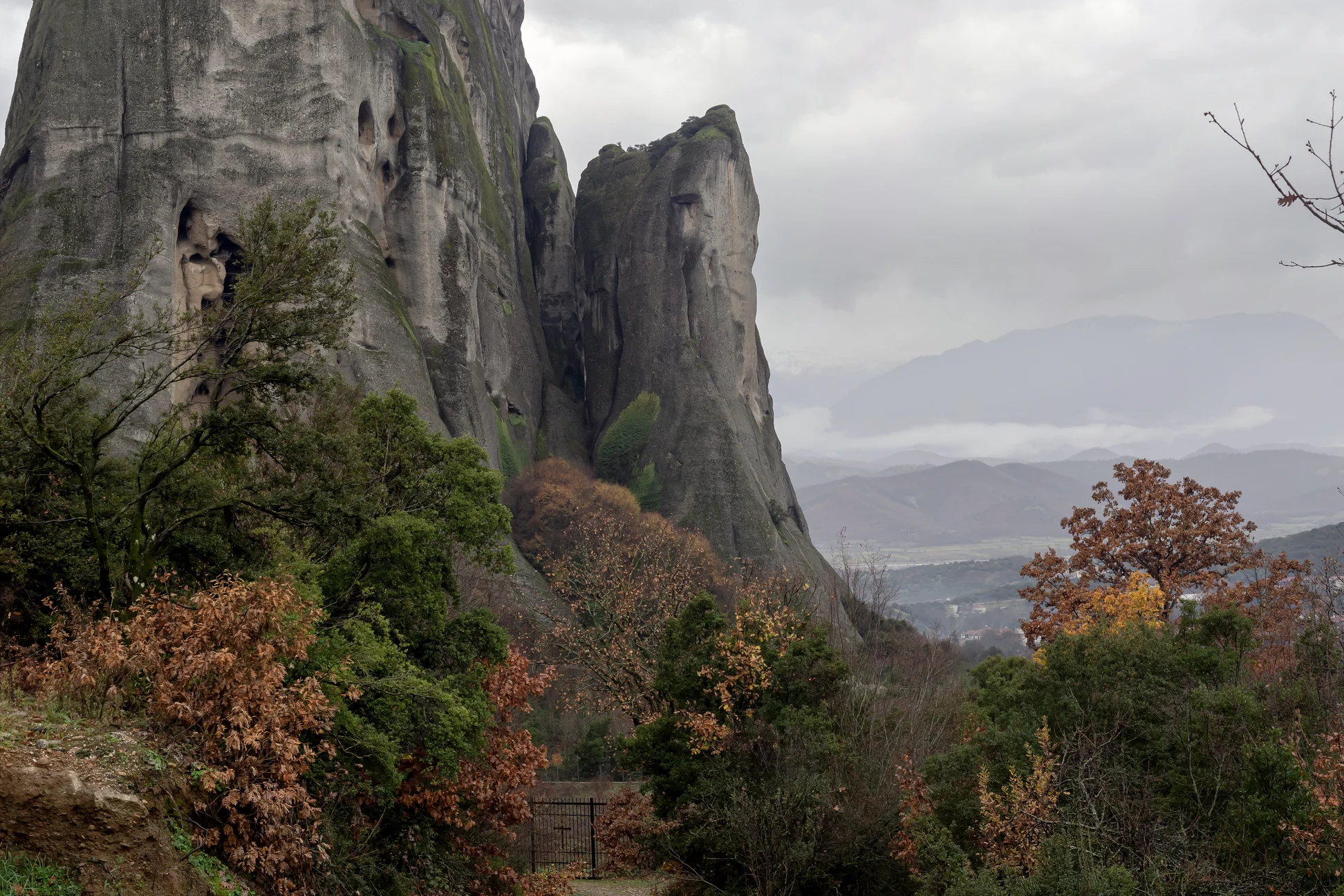
Pilgrims were once hoisted up in a net alongside the 373 m (1,224 ft) cliff where the Varlaam monastery stands above the valley. The sandstone peaks rise over 400 m (1,312 ft) above the ground. They began 60 million years ago as river deposits in a delta, and were later shaped by rain and wind. Meteora was inscribed on the World Heritage List in 1988; the UNESCO World Heritage page for Meteora has the full description.
The Ephorate of Antiquities of Trikala protects and manages the site on behalf of the Ministry of Culture and Sports, and the monastic communities of the six monasteries take part in its management. These are living monasteries, and visits depend on their opening days and hours.
Two of the operators cited below plan around this. The operator of the Meteora Rock Monasteries Private Day Trip from Athens notes that some monasteries close on certain weekdays and that the itinerary is adjusted to match, and the operator of the Private Day Trip to Meteora Monasteries from Thessaloniki says the monasteries visited can change with opening days and seasonal schedules. If you go on your own, check the current opening days and hours of each monastery shortly before your visit.
Several of the operator pages cited here ask for shoulders and knees to be covered, and some add that monasteries may lend wraps at the entrance, though bringing your own is safer. Some of them also say that entrance to each monastery is paid separately at the door.
With short winter afternoons, a day trip leaves little slack. The Meteora Full-Day Private Tour | Suspended Monasteries is a private day from Athens with a driver; its operator lists three of the monasteries and viewpoints over the Thessalian plain. The Meteora Full-Day Private Tour from Athens | Monasteries collects you at your hotel in Athens, and its page lists a stop at Thermopylae on the way and lunch in Kalambaka after the monasteries.
The Full-Day Guided Tour to Meteora and Thermopylae from Athens pairs Varlaam, Rousanou and the Holy Trinity with Thermopylae and, as its operator describes it, ends with a dinner stop; the same page says the host gives context on the way, because local rules limit guided entry inside the monasteries. If you want Delphi on the same day, the Full-Day Tour to Delphi Meteora and Thermopylae from Athens adds it, but with winter daylight that is a very long day.
From northern Greece, the Private Day Trip to Meteora Monasteries from Thessaloniki starts from your accommodation in Thessaloniki; its operator adds the Cave of Theopetra and lunch in Kalambaka.
A night at the foot of the rocks leaves more time for the monasteries. The 2-Days Private Tour: Meteora & Thermopylae from Athens stops at Thermopylae, stays overnight in Kalambaka or Kastraki and, according to its operator, keeps the second morning for the remaining monasteries. The Delphi and Meteora 2-Day Tour: Monasteries and Oracle is a small-group option that starts with Delphi and spends the night in Kalambaka; its page lists Megalo Meteoro and St Stephen's for the next morning.
If you go walking, GOV.UK advises planning your route, checking the weather forecast, wearing footwear for uneven terrain, avoiding hiking alone if you can and telling someone where you are going. It also warns that adverse weather, including floods, can happen quickly, and recommends insurance that covers extra costs such as mountain rescue and helicopter evacuation.
GOV.UK also notes regular strikes in Greece, sometimes called at short notice, that can disrupt buses, trains, ferries and air travel. If you travel to Meteora by public transport, check the day before and keep a spare day.
Read the current GOV.UK travel advice for Greece, or your own government's current advice, before you book. It notes a risk of earthquakes in Greece and advises following the local authorities and calling 112 if you are in immediate danger.
British visitors' passports must have been issued less than 10 years before you arrive and must stay valid for at least 3 months beyond their planned exit from the Schengen area. British visitors can spend up to 90 days within any 180-day period in the Schengen area, which includes Greece, without a visa. The EU's Entry/Exit System is being implemented across the Schengen area, there is no cost for registration, and border checks may take longer than usual.
British visitors need a GHIC or EHIC for medically necessary state healthcare in Greece, and it is not an alternative to travel insurance. The GOV.UK health advice for Greece says to check the latest vaccine recommendations for Greece at least 8 weeks before your trip.
Yes, if you plan for cool, wet days and short afternoons. Check each monastery's opening days and hours shortly before you go, and leave room in your plans.
Official figures exist for Larissa, in the same region, not for Meteora itself. In January, Larissa averages a daily high of 9.8 °C (50 °F) and a low of 0.7 °C (33 °F). Bring warm layers and a waterproof.
Cover your shoulders and knees, as the tour pages above explain. A scarf or wrap of your own saves time at the door.
Yes, the day tours above leave from Athens, but it is a long day. With a night in Kalambaka, you can spread the visits over two days.