Last updated:
Abu Simbel lies in Nubia, near Egypt's southern border, and its Great Temple is among the most awe-inspiring monuments in the country. King Ramesses II of the Nineteenth Dynasty had it cut into the living rock around 1264 BC. Read the monument's own page on the Ministry of Tourism and Antiquities page for Abu Simbel before you go, as the opening hours can change.
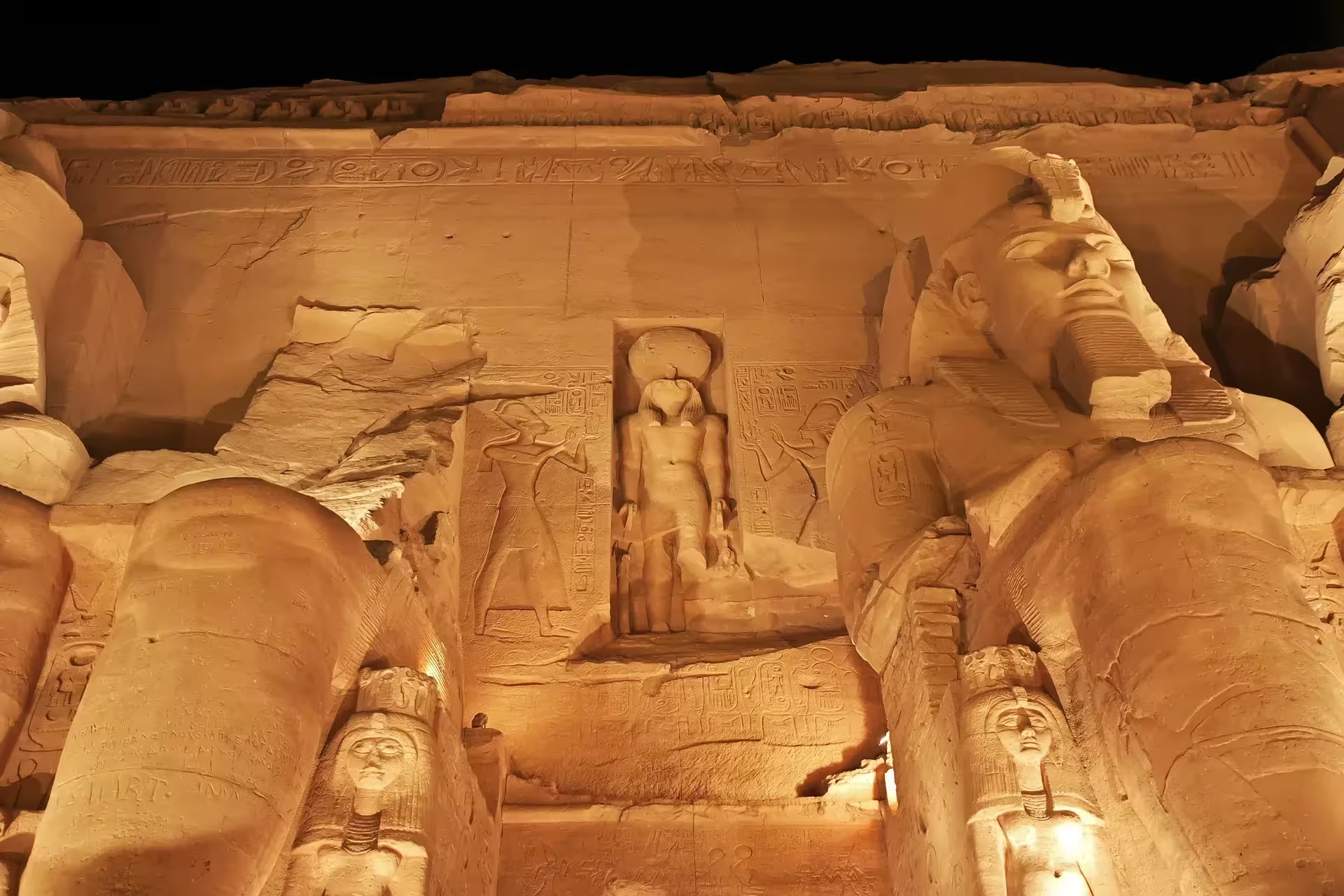
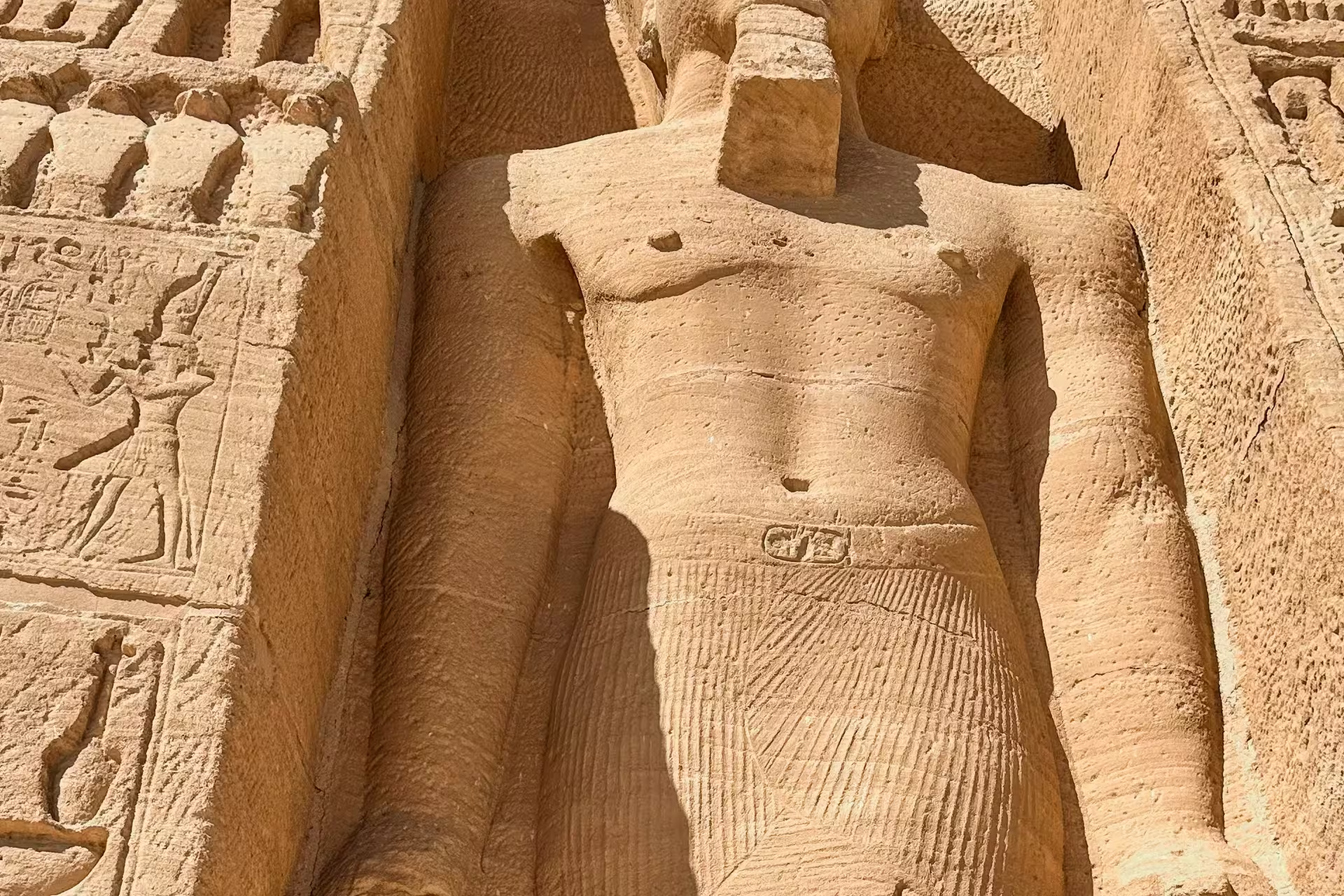
Four imposing seated statues of the king dominate the front of the temple. One of them collapsed in an ancient earthquake, and its fragments still lie on the ground. Inside, the main hall is lined with colossal standing figures of the king and leads to the sanctuary, where four deities sit: Amun Ra, Ra Horakhty, Ptah and Ramesses II himself, deified.
The builders worked with such precision that on two days a year, 22 February and 22 October, sunlight travels through the doorway and down the main hall to reach the statues in the innermost room. If your trip falls in February, ask your operator whether the date suits your plans.
A second rock-cut temple stands to the north. It is dedicated to the goddess Hathor and to Queen Nefertari, the king's Great Royal Wife. On its front her statues are the same size as those of her husband, which is very rare in ancient Egyptian art.
Both temples once stood on a different site. In 1968 they were moved because the Aswan High Dam threatened to submerge them, in an international effort led by UNESCO, and the temple joined UNESCO's list of World Heritage Sites in 1979. UNESCO's page for the Nubian Monuments describes the wider rescue, which also covered the sanctuary of Isis at Philae: an International Campaign launched by UNESCO between 1960 and 1980 saved the monuments from the rising Nile, and the World Heritage property is named Nubian Monuments from Abu Simbel to Philae.
The Ministry lists Abu Simbel as open every day from 6 am (06:00) to 5 pm (17:00). Most visitors come on a long day trip from Aswan, with an early start, and the products below describe how each one runs.
The Full-Day Trip to Abu Simbel Temples from Aswan by Bus is a guided small-group trip by bus, according to its operator, who describes a long journey through the Nubian desert each way. If you want the day to yourself, the Private Day Trip to Abu Simbel from Aswan with Hotel Pickup is private, and its operator says hotel pickup is included from properties on Aswan's East Bank. Either way, plan for a full day and carry water and sun protection.
If you stay overnight nearby, the Light & Sound Show at Abu Simbel Temple lights the temples with sound and colour, according to its operator.
Yes. Day trips leave early from Aswan and are described by their operators as full-day excursions.
Every day, according to the Ministry of Tourism and Antiquities, whose page gives the hours.
King Ramesses II, around 1264 BC, cutting the temple into the living rock.
It honours Hathor and Nefertari, the wife of Ramesses II.