For those seeking to transcend the boundaries of the terrestrial world, scuba diving offers an unparalleled opportunity to enter a silent, weightless realm of wonder. This global activity allows participants to breathe underwater and move in three dimensions, providing a front-row seat to some of the most complex ecosystems on our planet. From the sun-drenched shallows of tropical diving hubs to the mysterious depths of historic shipwrecks, underwater adventures provide a transformative perspective on the natural world. Whether you are looking to learn to scuba dive for the first time or are an experienced explorer seeking deep diving challenges, the variety of experiences ensures that the ocean has something for everyone.
Modern scuba diving trips are designed to be accessible and safe, utilizing highly regulated training standards and advanced technology. Many travelers start their journey with scuba diving for beginners, often beginning in a controlled environment before progressing to their first open water diver course. For those who already hold a PADI certification, the world’s oceans become a vast playground of dive sites ranging from vibrant coral reef diving to exhilarating drift diving along ocean currents. By choosing professional guided scuba dives, you can focus on the beauty of the environment while experts handle the navigation and safety logistics.
The history of diving is a testament to human curiosity and engineering. While ancient cultures practiced breath-hold diving for pearls and sponges for thousands of years, the ability to stay underwater for extended periods is a relatively modern achievement. The early nineteenth century saw the development of "heavy-foot" diving helmets, which were supplied with air from the surface via long hoses. However, the true revolution occurred in 1943 when Jacques Cousteau and Émile Gagnan co-invented the Aqua-Lung. This self-contained underwater breathing apparatus gave birth to modern scuba, allowing divers to move freely without being tethered to the surface.
Following this breakthrough, scuba diving evolved from a niche military and scientific tool into a premier global tourism industry. The establishment of standardized training organizations made scuba diving lessons safe and consistent worldwide. Over the decades, equipment has become lighter, more reliable, and more intuitive, allowing for specialized pursuits such as underwater photography and night diving. Today, the industry has a strong focus on sustainable diving and eco diving, emphasizing the protection of the very environments that divers come to admire. This evolution ensures that scuba diving tours remain a source of inspiration and conservation for generations to come.
Best scuba diving destinations are typically located in regions with clear water and high biodiversity, such as tropical volcanic islands, barrier reefs, and coastal marine parks. Most dive resorts and shops are situated near established harbors or beachfronts, providing easy access to the most popular dive sites.
Planning a dive vacation involves choosing between various dive packages. These can range from single-day scuba diving tours to week-long liveaboard diving expeditions where you live on a boat to reach remote locations. Seasonal factors, such as water temperature and migratory patterns of marine life, are crucial for determining the best time to visit.
The diving community is increasingly inclusive. Many dive resorts offer "Adaptive Scuba" programs for individuals with physical disabilities. While scuba diving lessons require a basic medical clearance, the weightless environment of the water can be incredibly liberating for those with limited mobility on land.
Our primary focus is on dive safety and environmental stewardship. We prioritize operators who emphasize proper buoyancy control to prevent reef damage and those who offer high-quality dive equipment rental. We also recommend looking for programs that integrate snorkeling and scuba to cater to groups with mixed experience levels.
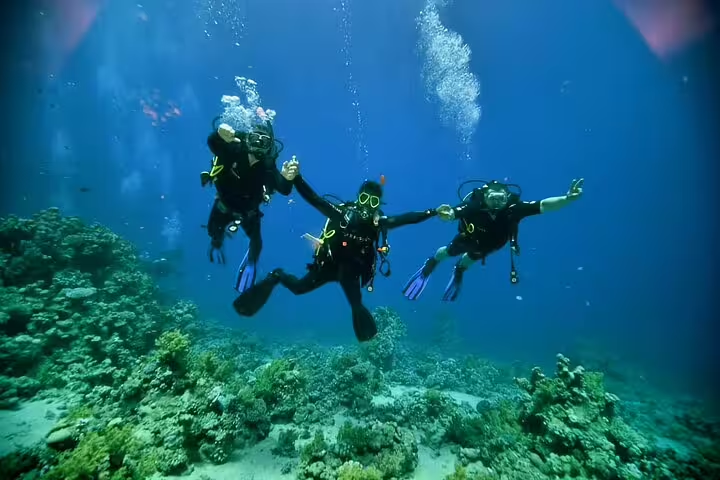
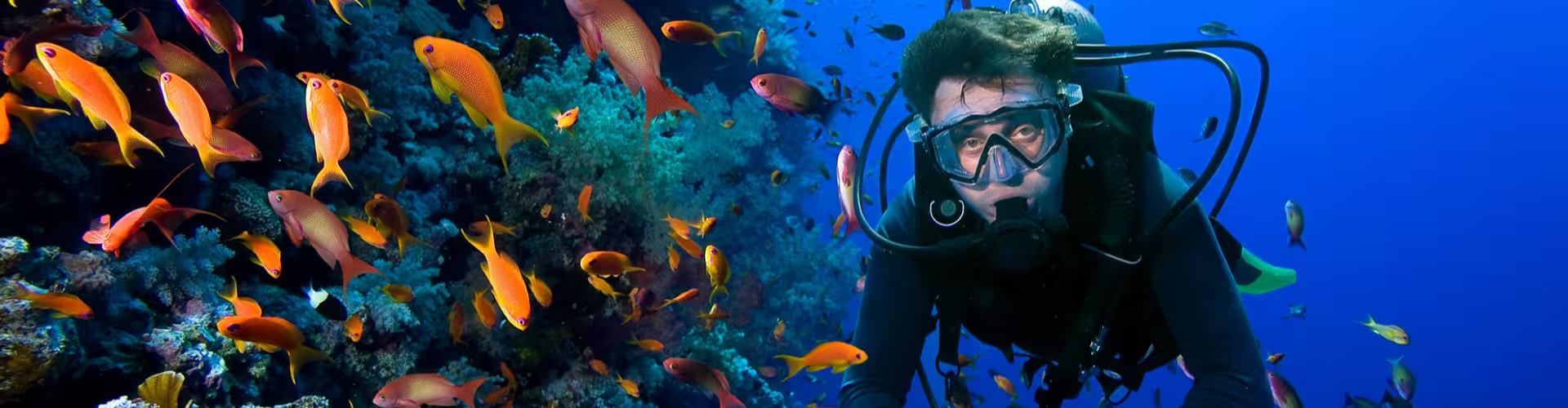
🐠 Coral Reef Diving: Immerse yourself in the most biodiverse environments on Earth, surrounded by vibrant fish and intricate coral structures.
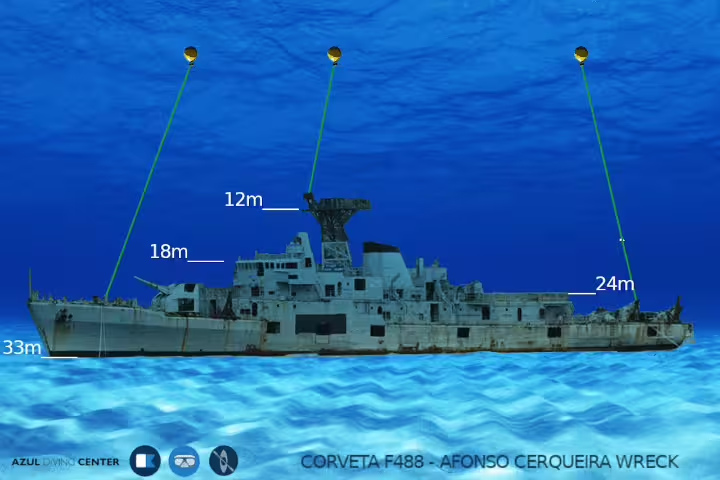
🚢 Wreck Diving: Explore the haunting beauty of sunken ships and aircraft that have become thriving artificial reefs over time.
🌌 Night Diving: Witness the ocean transform after dark as nocturnal creatures emerge and corals extend their tentacles to feed.
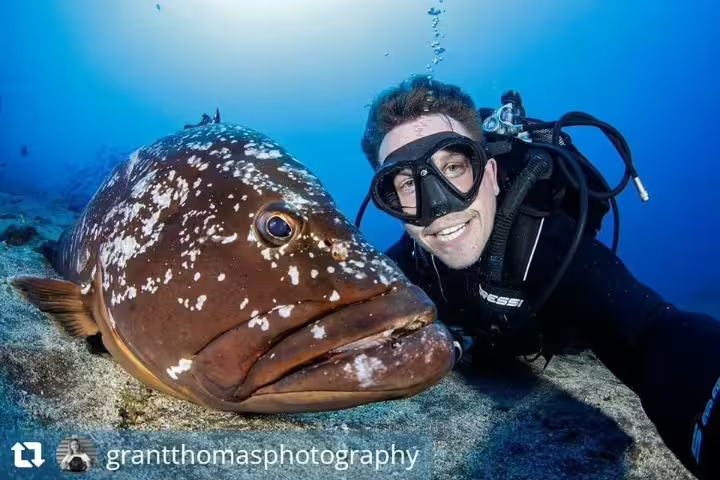
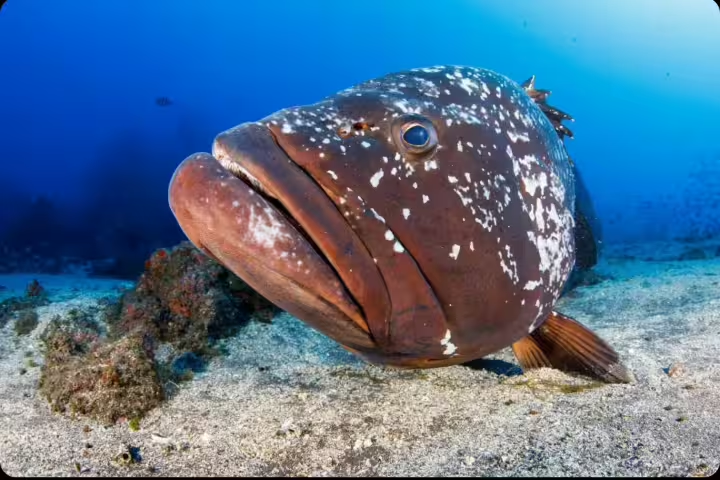
🐋 Marine Life Encounters: Experience the awe of swimming alongside manta rays, sea turtles, or whale sharks in their natural habitat.
🛥️ Liveaboard Diving: Maximize your bottom time by staying on a specialized vessel that travels to the world’s most pristine and remote reefs.
🎓 PADI Certification: Gain a globally recognized credential that opens the door to underwater adventures in every corner of the globe.
📸 Underwater Photography: Learn the specialized skills required to capture the stunning colors and unique lighting of the subterranean world.
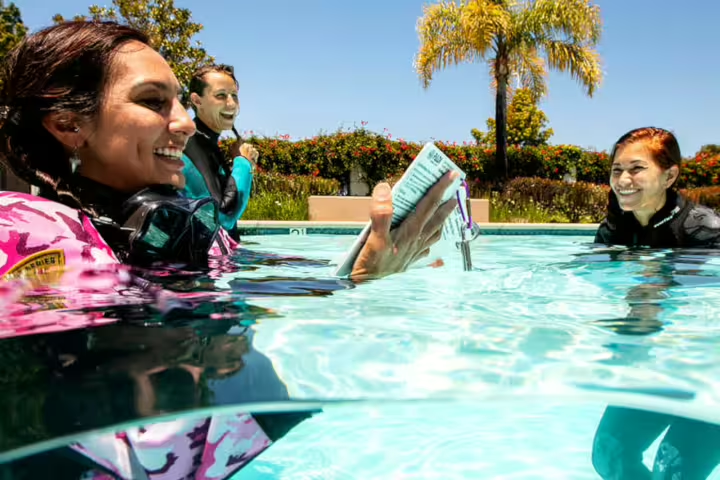
The journey into the deep begins long before you hit the water. Upon arriving at a dive center for your scuba diving trips, the atmosphere is one of professional preparation. You will begin by selecting your dive equipment rental, ensuring that your mask, fins, and exposure suit fit perfectly. If you are there to learn to scuba dive, your day will start with a theory session and a skills briefing where you learn the essentials of dive safety and hand signals for communication.
Once on the boat, the excitement builds as you head out to the designated dive sites. The transition from the air to the water is a sensory shift; as you descend, the sounds of the surface fade, replaced by the rhythmic sound of your own breathing. The experience of buoyancy control makes you feel weightless, allowing you to glide effortlessly over the terrain. On guided scuba dives, your instructor will point out hidden creatures like octopuses or camouflaged frogfish that you might otherwise miss.
The interval between dives, known as the surface interval, is a time for relaxation and sharing stories with fellow divers. Whether you are on a liveaboard diving deck or a tropical beach, this social aspect is a key part of the dive vacation. The final ascent at the end of the day leaves you with a profound sense of accomplishment and a quiet calm that only the ocean can provide.
To ensure a successful scuba diving experience, always prioritize your ears by equalizing early and often during your descent. If you are prone to seasickness, take preventative measures before boarding the boat for your scuba diving tours, as even calm waters can be challenging for some. For those interested in underwater photography, remember that red light is the first to disappear as you go deeper; using an external flash or a red filter will help bring back the true colors of the reef.
When planning your scuba diving lessons, try to complete the "e-learning" portion of your open water diver course before you arrive at your destination. This saves valuable vacation time, allowing you to spend more hours in the water and less time in a classroom. Finally, always practice sustainable diving by never touching the coral or marine life. Even a small brush can damage the delicate protective layer of a coral polyp.
Most major diving hubs are located in vibrant coastal communities.
Marine Conservation Centers: Many dive resorts are near research stations where you can learn about local eco diving initiatives.
Waterfront Cafes: The perfect place to log your dives and enjoy a meal while looking out over the water.
Equipment Specialists: Nearby shops often sell professional-grade gear for those looking to move beyond dive equipment rental.
Beaches: Excellent for snorkeling and scuba practice in the shallows before heading out on a boat.
This guide to scuba diving provides a global overview of the skills, equipment, and experiences available to underwater explorers. This content was curated by Toursxplorer.com to help you plan a safe and unforgettable dive vacation.
Do I need to be a strong swimmer to learn to scuba dive? While you do not need to be an Olympic athlete, you should be comfortable in the water. Most scuba diving for beginners programs require a basic swimming test to ensure you can maintain yourself at the surface and swim a short distance comfortably.
How long does it take to get a PADI certification? A standard open water diver course typically takes between three and four days. This includes several scuba diving lessons in a pool or shallow water followed by four open water check-out dives.
What is the difference between a dive resort and liveaboard diving? A dive resort is a land-based hotel that offers daily boat trips to nearby reefs. Liveaboard diving involves staying on a boat for several days, which allows you to reach more distant dive sites and perform more dives per day.
Is scuba diving safe? Modern dive safety standards are extremely high. By following your training, staying within your limits, and participating in guided scuba dives, the risks are very low. Professional operators always prioritize the well-being of their guests.
Can I dive if I wear glasses or contact lenses? Yes, you can wear contact lenses under your mask, or you can use a prescription mask. Many shops offering dive equipment rental have masks with various magnifying strengths available for guests.