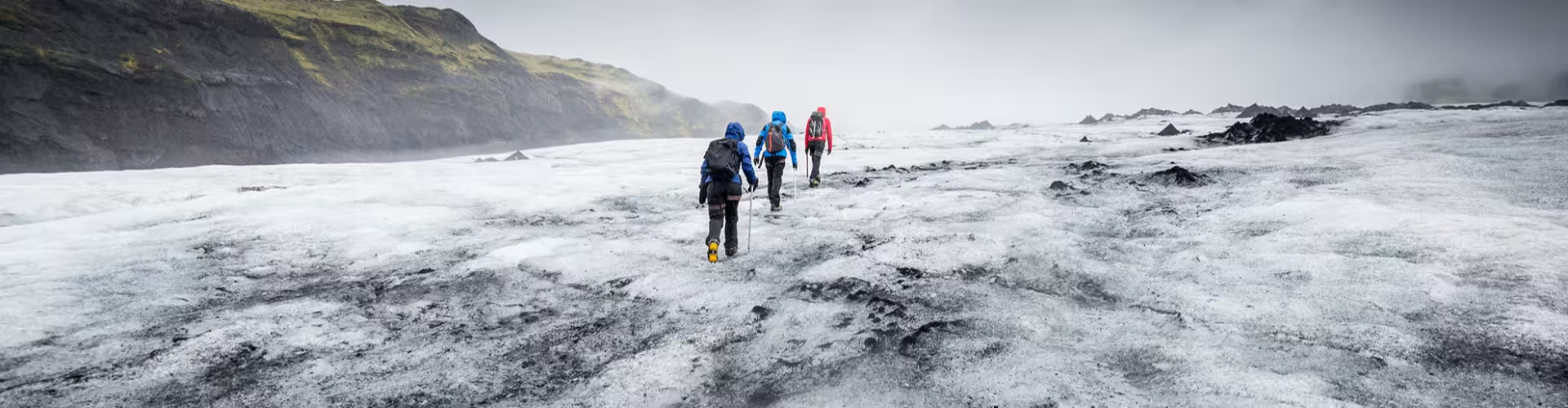
Stepping onto a living river of ice is a rare privilege. A carefully guided Glacier Hiking experience lets you walk across millennia of compressed snow, hear the soft crackle underfoot, and read the frozen landscape like a story. Whether you choose the volcanic contrasts of Iceland, the sky-piercing Alps, the wild frontiers of Alaska, or the dramatic walls of Patagonia, the journey blends quiet awe with hands-on learning. With professional guides, proper safety equipment, and thoughtful interpretation of the terrain, glacier travel becomes both accessible and unforgettable.
The main attraction is the glacier, a slow, powerful body that shapes valleys and carves stone. On a guided tour, you will practice footwork with crampons, learn how to carry an ice axe properly, and step around wind-sculpted seracs. Guides explain how seasonal snow compacts into blue ice, why surface textures change with sun and cloud, and how crevasse patterns reveal the glacier’s motion. Every ripple and ridge has meaning; a wave in the ice may point to buried rock, a polished channel speaks of last season’s melt.
In the colder months, translucent ice caves and vertical shafts called moulins open windows into the glacier’s interior. Inside, ceilings glow in shades of sapphire, while veins of ash or sediment trace ancient eruptions or storms. With a certified guide, small groups can enter select formations that are stable and safe. Photography is a joy; long exposures render glassy walls like cathedral arches. These features change from year to year, so no two seasons of Glacier Hiking are ever the same.
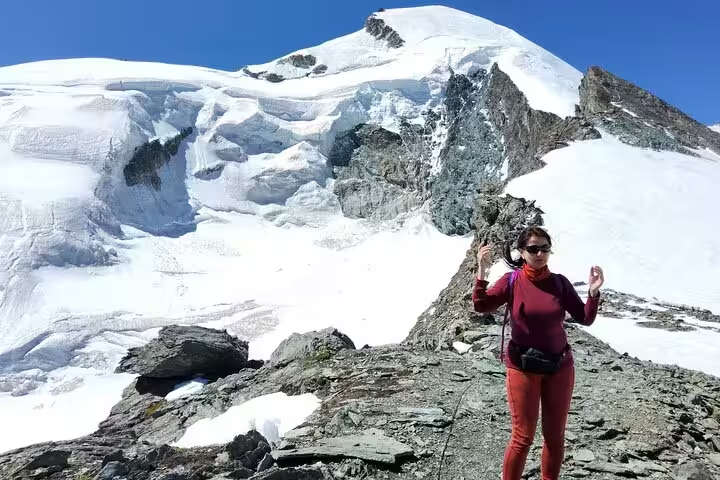
Not all highlights lie on the ice. Moraines of rock and gravel, carried by the glacier, form natural viewpoints and pathways. From these ridges, you can frame the sweep of the glacier against black volcanic sands in Iceland, jagged granite spires in Patagonia, evergreen forests in Alaska, or limestone peaks in the Alps. The combination of sky, stone, and ice invites unhurried contemplation and some of the most memorable photos of any mountain journey.
Where ice meets water, you may find a glacier lagoon dotted with floating bergs. Short boat tours, often by small craft, get you close to sculpted ice forms and resting seals. The palette shifts from deep blue to milky turquoise as sunlight filters through compressed ice.
In certain regions, heli-access unlocks remote zones, allowing fit travelers to step onto higher plateaus for longer traverses. These outings remain strictly guided, with clear protocols for weather, visibility, and energy management.
After time on the ice, warm up in geothermal pools where available, or enjoy a hearty meal in a nearby mountain town. The contrast of chill air and hot water feels like a reward in itself.
Your day begins with a briefing on safety, layering, and pacing. Operators provide or fit-test key items: crampons, ice axe, helmet, and harness if roped travel is planned. Waterproof pants and sturdy boots help you stay warm and confident on variable surfaces.
Before stepping onto the glacier, you will practice flat-footing and front-pointing, learn how to walk in a line, and review signals used in windy conditions. Good technique conserves energy and keeps groups flowing smoothly over the terrain.
Guides translate every feature into insight. You will hear about accumulation and ablation zones, seasonal meltwater, and the history written within the ice layers. Responsible operators include sustainability briefings, discussing how to visit lightly and respect sensitive areas.
Glaciers are dynamic environments. Visiting with respect means following guide instructions, staying on designated paths, and leaving no trace. A focus on sustainability strengthens communities around glacier regions, supports conservation efforts, and helps ensure future travelers can enjoy the same crystalline beauty. Small group sizes, efficient transport, and thoughtful equipment choices all reduce impact.
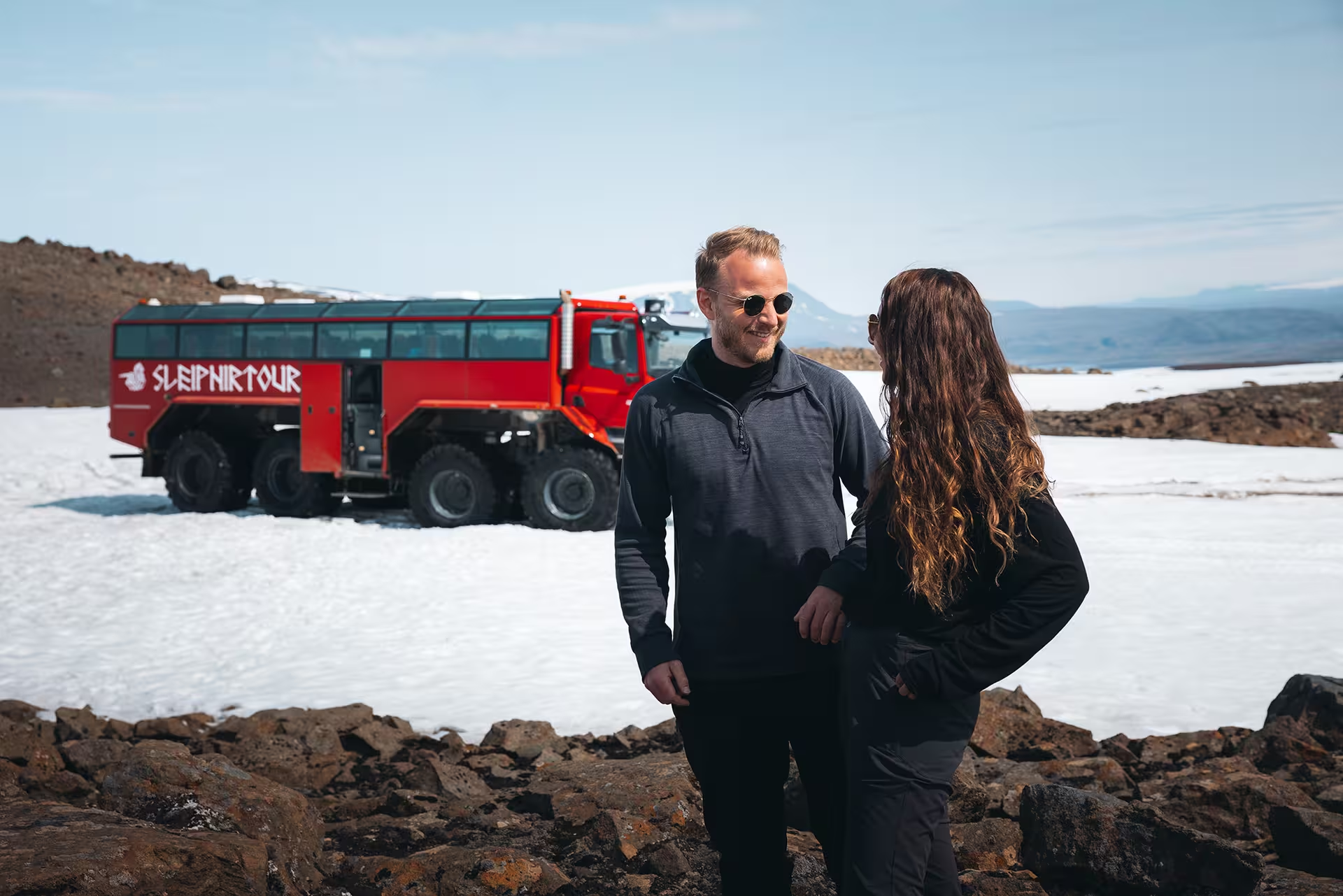
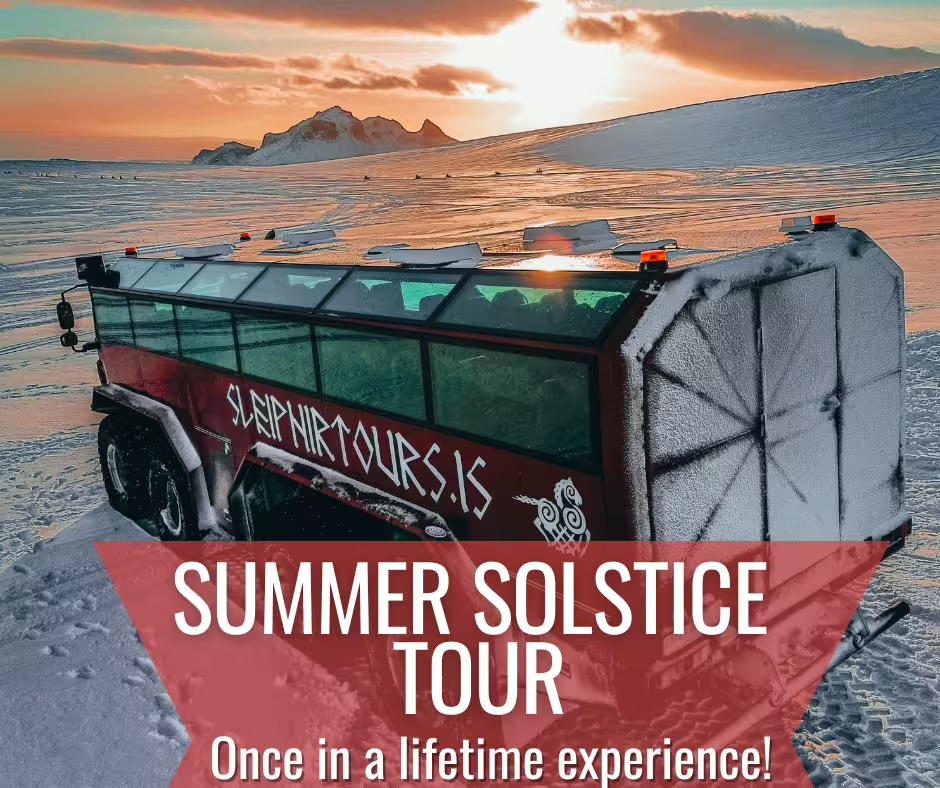
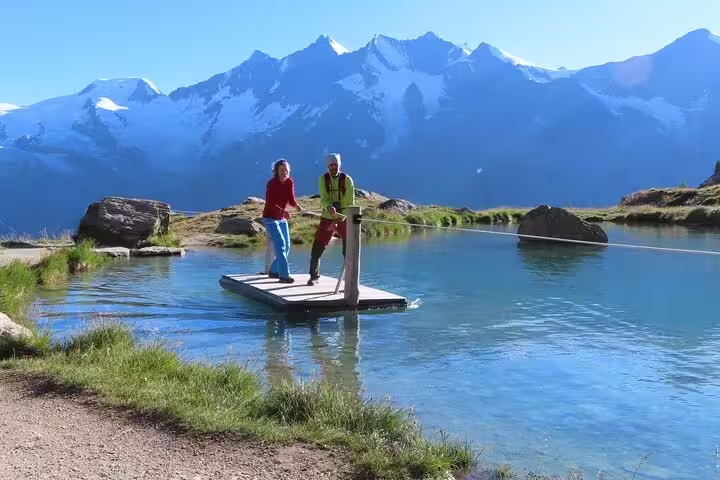
Glacier Hiking has a singular emotional pull. The deep blue of the ice, the hush of high mountain air, and the rhythm of careful steps combine to reset your sense of time. In Iceland, a walk might link ice and lava in one frame. In the Alps, it can feel like joining a grand European mountaineering tradition, minus the technical extremes. In Alaska, the scale of wilderness stirs something primal. In Patagonia, knife-edged peaks give each step cinematic drama. Wherever you choose, the journey is not only scenic, it is instructive, grounding, and quietly thrilling.
First-timers, families with adventurous teens, photographers, and fit walkers all find a place on the ice. Introductory routes emphasize safety, education, and steady pacing, while full-day itineraries reward stamina with expansive views and complex features. If you enjoy mindful movement, learning as you go, and landscapes that change with every cloud, this experience fits beautifully.
Bring a compact camera or smartphone with a wrist strap, spare battery or power bank, and a microfiber cloth to clear mist. Wide lenses capture sweeping fields of ice, while macro shots reveal frosty patterns and trapped air bubbles. Polarized sunglasses help you read textures and avoid glare; they also protect your eyes on bright days.
If the idea of walking atop ancient ice makes your heart quicken, consider a Glacier Hiking day that balances guidance, learning, and quiet wonder. From selecting the right route to fitting gear and timing your visit for the best conditions, Toursxplorer.com can connect you with curated experiences that place safety and storytelling first. You bring the curiosity, the glacier supplies the grandeur.