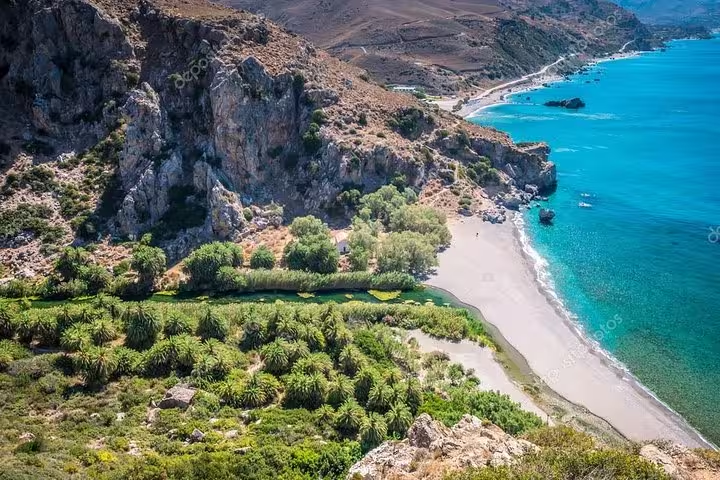
Preveli Beach is a stunning Mediterranean destination located on the south coast of Crete, Greece. This dramatic sandy beach is framed by towering cliffs and fed by the Megapotamos River, creating a rare freshwater lagoon that flows into the Libyan Sea. The pristine setting combines golden sand, crystal-clear turquoise waters, and lush vegetation that extends down from the surrounding mountains.
What to see in Preveli Beach
The main attraction is the distinctive river mouth where freshwater meets saltwater, creating a unique ecosystem. Visitors should explore the palm trees and vegetation surrounding the lagoon, and the historic Preveli Monastery sits on the cliffs above the beach, offering cultural significance and panoramic views of the coastline.
Things to do in Preveli Beach
Swimming and sunbathing in the calm lagoon waters are popular activities, while hiking trails connect the beach to nearby villages. Boat tours from surrounding coastal towns provide access to the beach, and visitors often combine their visit with exploration of other south coast beaches and traditional Cretan villages.
Natural Wonders and River Ecosystems
Preveli Beach is remarkable for its rare combination of river and sea environments. The Megapotamos River creates a freshwater oasis amid the arid Cretan landscape, supporting unique flora and providing a distinctive natural feature that distinguishes this beach from typical Mediterranean destinations.
Preveli Beach is located on the southern coast of Crete, Greece, approximately 40 kilometers east of Rethymno. The beach sits at the mouth of the Megapotamos River valley, which descends from the Rethymno mountains. The nearby Preveli Monastery (Moni Preveli), built in the 16th century, overlooks the beach from the cliffs above and serves as a significant cultural and historical landmark for the region. The area is accessible via the village of Sellia and the town of Platanias, with the larger Cretan cities of Rethymno and Chania providing main access points and tourist facilities.
Preveli Beach is featured in travel guides for Mediterranean destinations, known for combining natural beach experiences with cultural heritage. The river-fed lagoon creates a microclimate supporting palm vegetation unusual for southern Crete, making it a distinctive natural phenomenon on the island's coastline.