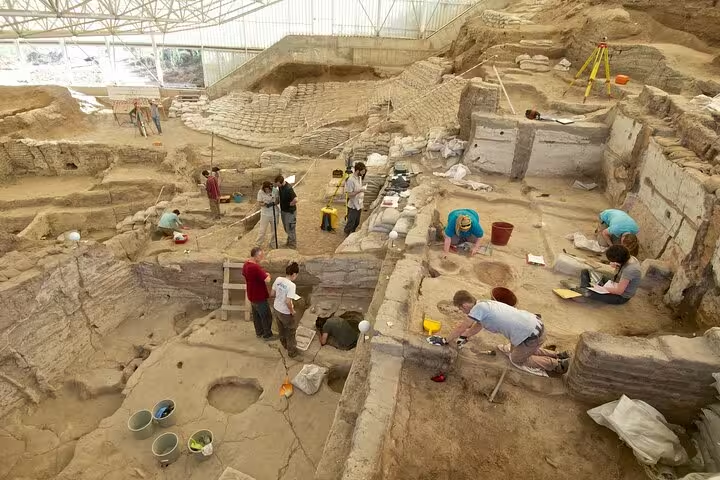
Catalhoyuk in central Türkiye stands as one of the world's oldest urban settlements, dating back to 7500 BCE. This UNESCO World Heritage Site reveals the fascinating story of early human civilization, showcasing the remains of a densely populated Neolithic town that challenges conventional understanding of ancient communities.
What to see in Catalhoyuk
Visitors can explore the excavated dwellings and interconnected houses that once formed this remarkable settlement. The on-site museum displays artifacts including tools, pottery, and figurines that illuminate daily life in this ancient community. The preservation of mud-brick structures offers insight into architectural practices of the Neolithic period.
Things to do in Catalhoyuk
Guided archaeological tours provide comprehensive explanations of the site's historical significance and ongoing research. The visitor center offers interactive exhibits that help contextualize the discoveries. Walking through the excavated areas allows travelers to experience the layout and scale of this pioneering urban center firsthand.
Archaeological Significance and Research
Catalhoyuk represents a pivotal moment in human prehistory, demonstrating early urbanization and sophisticated social organization. The site continues to be actively studied by international research teams, with regular excavations revealing new insights into Neolithic society, trade networks, and cultural practices that shaped early civilizations.
Catalhoyuk is located in the Konya Province of central Anatolia, Türkiye, approximately 50 kilometers south of the city of Konya. The archaeological site sits on the Çarsamba River plain in the fertile central plateau region. The nearest major airport is Konya's Konya Meram Airport, making it accessible for domestic and international travelers exploring Turkey's archaeological heritage.
Archaeology, UNESCO World Heritage Sites, Prehistoric History, Cultural Tourism, Ancient Civilizations, Türkiye, Neolithic Period