Strasbourg, in Alsace, rewards anyone who takes it slowly. A Romanesque and Gothic cathedral rises above timber-framed houses, pieces of the old defences still stand along the Ill, a whole new quarter was planned to the north-east after 1871, and the city is home to both the Council of Europe and the European Parliament. This page takes each of these in turn and ends with the tours that start or stop here.
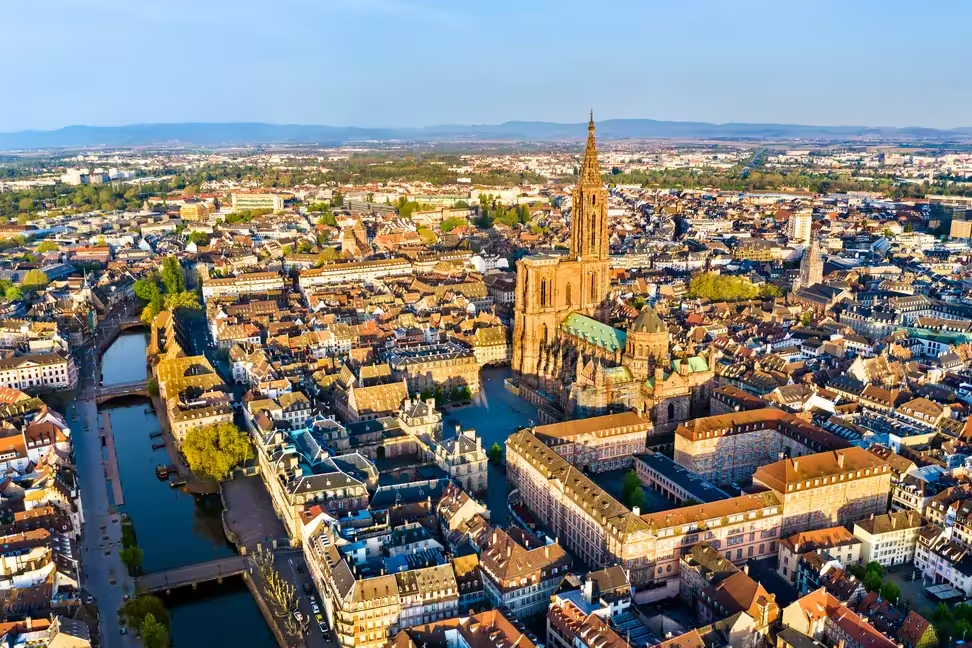
Under the name Strasbourg, Grande Île and Neustadt, the city appears among the French properties on the World Heritage List, which brings together its historic island and the later quarter of the Neustadt. Its great landmark is the cathedral, counted among the major buildings of Romanesque and Gothic art. Most of the work went on between the 11th and the 14th centuries, and its stained glass, one of the building's particular treasures, goes back as far as the 13th century. The cathedral was protected as a historic monument on the list of 1862. It was damaged in wartime and is still restored at regular intervals.
The Maison Kammerzell took shape in two main building phases, in 1467 and in 1589. On the cathedral square itself, a group of timber-framed houses dates back to 1467-1469, and the pharmacy in their corner shop carries on a use of the premises that began in 1268. The Palais des Rohan, raised in building campaigns of 1731 and 1742 under the direction of Robert de Cotte, is now home to the Archaeological Museum and to the museums of Fine Arts and Decorative Arts.
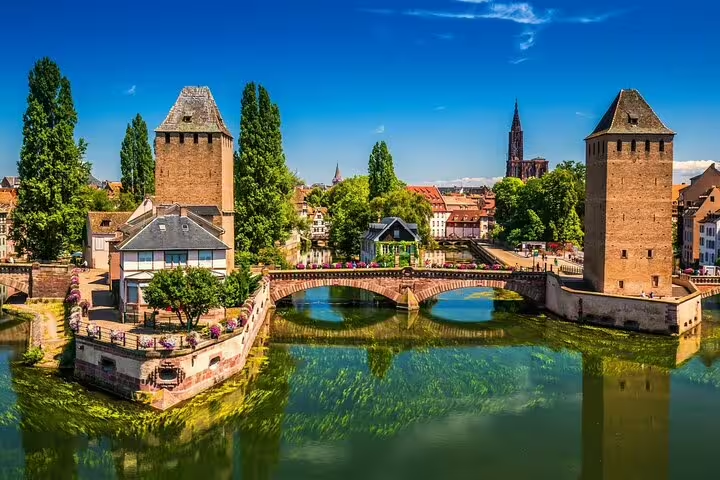
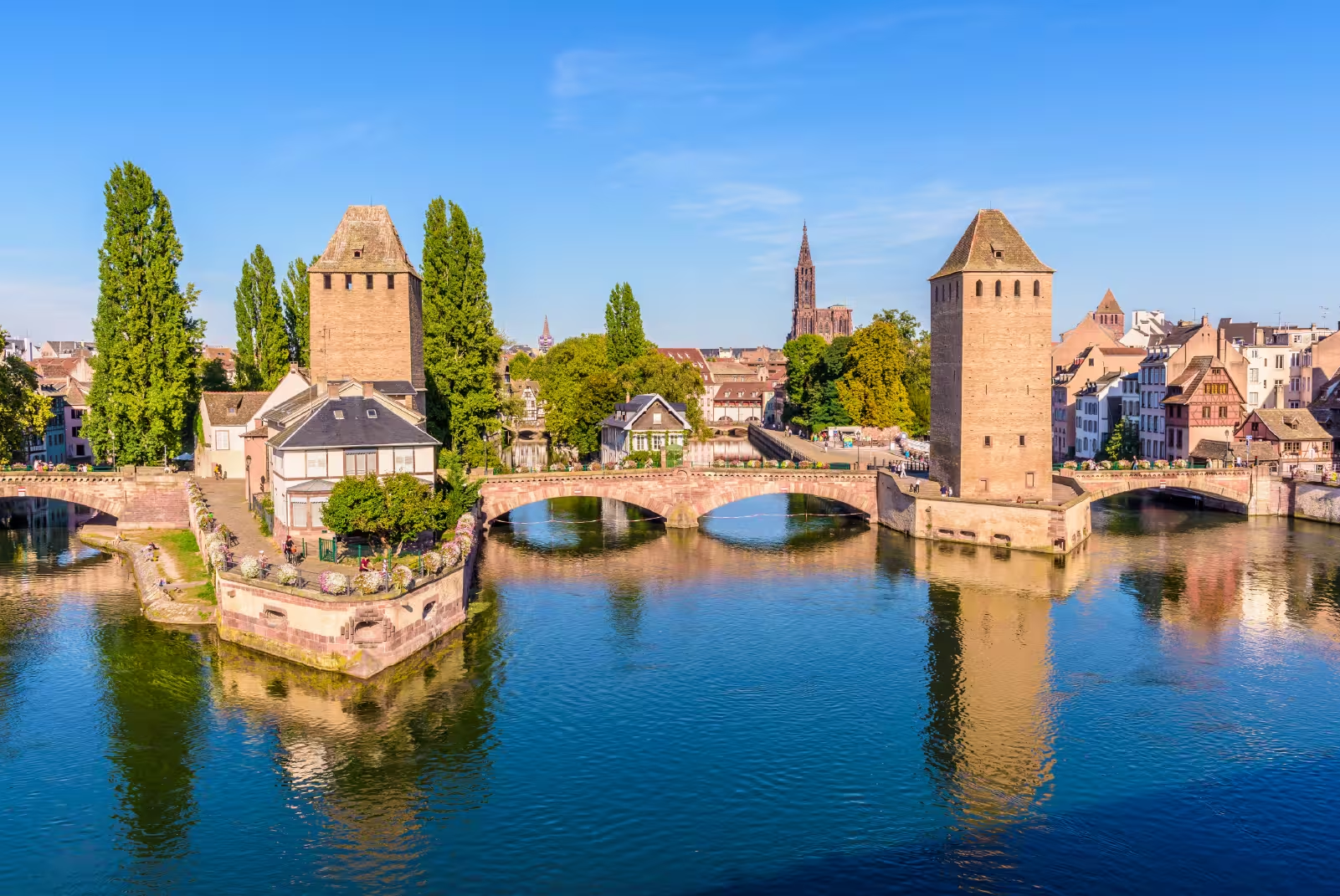
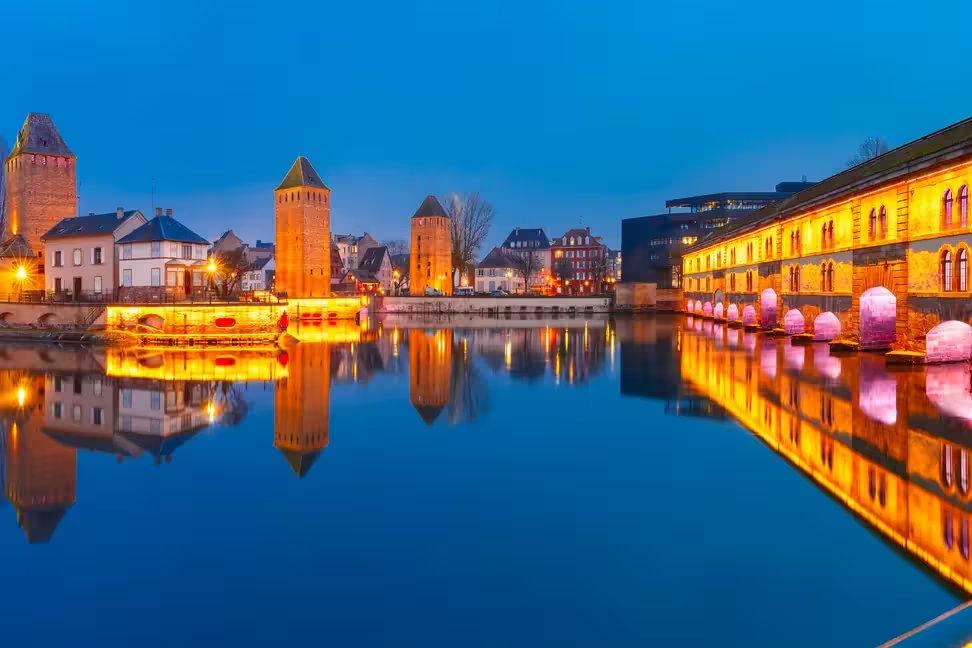
Two parts of the old defences stand side by side. Near the Ponts Couverts, four towers and their batteries survive from building phases in the 13th, 14th and 16th centuries, and they have been protected as a historic monument since 1928. A fortified wall joins them to the Vauban Dam, a great fortification lock of the 17th century whose fortified water gates were built to control the flow of the Ill and the Bruche.
After 1871 Strasbourg was given an ambitious town plan: a vast administrative and residential quarter laid out north-east of the old town. Its showpiece is the former imperial palace, which took the name Palais du Rhin in 1920. Hermann Eggert designed it, and it went up between 1884 and 1888 in the eclectic manner then in favour for official architecture in Germany and Austria-Hungary; after the bombing of 1944 it was rebuilt exactly as it had been. The Palais Universitaire started life as the Kaiser Wilhelms Universität, and its history also takes in the founding of the Council of Europe in 1949.
The Orangerie park was begun by Baron Jean-Frédéric de Turckheim in 1830-1835, carried on by Georges-Frédéric Schutzenberger and remodelled in 1895. In 1976 the Council of Europe's buildings by Henry Bernard went up there. Strasbourg is also the official seat of the European Parliament, the largest transnational parliament anywhere and the only EU body chosen by direct vote, and its members gather in the city twelve times a year for their plenary sessions.
The Parliament opens its doors to visitors six days a week throughout the year, and entry costs nothing; bring a valid physical identity document, either a national ID card or a passport. Inside you can see the Hemicycle, the Parlamentarium Simone Veil and a few exhibitions, with a multimedia guide that covers all 24 official EU languages. The Parlamentarium honours Simone Veil, who became president once European elections had begun, the first to do so and the first woman ever in the post, serving from 1979 to 1982.
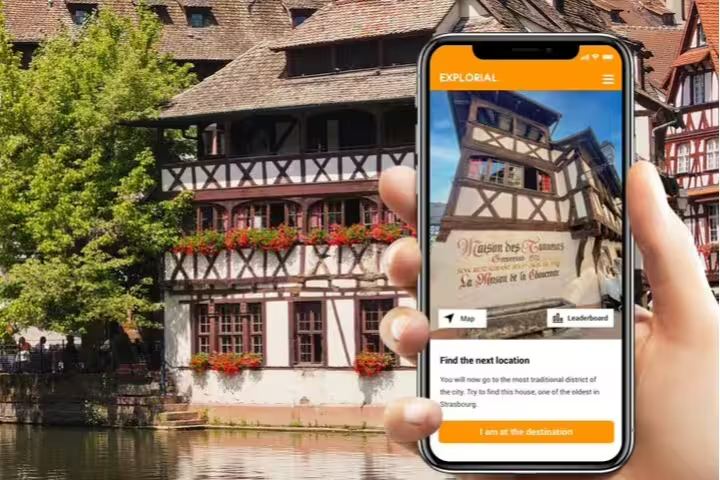
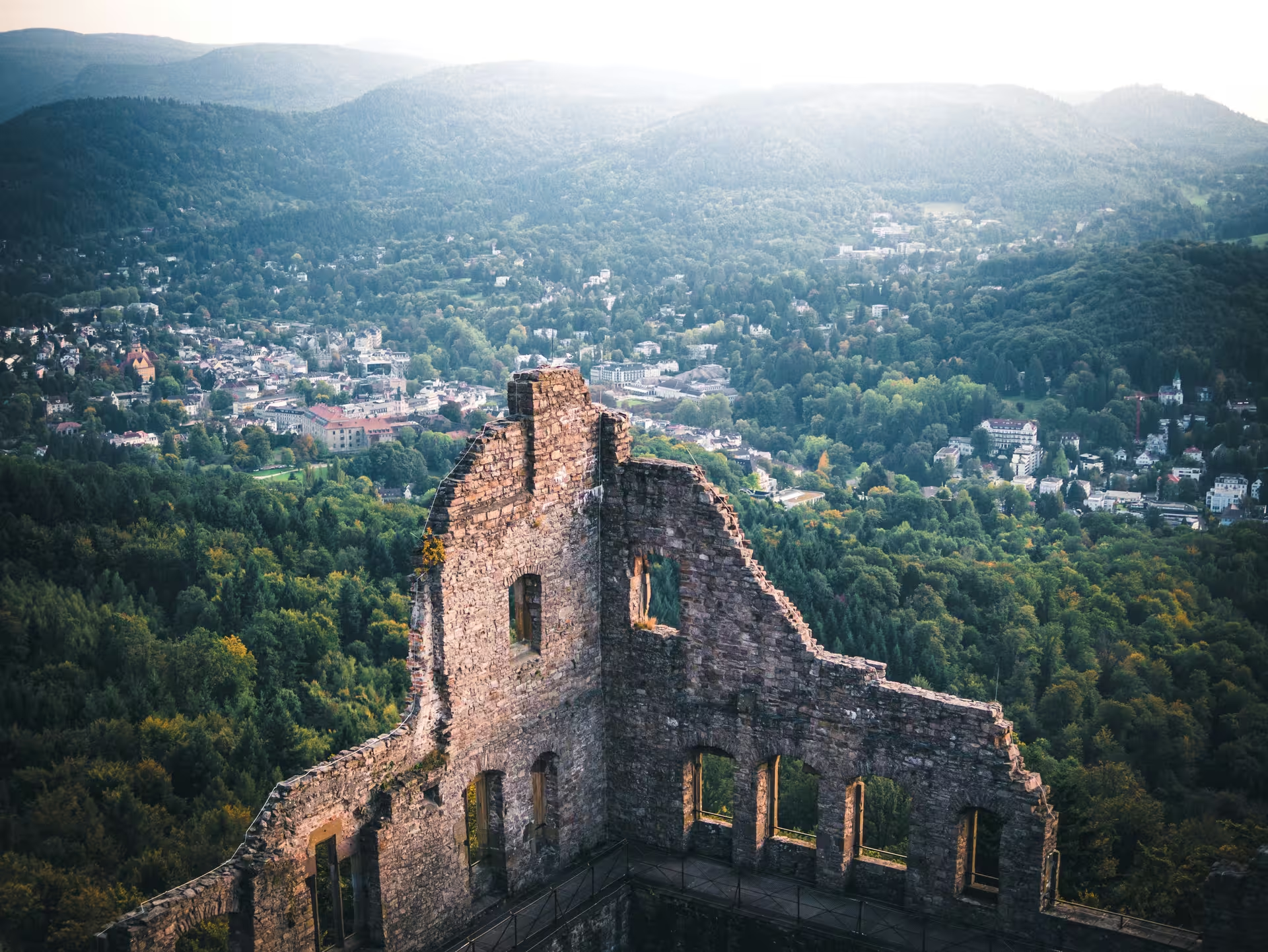
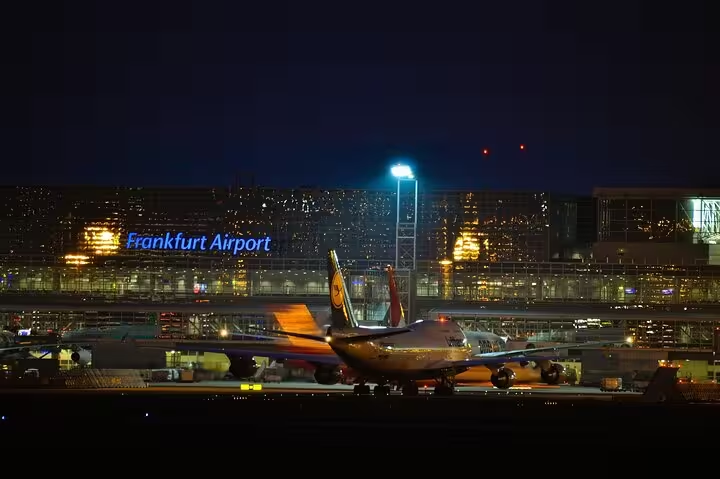
In the city itself there is a private tour of Strasbourg with pickup and drop-off, and two ways to explore at your own pace: a self-guided audio walk past the main sights and a self-guided scavenger hunt through the streets. From Zurich, a private full-day tour takes in Strasbourg and Colmar. Strasbourg is also a good base for trips further afield, with a day trip to the Black Forest and Baden-Baden and a private journey to Frankfurt with a professional driver.
Every trip that starts or stops here is also listed on the destination page.
Yes. The listed property is called Strasbourg, Grande Île and Neustadt.
No, visits are free, but you need a valid ID card or passport to get in.
Mostly from the 11th to the 14th century.
The former imperial palace of the Neustadt, built from 1884 to 1888 and renamed in 1920.
Twelve times a year, when its members hold plenary sessions.
Sources: Ministère de la Culture (culture.gouv.fr) (CC BY-SA 3.0 FR); Ministère de la Culture, Plateforme ouverte du patrimoine (POP) (Licence Ouverte Etalab 2.0); European Parliament (europarl.europa.eu), © European Union (reuse authorised, source acknowledged).