North of Venice, the lagoon islands of Murano and Burano each made their name with a craft: glass on Murano and lace on Burano. This page covers what to see on both islands, why the trip on to Torcello is worth it and how to visit them on a boat tour from Venice.
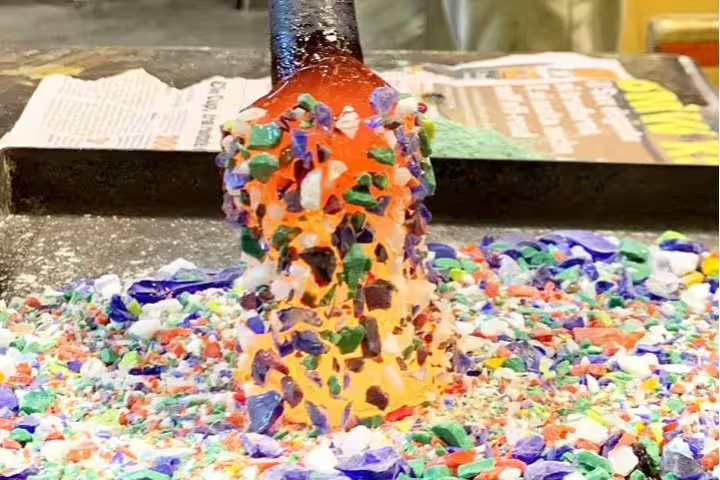
Glassmaking took hold on Murano towards the end of the 13th century, when Venice had every one of its furnaces moved out to the island to protect the city from fire. You can still watch the island's distinctive way of blowing glass in some of its many glassworks. To follow the craft across the centuries, head to the Glass Museum, founded in 1861 by the abbot Vincenzo Zanetti, whose collection runs from ancient pieces to modern ones. In Calle delle Conterie, a fine piece of industrial archaeology recalls the Conterie, a cluster of old furnaces and works that turned out coloured glass beads for necklaces, bracelets and ornaments.
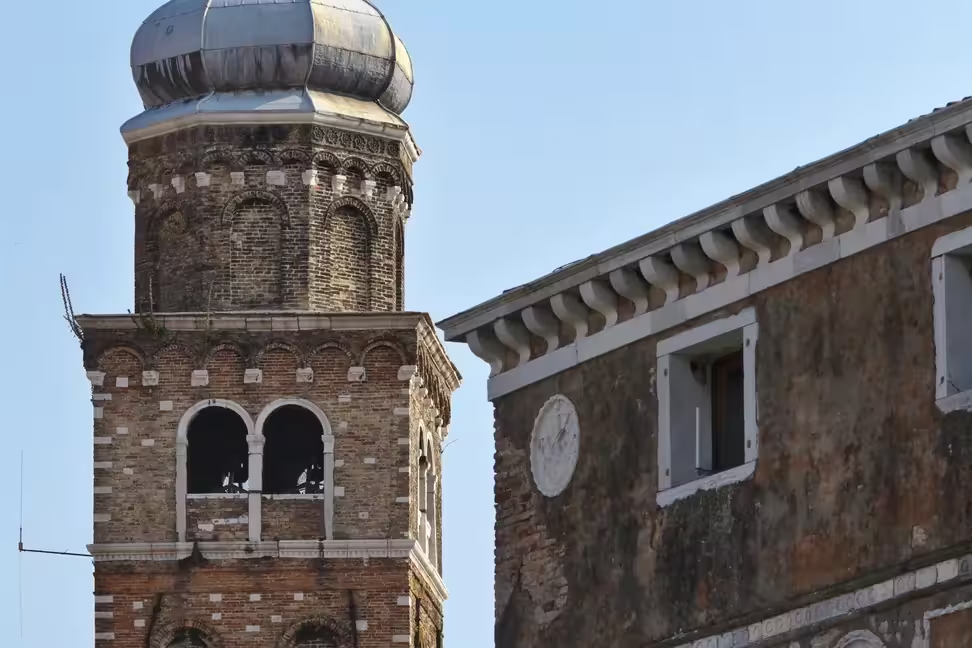
Walking along the Fondamenta dei Vetrai, you reach San Pietro Martire, a Renaissance church whose canvases include works by Paolo Veronese and by Domenico and Jacopo Tintoretto, as well as a Madonna enthroned by Giovanni Bellini. Further on stands Palazzo da Mula, which Venetian noble families built as a residence for their summers away from the city. The island's great monument is the Basilica dei Santi Maria e Donato, with a splendid apse mosaic set on a gold background and many mosaics across its floor. In Campo Santo Stefano, only the oratory survives of the church that gave the square its name, and the clock tower, which looks medieval, was in fact built at the end of the 19th century.
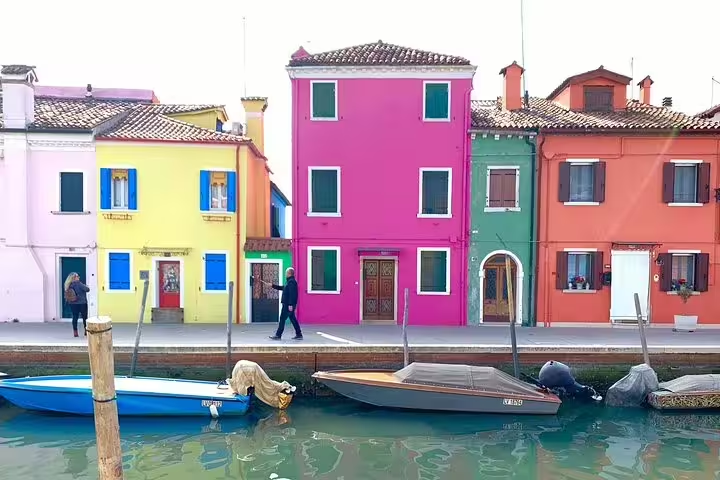
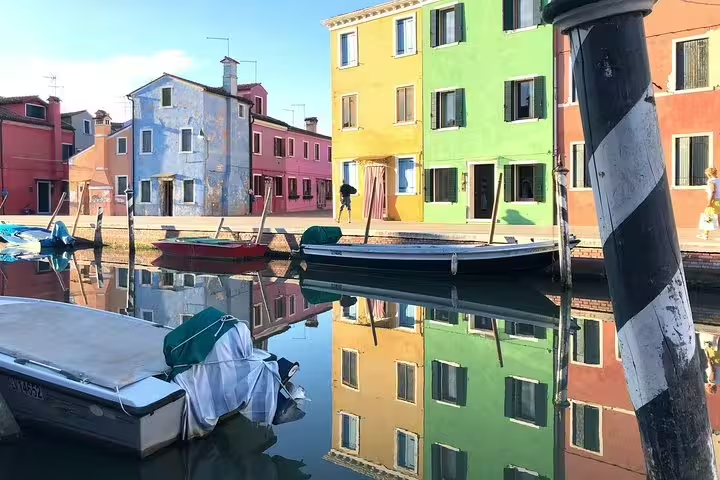
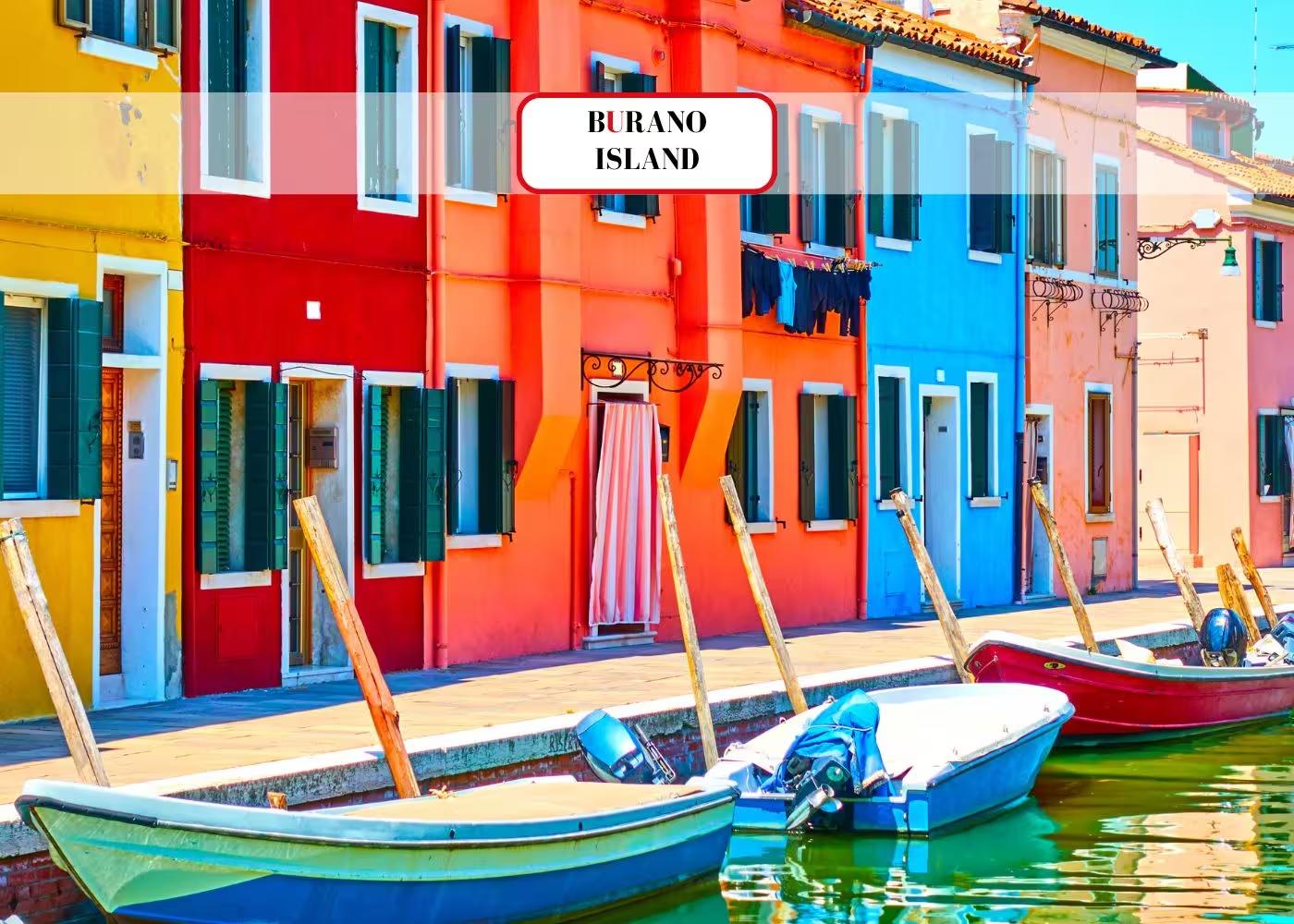
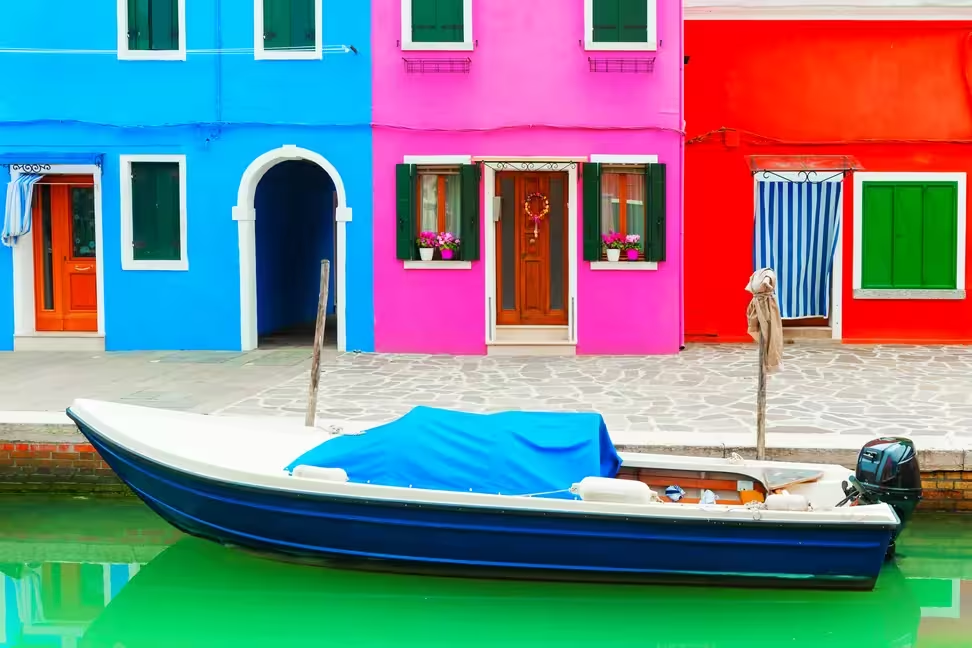
Burano is known for two things: the old art of lacemaking and the painted façades of its houses, which make it the most colourful island in the Venetian lagoon. Its main street is named after Baldassarre Galuppi, the 18th-century composer born on the island, and it leads to Piazza Galuppi. There, the 16th-century church of San Martino holds several works of art, among them a Crucifixion painted by a young Giambattista Tiepolo, and the Lace Museum occupies the historic Lace School, founded in the late 19th century. Before leaving, look out for the island's biscuits: the S-shaped esse and the round buranei. The buranei are made with eggs, sugar and butter.
A long bridge with no steps crosses from Burano to the neighbouring island of Mazzorbo, where you can stroll in the park.
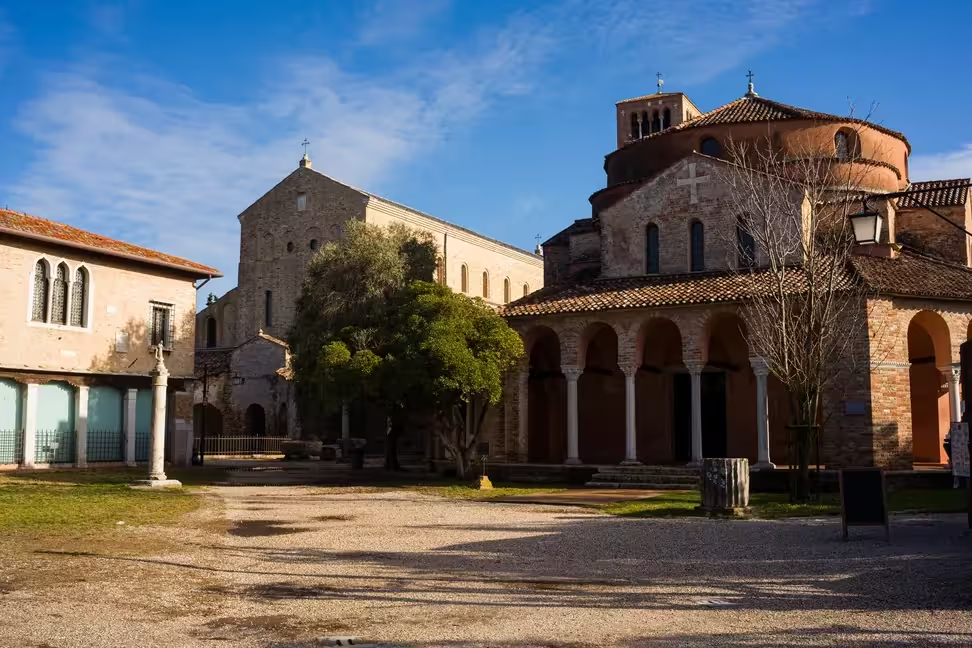
Some tours add Torcello, not far from Burano. Along the inner canal, you pass the Ponte del Diavolo, one of the few bridges without a parapet. The small square gathers the monuments that tell of the island's past importance: the Throne of Attila; the Torcello Museum; the 14th-century church of Santa Fosca; and the Cathedral of Santa Maria Assunta, with the remains of its baptistery. Founded in the 7th century, the cathedral is the oldest church in the lagoon. Byzantine marbles and mosaics cover much of its floor and walls, and over the main door you will find a splendid Last Judgement. The museum is spread over two buildings: the Palazzo del Consiglio, with the medieval and modern section; and the Palazzo dell'Archivio, with the archaeological finds.
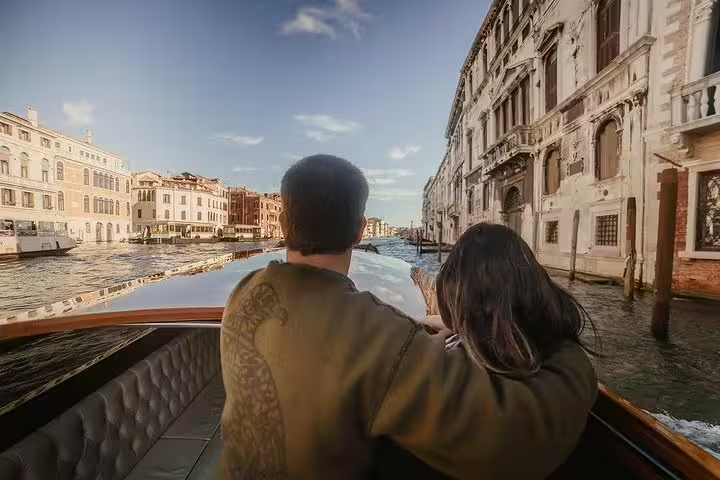
The simplest way to see the islands is on a boat trip from Venice. For a short outing, a shared boat ride along the Grand Canal to watch glassblowers on Murano covers the island of glass, and a day in Venice that pairs a Grand Canal boat ride and Murano glass with St Mark's Square adds the city's landmarks. To see both islands, you can choose a private boat tour to Murano and Burano, a private guided boat tour from the Grand Canal to Murano and Burano with hotel pickup or a full day by private boat that covers the Grand Canal as well as Murano and Burano. A guided boat tour of Murano and Burano with a stop at a lagoon vineyard and a small group lagoon cruise to Murano and Burano are good options too. If you want Torcello as well, a small group cruise takes in Murano, Burano and Torcello; there is also a boat tour of the same three lagoon islands.
Every trip that starts or stops here is also listed on the destination page.
In the late 13th century, Venice sent all of its furnaces across the water to cut the risk of fire in the city, and the island has been tied to glass ever since.
Yes. In some of Murano's workshops, the traditional blowing technique is still on show.
For lacemaking and for its brightly painted homes.
Santa Maria Assunta on Torcello, whose foundation dates back to the 7th century.
On foot, over a long footbridge that has no steps.
Sources: Comune di Venezia (CC BY 3.0 IT): murano, burano-e-torcello.