Last updated:
Delphi was one of the city-states of ancient Greece, and the oracle of Apollo had its seat in its sanctuary. Today most people reach the ruins and the museum on a private day out from Athens, with Mount Parnassus coming into view on the drive, and some trips add Thermopylae, the monastery of Hosios Loukas or a night near Meteora.
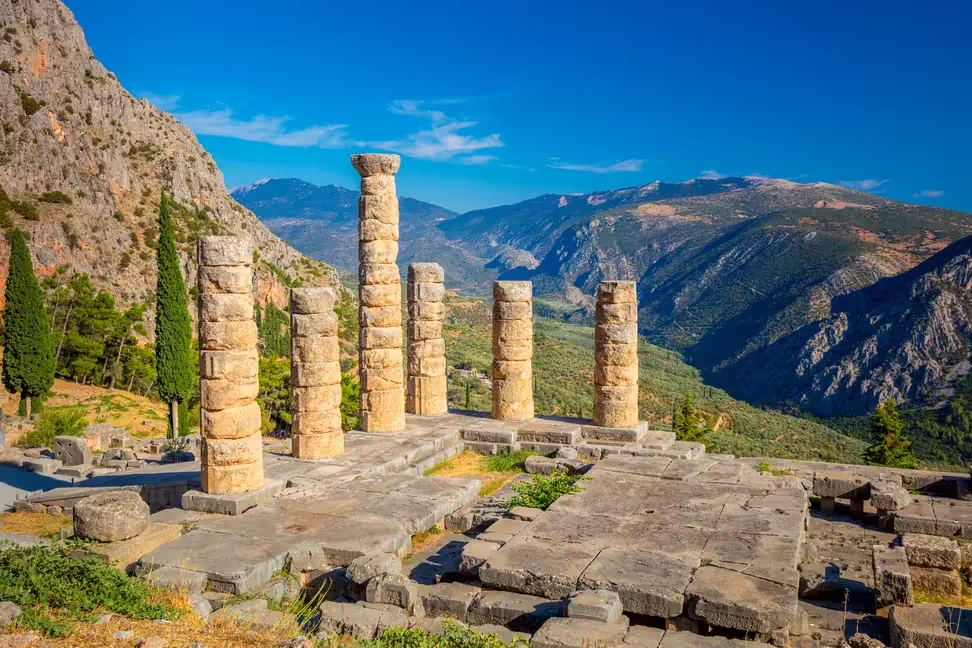
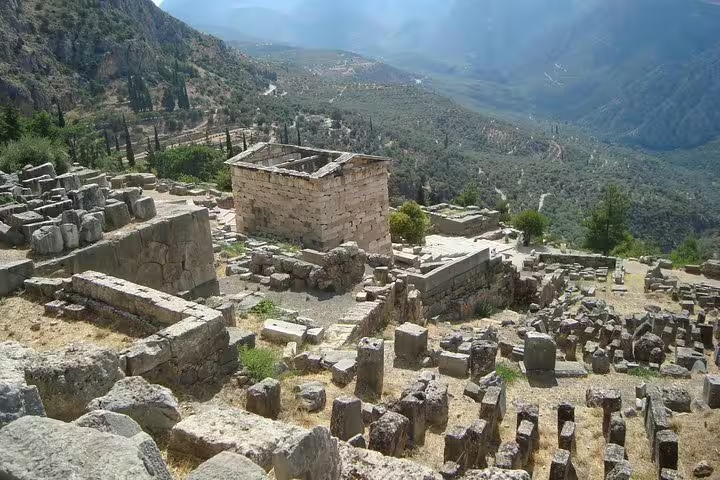
At the centre of the site is the sanctuary of Pythian Apollo, a sacred precinct that honoured the god under his title Pythios. Within it lie the ruins of the Temple of Apollo, built in the manner of the ancient Greek temples and dedicated to him, together with the theatre, the Sacred Way and the Athenian Treasury, and this is where the Delphic oracle was housed. Delphi also kept a stadium for the games of the ancient Greeks.
The Athenian Treasury, one of the buildings the Greeks called treasuries, was raised in the Doric order from marble quarried on Paros and offered to Apollo.
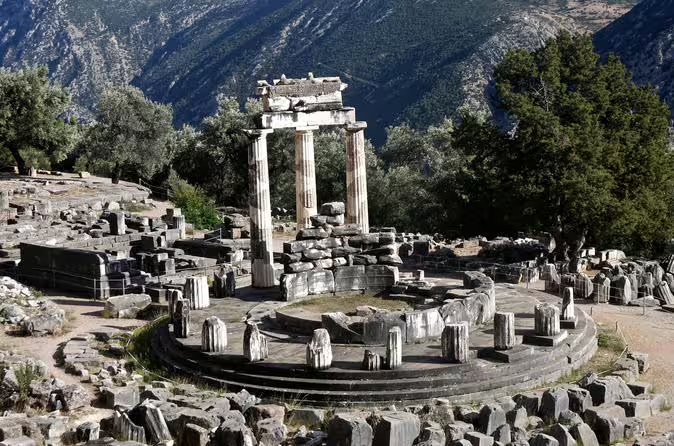
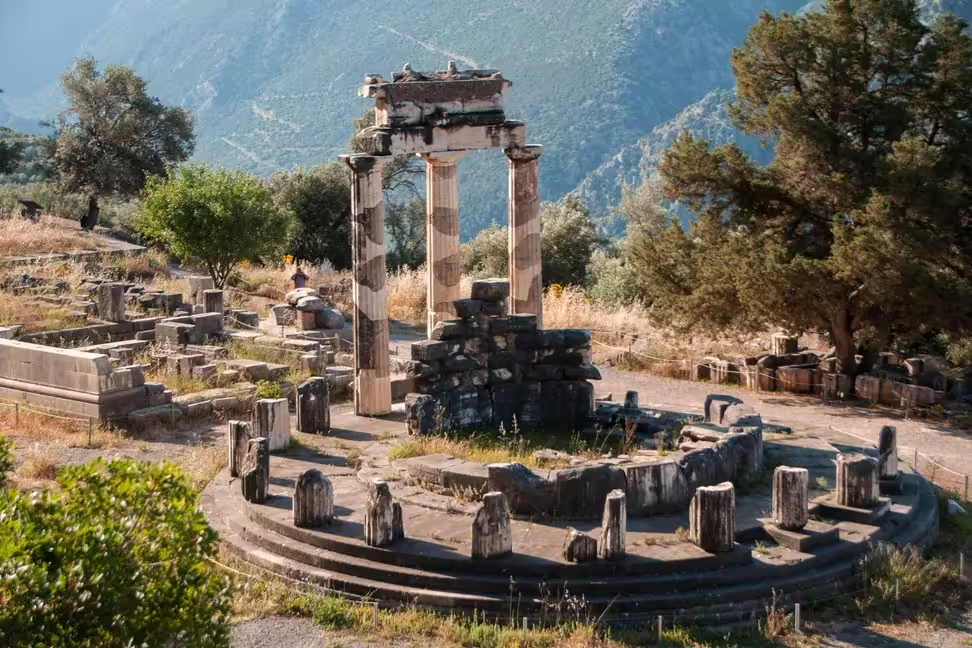
A second sacred precinct belonged to Athena, worshipped here as Pronaia. Besides her temple, it holds the Tholos, a round building ringed by columns; Vitruvius, in his De architectura, gives Theodoros of Phocaea as its architect. The Castalian Spring, named after Castalia, is part of the archaeological site as well: a water source that ancient Greek religion treated as a holy well.
The Delphi Archaeological Museum, itself part of the archaeological site, shows what was found there and welcomed 211,827 visitors in 2017. Its collection includes the Charioteer of Delphi, a statue cast in bronze.
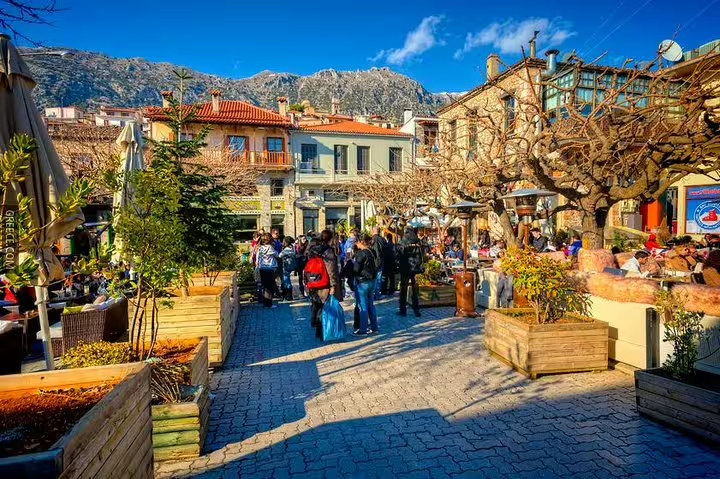
Delphi belongs today to Delfi Municipality, in the regional unit of Phocis, whose seat is the town of Amfissa; 26,081 people lived in the municipality in 2021. Itea and Galaxidi are towns of the same municipality, and Galaxidi is protected as one of the traditional settlements of Greece. Arachova is a town in the municipality of Distomo-Arachova-Antikyra, as is Hosios Loukas, a monastery in the Byzantine style that was founded by Luke Thaumaturgus and carries his name. In Lamia Municipality, Thermopylae is a narrow pass and an archaeological site, remembered for the Battle of Thermopylae.
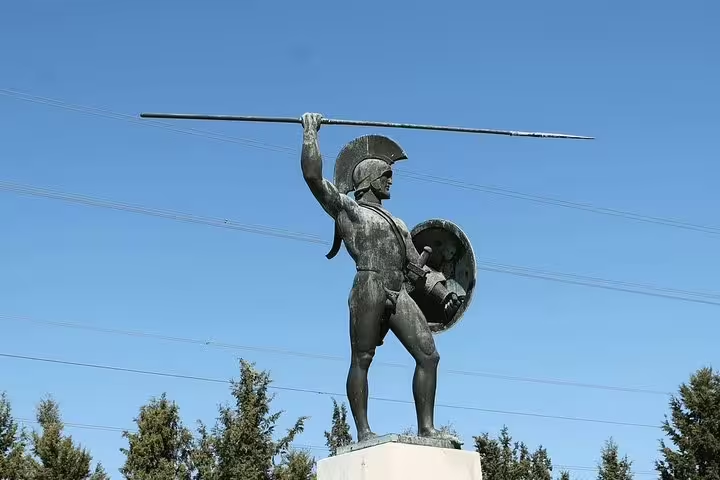
Two of these trips pair Delphi with Thermopylae. The private day to Delphi and Thermopylae stops at the battlefield and the monument to Leonidas, then visits the sanctuaries of Apollo and Athena Pronaia, the theatre, the stadium and the museum; your guide gives the background on the road and you walk the site at your own pace. The private tour with hotel pickup in Athens adds a short stop at the hot springs of Thermopylae, a traditional lunch in Delphi village and a stroll through Arachova to end the day.
Others look beyond the ruins. The private day with Itea and Galaxidi passes through Arachova and, after the site and the museum, which you explore on your own, ends by the sea on the Gulf of Itea. The private day with Hosios Loukas collects you from your accommodation in the Athens area, visits the monastery first, where shoulders and knees must be covered, and goes on through Arachova to Delphi with a licensed guide and museum entry included. The private day with Arachova climbs the Sacred Way past the Athenian Treasury and the Castalian Spring to the Temple of Apollo, the theatre and the stadium, and finishes with lunch overlooking the bay of Itea.
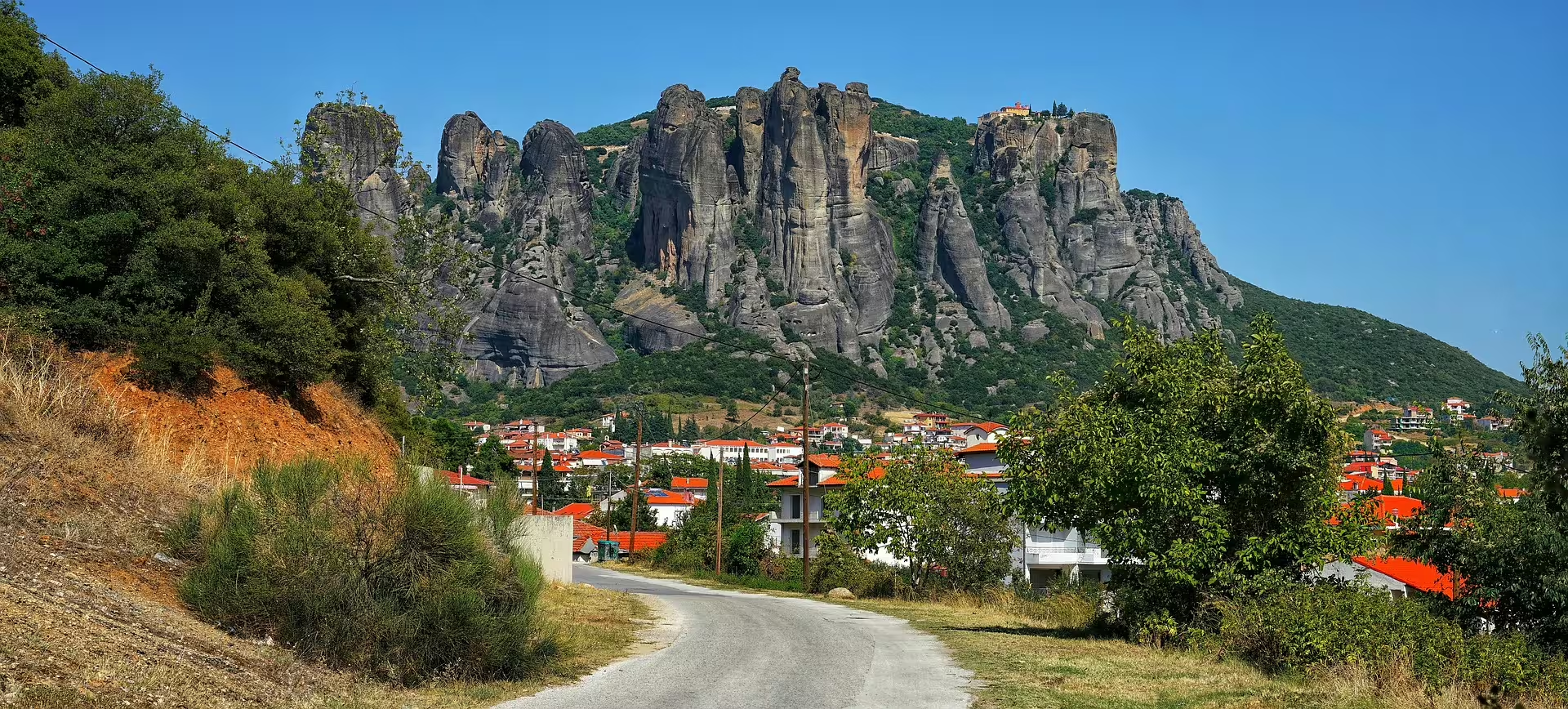
With more time, the two-day private tour with Meteora visits Delphi and its museum, then Thermopylae, spends the night in Kalambaka or Kastraki with the hotel included, and tours the monasteries of Meteora the next morning.
More trips that stop at Delphi are listed on the Delphi destination page.
Yes. Five of the trips on this page go there and back from Athens in a single day, each with a different second stop.
In most of these tours they are not: tickets for the site and the museum are bought separately. The trip with Hosios Loukas includes museum entry.
The ruins spread over a hillside, with stone paths, steps and slopes that can be uneven. Comfortable shoes help, and visitors with limited mobility may find parts of the site hard.
The bronze statue is part of the collection of the Delphi Archaeological Museum, so every trip that visits the museum lets you see it.
Sources: Wikidata (CC0).