The Alhambra rises on a hill above Granada, in Andalusia. It was the palace, citadel and fortress of the Nasrid sultans, with the Generalife just east of its walls and the old Albayzín quarter on the next hill. This page follows its story, its main spaces and the one rule that shapes every visit, and ends with the tours that bring travellers here.
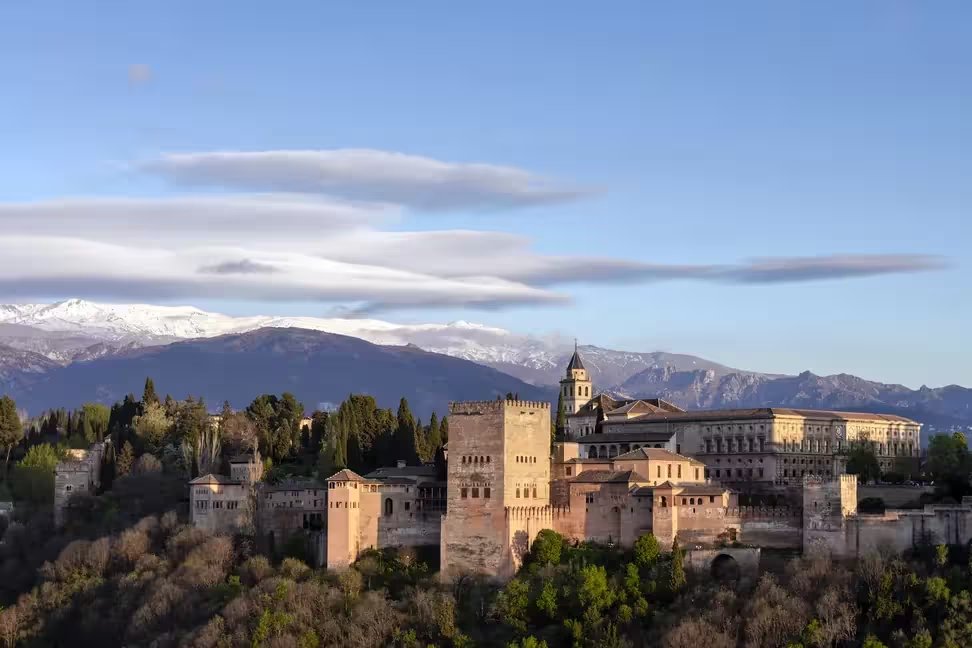
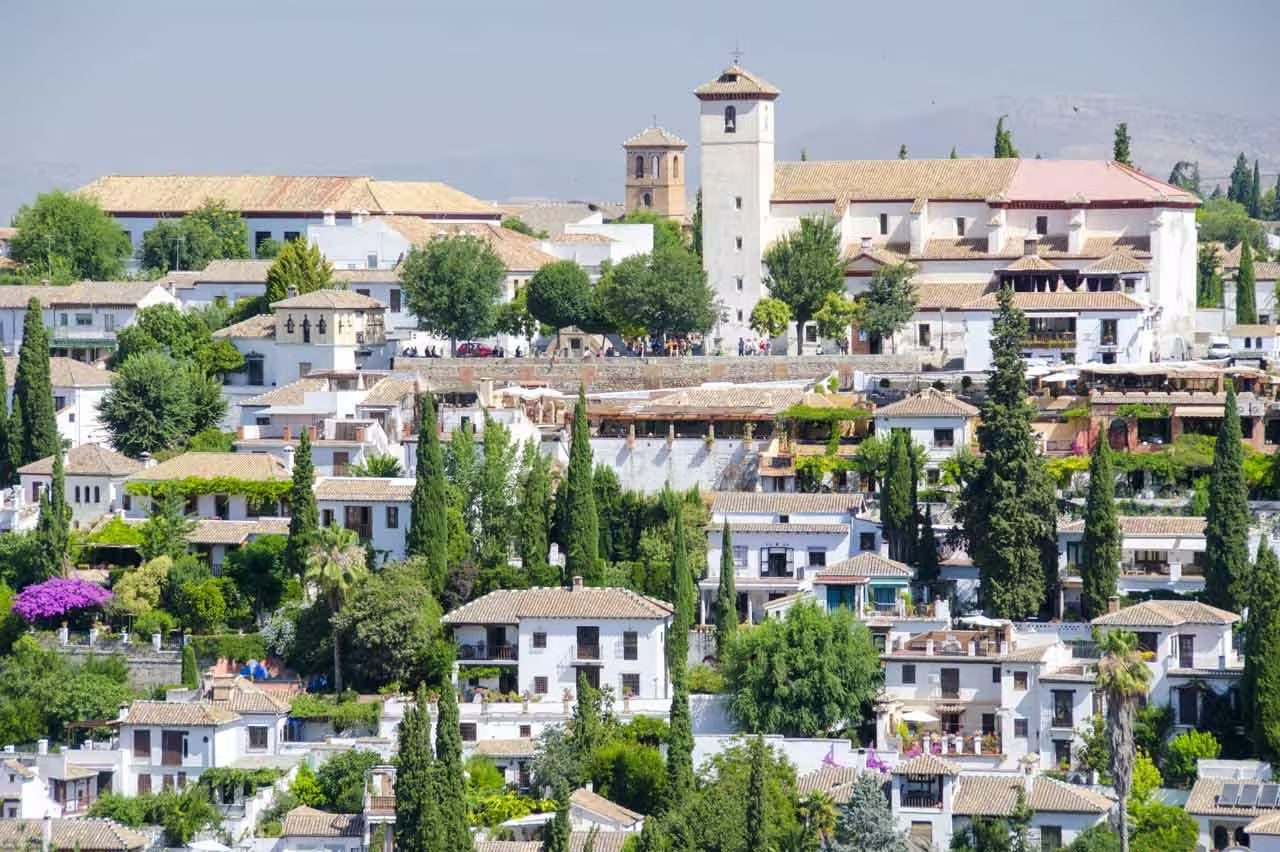
The Alhambra and the Albayzín sit on neighbouring hills with the river Darro running between them, and together they make up medieval Granada, high above the modern city. The Albayzín, home to the Zirid court in the 11th century, still keeps its original street pattern, where medieval buildings blend into traditional Mediterranean architecture and stretches of the old wall survive. The Alhambra and the Generalife were added to the World Heritage List in 1984, and the listing took in the Albayzín in 1994. Because it never stopped being used, the Alhambra is the only palatine city of medieval Islam still standing, and the finest surviving example of Nasrid art.
In 1238 Al-Ahmar, the founder of the Nasrid dynasty, settled in the old fortress of the Albayzín. The ruins on the opposite hill caught his eye, and he chose to rebuild them and move his court there, which is where the Alhambra you see today began. It was at its most splendid in the second half of the 14th century, under Yusuf I and during the second reign of Muhammad V. After 1492 it became a royal household in the care of the Count of Tendilla, and the Catholic Monarchs had it widely repaired, mostly by Morisco craftsmen. In 1526 Emperor Charles V resolved to add the palace that now carries his name, in the Roman Renaissance taste. The revolution of 1868 took the Alhambra from the Crown and handed it to the State, which declared it a national monument in 1870.
Of the several palaces the Alhambra once held, two have come down to us intact: the Palace of Comares and the Palace of the Lions. Comares is built around the Court of the Myrtles, and the Hall of the Ambassadors lies at its heart.
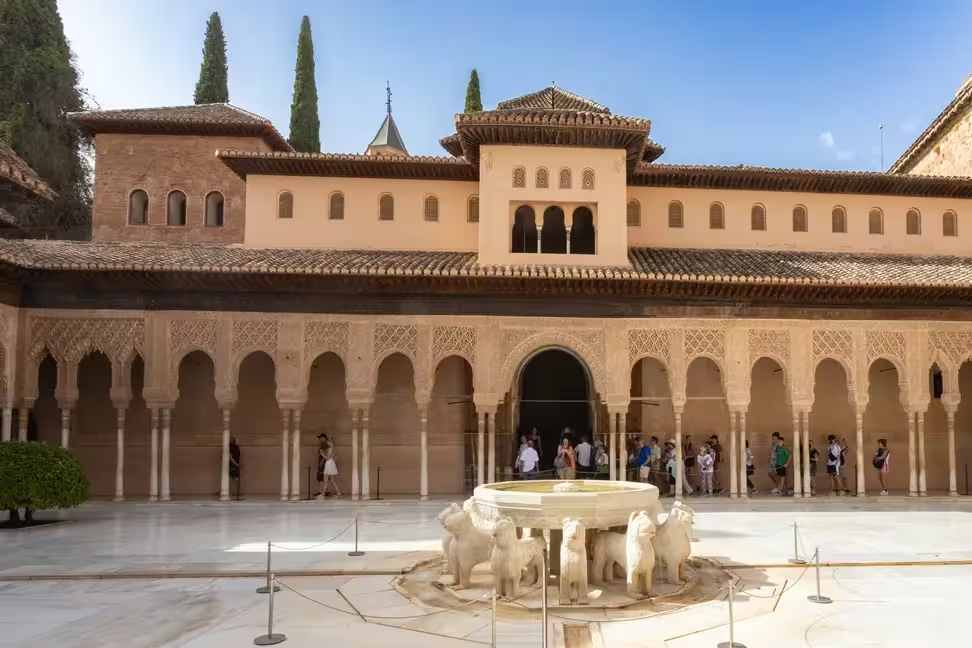
In the Palace of the Lions, a courtyard laid out in the shape of a cross holds the Fountain of the Lions, one of the most recognisable sights in the whole Alhambra, and opens onto the Hall of the Two Sisters and the Hall of the Mocárabes, among other rooms.
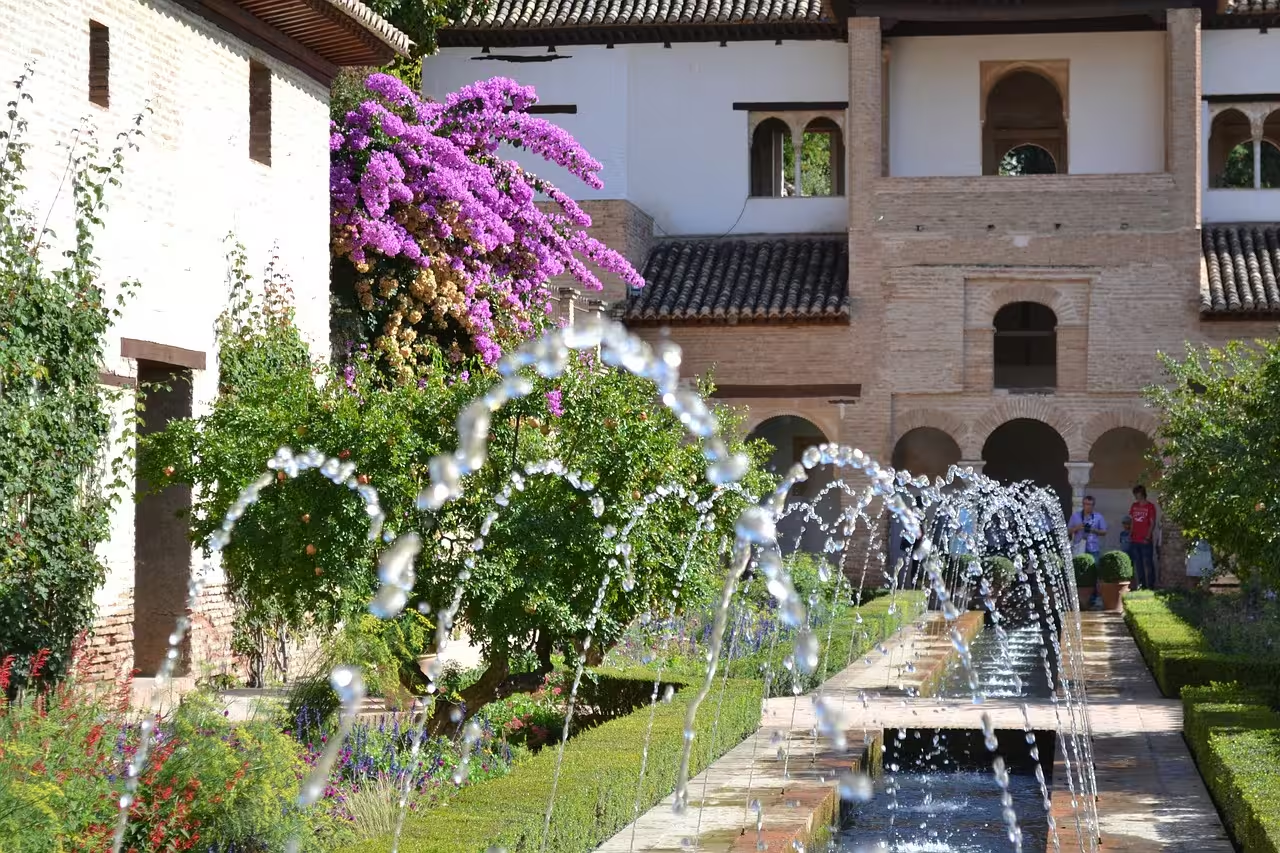
Together, the Alhambra and the Generalife form a walled precinct 2,200 m (7,218 ft) around, raised by the Nasrid kings between the 13th and 15th centuries: the Nasrid Palaces held the court, the Alcazaba and the walls its defence, and the Generalife its residence. The Alcazaba is the oldest part of the complex, and beyond the palaces lie the gardens of the Partal and the Medina, the court town that depended on them. The Palace of Charles V, the Renaissance mark left by the Christian conquest, is now home to the Museum of the Alhambra and the Museum of Fine Arts. East of the walls stands the Generalife, the country retreat of the dynasty that ruled this part of Spain from the 13th to the 15th century. Built in the 13th and 14th centuries, it was where the Nasrid sultans went to rest, a rural villa of courtyards, orchards, buildings and ornamental gardens.
Each of the three marked areas, the Alcazaba, the Nasrid Palaces and the Palace of the Generalife, admits you only once, so take your time in each. The one fixed point is the Nasrid Palaces: because the rooms are fragile and visitor numbers are tightly controlled, entry runs in 30-minute slots of up to 300 tickets, and you must go in at the time printed on your ticket, so plan the rest of the visit around that slot.
In Granada itself, there is a private guided tour of the Alhambra and the city with hotel pickup and a full-day guided visit that includes the Generalife and the Alcazaba. On the facing hill, a guided walk through the Albayzín and Sacromonte covers the hill where the city began. Granada is also a stop on longer guided tours of Andalusia: from Madrid, one combines Andalusia with Toledo and Seville and another pairs Andalusia with Toledo, while from Lisbon there is a tour of Andalusia and Madrid.
Every trip that starts or stops here is also listed on the destination page.
Entry is only allowed at that time, and the palaces admit visitors in half-hour groups.
No. You get one entry to each of those three areas.
Two: Comares and the palace with the Fountain of the Lions.
In 1984, together with the Generalife; the Albayzín followed in 1994.
The old quarter on the hill across the Darro from the Alhambra, where the Zirid court sat in the 11th century.
Sources: Origen de los datos: Ministerio de Cultura (Ley 37/2007); Información obtenida del Portal de la Junta de Andalucía (CC BY 3.0).