




Paris Urban History Tour
Napoleon III's Paris: The Haussmannian Reconstruction City Tour
Walk through the radical reinvention of a medieval city into the modern capital of the world.
The Haussmannian reconstruction of Paris stands as one of the most sweeping urban transformations in recorded history, erasing over 70% of a medieval city in just 17 years. This tour traces the physical and cultural consequences of that upheaval across the streets, squares, and monuments that replaced what came before.
Baron Haussmann, acting under the direct mandate of Napoleon III, did not simply renovate Paris. He imposed an entirely new idea of what a city should be: broad, legible boulevards lined with uniform stone facades, punctuated by grand public buildings designed to project power, prosperity, and order. The old city, with its irregular lanes and layered centuries, was systematically cleared to make way for this vision.
What emerged from the rubble was not merely a new set of streets but a new way of urban life. The boulevard became a social arena, the department store a cathedral of consumption, and the opera house a secular temple of cultural aspiration. This tour examines each of these inventions in turn, reading the city as a text about modernity itself.
Few tours anywhere in Paris engage so directly with the question of how the contemporary world came to look and feel the way it does. The forces that shaped 19th-century Paris, industrial capitalism, political compromise, bourgeois taste, and technological ambition, are the same forces that continue to shape cities globally today.
Tour Highlights
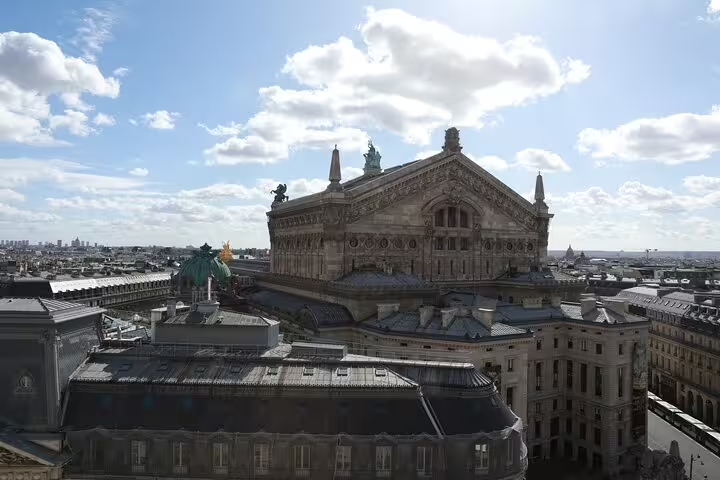
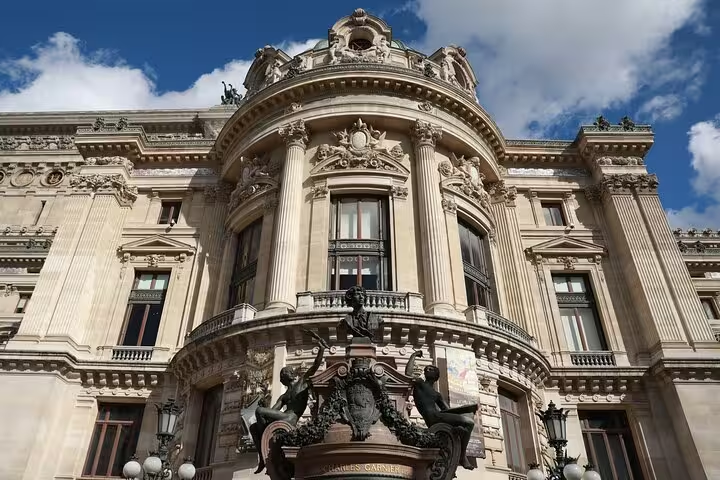
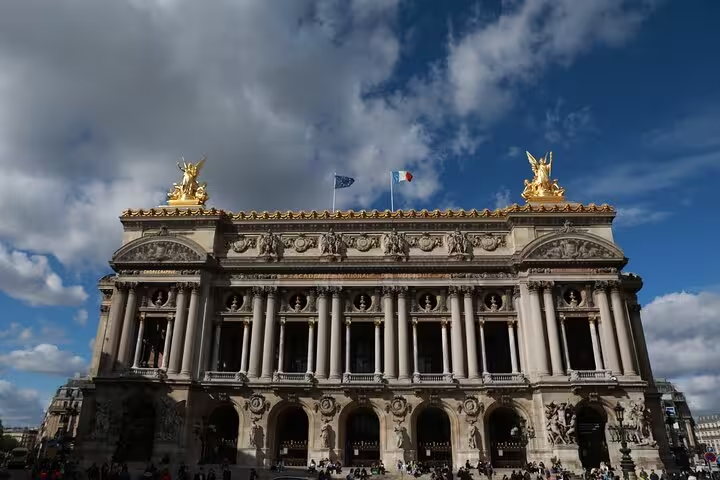
Examine the Opera Garnier, the architectural centerpiece of Haussmann's new Paris and the symbolic replacement for Notre-Dame as the city's cultural heart.
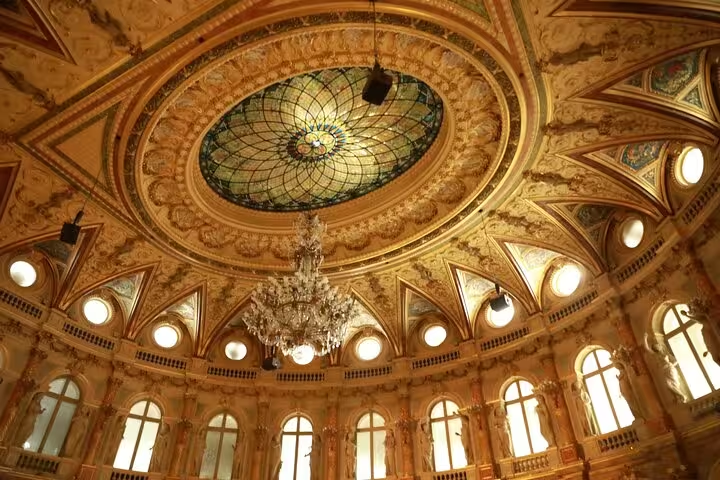
Discover what is considered the most ornate bank interior in the world, a space that transforms a financial transaction into an almost ceremonial experience.
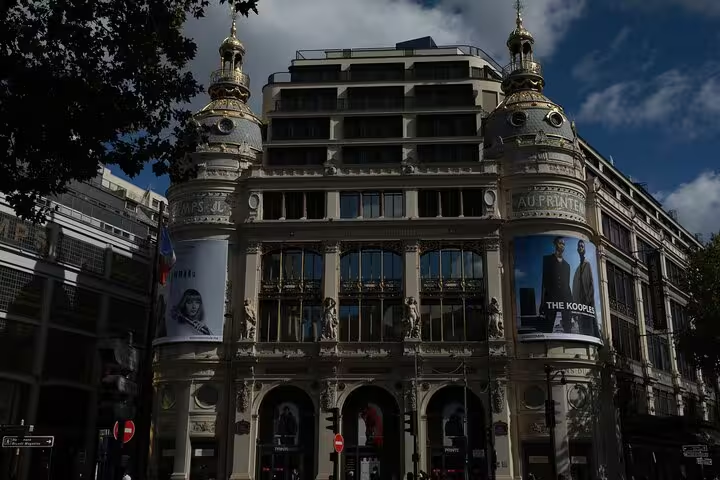
Explore two rival contenders for the title of the world's most beautiful department store, both born from the Haussmannian vision of consumerism as spectacle.
Walk along Boulevard Haussmann itself, the defining example of the boulevard typology that became the signature street form of modern Paris.
Visit Place Vendome, a royal square from the late 17th century that served as the aesthetic and architectural model for the reconstruction's design language.
Understand the political tensions of 19th-century France and how the reconstruction was used as an instrument of reconciliation between monarchic and republican factions.
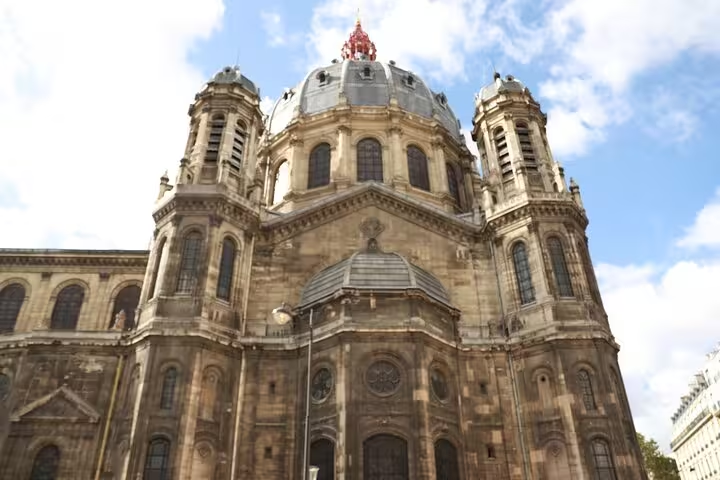
Conclude at the first Parisian church built with extensive use of structural steel, a monument to the alliance between industrial technology and religious institution.
Tour Itinerary
The tour opens at Place Vendome, one of the five royal squares of Paris, completed at the very end of the 17th century. Its proportions, materials, and disciplined uniformity provided the aesthetic blueprint that Haussmann and his architects would scale up across the entire city a century and a half later.
The Palais Garnier is the focal monument of the reconstruction, deliberately conceived as the symbolic heart of the new city in place of Notre-Dame de Paris. Addressed entirely from the exterior, the building is examined as a statement of cultural priorities and political ambition rather than simply as an architectural achievement.
A short walk from the Opera leads to a banking hall that reframes the act of financial transaction as a quasi-spiritual experience. The interior design draws on the vocabulary of sacred architecture to lend gravity and grandeur to commercial life, one of the defining moves of the Haussmannian era.
Two of the world's most celebrated department stores stand within close proximity of each other here, both products of the new consumer culture that the reconstruction made possible. Each is examined as an example of retail space elevated to the level of monumental architecture, where shopping becomes a form of civic participation.
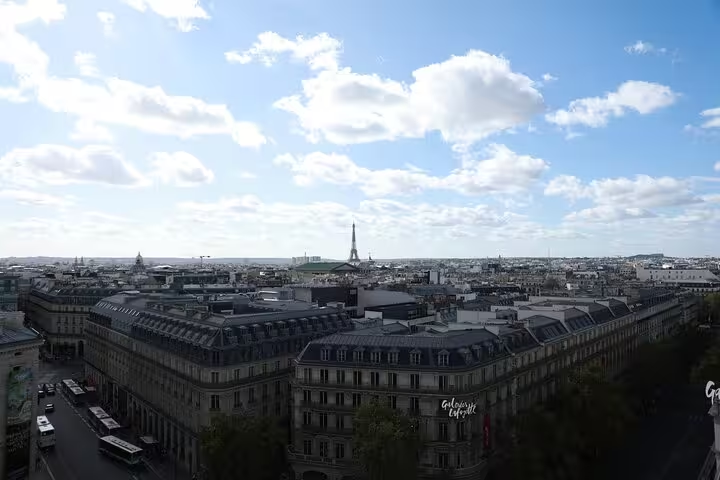
The boulevard itself is analyzed as a distinct invention: wide, tree-lined, and flanked by the characteristic cream-coloured stone facades with their wrought-iron balconies and regular cornice lines. Boulevard Haussmann serves as the prime specimen of this street type, designed for movement, commerce, and social display in equal measure.
The tour concludes at a church notable for being the first in Paris to make extensive structural use of steel, a material that was, at the time, synonymous with industrial progress. The building represents the negotiated peace between the Church and the forces of industrial capitalism, and between the monarchic and republican political camps that divided France throughout the 19th century.
What Is Included
Included
- Professional guided walking tour of approximately 2 hours
- Expert commentary on Haussmannian urban history and architecture
- Exterior visits to all itinerary sites
- Small group experience for a more focused and personal tour
Not Included
- Entry to the Opera Garnier interior (available as a separate tour)
- Entry fees to any museums or monuments
- Food, drinks, or personal expenses
- Transportation to or from the meeting point
Important Information
Reserve Your Place on This Tour
Places on this walking tour are limited to maintain a small group experience. Booking in advance is recommended, particularly during peak season in Paris.
Book Now