
Explore Tours

Build your dream
experience

More to know about Mota del Cuervo
Mota del Cuervo Travel Guide
Mota del Cuervo is a destination where rural La Mancha atmosphere, big skies, and everyday Spanish life come together at an unhurried pace. This guide focuses on the practical choices that shape a great trip, when to visit, what to prioritize, and how to organize your time for the best experience. If you like places that feel lived-in rather than staged, Mota del Cuervo rewards slow walks, local flavors, and viewpoints that make the landscape feel cinematic.
Snapshot
Mota del Cuervo delivers an authentic Castile La Mancha vibe, open horizons, and a calm rhythm that makes it easy to disconnect. Go now if you want smaller crowds and a more local feel, especially compared with Spain’s big headline cities. The signature appeal is simple, scenery, heritage, and food that tastes like the region rather than a trend.
🗺️ Geography and Logistics
📍 Orientation: Where is it within Cuenca Province and Spain? Name key gateway airports or hubs.
Mota del Cuervo sits in Cuenca Province in the autonomous community of Castilla La Mancha, a region associated with wide plains, traditional villages, and classic road trip routes across central Spain. For international arrivals, the most common gateways are major hubs such as Madrid and Valencia, then onward by regional connections. Plan your approach around the transport option that best matches your schedule, driving for flexibility, or public transport if you prefer a car-free itinerary.
🕒 When to Go: Seasonal breakdown. Weather patterns vs. crowd levels.
Inland Spain tends to mean stronger seasonal contrasts than the coast, with hotter summers and cooler winters. For many travelers, spring and autumn feel the most comfortable for walking and sightseeing, with pleasant light for photography and a more relaxed pace. Summer can still work well if you structure days around early starts and later evenings, while winter is best for travelers who enjoy quiet streets and a slower, more local atmosphere.
💰 Budget & Currency: Practical money tips, local price levels, and card vs. cash advice.
Spain uses the euro, and day-to-day spending in smaller inland towns often feels more approachable than in major tourist centers. Carry a bit of cash for small purchases, especially in traditional cafés or bakeries, while keeping a card for larger payments. A practical rule is to budget for simple meals, snacks, and local transport, then add a buffer for tastings, souvenirs, or spontaneous detours.
⭐ Essential Things to Do List
Note: Experiences below are curated to fit the typical strengths of a La Mancha town setting and a traveler’s decision needs. Confirm exact access details locally, since opening times and availability can change.
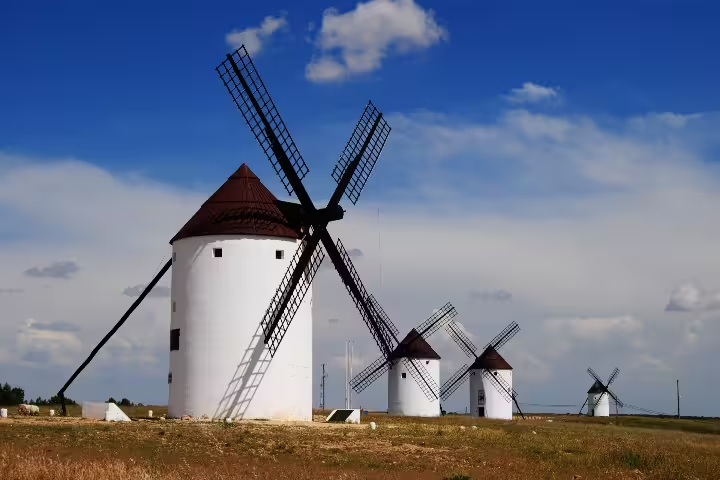
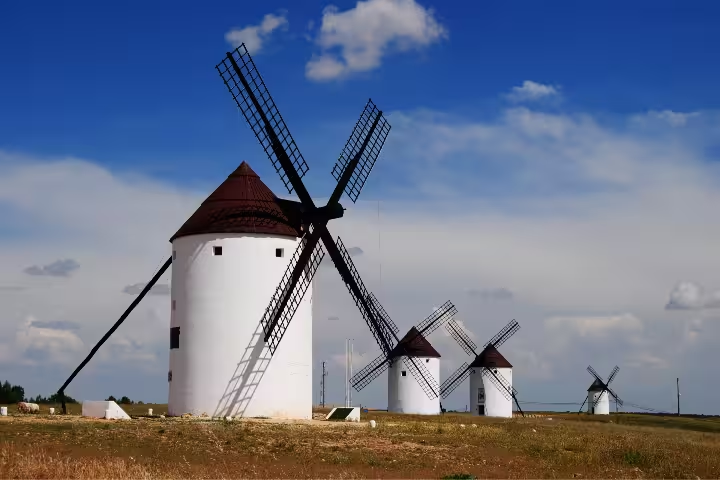
1) Windmill Viewpoints and Landscape Photography
The La Mancha landscape is part of Spain’s cultural imagination, and viewpoints around town can make the wide horizons feel dramatic and timeless. It is the kind of scenery that looks different every hour, depending on cloud cover and sun angle. Practical tip, go near golden hour for warmer light and clearer contrast in photos.
2) A Self-Guided Heritage Walk Through the Town Center
The best way to understand Mota del Cuervo is on foot, noticing daily routines, shopfronts, and the way public spaces are used. A slow walk helps you spot details you would miss on a drive-through, from small plazas to local architecture. Practical tip, start in the morning, then loop back later to see how the atmosphere changes in the evening.
3) Local Market Style Shopping for Picnic Ingredients
Inland towns often shine through food, and building a simple picnic is a low-cost, high-reward way to taste the region. Look for seasonal fruit, bread, cured meats, and local cheese styles that reflect the agricultural identity of Castilla La Mancha. Practical tip, pack a reusable bag and buy enough for a sunset snack outside the center.
4) A La Mancha Wine and Cheese Tasting Mindset
Even without a formal tasting, you can approach meals like a tasting by ordering a few small plates and comparing flavors. This region is known for hearty profiles that pair well with local wines and olive oil. Practical tip, ask for recommendations by describing what you like, dry vs. fruity wine, mild vs. intense cheese.
5) Daytime Cafés and Evening Paseo Culture
The café pause is part of the rhythm, and it is also a practical tool for travelers, it breaks up walking and helps you avoid the hottest hours in warmer months. In the evening, the paseo, a relaxed stroll, often becomes the social heartbeat. Practical tip, plan a flexible dinner time and follow local cues for when streets start to feel lively.
6) Scenic Drives Across the Plains of Castilla La Mancha
Driving in this part of Spain can feel meditative, with long sightlines and a sense of scale that is hard to get in dense cities. A short loop outside town can turn a simple afternoon into a highlight, especially if you enjoy photography or rural landscapes. Practical tip, keep water in the car and download offline maps if you expect patchy signal.
7) A Slow Meal Focused on Regional Cooking
La Mancha cooking is often straightforward and satisfying, built around legumes, meat, olive oil, and bread. A longer meal is not just about food, it is a way to experience the town’s tempo and hospitality. Practical tip, consider a lighter lunch and a more substantial dinner if you are walking a lot.
8) A Short Excursion to Nearby Towns in Cuenca Province
One of the best reasons to base yourself in Mota del Cuervo is the ability to add nearby stops without overplanning. Small towns can offer different viewpoints, local products, and architectural contrasts. Practical tip, pick one anchor stop and one spontaneous stop, so the day feels curated but not rushed.
🚶 Curated Itineraries
⏰ The Highlights (1 Day): A fast-paced “Best Of” route.
Start with a morning walk through the center to get oriented, then pause for coffee and a small breakfast. Spend late morning and early afternoon on scenic viewpoints and a relaxed lunch that leans into regional dishes. Finish with an evening paseo and a casual tapas-style dinner, keeping time for golden-hour photos if you enjoy landscapes.
⏰ Deep Dive (2-3 Days): Adding neighborhood exploration and local secrets.
On day one, focus on the town center, viewpoints, and a food-first approach, bakery stops, small plates, and a long meal. On day two, add a scenic drive and a nearby-town excursion within Cuenca Province, building the route around light and weather rather than a strict timetable. If you have a third day, keep it flexible, revisit your favorite viewpoint, shop for edible souvenirs, and slow down into the local rhythm that makes Mota del Cuervo feel memorable.
🍽️ Flavors of Mota del Cuervo
Note: Specific menus vary by season and restaurant. Use these as ordering ideas and ask what is typical that day.
- Manchego-style cheese. Firm texture and savory depth, often with a nutty finish. Ordering tip, ask for a small portion with bread and olive oil for a simple tasting.
- Jamón and cured meats. Salty, rich, and ideal for sharing. Ordering tip, request a mixed plate if you want variety without over-ordering.
- Olive oil-forward toasts. Clean, peppery notes depending on the oil. Ordering tip, look for simple toppings, tomato, salt, and oil, to taste the base ingredients.
- Hearty stews and legume dishes. Comforting, slow-cooked flavors that suit cooler months. Ordering tip, ask what is most traditional in the kitchen today.
- Roasted or grilled meats. Straightforward, satisfying, and often paired with simple sides. Ordering tip, balance it with a lighter starter if you plan a long walk afterward.
- Local wine styles from Castilla La Mancha. Often food-friendly and easy to pair with tapas. Ordering tip, if you are unsure, ask for a glass that matches your main dish rather than choosing by label.
🚌 Navigation & Transport
Walking works well for the central areas, especially if your plan emphasizes cafés, plazas, and a heritage stroll. For viewpoints, countryside scenery, and day trips, a car is typically the most practical option, since rural distances can be longer than they look on a map. If you use taxis or ride services, confirm availability in advance, and keep a backup plan for late evenings. For safety and comfort, carry water in warm months, wear stable shoes for uneven surfaces, and keep a light layer for cooler nights.
🌄 Beyond the Center: Day Trips
Day trips depend on your transport and the pace you prefer. Use these as planning anchors, then confirm routes and travel times based on your chosen mode.
- Cuenca Province countryside drives. Short to medium travel time by car. Primary reason, expansive landscapes and rural viewpoints that define the region.
- Nearby La Mancha towns. Short travel time by car or regional connections. Primary reason, compare local atmospheres, small plazas, and food specialties.
- Cuenca city. Medium travel time depending on your route. Primary reason, a bigger cultural day with historic streets and a different architectural feel.
- Madrid. Longer travel time. Primary reason, a high-energy contrast day for museums, neighborhoods, and major rail connections.
- Valencia. Longer travel time. Primary reason, a coastal city contrast with Mediterranean energy and different cuisine traditions.
✅ Insider Tips for Travelers
- Plan your photo moments around light, early morning and late afternoon are usually more flattering for landscapes.
- Keep meal timing flexible, especially for dinner, and follow local cues for when places get busy.
- Carry some cash for small purchases, then use a card for larger bills.
- Pack layers, inland Spain can shift between warm days and cooler evenings depending on season.
- If you are driving, download offline maps and keep water in the car for countryside loops.
- Choose one key experience per half-day, then leave space for unplanned stops that often become highlights.
❓ Frequently Asked Questions, FAQ
Is Mota del Cuervo best visited as a day trip or an overnight stay?
A day trip can cover the main viewpoints and a relaxed meal. An overnight stay gives you better light for photos and time to enjoy the evening paseo without rushing back.
Do I need a car to get around?
You can walk for central sights and meals. A car is helpful for countryside viewpoints and day trips, especially if you want flexibility.
What is the best time of year to visit?
Spring and autumn are often the most comfortable for walking and long lunches. Summer can work well if you plan early starts and slower afternoons.
How much time should I plan for Mota del Cuervo?
One day is enough for a highlights route with food and viewpoints. Two to three days suits travelers who want scenic drives, nearby towns, and a slower pace.
Is it easy to pay by card, or should I carry cash?
Cards are widely useful for larger payments, but small purchases may be easier with cash. Carry a small amount of euros for cafés, bakeries, and quick stops.
This guide to Mota del Cuervo explains how to plan an efficient, enjoyable visit using practical logistics, curated experiences, and local food context. It is written by Toursxplorer.com to help travelers compare options and build a realistic itinerary.
Europe, Spain, Castilla La Mancha, Cuenca Province, Mota del Cuervo