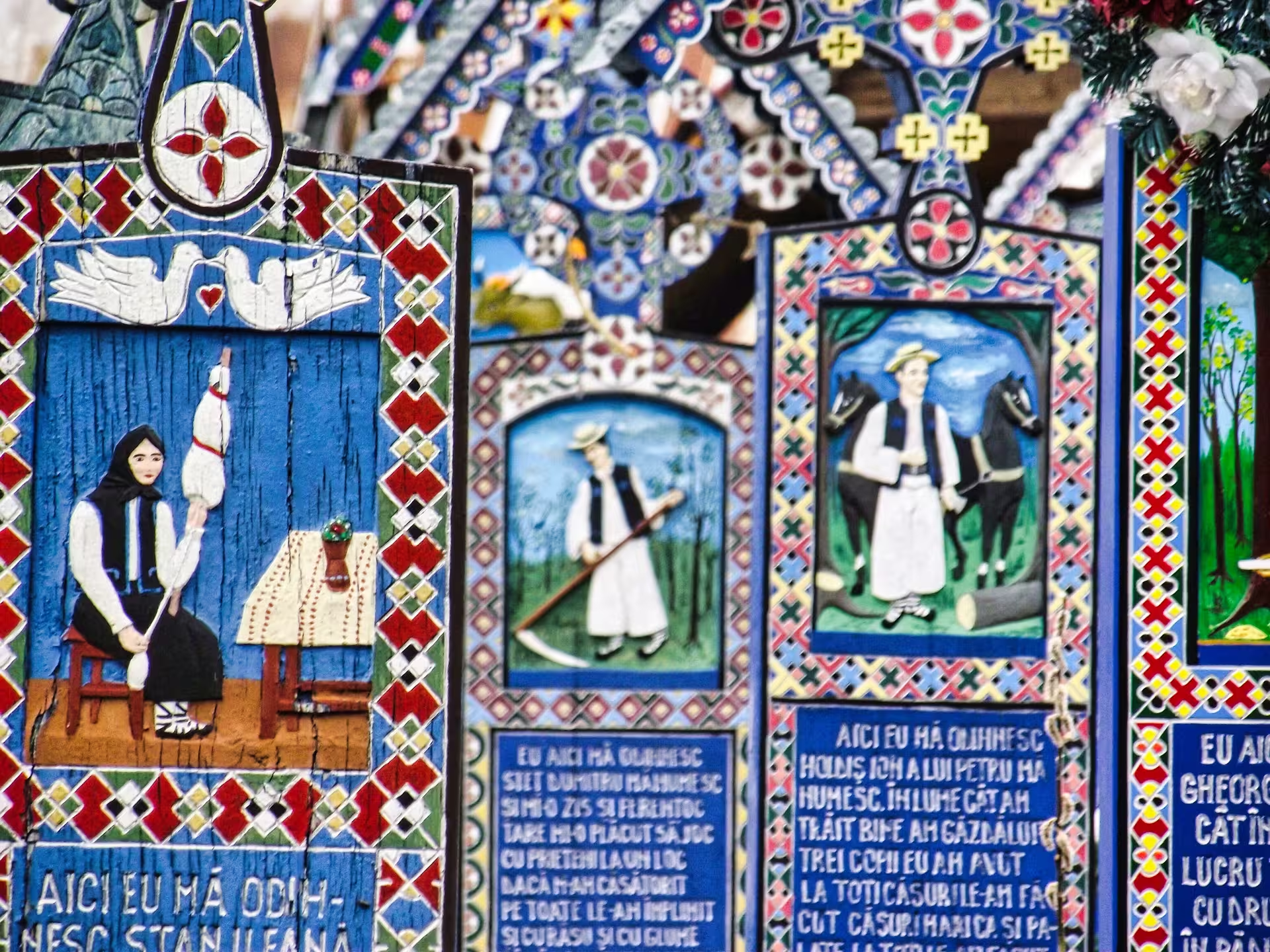
Sapanta is a small village nestled in the Maramures region of northwestern Romania, known for its distinctive wooden churches and vibrant folk traditions. This remote Carpathian settlement offers visitors a glimpse into authentic rural Romanian culture and centuries-old craftsmanship that defines the region.
What to see in Sapanta
The village is famous for the Merry Cemetery, a unique burial ground featuring hand-painted wooden crosses adorned with bright colors and naive folk art depicting scenes of daily life and religious imagery. Visitors should also explore the traditional wooden architecture of local homes and the Orthodox wooden church that exemplifies Maramures carpentry traditions.
Things to do in Sapanta
Travelers can wander through the village to observe local craftspeople creating traditional wooden crosses and crafts. Day trips to neighboring Maramures villages, visits to local artisan workshops, and guided tours of the cemetery provide cultural immersion and photography opportunities showcasing regional heritage.
Folk Art and Wooden Craftsmanship
Sapanta is renowned as a center of traditional wooden cross carving, with artisans continuing techniques passed through generations. The village's distinctive style of naive folk art and woodworking has gained international recognition, attracting visitors interested in European folk culture and authentic handmade craftsmanship.
Sapanta is located in Maramures County in northwestern Romania, approximately 430 kilometers north of Bucharest. The village sits in the Carpathian foothills within a region historically known for preserving medieval traditions, wooden architecture, and folk customs. Its remote location in the mountainous landscape has helped maintain authentic cultural practices and artisanal techniques for centuries.
Sapanta is best known globally for the Merry Cemetery (Cimitirul Vesel), a UNESCO-recognized site featuring uniquely hand-painted wooden crosses with bright colors, religious symbols, and humorous folk narratives. This distinctive burial tradition reflects Maramures philosophy viewing death with acceptance and celebration rather than somber reverence, making it one of Eastern Europe's most distinctive cultural landmarks.