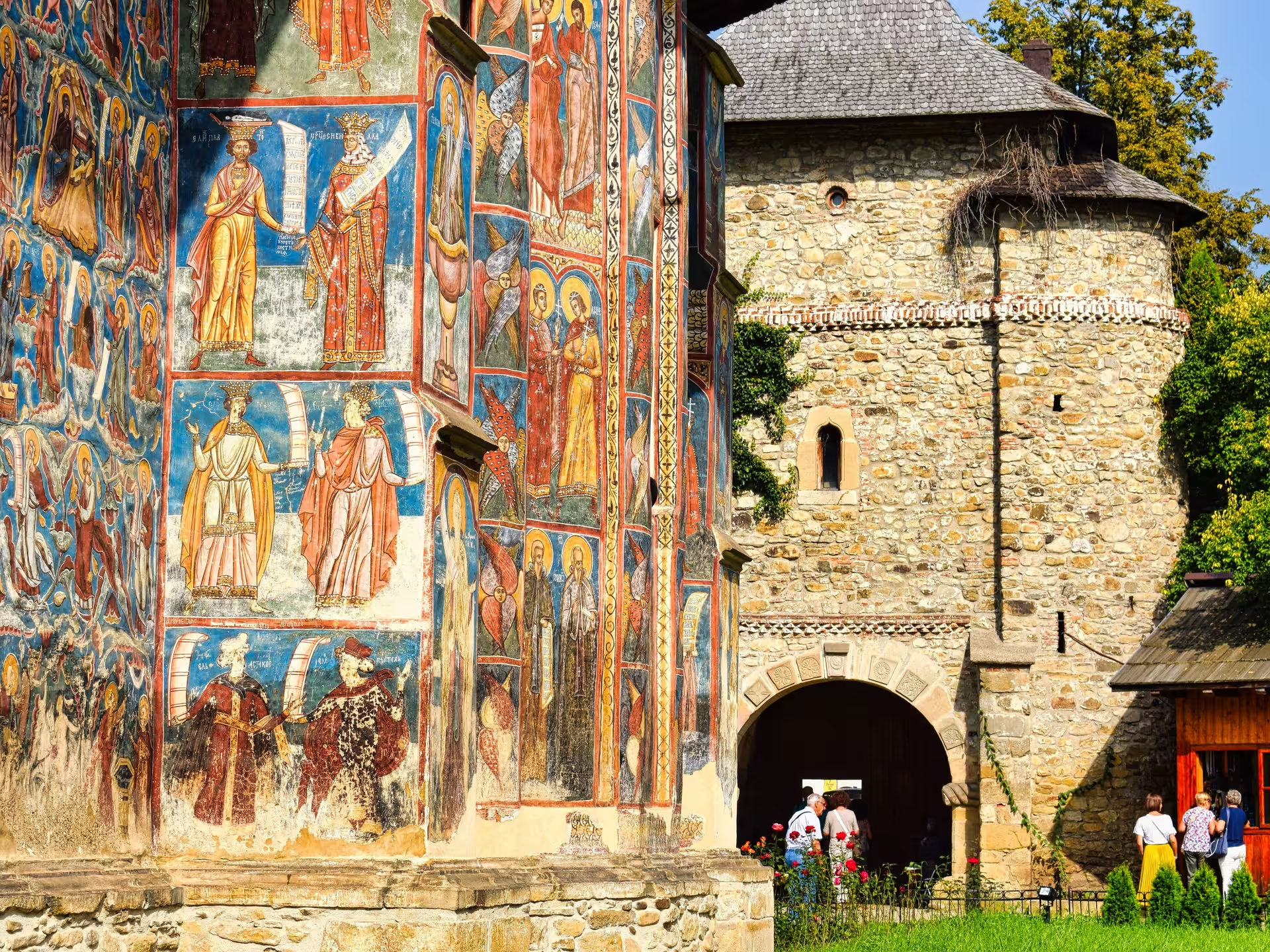
North East Romania is a region of striking natural beauty and rich cultural heritage, where the Carpathian Mountains meet historic towns and traditional villages. This area encompasses some of Romania's most authentic landscapes, from dense forests to rural communities that have preserved centuries-old customs and craftsmanship.
What to see in North East Romania
Visitors should not miss the painted monasteries of Bucovina, famous for their vibrant exterior frescoes depicting biblical scenes. The region also features the medieval fortified churches scattered across Moldavia, charming market towns like Piatra Neamt, and access to pristine mountain terrain ideal for exploration and photography.
Things to do in North East Romania
Adventure seekers can hike through the Carpathian foothills, visit traditional craft workshops in small villages, and explore local monasteries on guided tours. The region offers opportunities for cultural immersion through visits to artisan communities, farmers' markets, and participation in seasonal festivals celebrating local traditions and heritage.
Cultural Heritage and Monastic Traditions
North East Romania is renowned for its exceptional monastic heritage, with Voronet Monastery and other Bucovina religious sites serving as living museums of Byzantine art. These spiritual centers continue to function as active places of worship while welcoming visitors interested in Orthodox Christian architecture and traditional iconography.
North East Romania encompasses the Moldavia and Transylvania regions, bordered by Ukraine and the Republic of Moldova. This area is characterized by the Eastern Carpathian Mountains, pristine forests, and river valleys. The region's geography has historically made it a crossroads of cultures and a stronghold of Orthodox Christian traditions. Key geographic features include the Prut River valley, high altitude plateaus, and extensive woodland areas that support both tourism and traditional livelihoods.
Cultural Heritage, Monastic Tourism, Mountain Landscape, Authentic Traditions, Byzantine Art, Religious Sites, Rural Tourism, Adventure Travel