




Last updated:


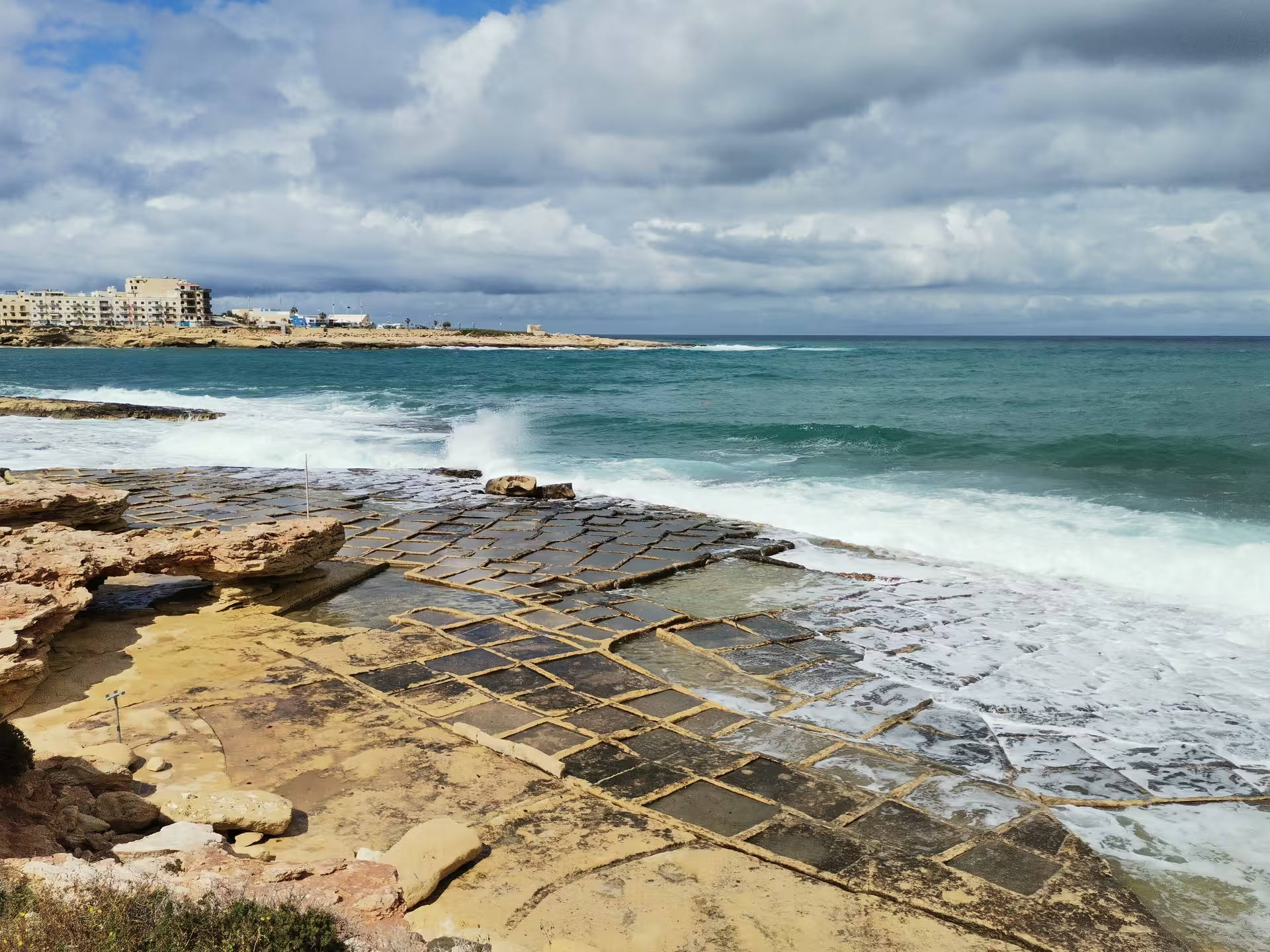
Saint Paul's Bay suits a visit built around coastal walking and local history. Its name recalls the shipwreck of Saint Paul recorded in the Acts of the Apostles, while Wignacourt Tower gives the coast a link to Malta's defences.
Two days would let you separate the coastal hike from the historic sights: dedicate one day to walking and the other to Wignacourt Tower, the Ghajn Razul fountain and Buġibba Temple.
The guided coastal hike with a local picnic in Saint Paul's Bay lasts 4 hours. It includes a professional licensed hiking guide, a trail map, route briefing materials and a picnic with artisan food and drinks. Snorkelling equipment is included during the summer season only.
Buġibba Temple is a stop for travellers interested in Malta's prehistoric monuments. Preserved within hotel grounds in Buġibba, it belongs to the same category of monument as Tarxien and Ħaġar Qim in Malta and Ġgantija in Gozo. It gives a heritage-focused visit a different thread from the coastal defences and the places associated with St Paul.
Wignacourt Tower and the Ghajn Razul fountain make a useful pairing for a history-focused day. Grand Master Alof de Wignacourt paid for the tower, and work began in 1610; the name of its designer is not known for certain. A battery added in 1715 strengthened its firepower, and restoration followed between 1973 and 1976 after Din l-Art Helwa leased it in 1970.
At the fountain, look for the marble plaque bearing a Latin inscription dated 1725 and the small carved figure of St Paul in the upper niche. Din l-Art Helwa restored the fountain in 1989 and again in 2009.
For another connection with St Paul, the statue of St Paul on St Paul's Island was blessed in 1845. Sigismondo Dimech of Valletta and Salvatore Dimech of Lija were the sculptors behind it.
Burmarrad is an option for extending a visit centred on St Paul. San Pawl Milqi, near Saint Paul's Bay, is traditionally associated with Publius welcoming and hosting St Paul around AD 60. That makes it a connected follow-up to the fountain and the story behind the bay's name.
A coastal walk is worth planning with wind in mind. Winds across the Maltese Islands come mainly from the north-west. The annual mean air temperature is about 19.5 °C, with monthly means from about 13 °C in winter to about 27 °C in August. Relative humidity is usually between about 70 and 80 percent, and sunshine averages about 8.4 hours a day over the year.
Leave plants and animals undisturbed in the Selmunett Islands nature reserve. Its rules prohibit killing, capturing, trapping or collecting species, as well as picking plants and taxidermy.
The Maltese Islands cover roughly 316 square kilometres in the central Mediterranean.
A civilisation that built temples inhabited the Maltese archipelago for about three millennia, beginning around 5200 BC.
Italian cooking has a strong influence on Maltese cuisine, with Sicily playing a particular role.