Positano: what to see and do
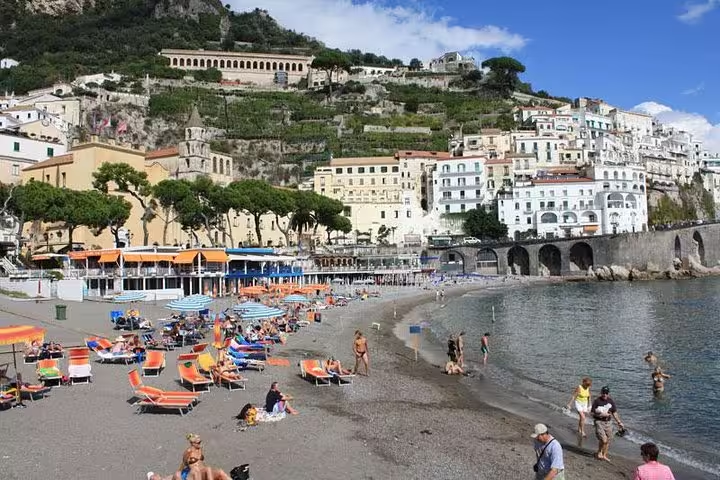
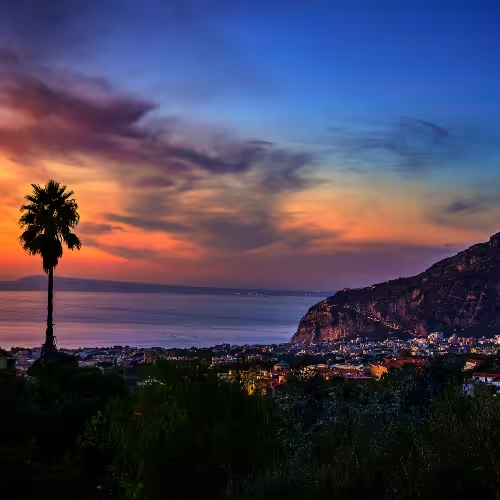
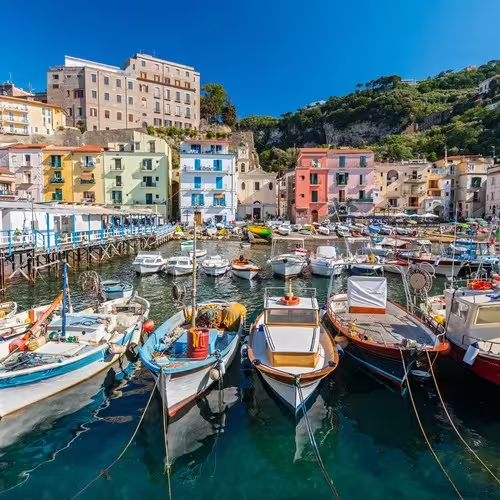
Positano is on the Amalfi Coast, on the southern side of the Sorrentine Peninsula, facing the Gulf of Salerno. The village rises vertically on a rocky site above the sea. Above its central settlement lie the hamlets of Montepertuso and Nocelle. Both are linked to the centre by long flights of steps, as well as by road.
Things to do in Positano
Santa Maria Assunta has a dome tiled in yellow, green and blue majolica. Its history is connected with a Benedictine monastery, and much of the church as it stands today comes from works begun in 1777 and completed in the early 1780s. Benedictine monks probably brought its Byzantine Madonna icon to Positano in the 12th century. The church also contains a bas-relief from 1506 that may once have served as a reliquary for Saint Vitus.
Near Spiaggia Grande, a Roman patrician villa lies beneath gardens and the Church of Santa Maria Assunta. Building works brought the villa to light again in 2003. Its remains extend beneath the historic centre, along what was the ancient seafront. The frescoes are in the Pompeian Fourth Style, from the decades before the eruption of AD 79.
Baroque houses built by merchants of the 17th and 18th centuries remain visible. At Fornillo Beach stands the small chapel of Santa Margherita. A stairway of about 1,500 steps descends from Nocelle, at the end of the Path of the Gods, to Arienzo and its beach.
Montepertuso and Nocelle
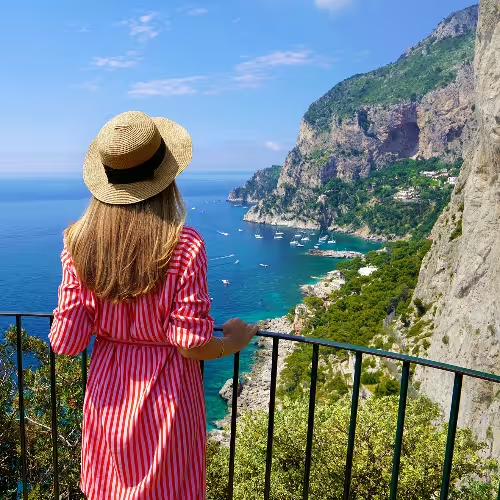
The name Montepertuso refers to a mountain with a hole through it. According to legend, the Madonna made the opening with her index finger. Nocelle is a recognised stopping place on the Path of the Gods. Views along the path reach the Faraglioni of Capri, and the route crosses Colle Serra at an elevation of 580 metres.
Positano and the Amalfi Coast
The Amalfi Coast received UNESCO World Heritage status in 1997, in the Cultural Landscape category. Positano belongs to the production area of Limone Costa d'Amalfi IGP. The lemon variety Sfusato Amalfitano takes its name from the tapered shape of its fruit. In 2025 FAO named the Amalfi lemon orchards and terraces ('Lemon Orchards and the Terraced Agricultural System in Amalfi') a Globally Important Agricultural Heritage System.
An Amalfi Coast day trip to Ravello, Positano and Amalfi lasts 8 hours and 30 minutes, with free time in each town and an itinerary adjusted to individual preferences.
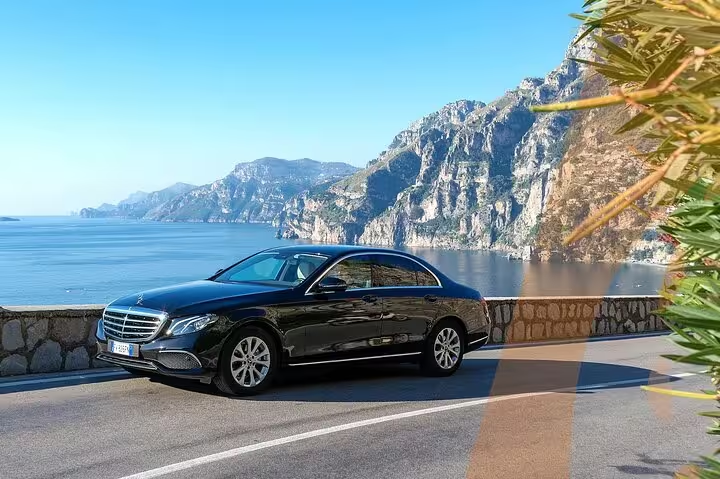
A private Amalfi Coast day trip to Positano, Sorrento and Amalfi takes 8 hours and 30 minutes and includes a private driver, travel by private vehicle and free time in all three towns.
The private Amalfi Coast tour from Naples to Positano, Amalfi and Cetara lasts 10 hours, with a chauffeur-driven private vehicle, transport between destinations, visits to Sorrento, Positano, Amalfi and Cetara, and an itinerary tailored to individual interests.
Between Positano and Capri lies the Li Galli archipelago. The Natura 2000 site Isolotti Li Galli contains Mediterranean scrub and a subspecies of Italian wall lizard, Podarcis siculus gallensis, described from these islets.
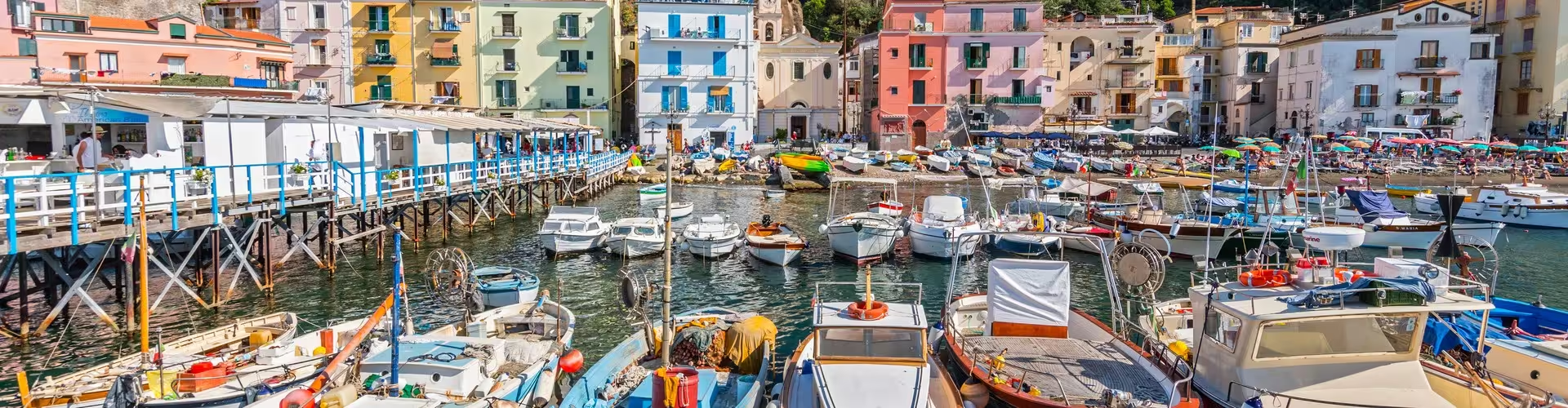
A private boat tour from Sorrento to the Amalfi Coast and Positano lasts 7 hours and includes private use of a traditional gozzo 850 boat, an experienced skipper, snorkelling equipment on board and a customisable coastal itinerary.
Frequently asked questions
Where is Positano on the coast?
On the Amalfi Coast, on the Gulf of Salerno side of the Sorrentine Peninsula.
What colours are on the dome of Santa Maria Assunta?
The majolica tiles are yellow, green and blue.
What is beneath central Positano?
A Roman villa that once occupied the seafront of today's historic centre.
Is Nocelle on the Path of the Gods?
Yes, Nocelle is a stopping place on the path.
Where are the Li Galli islands?
The archipelago is between Positano and Capri.