Last updated:


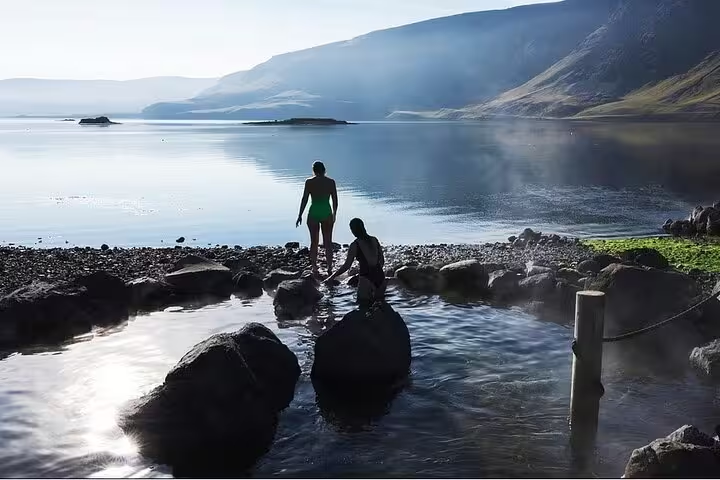
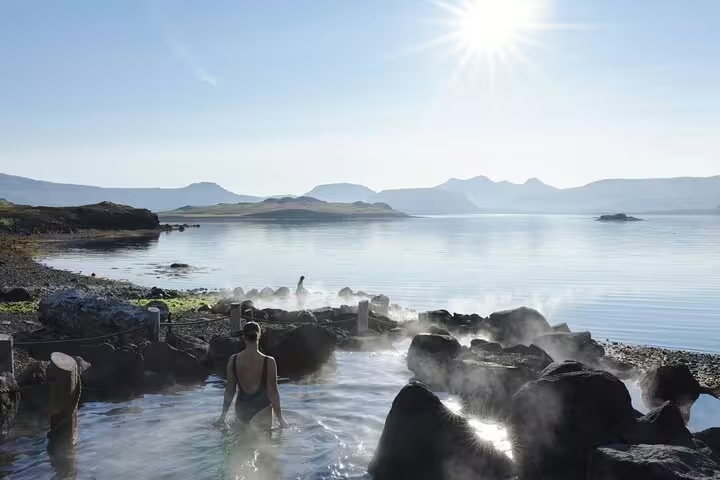
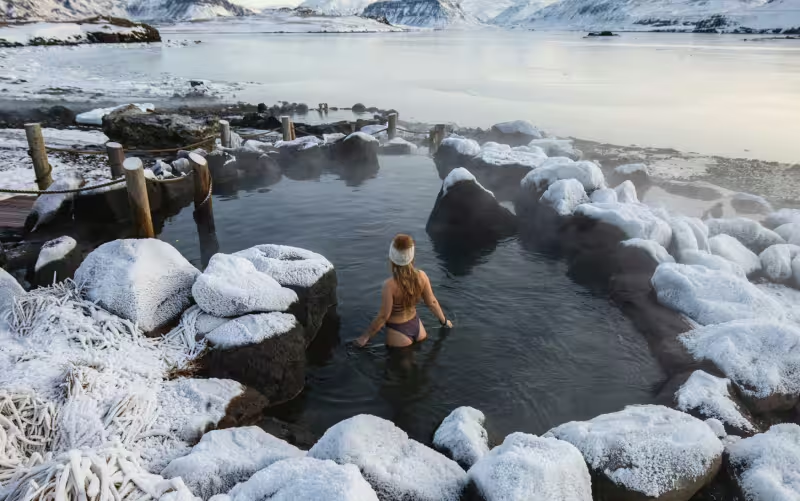
Hvammsvík is worth planning around the water: its hot springs sit on a beach of black sand in Hvalfjörður, with pools spread along the shore. A visit can stay focused on bathing, while Hvalfjörður offers other possibilities if you would rather make room for waterfalls or unusual rock formations.
The pools offer a choice of temperatures and sizes, so you can make the bathing experience the centre of your visit rather than treat it as a single quick dip. There are eight natural hot springs along the shoreline, giving you different pools to try without making another attraction the focus.
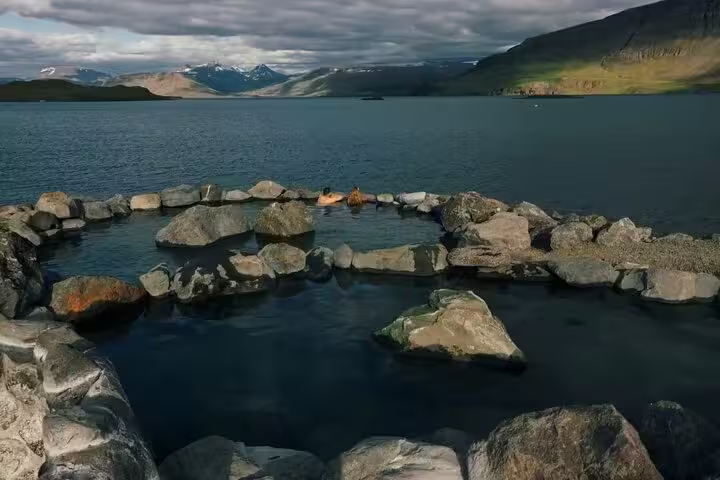
Atlantic seawater joins geothermal water in the pools, tying the bathing experience to the coast itself. The tide matters here: when the sea rises to high tide, it covers one of the springs, so the shoreline pools are not a fixed scene.
The coast also has a wildlife interest beyond the baths: eider ducks breed along the Kjós shoreline, with Hvammsvík a particular breeding area.
One day is a reasonable plan for a visit centred on the baths, with time for food at Hvammsvík rather than a long list of other stops. The drive from Reykjavík takes about 45 minutes, which makes a bathing visit a practical day-trip option.
If you want a trip from Reykjavík focused on the baths, the four-hour Hvammsvík excursion comes with an entry ticket.
If the Golden Circle is also on your list, the guided Golden Circle and Hvammsvík day trip fills ten hours and includes admission to the hot springs.
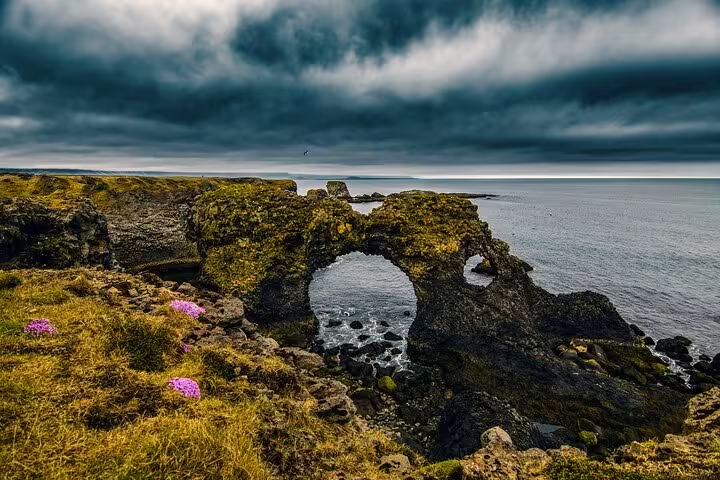
Waterfalls and rock formations offer two distinct directions for exploring beyond the baths, so let the landscape you want to see shape the rest of your plan. Steðji, also known as Staupasteinn, is a nearby option for an interest in rock shapes: the formation resembles a goblet and stands beside the old national road around Hvalfjörður.
The rock rewards a closer look, with reddish scoria below and basalt columns above. It stands on Skeiðhóll beside Hvammsfjall in Hvalfjörður, so these names belong on a plan focused on the fjord's rock formations.
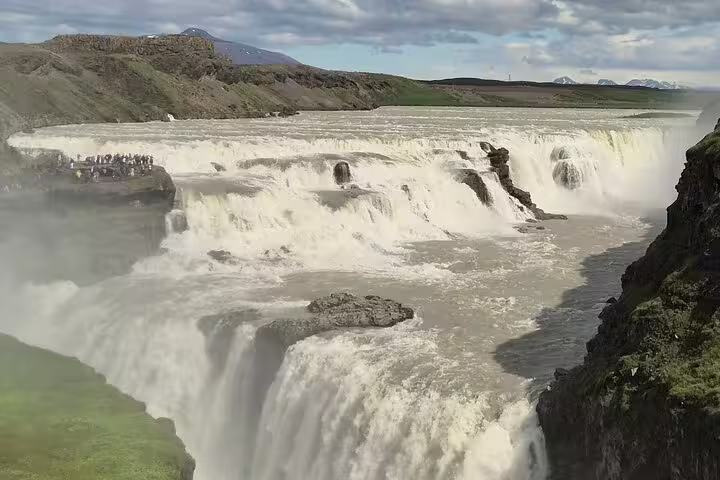
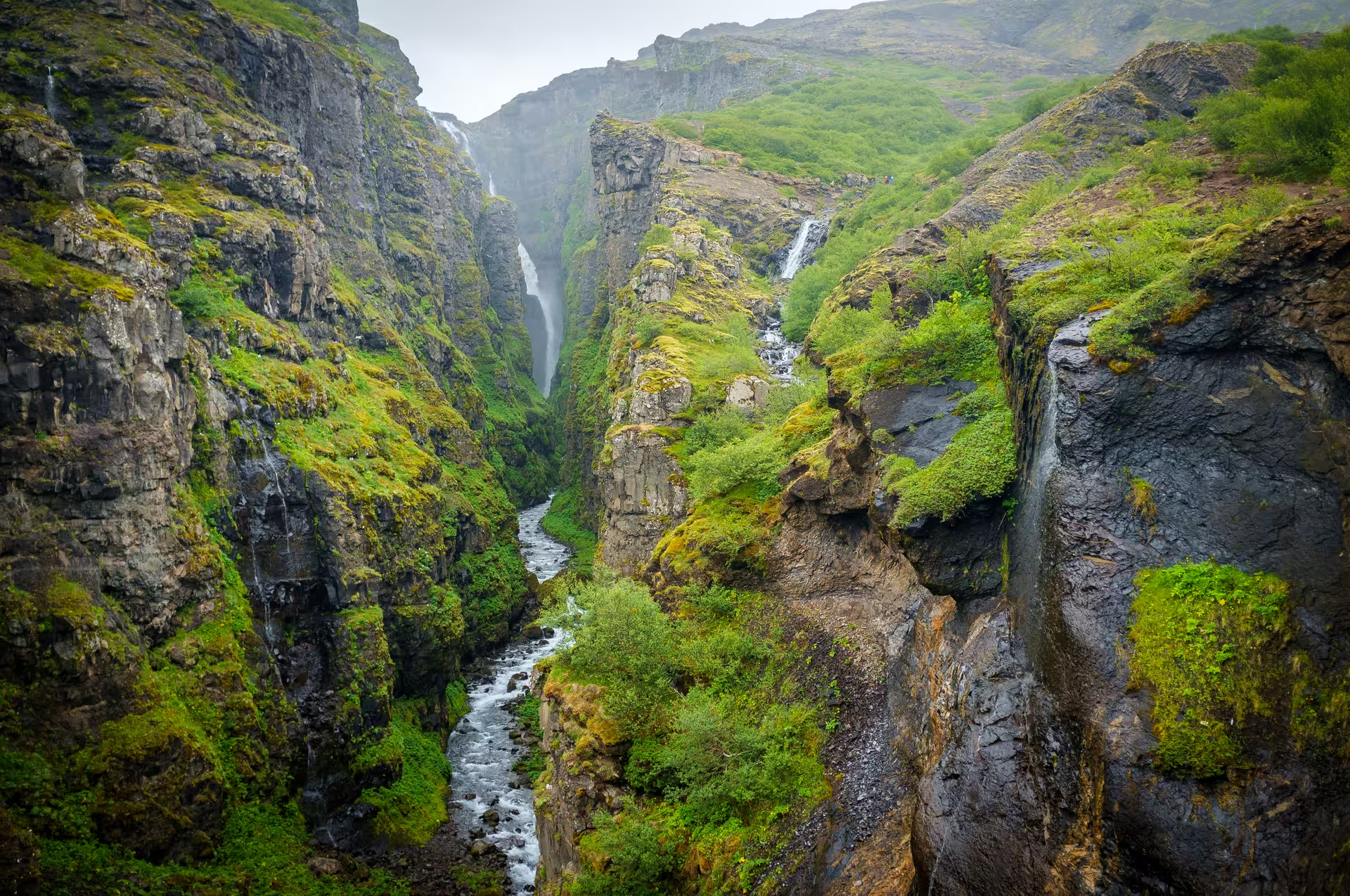
Glymur in Botnsdalur brings a different scale to a waterfall-focused visit, with a drop of 198 metres. Fulmars nest in its gorge into summer, making the surrounding gorge part of the interest as well as the falling water.
Game of Thrones viewers may prefer to put Þórufoss on their list: this waterfall on the Laxá River was a filming location for the series.
Spring is worth favouring if lower rainfall matters to your plans around the fjord. Kjósarhreppur, on the southern side of Hvalfjörður, receives less precipitation in spring than in the other seasons, while autumn brings more. For a visit with time outside the baths, spring therefore has the rainfall advantage over autumn.
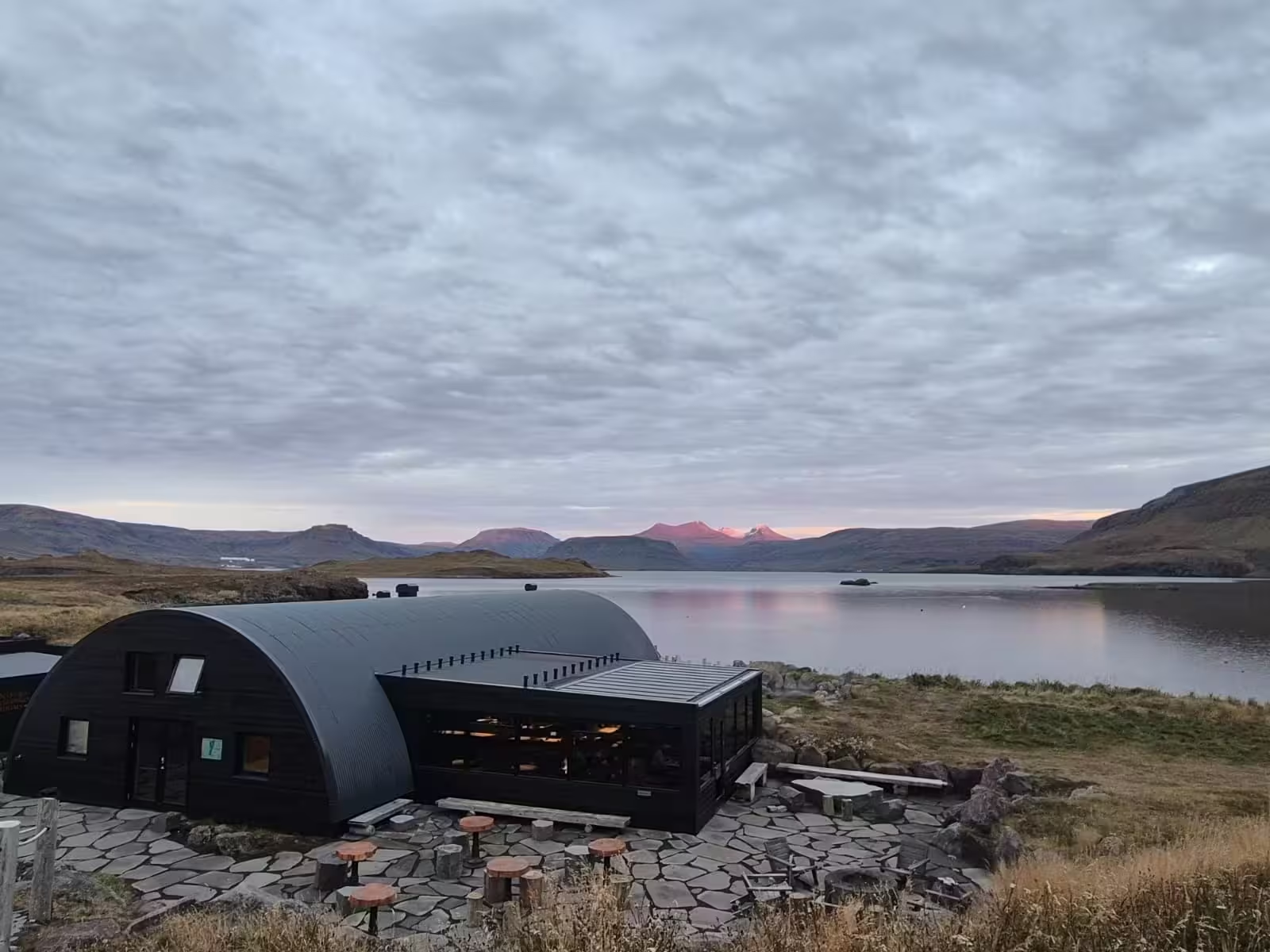
Yes, Stormur Bistro lets you keep a food stop at Hvammsvík, with seafood soup on the menu. Open sandwiches with generous toppings and cakes give you other options, so a visit need not be planned around soup alone.
Yes, the geothermal water comes from a source 1,400 metres underground, and the pools also take in seawater.
Yes, Steðji was designated a natural monument in 1974, and its protected area covers about 3.2 hectares.
2022 is the year the hot spring resort opened.