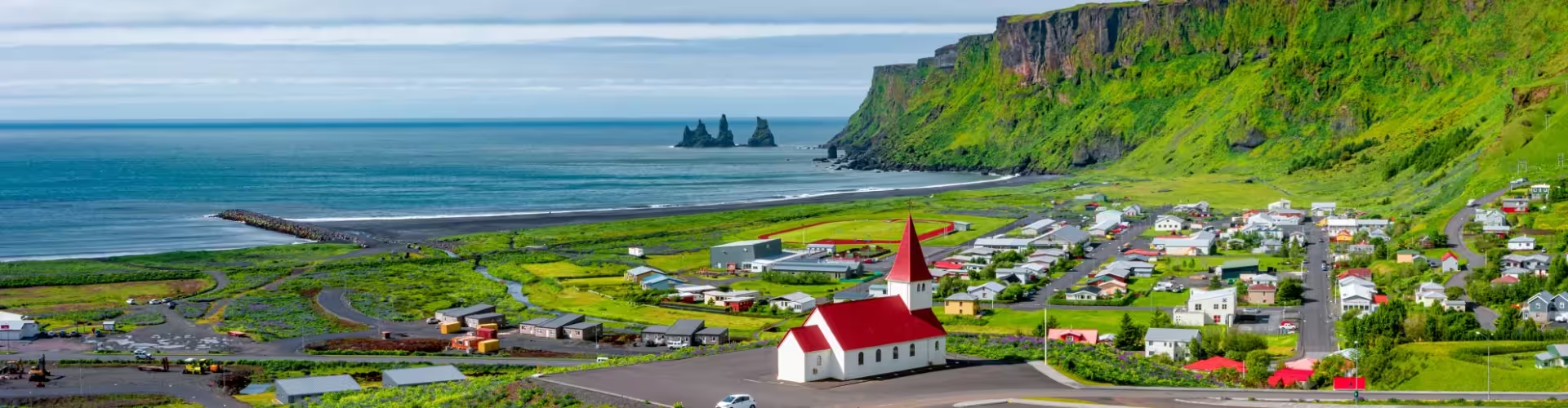
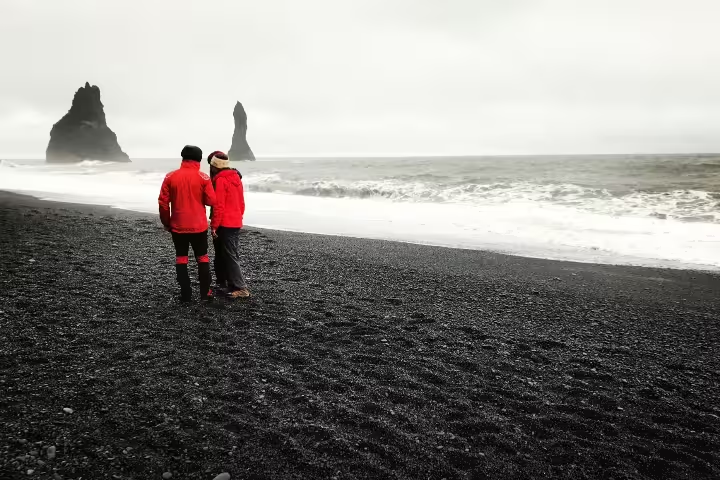
Reynisdrangar is a striking collection of basalt sea stacks located on Iceland's South Coast near the black sand beach of Reynisfjara. These towering rock formations rise dramatically from the Atlantic Ocean, creating one of Iceland's most photographed coastal landscapes. The area is renowned for its raw volcanic geology and powerful ocean waves.
What to see in Reynisdrangar
The main attraction is the cluster of basalt columns that jut from the sea, shaped by ancient lava flows and centuries of wave erosion. Visitors can observe the distinctive hexagonal columnar formations up close from Reynisfjara Beach. The black sand shoreline itself provides a striking contrast to the grey stone pillars and white ocean spray.
Things to do in Reynisdrangar
Explore the beach on foot, photograph the stacks from various angles, and walk along the coastal trails that offer panoramic views. Many visitors combine Reynisdrangar with nearby attractions like Skógafoss waterfall and Sólheimasandur plane wreck. Local tour operators offer guided photography tours and boat excursions that provide closer perspectives of the rock formations.
Geological Significance and Photography
Reynisdrangar represents a textbook example of columnar basalt formations, making it popular with geology enthusiasts and photographers. The dramatic interplay of light, shadow, and ocean spray creates constantly changing photographic opportunities throughout the day and seasons. The site has become increasingly accessible to international visitors exploring Iceland's South Coast route.
Reynisdrangar is located on Iceland's South Coast near the village of Vík and the famous Reynisfjara Beach. The site sits approximately 180 kilometers southeast of Reykjavik and is easily accessible via Route 1, the main Ring Road. The basalt sea stacks are visible from the black sand beach and nearby coastal viewpoints, making it a popular stop on South Coast tours and road trips.
Reynisdrangar is a UNESCO-relevant geological site that exemplifies Iceland's volcanic heritage. The basalt columnar formations were featured in various nature documentaries and photography publications. The location attracts geology students, professional photographers, and nature enthusiasts from around the world.