The Gibraltar of the North
In 963 Count Sigfried built a castle on the Bock Promontory, the foundation stone of the city. Luxembourg City was then transformed into a fortress: after Vauban extended the fortifications, the Austrians created the "Gibraltar of the North" in the 18th century, and most fortifications were demolished after the Treaty of London in 1867. The fortress bulwarks and the old town were inscribed on the UNESCO World Heritage List in 1994.
The Austrians began building the Bock Casemates in the middle of the 18th century; they could have housed some 50 cannons and 1,200 soldiers.
Two viewpoints
The Chemin de la Corniche, which the Luxembourg writer Batty Weber called "the most beautiful balcony of Europe", runs on the ramparts along the Alzette valley, looking over the Grund district and the Rham Plateau.
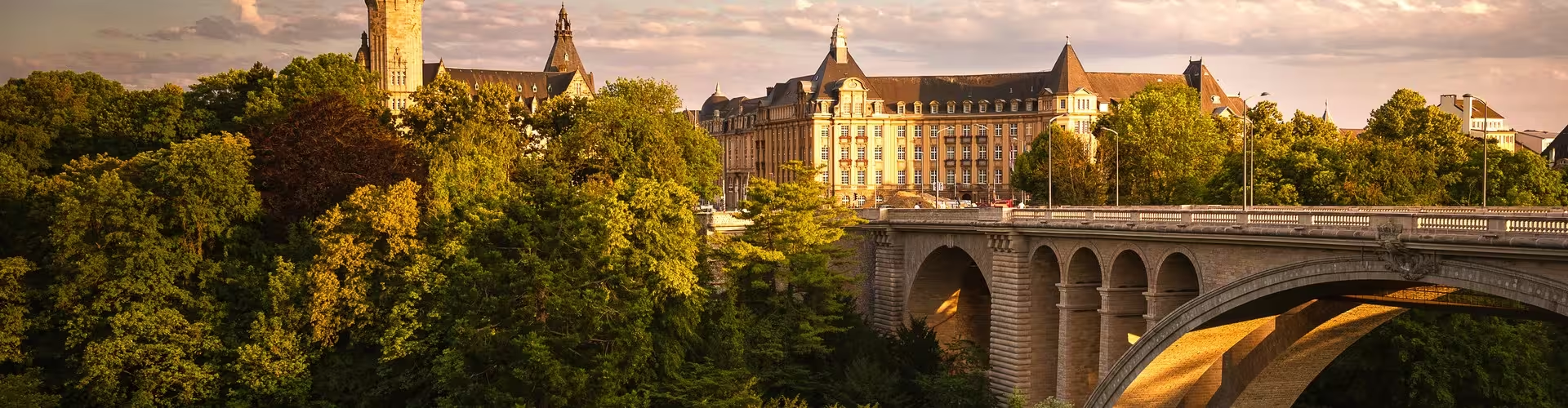
On the Place de la Constitution, the "Gëlle Fra" monument was set up in 1923 to commemorate the Luxembourgers who perished in the First World War; from here the view stretches over the Pétrusse Valley and the Adolphe Bridge.
Down in the Grund
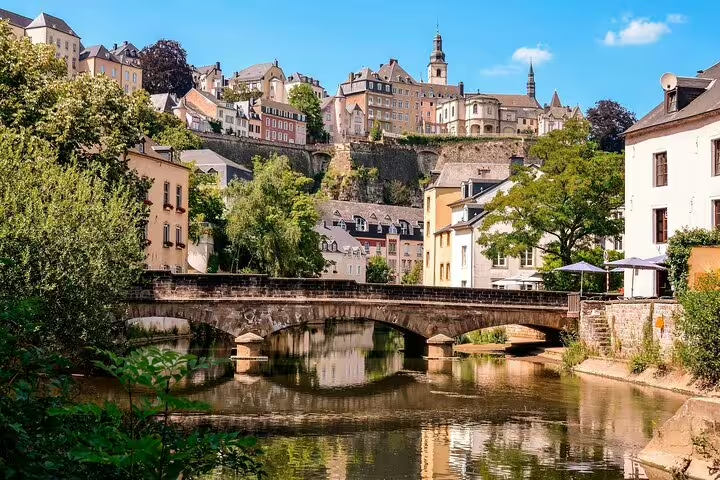
With historical references dating back to the 14th century, the Grund is one of the oldest districts, with a much calmer feeling than the nearby city centre. The ancient Abbey of Neumünster is a landmark in the Grund, and the Church of St. Michel is now a museum of sacred art.
A city on several levels
The city is built on different levels: the Grund and Pfaffenthal districts are reachable by public lifts, and the Kirchberg Plateau by the city's only funicular.
On foot, the city can be explored with the Luxembourg City Interactive Scavenger Hunt Self-Guided Tour.
Frequently asked questions
What is Luxembourg City like through the year?
The summer months are mainly sunny and warm, with many open-air events, and golden autumn days light up the Pétrusse valley.
What day trips can you take from Luxembourg City?
The surroundings are compact: in under an hour you can wander through the rocky landscape of the Mullerthal, trace wine terraces along the Moselle or hike the quiet hills of the Éislek.