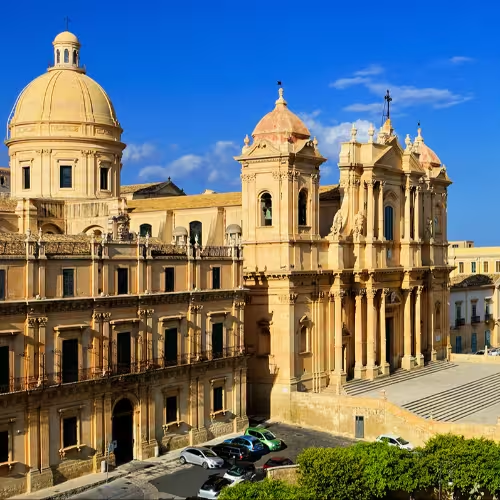
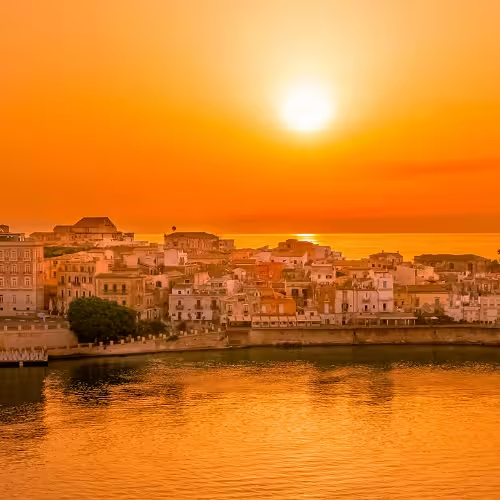
Modica is a stunning baroque town located in southeastern Sicily, Italy, renowned for its dramatic hilltop setting and magnificent architecture. This UNESCO World Heritage site showcases ornate churches, grand staircases, and elegant palaces that define the Val di Noto region's architectural legacy.
What to see in Modica
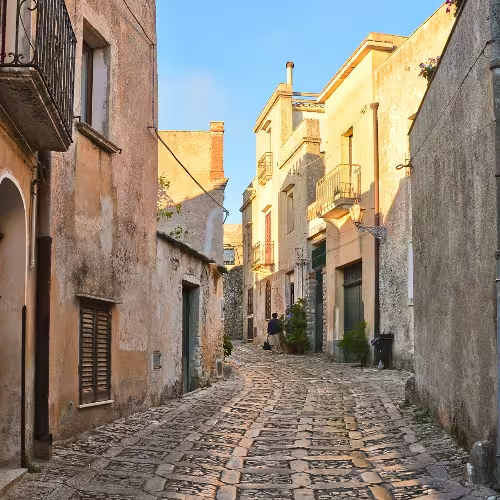
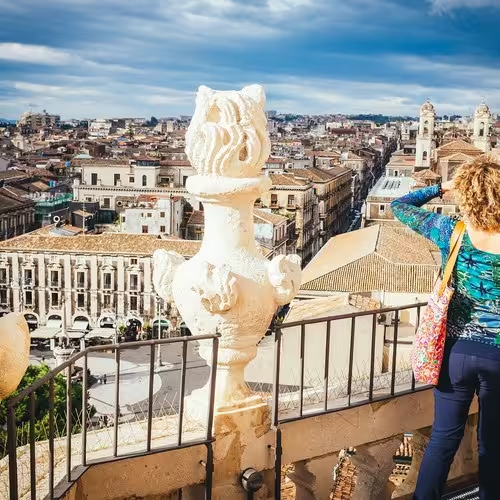
The Church of San Giorgio dominates the skyline with its impressive facade and 250-step staircase, offering sweeping views of the town and countryside. The Church of Santa Maria di Monserrato and the historic Palazzo Polara reflect the town's rich baroque heritage. Wandering through narrow cobblestone streets reveals hidden courtyards, local shops, and centuries-old buildings that transport visitors to another era.
Things to do in Modica
Explore the town's winding streets on foot to discover authentic local life and artisan workshops. Visit nearby ragusa and other Val di Noto towns as part of a broader baroque architecture tour. Sample local specialties including chocolate and arancini at family-run restaurants and cafes throughout the town center.
Modica's Chocolate Tradition
Modica is celebrated for its distinctive chocolate-making heritage, featuring chocolate di Modica, a traditional confection made with granulated sugar that creates a unique texture. This artisanal product reflects centuries of Sicilian culinary tradition and remains a beloved souvenir for visitors exploring the town's charming streets and markets.
Modica is located in the province of Ragusa in southeastern Sicily, Italy. This region is part of the Val di Noto, a UNESCO World Heritage area known for its exceptional concentration of late baroque architecture and urban planning from the 17th and 18th centuries. The town sits on a hillside with commanding views of the surrounding Val di Noto landscape and is easily accessible from other baroque towns in the region.
Sicily baroque architecture, UNESCO World Heritage sites, southeastern Sicily, Val di Noto region, traditional Italian chocolate, Ragusa province, baroque cultural tourism