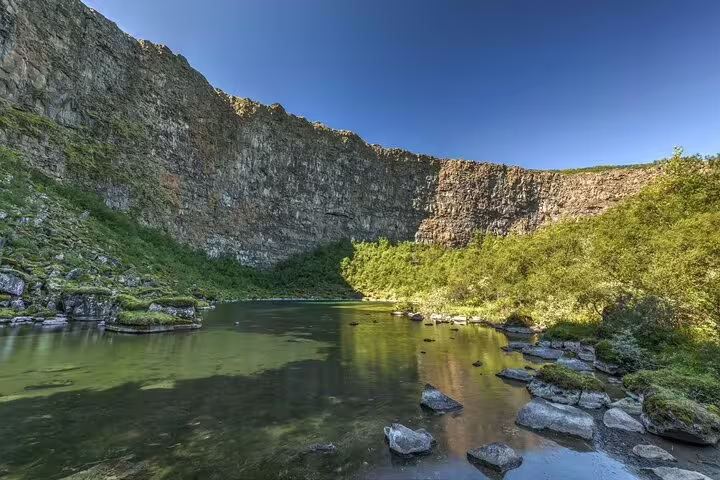
North Iceland is a region of dramatic natural contrasts, where volcanic landscapes meet pristine coastlines. Home to Akureyri, Iceland's second-largest city, and the powerful Godafoss waterfall, the north showcases Iceland's raw geological beauty and vibrant local culture.
What to see in North Region of Iceland
The north features stunning natural attractions that define Iceland's landscape. Godafoss waterfall cascades dramatically over basalt cliffs, while Lake Myvatn offers geothermal wonders and prolific birdlife. The charming town of Akureyri provides urban amenities and galleries overlooking Eyjafjordur fjord.
Things to do in North Region of Iceland
Visitors can explore geothermal areas around Myvatn, take whale-watching cruises from Husavik, or hike through lava fields and volcanic terrain. Summer offers midnight sun experiences, while winter brings opportunities to chase the northern lights across dark skies.
Northern Lights and Midnight Sun in North Iceland
The north's high latitude makes it exceptional for viewing natural phenomena. Winter visitors seek the Aurora Borealis dancing across arctic skies, while summer travelers experience the midnight sun illuminating landscapes at midnight, creating unique conditions for photography and exploration.
North Iceland encompasses the northern region centered around Akureyri, Iceland's second-largest city. This area stretches across dramatic fjords, volcanic plateaus, and geothermal fields. Key geographic features include Eyjafjordur fjord, Lake Myvatn basin, and the Godafoss waterfall system. The region experiences extreme seasonal variations with midnight sun in summer and optimal aurora conditions in winter, making it a year-round destination for diverse travelers.
North Iceland stands out for its exceptional natural phenomena and accessibility to multiple ecosystems within a compact area. The region balances developed infrastructure in Akureyri with remote wilderness experiences. Notable for both geological significance and cultural heritage, North Iceland attracts adventure seekers, wildlife enthusiasts, and aurora hunters. The area maintains strong connections to Viking history while hosting modern geothermal research and sustainable tourism initiatives.