



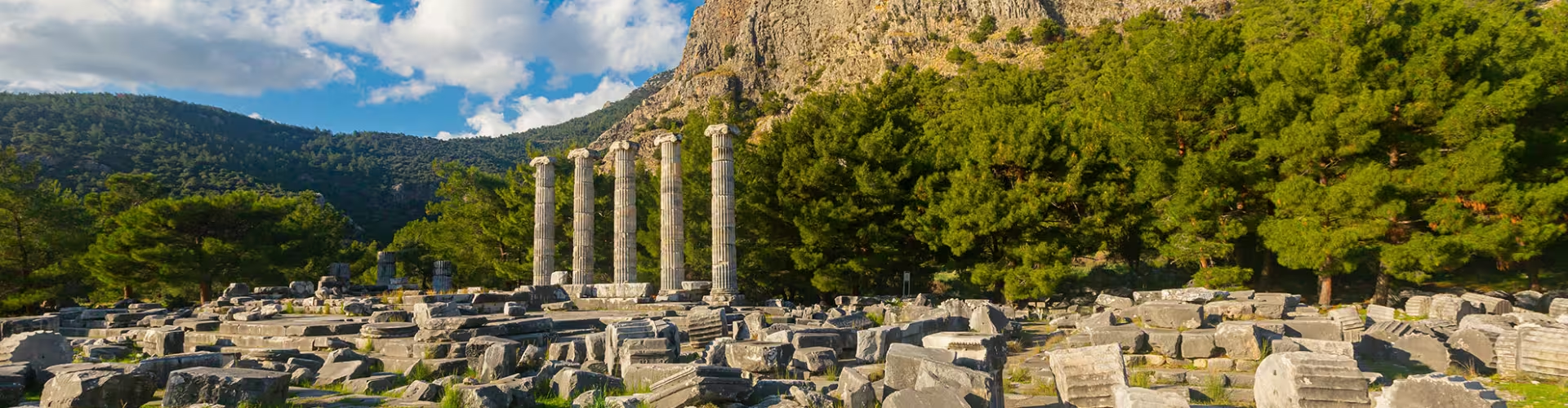


Priene is one of the Aegean’s most atmospheric ancient cities, known for its orderly street plan, hillside setting, and quietly powerful ruins. This guide focuses on decision support, what to prioritize, how to structure your time, and how to plan a smooth visit without guesswork. Expect a place that rewards slow walking, careful looking, and a bit of curiosity about how Greek and Anatolian histories overlap in western Türkiye.
Priene feels like a calm, open air museum where stone streets and terraces still read like a living town plan. The signature vibe is spacious and contemplative, with big views and a sense of architectural clarity rather than crowded spectacle. Go when you want a high impact classical site that is easier to absorb than larger, busier complexes, and build your day around light, shade, and unhurried exploration.
Priene sits in Türkiye’s Aegean Region within Aydın Province, in a landscape shaped by valleys, low mountains, and the wider coastal hinterland. For most travelers, the practical approach is to base yourself in a larger hub and visit as a focused half day or full day, then combine it with nearby Aegean highlights. Plan your routing around the main regional transport corridors and allow extra time for rural roads as you get closer to the site.
In the Aegean, summer typically brings stronger sun and higher temperatures, which can make exposed ruins feel intense at midday. Spring and autumn often provide more comfortable walking conditions and softer light for photos, with fewer weather extremes. Winter can be quieter and moodier, but you should plan for cooler air, possible rain, and shorter daylight, which compresses sightseeing time.
Türkiye uses the Turkish Lira, and it is smart to carry some cash for small purchases, quick stops, and rural areas where card acceptance can be inconsistent. For bigger expenses like accommodation in nearby towns, cards are commonly used, but having a backup payment method reduces friction. Build a small buffer into your budget for transport flexibility, water, and snacks, especially if you plan to linger at Priene and nearby sites on the same day.
1) Walk the Grid Plan of Priene
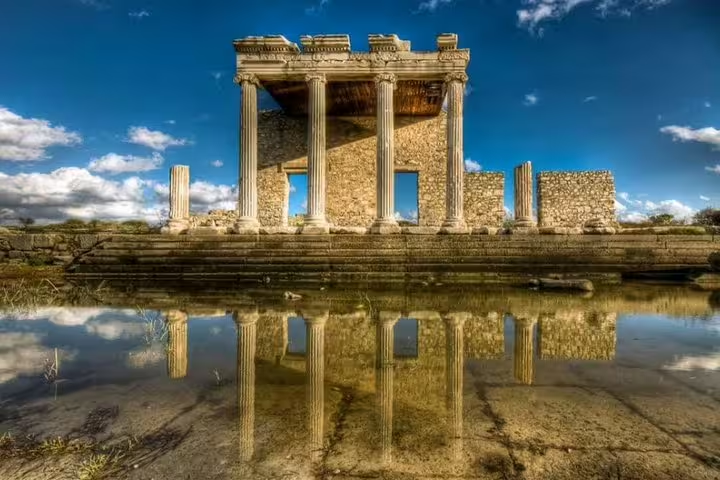
What makes this special is how clearly the city’s street layout still reads, giving you an unusually legible sense of daily life and civic order. The experience is less about one single monument and more about the town as a system, streets, terraces, and public spaces working together. Practical tip: start with a slow loop that helps you understand the layout, then revisit your favorite areas for photos once you know where the best angles are.
2) Spend Time at the Theater
Ancient theaters are where architecture, acoustics, and social history meet, and this one helps you imagine gatherings that shaped public life. Sitting quietly for a few minutes turns the structure from a photo stop into a real place with scale and purpose. Practical tip: aim for softer light, and be mindful of uneven stone underfoot when climbing for viewpoints.
3) Seek Out the Temple Area
Sacred spaces often reveal how a city saw itself, what it valued, and how it connected to wider Greek traditions across the Aegean. Even without rushing through details, the proportions and positioning can be striking, especially in contrast to the surrounding terrain. Practical tip: take a few minutes to look outward from the temple zone, the relationship between monument and landscape is part of the story.
4) Follow the Main Streets for Photo Composition
The straight lines and terraces of Priene make it ideal for strong perspective shots, where stone blocks guide the eye into the distance. It is a site that rewards patient framing rather than rapid snapshots. Practical tip: shoot both along the street axis and from slight side angles to capture depth and texture.
5) Pause at Viewpoints Over the Surrounding Countryside
A big part of the appeal is the setting, which gives you a sense of why ancient settlements balanced defense, visibility, and access. These pauses also break up walking and help you pace your visit. Practical tip: carry water and plan short rest stops in shade when available, especially in warmer months.
6) Combine with a Wider Aegean Ruins Day
The region is dense with classical and Anatolian heritage, and Priene fits naturally into a multi site itinerary. Pairing sites adds context, you start to notice differences in planning, scale, and later history. Practical tip: decide your priority site first, then add a second stop only if you still have energy and daylight.
7) Slow Travel Walk: Read the Stones, Not Just the Signs
Even if you are not a specialist, you can notice building techniques, reused blocks, and how structures sit on terraces. This kind of observation makes the visit feel personal and memorable. Practical tip: give yourself a no rush window, and avoid trying to “complete” everything if the terrain feels tiring.
8) Golden Hour Circuit
Warm light can soften the stone and bring out relief, making the ruins feel more dimensional. It also tends to be a calmer time to linger and take in the atmosphere. Practical tip: plan your arrival so you are not racing the light, and keep a simple route in mind for the last hour.
Start with a quick orientation loop to understand the city grid, then move toward the theater for your first major stop. Continue to the temple area and spend time taking in the setting, then follow the main streets back with photo pauses along the way. Finish with viewpoints and a slower final circuit, leaving time for rests and water breaks so the visit stays enjoyable rather than rushed.
Day 1 focuses on Priene as a complete urban plan, walk the streets, revisit the theater, and explore at a slower pace with longer stops for observation. Day 2 can add nearby Aegean heritage sites and a local town base for food and an evening stroll, which helps you feel the region beyond the ruins. If you have a third day, keep it flexible for weather and energy, and prioritize a second look at your favorite area in better light rather than adding too many new stops.
Food is part of the travel memory, and in the Aegean you will often find a style that leans fresh, herb forward, and olive oil rich.
Priene is best experienced on foot once you are on site, since the value is in walking the streets, terraces, and key monuments at your own pace. For getting there and linking multiple stops, travelers commonly rely on a private car, taxi style arrangements, or organized day tours from nearby hubs, depending on comfort and time. Wear stable walking shoes for uneven stone, and pace yourself on slopes and steps, the terrain can be tiring if you rush. If you are traveling with mobility considerations, plan conservatively and prioritize the most accessible viewpoints and main paths.
Many travelers find a half day works well for a comfortable circuit with photo stops and short rests. If you enjoy slow observation and revisiting viewpoints in different light, plan closer to a full day.
Yes, the wider Aegean region has several major ruins that pair naturally in one itinerary. Keep your schedule flexible so you can adjust for walking fatigue and daylight.
Wear stable shoes with good grip and comfortable clothing for sun and wind exposure. Bring water and a hat, especially in warmer months when shade can be limited.
Carrying some Turkish Lira is helpful for small purchases and rural stops where card use can be inconsistent. Cards are commonly used in larger towns, but a cash backup makes the day smoother.
Spring and autumn often balance pleasant walking conditions with manageable crowd levels. Summer can be very sunny, so plan earlier or later in the day for comfort.