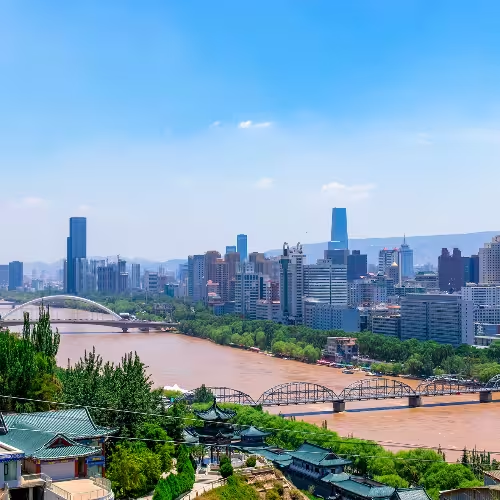
Gansu Province stretches across northwestern China as a vital corridor along the ancient Silk Road. This region is home to the remarkable Mogao Caves near Dunhuang, one of the world's greatest repositories of Buddhist art, and the dramatic landscapes that have captivated travelers for centuries.
What to see in Gansu Province
Visitors should not miss the Mogao Caves, a UNESCO World Heritage site featuring thousands of Buddhist murals and sculptures. The Great Wall sections near Jiayuguan stand as impressive historical monuments, while the colorful rock formations of Zhangye Danxia offer striking natural scenery that draws photographers from around the globe.
Things to do in Gansu Province
Explore the province on guided tours through ancient Silk Road trading posts and desert landscapes. Visitors can trek across sand dunes, visit traditional oasis towns, and take day trips to historical sites that reveal layers of Chinese history and cultural exchange spanning over two millennia.
Silk Road Heritage and Desert Culture
Gansu Province remains deeply connected to its role as a Silk Road crossroads, where Dunhuang served as a critical hub for trade and cultural exchange. The region's desert environment and historic trading routes continue to shape local traditions, crafts, and the profound sense of history that permeates every visit.
Gansu Province is located in northwestern China, stretching along the ancient Silk Road corridor. It borders Inner Mongolia to the north, Ningxia and Shaanxi to the east, Sichuan and Tibet to the south, and Qinghai and Xinjiang to the west. The province encompasses diverse landscapes from desert regions to high plateaus, with Lanzhou serving as its provincial capital and largest city.
Gansu Province is renowned for its significant historical importance as a Silk Road crossroads, exceptional Buddhist art collections in the Mogao Caves, dramatic desert landscapes including Zhangye Danxia, and well-preserved sections of the Great Wall. The region represents a crucial point of cultural exchange between East and West, with deep connections to Buddhist heritage, ancient trade routes, and desert exploration traditions.