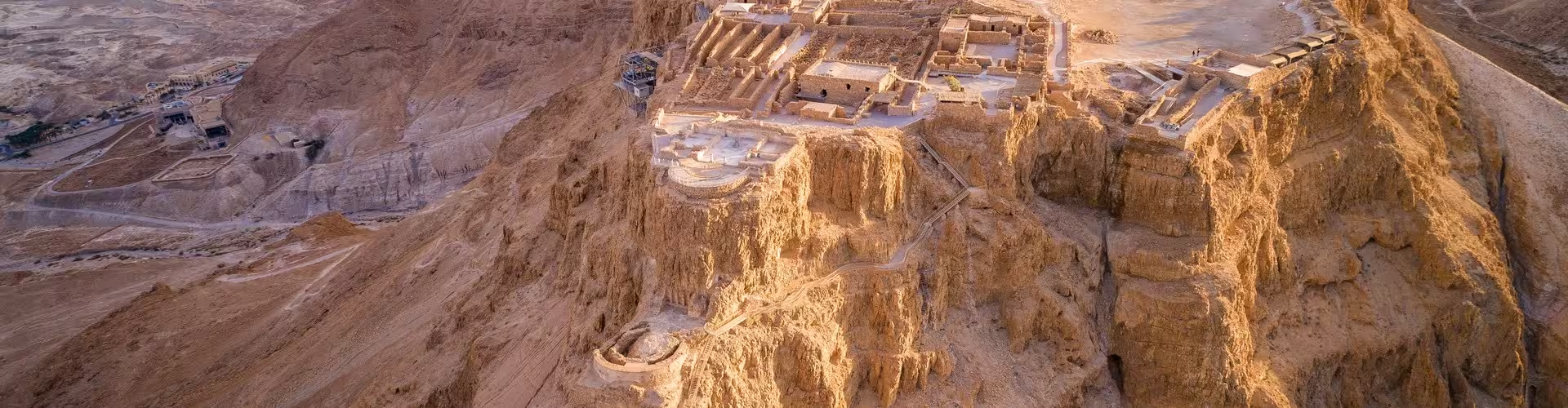
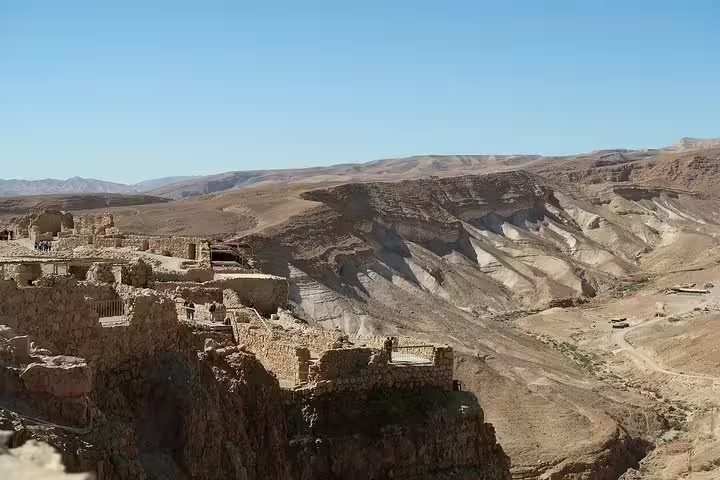
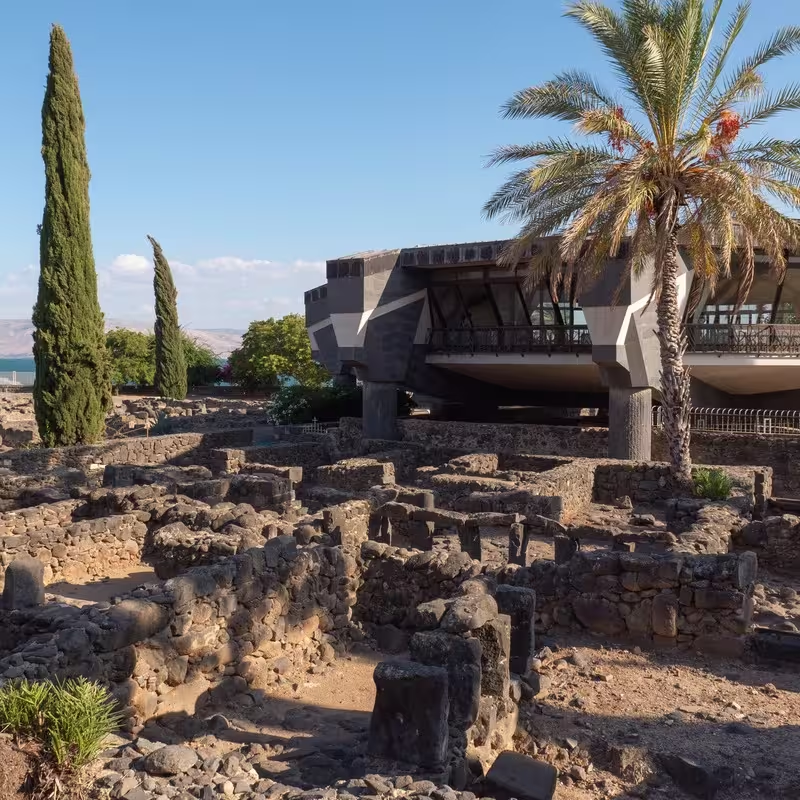
Masada stands as one of Israel's most significant archaeological sites, perched dramatically on an isolated rock plateau in the Judean Desert near the Dead Sea. This ancient fortress commands sweeping views of the surrounding wilderness and represents a pivotal moment in Jewish history. The site's stark beauty and historical importance make it an essential destination for visitors exploring Israel's cultural heritage.
What to see in Masada
The fortress walls and towers offer insight into Roman siege architecture and Jewish resistance. Visitors can explore the remains of Herod's palace, ancient synagogue, and residential structures built into the plateau's natural contours. The Snake Path, a narrow ancient route, winds up the eastern cliff face and remains visible to those ascending the mountain.
Things to do in Masada
Most visitors take the cable car to the summit, though hiking the Snake Path offers a more immersive experience. Guided tours provide historical context about the site's dramatic past. The nearby Dead Sea offers opportunities for swimming and therapeutic mineral-rich waters, making Masada an ideal base for multi-day exploration of the region.
Historical Significance and Legacy
Masada witnessed the final Jewish stand against Roman forces in 73 CE, an event that shaped collective memory for centuries. The site was rediscovered by archaeologist Yigael Yadin during his groundbreaking 1963-1965 excavations. Today, Masada serves as a symbol of resilience and remains one of Israel's most visited historical monuments.
Masada is located in the Judean Desert near the Dead Sea in central Israel, approximately 50 kilometers south of Jerusalem. The site sits at an elevation of 440 meters above sea level on an isolated rock plateau. The surrounding region includes the Dead Sea shoreline and desert landscape typical of the Judean hills. Access is available via well-maintained roads from major Israeli cities, with both cable car and hiking route options for reaching the summit.