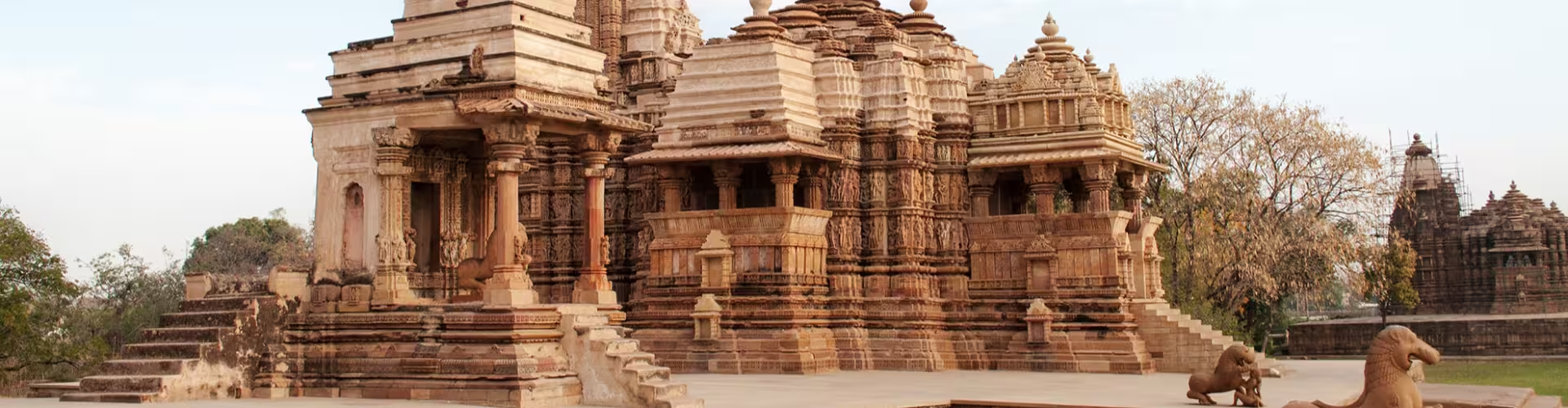
Khajuraho is a small village in Madhya Pradesh, India, renowned for its extraordinary medieval temples featuring intricate stone carvings and architectural brilliance. Located in central India, this UNESCO World Heritage Site showcases some of the finest examples of Indian temple architecture from the 10th and 11th centuries.
What to see in Khajuraho
The Khajuraho Group of Monuments comprises 25 surviving temples divided into three clusters: Western, Eastern, and Southern groups. Visitors should not miss the Kandariya Mahadev Temple, the largest and most ornate structure, and the Chitragupta Temple, known for its detailed astronomical carvings and impressive sculptures depicting various aspects of life and spirituality.
Things to do in Khajuraho
Explore the temples through guided heritage walks to understand the historical significance and architectural techniques. The annual Khajuraho Festival of Dance in November-December showcases classical Indian dance forms against the backdrop of illuminated temples, offering visitors a unique cultural experience combining spirituality and performance art.
Temples and Cultural Significance
The temples were built by the Chandela dynasty and represent a remarkable fusion of Hindu and Jain architectural traditions. These structures served as centers of religious learning and continue to reflect the sophisticated artistic and engineering knowledge of medieval India.
Khajuraho is located in the Chhatarpur district of Madhya Pradesh in central India. The village is situated approximately 175 kilometers from Jabalpur and serves as an important cultural and historical destination in the region. The temples are spread across three clusters within the area, making it accessible for exploration by visitors throughout the year.
Heritage Site, Cultural Tourism, Historical Architecture, Festival Destination, UNESCO World Heritage