Last updated:
The Venice Carnival 2027 runs from 23 January to 9 February. The programme for each day is announced by the organisers, so keep the official Carnevale di Venezia site open while you plan, and treat the dates here as the frame for your trip.
The first evidence of the Carnival goes back to 1094. It was revived in 1979, after almost two centuries of absence, and it still keeps its old traditions: theatre, traditional sweets, masks and costumes, and private palaces turned into places for dances.
Behind a mask, Venetians of every class could move freely around the city. They greeted anyone in disguise with 'Buongiorno Siora Maschera', a mark of respect along the alleys, the canals and the promenades.
The bauta is probably the most famous mask. It was often worn with the tabarro, a large black cloak that hid most of the body. The moretta was an oval black velvet mask, first meant for women, and it stayed on with a small button held between the teeth, which kept its wearer silent.
To try the craft yourself, the Hand-Painted Mask Workshop: Guided Artisan Experience is a hands-on workshop in Venice with a master mask maker, according to its operator.
This festival looks back to the year 973, when twelve Venetian girls were taken by Dalmatian pirates and freed after a chase led by Doge Pietro Candiano III. The director Bruno Tosi revived it in 1999, and it has become one of the key events of the Carnival.
Carnival has its own sweets. The fritoe venexiane are fried dough balls, most traditionally made with raisins and pine nuts. The galani are thin, crisp fried pastries dusted with powdered sugar, and elsewhere in Italy they go by chiacchiere or crostoli.
For everyday Venetian food, head to the markets, the bàcari, the osterie and the restaurants. The Luxury Natural Wine & Cicchetti Tasting Experience in Venice pairs natural wines with traditional bites in a wine bar, according to its operator.
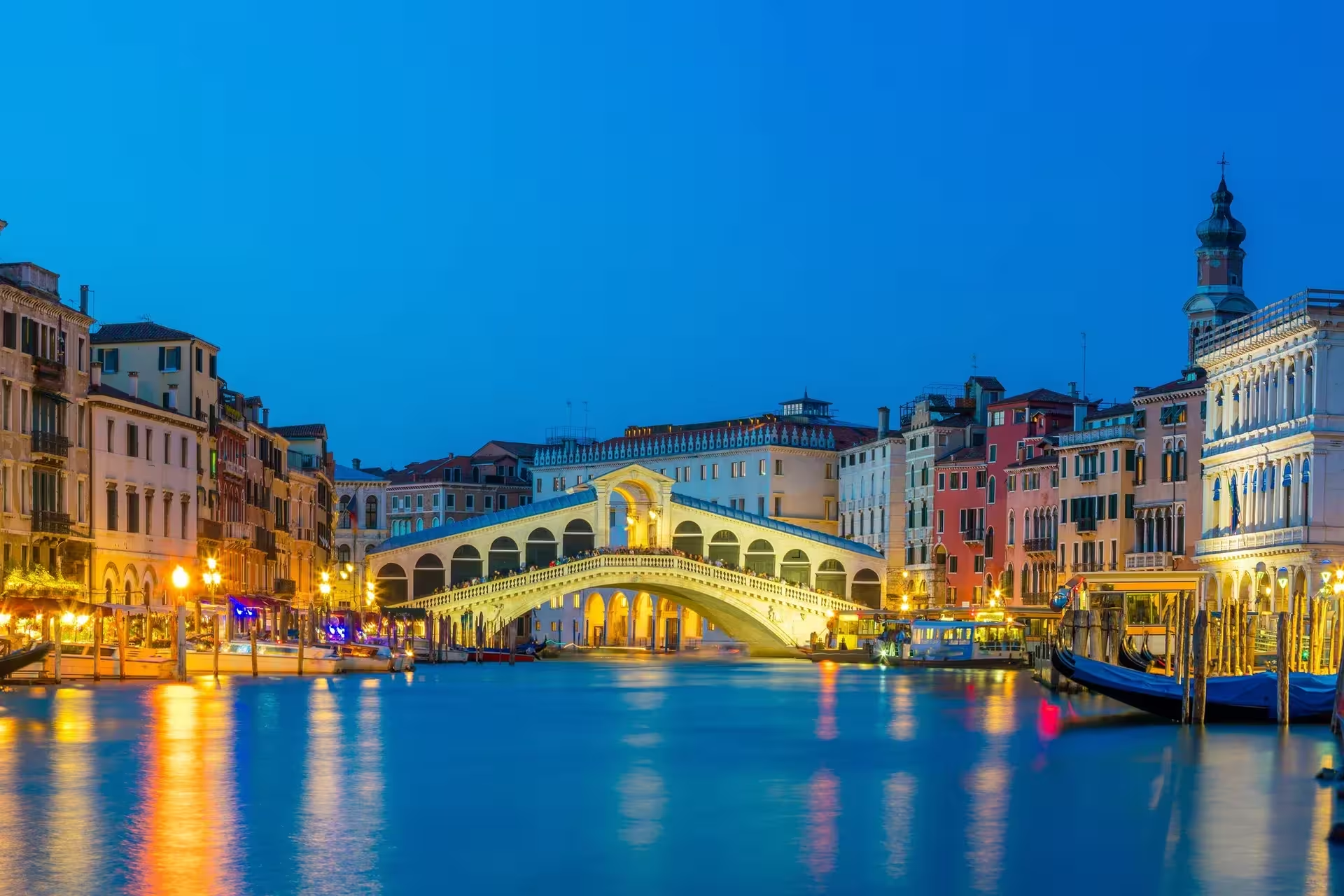
Venice has no roads, only canals and pedestrian alleys called calli, so you visit it on foot or by boat. The city is made up of 121 islands joined by 435 bridges, inside a lagoon. Yellow signs on the sides of buildings point to San Marco, Rialto, the Santa Lucia railway station and the bus terminal at Piazzale Roma.
The waterbus, the vaporetto, is run by the local transport company ACTV. If you buy a ticket at a kiosk or machine, validate it before you travel, because officials issue on-the-spot fines. When the water passes 80 cm above average sea level, walkways are laid along the main paths, and you can still visit.
For a route you can follow without a guide, the Venice Self-Guided Walking Tour with Audio Guide & GPS Map works offline once downloaded, according to its operator.
The city itself suggests leaving the busiest routes for lesser-known museums, calm churches, old gardens and the tucked-away courtyards of palaces. Beyond the main island, the lagoon has quieter places such as Torcello and Mazzorbo, Certosa, the Lido and Pellestrina.
On the water, the Venice Boat Tour: Hidden Canals & San Giorgio Island heads for the backwaters and the island of San Giorgio, and the Venice Islands Boat Tour: Murano, Burano & Torcello covers the lagoon islands. If you prefer to stay on foot, the Venice Walking Tour: San Marco to Rialto & Local Spritz links the great square with the Rialto Bridge and ends with a spritz, according to its operator.
Some of Venice is under a roof. The Doge's Palace & Prisons Guided Tour in Venice with Access visits the palace and its prisons, and the Venice Opera Concert at the Historic Palace of Prisons takes place in a historic palace, according to its operator.
Crime levels in Italy are generally low, but pickpockets and bag-snatchers work the city centres and the main tourist sights, and a festival crowd suits them. High water is common in Venice and can flood parts of the city. Some visitors to Venice may have to pay an access fee, so check the official rules before you go. Read GOV.UK safety advice for Italy before you travel.
The carnival is held between 23 January and 9 February 2027, and the organisers publish the programme.
A famous Carnival mask, traditionally worn with a large black cloak called a tabarro.
The fried dough balls called fritoe, and the thin sugar-dusted pastries called galani.
On foot or by waterbus, as the city has no roads. Validate your ticket before you ride.