




Things to Do in Olhão: Ria Formosa, Barrier Islands & Authentic Algarve
A practical guide to exploring the Algarve's most genuine fishing town, from lagoon boat tours to the historic market halls and the islands of Armona and Culatra.
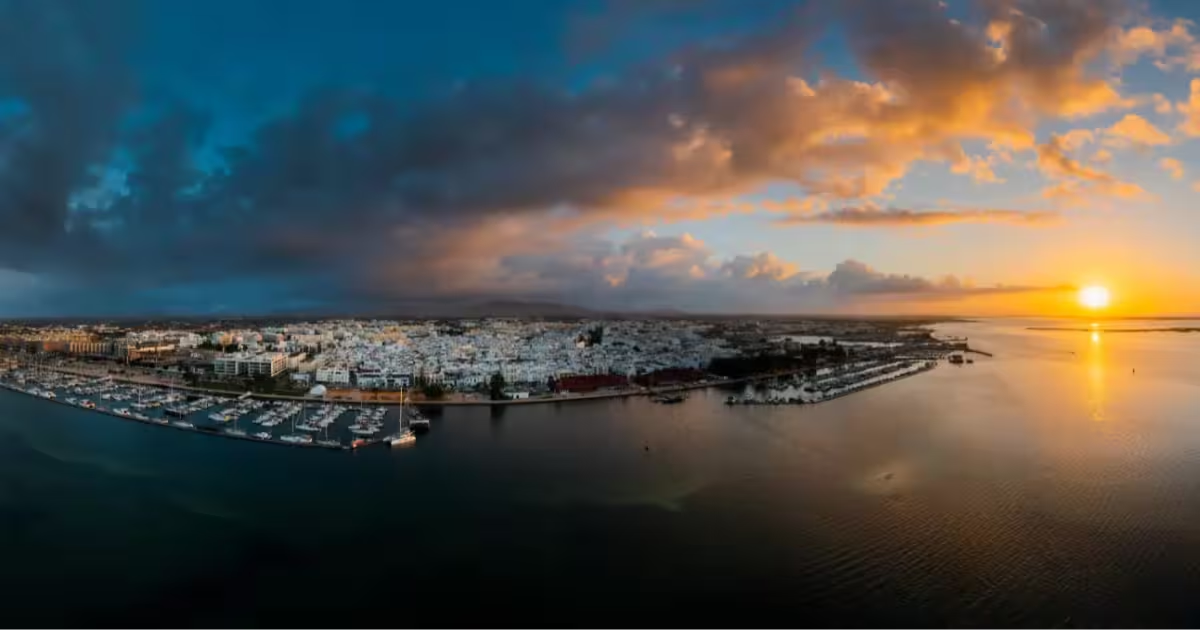
Olhão sits on the eastern Algarve coast, roughly 8 kilometres east of Faro, and functions as the region's most productive working fishing port. Unlike the resort towns to the west, the town's Moorish-influenced streetscape, twin 19th-century market pavilions, and direct ferry access to the Ria Formosa Natural Park make it a practical base for travellers seeking both cultural depth and unspoiled beaches.
What makes Olhão different from other Algarve towns?
Most of Portugal's southern coast has been reshaped by decades of tourism infrastructure, but Olhão has retained the character of a functioning port town. The Bairro dos Pescadores (Fishermen's Quarter) is a dense grid of cube-shaped whitewashed houses with rooftop terraces, a layout traced directly to North African influences absorbed during centuries of trade with Morocco. The architectural style is so distinctive that the neighbourhood is sometimes referred to locally as the Barrocal cluster, and it has been the subject of urban heritage studies since the 1980s.
The town's two iron market halls, the Mercado de Pescado (fish market) and the adjacent Mercado de Fruta e Legumes (fruit and vegetable market), were constructed in 1912 and still operate six mornings a week. Arriving before 9:00 is recommended to see the full catch laid out, including dourada (gilt-head bream), robalo (sea bass), and the regional bivalve speciality, the ameijoa (clam), harvested directly from the Ria Formosa beds.
Olhão's fish market has supplied the town since 1912, and on a weekday morning it remains one of the few places in the Algarve where the distance between sea and table is measured in metres, not kilometres.
The waterfront Jardim Patrão Joaquim Lopes connects the market area to the ferry docks, providing a walkable promenade from which visitors can observe the daily rhythm of the port, from early trawler arrivals to the midday departure of passenger ferries toward the barrier islands.
What is the Ria Formosa Natural Park and why does it matter?
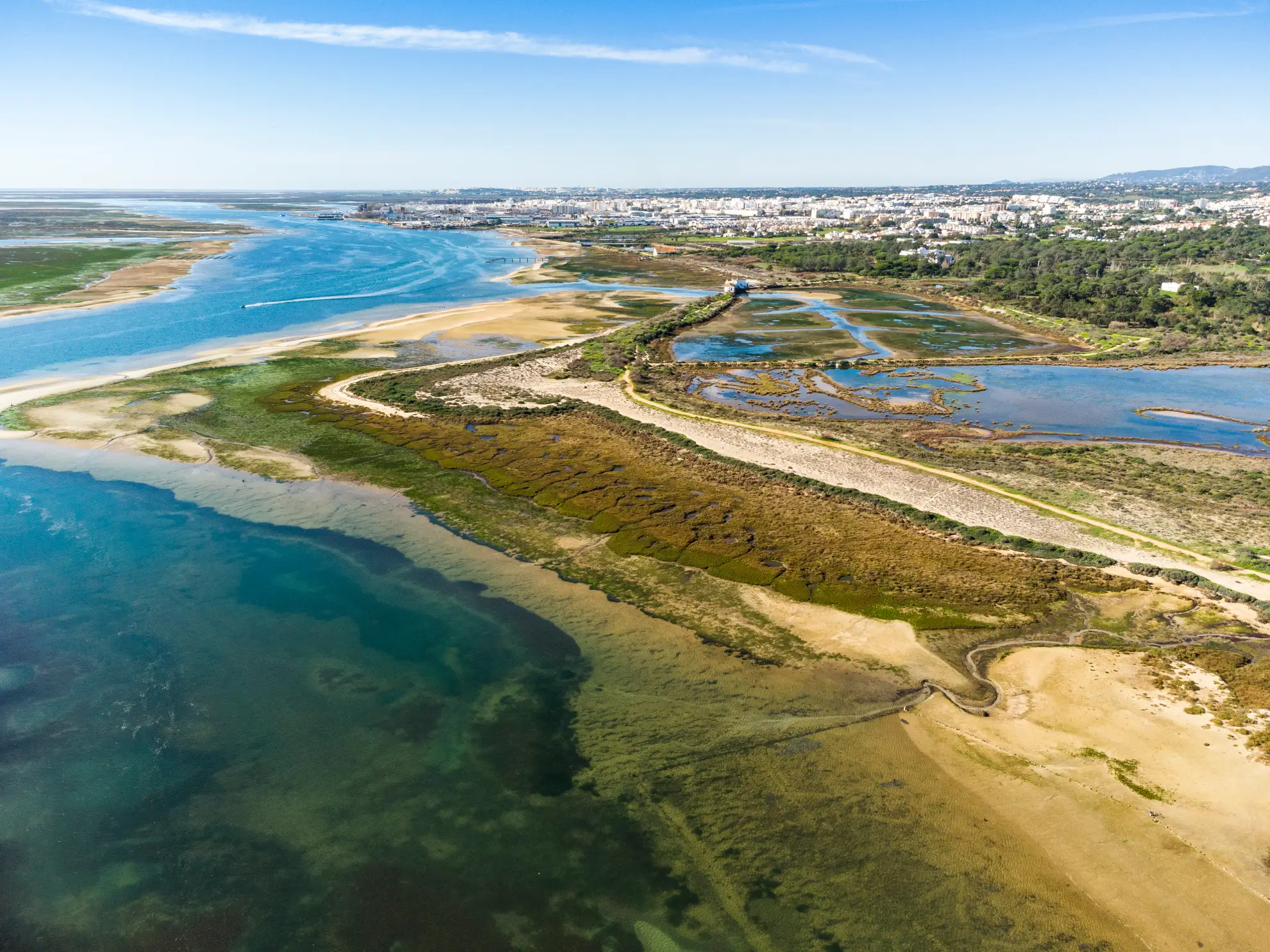
The Ria Formosa Natural Park is a 60-kilometre-long coastal lagoon system extending from Ancão, west of Faro, to Manta Rota near the Spanish border. Designated a protected natural park in 1987, it covers approximately 18,400 hectares and encompasses saltpans, tidal channels, dune islands, and intertidal mudflats that support one of the most significant coastal wetland ecosystems in southwestern Europe.
The park is home to over 200 recorded bird species, including the Phoenicopterus roseus (greater flamingo), which winters in the saltpans in flocks that can exceed 1,000 individuals between October and March. The Charadrius alexandrinus (Kentish plover) breeds on the sandbar islands, and the park serves as a critical staging point on the East Atlantic Flyway for wading birds migrating between northern Europe and West Africa.
For visitors, the most practical entry point into the park is Olhão's ferry dock, located on the Avenida 5 de Outubro, from which public ferries operate year-round to Armona and Culatra islands. The crossing to Armona takes approximately 15 minutes; the crossing to Culatra takes around 30 minutes. Both islands are car-free, with no permanent road infrastructure, which means the interior dune landscapes and south-facing beaches remain in a largely undeveloped state.
The Ria Formosa was classified as one of Portugal's Seven Natural Wonders in a 2010 public vote, a recognition that reflects both its ecological value and its visibility among Portuguese citizens as a landscape worth protecting.
Guided boat tours, available through platforms like ToursXplorer, add interpretive value that the public ferry cannot offer, since licensed guides can narrate the ecological zones, identify bird species, and navigate the shallower tidal channels inaccessible to larger vessels.
Which islands can you visit from Olhão, and how do you reach them?
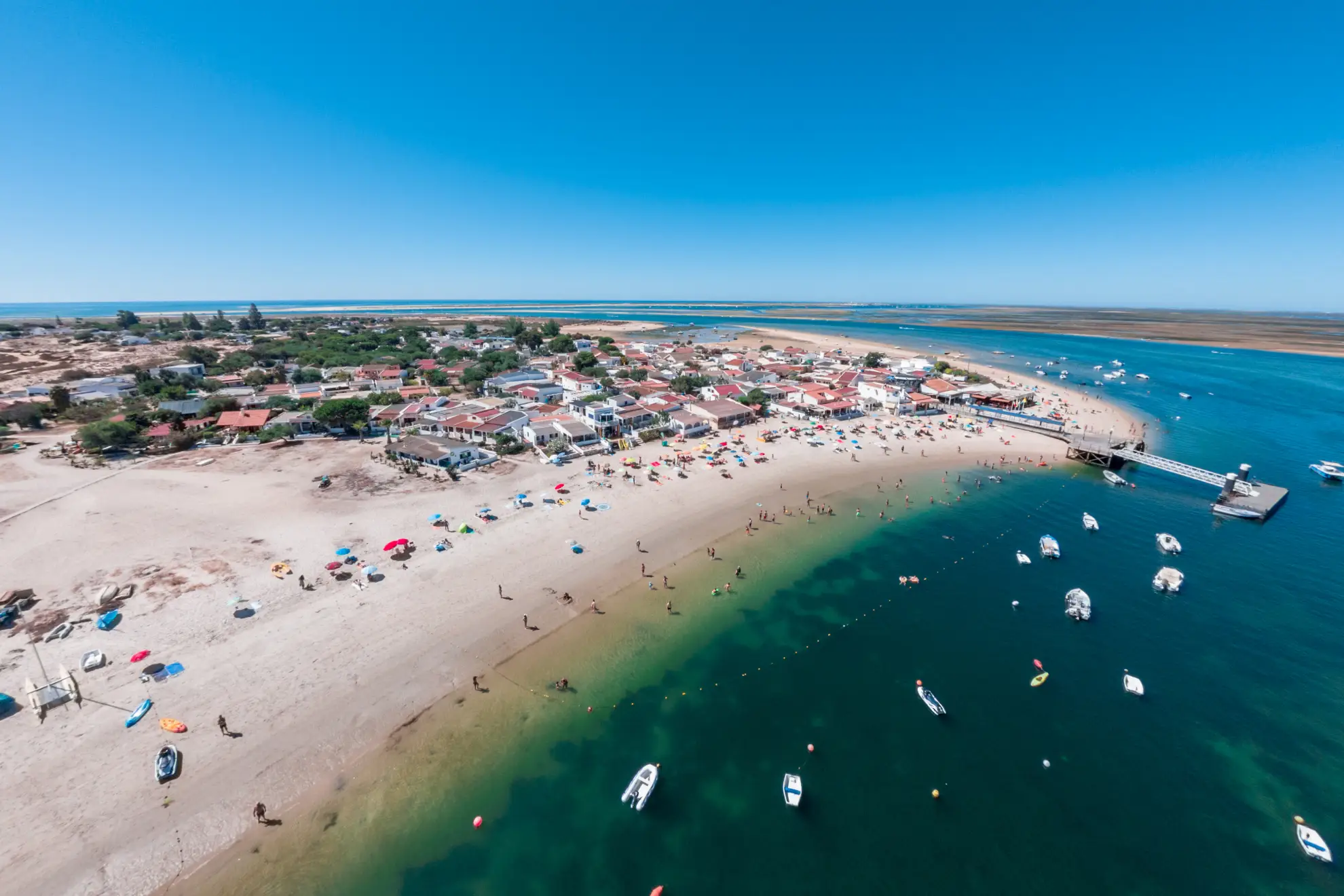
Armona is the closest barrier island to Olhão, situated approximately 2 kilometres offshore. The island is roughly 8 kilometres long and contains two main settlements: Armona village on the north shore, where the ferry docks, and a cluster of holiday bungalows near the southern beach. The southern beach, Praia de Armona, faces the Atlantic directly and offers a firm-sand shoreline with no permanent commercial infrastructure beyond seasonal kiosks. The crossing takes 15 minutes on the public ferry, which runs multiple times daily from April through September and at reduced frequency from October to March.
Culatra is the larger and more inhabited of the two main islands, home to approximately 1,000 permanent residents split between the village of Culatra and the smaller community of Farol, named for the 1852 lighthouse (farol) at its western tip. The lighthouse at Farol stands 46 metres tall and is one of the landmark navigational structures of the eastern Algarve coast. The ferry from Olhão to Culatra takes approximately 30 minutes and also stops at Farol, making it possible to walk the 4-kilometre dune path between the two communities.
A third island, Ilha da Fuseta, lies further east toward Tavira and is reachable by a shorter ferry crossing from the village of Fuseta, approximately 12 kilometres from Olhão by road. Organised boat tours from Olhão sometimes include Fuseta's beaches as part of a wider lagoon itinerary.
| Island | Distance from Olhão | Ferry Time | Permanent Population | Key Feature |
|---|---|---|---|---|
| Armona | ~2 km | ~15 min | Seasonal only | Atlantic-facing beach, no development |
| Culatra | ~5 km | ~30 min | ~1,000 residents | Fishing village, Farol lighthouse (1852) |
| Farol | ~7 km (via Culatra) | ~40 min | Small community | 46-metre lighthouse, dune walk |
Recommended Boat Tours from Olhão
Browse all Ria Formosa boat tours departing from Olhão and book directly through ToursXplorer, with confirmed departure times and local licensed guides.
Browse all Olhão tours on ToursXplorerHow to plan your time in Olhão: a practical itinerary framework
One day in Olhão is enough to visit the fish market, walk the Bairro dos Pescadores, and take a half-day ferry or guided boat tour to either Armona or Culatra. Arriving at the market by 8:30, spending the morning in town, and catching the early afternoon ferry gives visitors a full afternoon on the island before the last return crossing.
Two days allows for a more measured pace: one day dedicated to a full-day guided tour of the Ria Formosa with stops at multiple islands, and a second day for exploring the town independently, including the Igreja de Nossa Senhora do Rosário, a baroque church whose twin towers are the dominant landmark on Olhão's skyline, and the rooftop terrace of the Igreja de Nossa Senhora da Soledade, which offers an unobstructed view over the Moorish-influenced rooftops toward the lagoon.
Three days makes it practical to use Olhão as a base for a day trip to Tavira, approximately 28 kilometres east on the EN125 road, a town with a well-preserved historic centre and its own barrier island, Ilha de Tavira, accessible by ferry from the Quatro Águas dock. The eastern Algarve between Olhão and the Spanish border at Vila Real de Santo António is one of the least-developed stretches of the Portuguese coast and rewards travellers with time to explore it independently.
ToursXplorer lists all available departures from Olhão's harbour with real-time availability, allowing visitors to coordinate boat tour bookings with ferry schedules and avoid the queues that can develop at the public dock during July and August.
Practical information for visiting Olhão
Getting there: Olhão is served by the Linha do Sul rail line, with direct trains from Faro (approximately 10 minutes, roughly 8 kilometres) and connections from Lagos, Albufeira, and Lisbon's Gare do Oriente. The train station is located on Rua dos Combatentes da Grande Guerra, approximately 500 metres north of the waterfront market area. By car from Faro, the A22 motorway connects to Olhão in under 15 minutes.
Best time to visit: May through June and September through October offer the most balanced conditions, with sea temperatures between 19°C and 22°C, reduced visitor numbers compared to July and August, and the full schedule of ferry and boat tour departures in operation. The flamingo population in the Ria Formosa saltpans peaks between October and March, making autumn and winter visits worthwhile for birdwatchers.
Where to eat: Olhão's restaurant concentration is highest in the streets immediately behind the market halls, particularly along Rua do Comércio and Rua 18 de Junho. Cataplana (a traditional copper-pot seafood stew) and grilled lingueirão (razor clam) are the dishes most closely associated with the town's fishing heritage.
Boat tour logistics: Guided tours listed on ToursXplorer depart from the main harbour area on Avenida 5 de Outubro. Most operators require advance booking during peak season (July to August), when departures can reach capacity several days ahead. Life jackets are provided on all licensed vessels operating within the Ria Formosa Natural Park under Portuguese Maritime Authority regulations.
Frequently Asked Questions
With one day, visit the 1912 fish market before 9:00 to see the full catch, walk the Bairro dos Pescadores for the North African-influenced architecture, then take either the public ferry (15 minutes to Armona, 30 minutes to Culatra) or a guided boat tour from the Avenida 5 de Outubro harbour to spend the afternoon on a barrier island beach before returning by evening.
Public ferries depart from Olhão's harbour on Avenida 5 de Outubro year-round. The crossing to Armona takes approximately 15 minutes and to Culatra around 30 minutes. Guided boat tours also depart from the same area and include commentary on the Ria Formosa Natural Park. During July and August, arriving early at the ferry dock is advisable to secure a place on busy departures.
Yes. The Ria Formosa Natural Park is open year-round and offers different experiences by season. Summer brings the highest beach-going traffic on the barrier islands. Autumn and winter are better for birdwatching, particularly for flamingo sightings in the saltpans between October and March. Ferry schedules operate year-round but run at reduced frequency from October to March.
One to three days is the practical range. One day covers the market and a single island ferry trip. Two days adds a full guided Ria Formosa boat tour and more time in the historic town centre. Three days allows for a day trip to Tavira, 28 kilometres east, or other eastern Algarve destinations including Fuseta and Vila Real de Santo António near the Spanish border.
The Ria Formosa Natural Park shelters over 200 recorded bird species. Greater flamingos (Phoenicopterus roseus) winter in the saltpans in flocks exceeding 1,000 individuals from October to March. Kentish plovers breed on the sandbar islands in spring. Dolphin sightings occur occasionally in the tidal inlets. Licensed guides on organised tours can identify species and navigate shallower channels not accessible on public ferries.
Yes, the Mercado de Pescado is open to the public six mornings a week. The market building, constructed in 1912, is a cast-iron hall directly on the waterfront. The best time to visit is before 9:00 when the full catch is displayed. The adjacent fruit and vegetable market operates on the same schedule in the neighbouring hall. No admission fee is charged.