




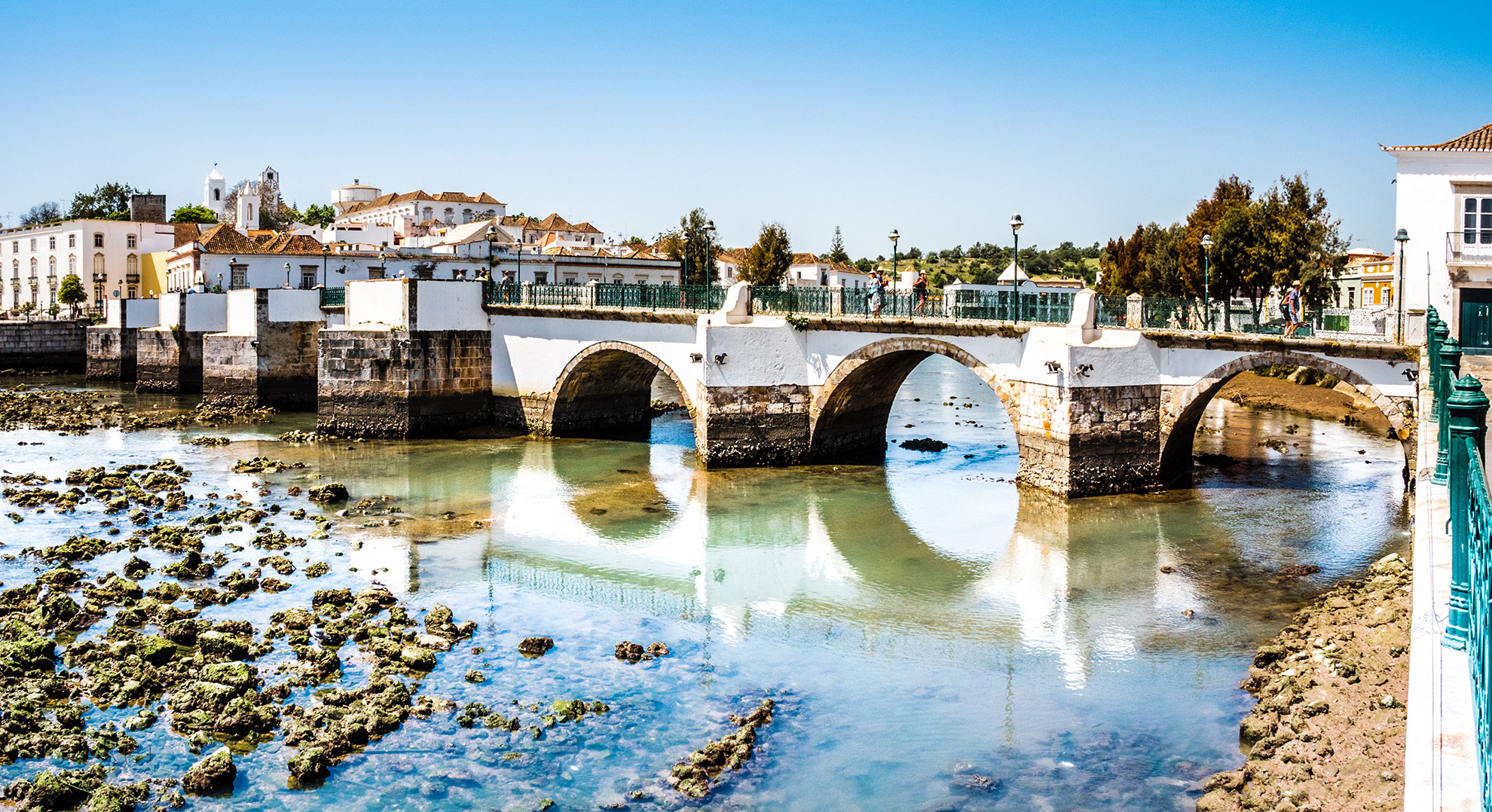
The Roman Bridge over the Gilão River, where the old town of Tavira reflects in still water each evening.
Romance by the River
More Than Just a Coastal Escape: Why Tavira is the Cultural Soul of the Algarve
Where scissor rooftops meet riverine reflections, thirty-seven churches hold centuries of quiet, and a ferry crossing opens onto a world of golden salt-dusted dunes.
Most visitors to the Algarve follow the same familiar arc — clifftop caves, crowded beaches, terrace cocktails at dusk. Tavira invites a different rhythm entirely. This small eastern town on the Gilão River asks you to slow down, to wander its cobbled streets without a destination, to order grilled octopus at a table that has seated fishermen for generations. It rewards patience with a depth that few Portuguese towns its size can match.
Settled by Romans, shaped by Moors, and refined through centuries of tuna and salt trading, Tavira carries its history lightly. The white-washed facades that line the riverbank, each crowned by the distinctive tesoura — or scissor-shaped roof, a local architectural signature rare elsewhere in the Algarve — give the town an almost theatrical elegance when reflected in the smooth surface of the Gilão. A restored Roman bridge of sixteen arches links the two banks, and crossing it in the late afternoon, when amber light settles over the old quarter, is one of those unremarkable acts that somehow stays with you.
Tavira does not announce itself. It discloses itself gradually, the way a well-written book reveals its meaning only after you have agreed to linger with it.
The town's Moorish inheritance is everywhere once you know where to look — in the geometrically patterned azulejo tiles that panel courtyard walls, in the narrow medina-like lanes of the Mouraria quarter, in the names of streets that trace the outlines of a civilisation that held the Algarve for over four centuries. The castle ruins at the town's highest point shelter a walled garden inside, a small green sanctuary where orange trees grow and the battlements frame rooftop views over the tile-red canopy of the old town. Tavira's thirty-seven churches — a disproportionate number for a town of this size — speak to a later era of piety and mercantile prosperity, each one a quiet archive of carved limestone and gilded altarpieces.
Across the Lagoon: Tavira Island and Barril Beach
A short ferry crossing from the quayside at Quatro Águas carries you through the Ria Formosa — a protected coastal lagoon of channels, mudflats, and barrier islands — to Tavira Island. The beach that opens up on the ocean side is wide enough that the July crowds dissolve within a few minutes' walk. The sand here is the fine, pale variety that compacts underfoot; the Atlantic water, even in high summer, retains a coolness that keeps the experience honest.
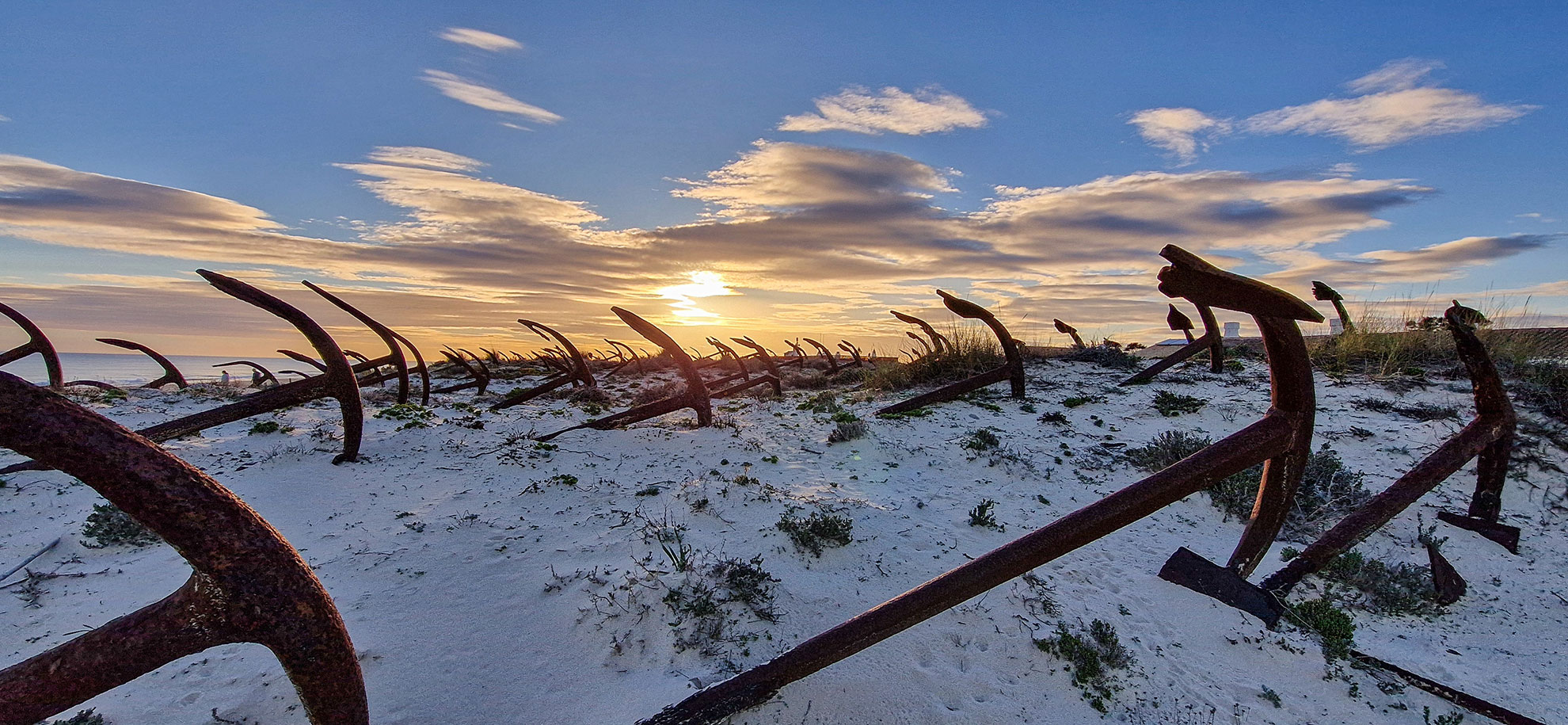
The Cemitério das Âncoras at Barril Beach — dozens of rusted anchors marking the site of a former tuna fishing station, abandoned in the 1970s.
At the western end of Tavira Island, near Barril Beach, stands the Cemitério das Âncoras — the Anchor Cemetery. Dozens of rusted iron anchors, planted upright in the sand, mark the place where a working tuna fishing station once operated. When the last company closed in the 1970s, the workers buried their anchors rather than transport them elsewhere. The result is a hauntingly composed memorial that no one officially designed: industrial relics absorbed by dune grass, slowly turning the colour of dried blood. It is one of the more affecting things you will encounter anywhere in the Algarve, and it requires nothing of you except attention.
On the Water — Guided Experiences from Tavira
Tavira and the Eastern Algarve offer a range of guided experiences — from quiet birdwatching on the lagoon to full-day cultural tours through salt pan landscapes. Browse the complete selection and check live availability.
Explore all Tavira tours →The Salt Pans: Flamingos and Flor de Sal
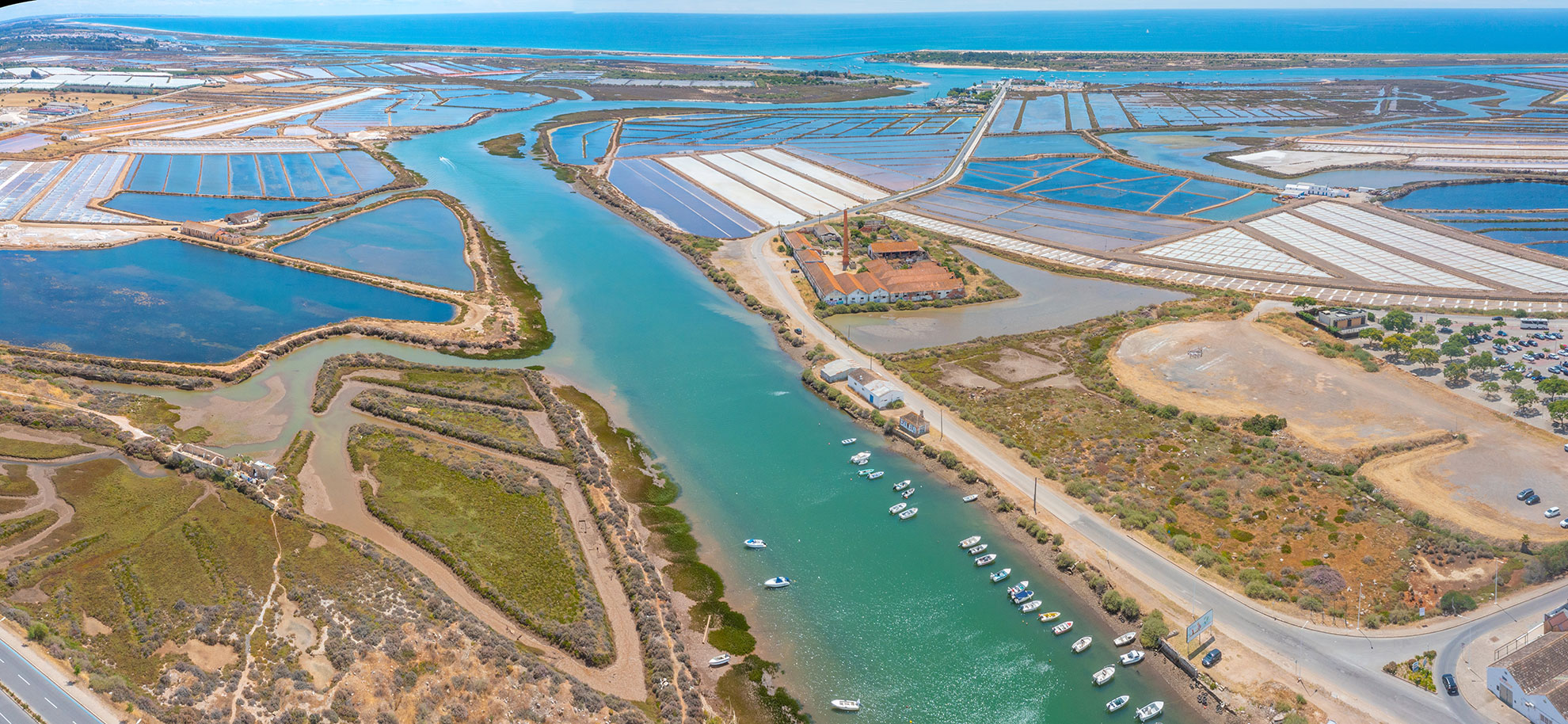
Beyond the town's eastern fringes, the landscape opens into an expanse of geometric salt pans — the salinas — where some of Portugal's most prized sea salt is harvested by hand. Flor de sal, the thin mineral crust that forms on the water's surface on calm, dry days, is skimmed by workers using wooden rakes in a process unchanged for centuries. The salt is unrefined, rich in trace minerals, and carries a genuine sense of terroir; several Lisbon restaurants specify which saltworks their supply comes from. It makes, incidentally, a considered gift.
Greater flamingos are year-round residents in parts of the Ria Formosa, gravitating toward the shallow salt pan margins where brine shrimp are abundant.
Greater flamingos — paler and more deliberate in movement than their tropical relatives — wade through the shallows here throughout the year, their numbers swelling in winter and early spring. Watching them from the road embankment that bisects the pans, standing still against the flat silver of the water, is one of those encounters that recalibrates a certain sense of scale. The Eastern Algarve Full-Day Tour includes a visit to these salt pans alongside Tavira and Olhão, offering context for what can otherwise feel like a puzzlingly industrial landscape.
A Table at the River's Edge: Tavira's Food Culture
Tavira holds a distinction that relatively few towns in Europe can claim: its traditional diet is formally recognised under UNESCO's Intangible Cultural Heritage designation for the Mediterranean diet, part of a multi-country inscription that acknowledges the cultural as much as the nutritional dimensions of food. In practice this means that eating well here is less a matter of finding the right restaurant than of trusting the ones that have been open the longest.
The octopus arrives at the table simply dressed — olive oil, garlic, a little coarse salt from the pans two kilometres east — and needs nothing added to it.
Grilled octopus (polvo grelhado) is the town's most celebrated dish, cooked over charcoal and served with roasted sweet potato and a drizzle of the local olive oil. In the cooler months, cataplana — a copper-pot stew of clams or fish — makes frequent appearances. For those with a preference for sweetness, the confectionery tradition of the Algarve runs deep in Tavira: almond and fig sweets, shaped by hand into fruits and fish, are sold in small packages from pastry shop counters throughout the old town. They are dense, honeyed, and specific in flavour — the kind of thing that makes an impression precisely because it is not trying to.
Moving Through the Eastern Algarve
Tavira sits at a convenient point on the eastern Algarve's quiet arc. To the west, Faro offers the airport and the broader Ria Formosa reserve. To the east, the Spanish border town of Vila Real de Santo António marks the end of the Portuguese coast. Between these points, Olhão — a working fishing town with a North African-inflected architecture of flat white rooftops and cube-shaped houses — makes a compelling half-day alongside Tavira. The Eastern Algarve Full-Day Tour is designed precisely for this combination, allowing a measured pace through both towns and a stop at the salt pans without the pressure of self-navigation on unfamiliar roads.
Whether you are drawn to the Ria Formosa's birdlife, the offshore fishing grounds near Cabanas, or a guided walk through Tavira's layered old town, a range of experiences is available from a single base. Check current availability and book directly.
View all Tavira experiences →Frequently Asked Questions
How do I get to Tavira from Faro Airport?
The most straightforward option is the regional train, which runs directly from Faro station to Tavira in approximately 35 minutes. Trains run regularly throughout the day. Taxis and rental cars are also practical; the drive along the EN125 takes around 30 minutes depending on traffic.
How do you reach Tavira Island and Barril Beach?
Tavira Island is accessed by ferry from the Quatro Águas quayside, a ten-minute drive or taxi ride from the town centre. The crossing takes about five minutes and runs frequently in summer, less so off-season. Barril Beach on the same island is reached from Pedras d'El Rei via a small tourist train that runs through the salt marshes.
When is the best time of year to visit Tavira?
April through June and September through October offer a balance of warm weather, manageable visitor numbers, and the best conditions for both birdwatching and outdoor dining. July and August are hot and busy but functional. Winter is mild by northern European standards — around 16–18°C — and the town takes on a quiet residential character that many slow-travel visitors find preferable.
Are the dolphin and seabird boat tours suitable for children?
Both tours operate on relatively calm inshore and lagoon waters, making them generally accessible for children of most ages. The seabird watching tour within the Ria Formosa is particularly well suited to younger visitors given the protected, sheltered nature of the lagoon channels. Check individual tour pages for any minimum age requirements.
Where can flor de sal from Tavira's salt pans be purchased?
Several local producers sell directly at small roadside stalls near the salinas east of town, and it is also available in Tavira's market (Mercado da Ribeira) and in a number of delicatessen-style shops in the old town. It is notably cheaper when bought here than in Lisbon or at airports.
Is Tavira walkable as a base for exploring the Eastern Algarve?
Tavira's own historic centre is entirely walkable and compact. For day trips to the salt pans, Olhão, or the fishing villages east of town, a car or a guided tour provides more flexibility than public transport, though trains and buses do connect the main towns along the coast.