




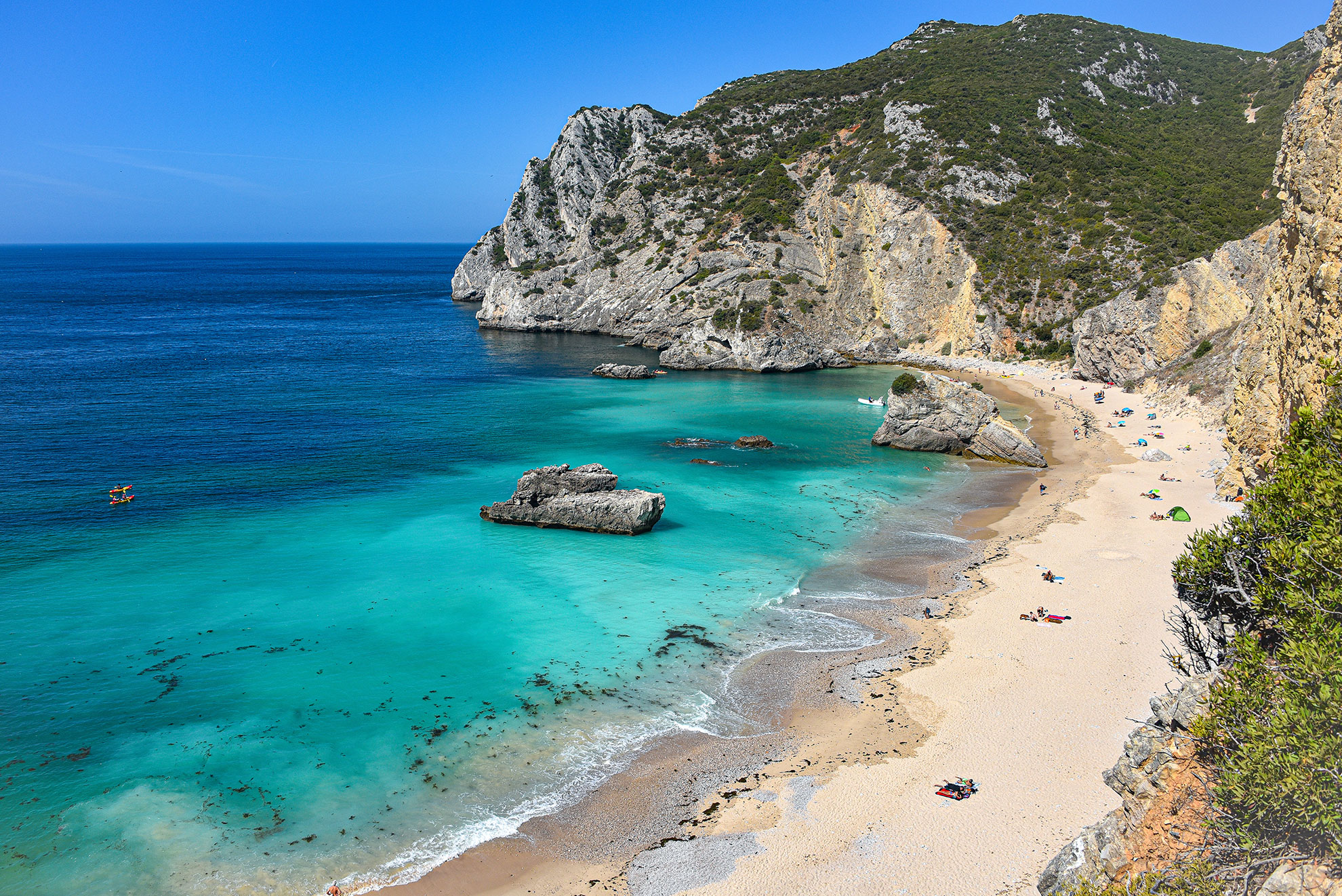
The limestone escarpments of Arrábida plunge directly into the Atlantic — a coastline largely unchanged for centuries.
Portugal Unexplored
Where the Cliffs Meet the Estuary: Boat Tours & Wild Experiences in Setúbal
Forty minutes south of Lisbon, a different Portugal surfaces — all limestone sea-cliffs, bottle-nosed dolphins, and wine cellars that still smell of oak and the year's last harvest.
The Setúbal Peninsula is the kind of place that resets your sense of scale. Stand on the ridge of the Serra da Arrábida at dusk, with the scent of maritime pine drifting up from the slopes and the Atlantic turning copper below, and the busy streets of Lisbon feel like they belong to another continent entirely. Down in the estuary, bottlenose dolphins navigate the same channels they always have. In the village of Azeitão, small producers still age their Moscatel the old way. This is slow travel, and it starts the moment you leave the motorway.
The region sits at the convergence of two distinct landscapes: the Arrábida Natural Park, a UNESCO-recognised biosphere reserve where Jurassic limestone meets the Atlantic, and the Sado Estuary, one of the most biodiverse coastal wetlands on the Iberian Peninsula. Between these two worlds, a growing calendar of boat tours, kayak expeditions, wine routes, and guided nature experiences has opened the peninsula to travellers who want substance over spectacle. The crowds that fill the Algarve in August rarely reach here, and the ones that do tend to come back.
"The Sado estuary is home to a resident population of bottlenose dolphins: about 25 animals, according to the ICNF (2024). They don't pass through: they live here, year-round."
On the Water: Dolphins, Kayaks & the Open Atlantic
The Sado Estuary and the Arrábida coastline together offer some of the most varied on-water experiences in mainland Portugal. A morning can take you from a sheltered sea cave paddled by kayak to an open bay where common dolphins ride the bow wave of your vessel. The variety is the point — no two half-days on the water here feel quite the same.
Dolphin Watching & Sea Excursions
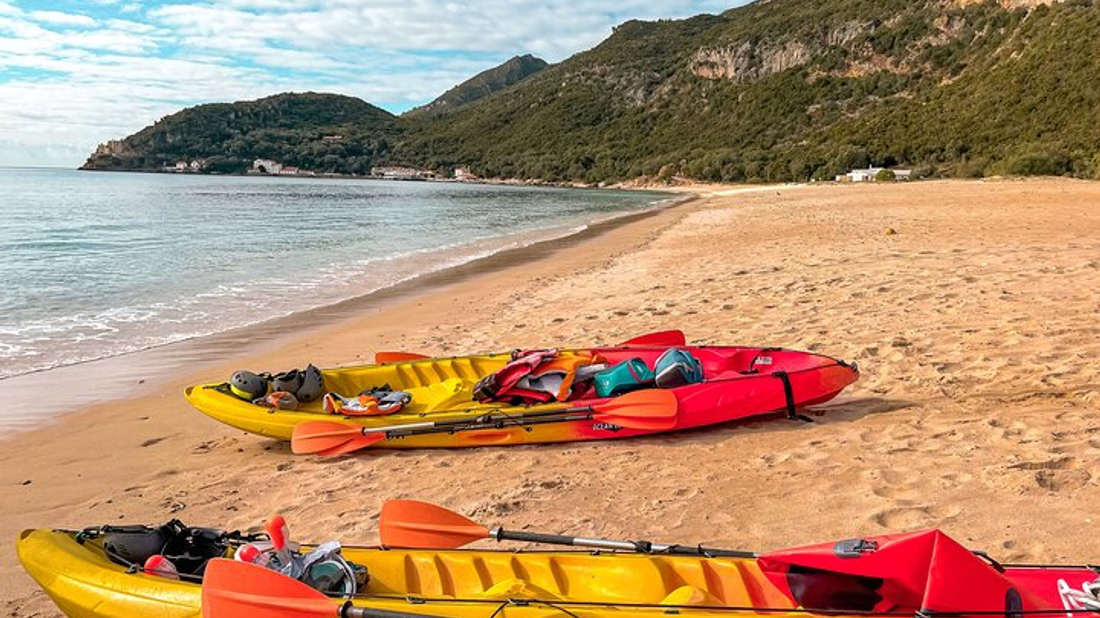
The sea caves along the Arrábida coast are only reachable by paddling — many remain completely undeveloped.
Kayaking & Coasteering
Setúbal's coastline and estuary offer something for every pace of travel — from a calm morning on the water to a full day of guided adventure. Browse the complete selection of tours across the peninsula.
See all Setúbal experiences →The Azeitão Wine Country: Moscatel, Aged Cheese & Slow Afternoons
The village of Azeitão sits in the folds of the serra, surrounded by vineyards that have produced wine since at least the 15th century. The local Moscatel de Setúbal — a fortified wine made from Muscat grapes grown on slopes that catch both Atlantic breezes and the heat reflected off the limestone — has its own protected designation of origin. Alongside it, the Azeitão cheese, a raw sheep's milk variety cured with wild thistle rather than animal rennet, has become a benchmark of Portuguese artisanal food. Wine tours in this region are not about tasting rooms with gift shops; they tend to involve small family estates, conversations with winemakers, and tables set outside under the pergola.
"Moscatel de Setúbal ages differently to most fortified wines — decades in the bottle coax out notes of dried fig, roasted almond, and something faintly resinous that locals attribute to the pine forests surrounding the vineyards."
Wine Tours & Tastings
Land & Peninsula: Full Days in Arrábida & Sesimbra
Not every experience here begins on the water. The Serra da Arrábida is threaded with hiking paths that date back to the monasteries built by Franciscan monks in the 16th century — some of the original walls are still visible among the cistus and rosemary scrub. The coastal town of Sesimbra, on the western flank of the peninsula, retains a working fishing harbour where the catch is landed in the early morning and served in the town's restaurants by noon. Guided overland tours tie these threads together, while more offbeat options — including buggy tours through cliff-edge terrain — appeal to travellers who want to move through the landscape rather than observe it through glass.
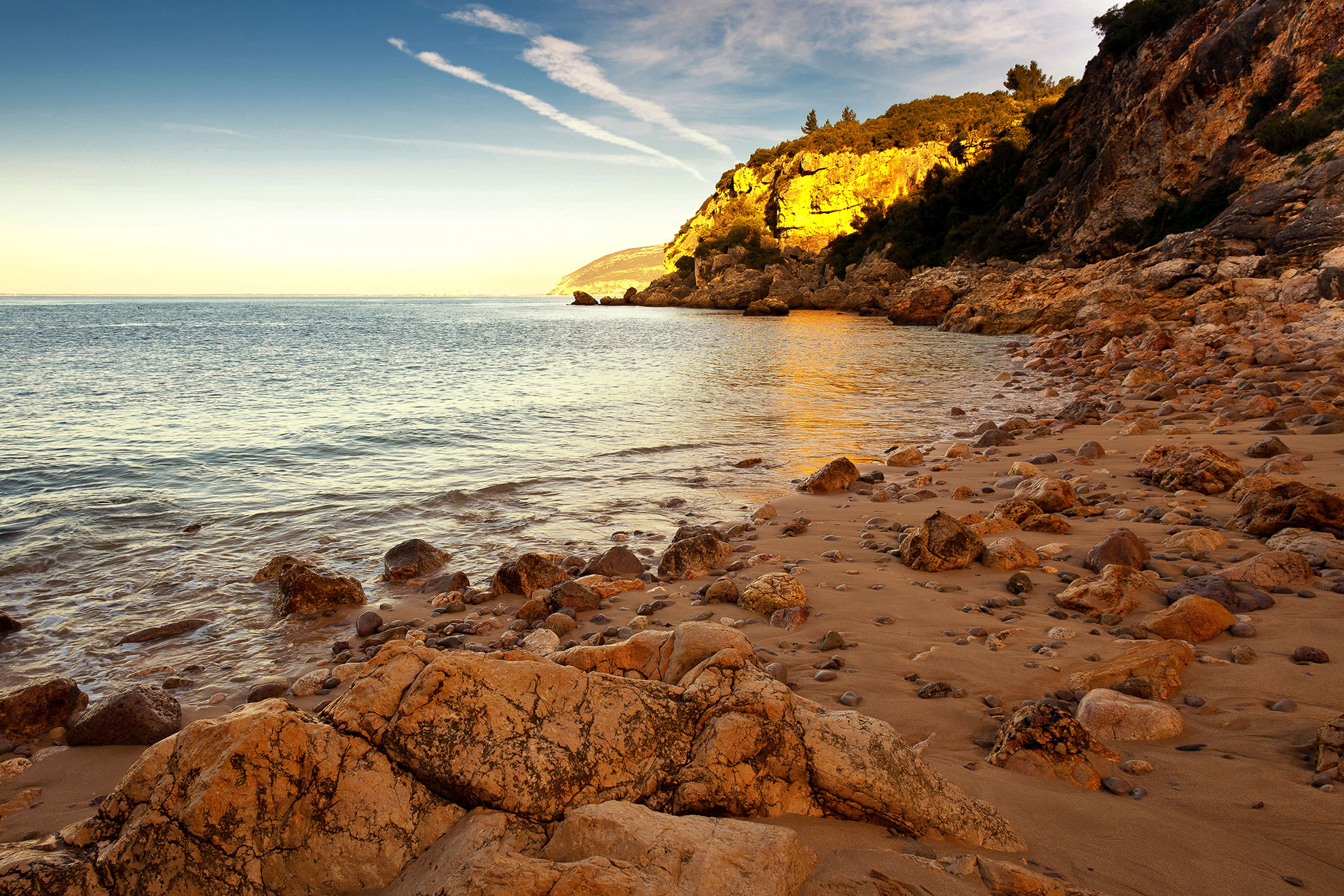
Sesimbra's cliffs are most striking in the morning and late afternoon, when the Atlantic light flattens the shadows across the rock face.
Overland & Peninsula Explorations
Whether you're planning a single afternoon or building a multi-day itinerary around the Setúbal Peninsula, the full range of available experiences — on water and on land — is listed in one place.
Browse all Setúbal tours →Frequently Asked Questions
How far is Setúbal from Lisbon, and how do I get there?
Setúbal is approximately 50 kilometres south of Lisbon — around 40 to 50 minutes by car via the A2 motorway. Several tours in this guide include pick-up from Lisbon, which is the most practical option if you don't have a rental car. Public transport connections via Barreiro are available but slower.
Are dolphin watching tours guaranteed to spot dolphins?
No reputable operator offers guarantees, but the resident bottlenose dolphin population in the Sado Estuary means sighting rates are consistently high — operators typically report encounters on the large majority of departures. The marine biologist-led tour provides more detail on the community's behaviour and movement patterns if a missed sighting occurs.
Do I need prior experience for the kayaking tours?
The guided kayaking tour from Creiro is suitable for beginners — guides provide a full briefing before departure and routes are chosen based on sea conditions. The full-day kayak and coasteering tour requires a basic level of fitness and comfort in open water, though prior paddling experience is not mandatory.
What is the best time of year to visit Setúbal for outdoor activities?
April through October offers the most reliable conditions for water-based activities, with sea temperatures peaking between July and September. Spring (April–May) is often considered the best period for hiking and wine tours, as the vegetation is at its densest and the temperatures are moderate. The dolphin watching and buggy tours run year-round.
What makes Moscatel de Setúbal different from other Portuguese wines?
Moscatel de Setúbal is a fortified wine made primarily from the Muscat of Alexandria grape, grown on the clay-limestone soils of the Arrábida foothills. Fermentation is arrested early by the addition of grape spirit, retaining residual sweetness. The best examples are aged for many years — sometimes decades — producing a complexity rarely found in younger fortified wines.
Is the Arrábida Natural Park accessible without a guided tour?
Yes, but in summer the municipality of Setúbal limits cars on the roads to the Arrábida beaches. In 2026, from 4 June to 15 September, between 07:00 and 20:00, the road to Albarquel and Figueirinha was closed to private cars, and the road from the ER 379-1 to Portinho da Arrábida, Creiro and Galapos closed whenever its car parks were full. Buses, taxis and authorised vehicles could still pass, and tour companies could apply for access cards. Check the municipality's "Arrábida sem Carros" page for the current season.