




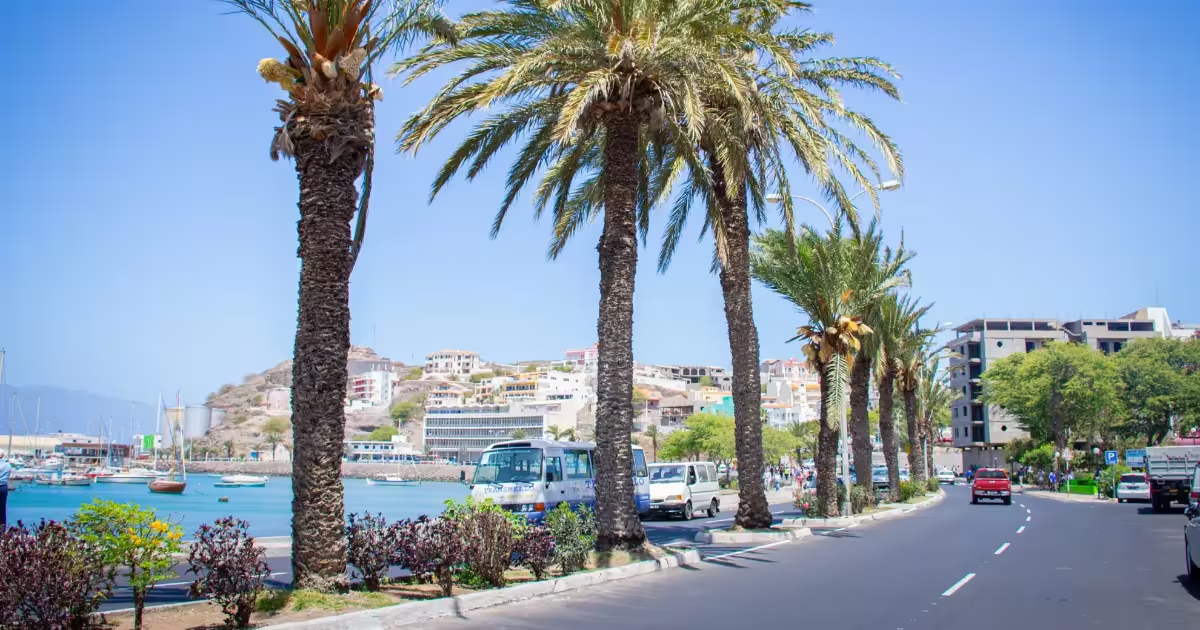
São Vicente & Mindelo: The Cultural Soul of Cape Verde
Where morna drifts through colonial streets, Carnival ignites the harbor, and music is not entertainment but memory itself.
São Vicente is not the Cape Verde of glossy beach brochures. The island's main city, Mindelo, built around a deep natural harbor 570 kilometers off the coast of Senegal, has spent two centuries accumulating something rarer than white sand: a cultural identity dense with music, migration, and saudade. Here, the genre called morna was shaped into an art form. Here, Cesária Évora was born. And here, travelers who arrive expecting sun often leave remembering something else entirely.
What Is São Vicente and Where Does It Sit in the Cape Verde Archipelago?
São Vicente is one of ten islands that form the Republic of Cape Verde, an archipelago that gained independence from Portugal in 1975 after five centuries of colonial presence. The island lies in the northern group, known as the Barlavento or Windward Islands, approximately 570 kilometers west of Dakar, Senegal. It covers around 227 square kilometers and rises from volcanic rock to a high point of 774 meters at Monte Verde, its green northern summit.
The island's single significant city is Mindelo, home to roughly 75,000 people and the site of Porto Grande, one of the finest natural harbors on the Atlantic. That harbor defined Mindelo's identity long before tourism existed. In the 19th century, British coal merchants used Porto Grande as a critical refueling stop for steam-powered ships crossing between Europe and South America. That transit history brought sailors, traders, and musicians from multiple continents, layering Mindelo with a cultural complexity unusual for an island of its size.
Unlike Sal and Boa Vista, which developed as resort destinations built around flat terrain and long beaches, São Vicente's geography is more rugged and its economy historically more urban. The result is an island that rewards travelers who want a city with texture: narrow streets lined with hand-painted tiles, colonial squares that come alive after dark, and a music scene that functions not as tourism product but as daily social ritual.
São Vicente is not simply an island in an archipelago. It is a place where Atlantic crossings, African rhythms, Portuguese language, and Creole soul compressed into something entirely its own over several hundred years.
Why Is Mindelo Famous for Music and Cultural Identity?
Morna is the musical genre most closely associated with Cape Verde, and Mindelo is its spiritual home. Structured around minor-key guitar melodies, the cavaquinho (a small Portuguese stringed instrument), and vocals that carry an almost physical weight, morna expresses longing, migration, and love with an economy of means that makes it one of the most emotionally direct musical forms to emerge from the Atlantic world.
The word saudade, borrowed from Portuguese, describes a feeling that has no clean translation: a longing for something or someone distant, possibly irretrievable, experienced simultaneously as grief and tenderness. Morna gives that feeling a sound. In Mindelo, it is performed in small bars near the harbor, at festivals, in family homes, and increasingly in cultural centers dedicated to preserving it. UNESCO recognized morna as an Intangible Cultural Heritage of Humanity in 2019, a formal acknowledgment of what Mindelo had understood for generations.
Alongside morna, Cape Verde produced coladeira, a lighter and more rhythmically playful style that developed in the mid-20th century as a counterpoint to morna's melancholy. Funaná, originally from the interior of Santiago island, arrived in Mindelo through migration and found enthusiastic audiences in the city's clubs. The combination of these styles, African percussion structures filtered through Portuguese harmonic conventions and Creole lyrical sensibility, makes Mindelo's music scene genuinely distinct from anything found elsewhere in West Africa or the Lusophone world.
The concept of morabeza, a Cape Verdean word describing warmth, generosity, and the particular ease with which people welcome strangers, manifests most visibly in how Mindelo shares its music. Performances happen spontaneously. A guitarist begins playing at a café terrace and within minutes a vocalist joins. Travelers are not spectators at a managed cultural experience. They are sitting in the same room where the music lives.
In Mindelo, music is not entertainment arranged for visitors. It is memory, collective identity, and emotional language, played the same way whether tourists are present or not.
Who Was Cesária Évora and What Is Her Connection to Mindelo?
Cesária Évora was born in Mindelo in 1941 and died there in 2011, and the seventy years between those dates constitute one of the most unusual careers in modern music. She began singing in the bars and sailors' clubs around Porto Grande as a teenager, performing for coins and meals in venues that saw little distinction between entertainment and daily life. She performed barefoot, a habit that became a deliberate statement after her international success: she dedicated her concerts to the poor of Cape Verde, who could not afford shoes.
International recognition came late. Évora was nearly fifty when a French record label released her first internationally distributed album, La Diva aux Pieds Nus, in 1988. The album introduced morna to audiences in France, Portugal, Brazil, and eventually the United States. By the 1990s she had won a Grammy Award and performed at concert halls across Europe and the Americas, yet she continued to return to Mindelo between tours, remaining in the city where her voice had first taken shape.
Her legacy in São Vicente is tangible. The international airport was renamed Cesária Évora Airport in her honor. A museum dedicated to her life and work, the Casa-Museu Cesária Évora, opened in Mindelo and preserves her personal belongings, costumes, and recordings. Street murals of her face appear across the city. For travelers arriving in São Vicente, the presence of Cesária Évora is not historical decoration. It is a living orientation point that explains why music matters so fundamentally to Mindelo's sense of itself.
What Happens During the Mindelo Carnival and When Does It Take Place?
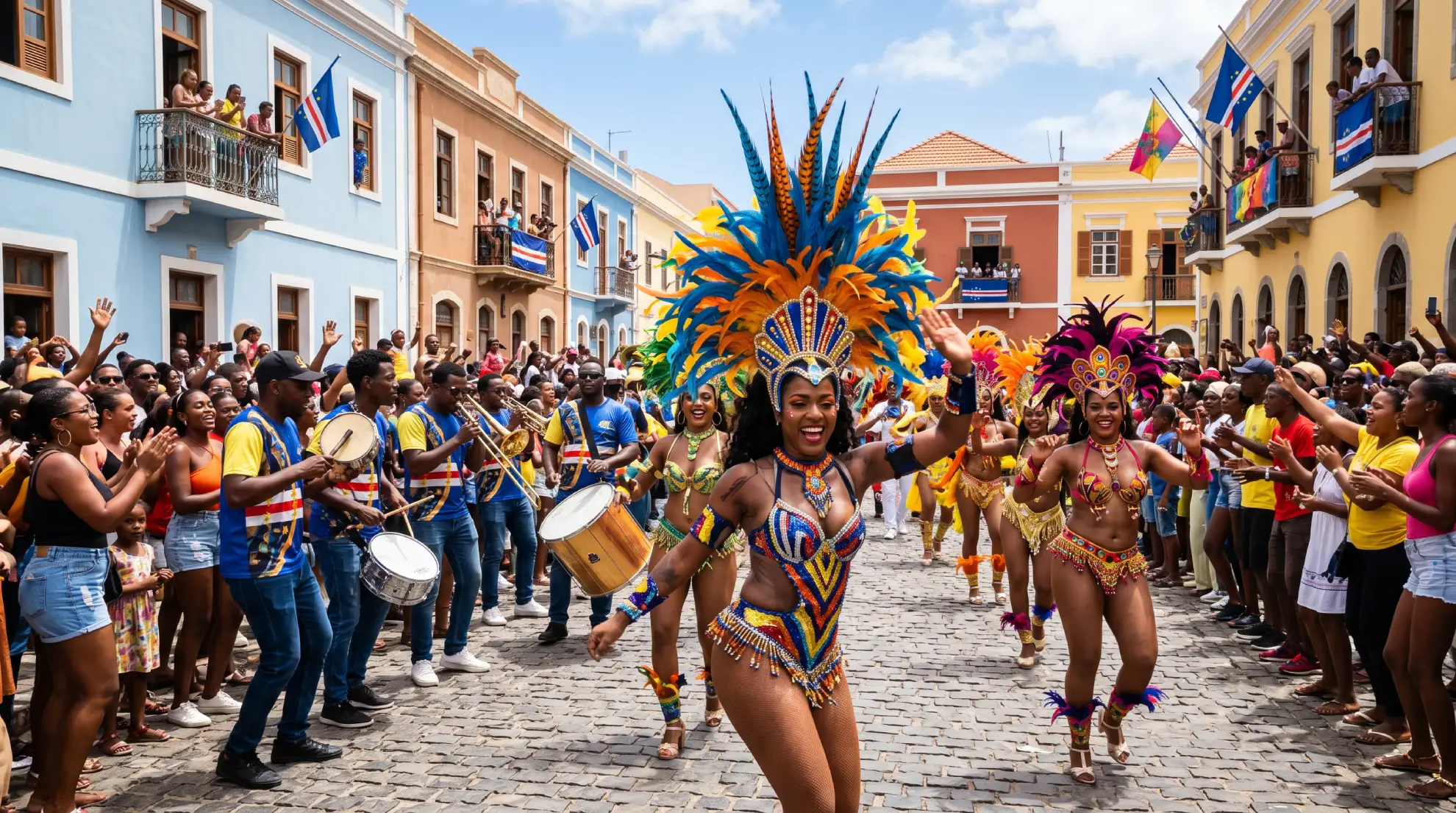
The Mindelo Carnival takes place each year in February or March, timed to the traditional Catholic calendar of pre-Lenten celebration. It is consistently ranked among the most visually and rhythmically intense carnivals in the Lusophone world, alongside Rio de Janeiro and the carnivals of São Tomé and Príncipe. Preparation begins months earlier, with neighborhood groups called grupos carnavalescos rehearsing choreography, constructing elaborate floats, and designing costumes that can take hundreds of hours to complete.
The main parade moves through the center of Mindelo along streets that have been swept and decorated for weeks in advance. Samba-influenced choreography borrowed from Brazil intersects with African drumming traditions and Cape Verdean musical structures to produce something that does not simply replicate Rio but genuinely synthesizes the Atlantic cultural exchange that shaped Mindelo's history. Hundreds of performers take part. Tens of thousands of spectators line the streets.
What distinguishes the Mindelo Carnival from purely tourist-facing events is the degree to which the city itself is the audience. Local families watch from rooftops and balconies. Children wear miniature versions of the adult costumes. The social energy is internal rather than performed outward for cameras, which gives the event a density and authenticity that visitors find surprising. Booking accommodation in Mindelo for Carnival requires planning at least three to four months in advance, as the city's limited hotel stock fills quickly. The week surrounding Carnival is also the most active period for live music throughout the city's bars and cultural venues.
What Are the Best Things to Do in Mindelo Beyond the Music Scene?
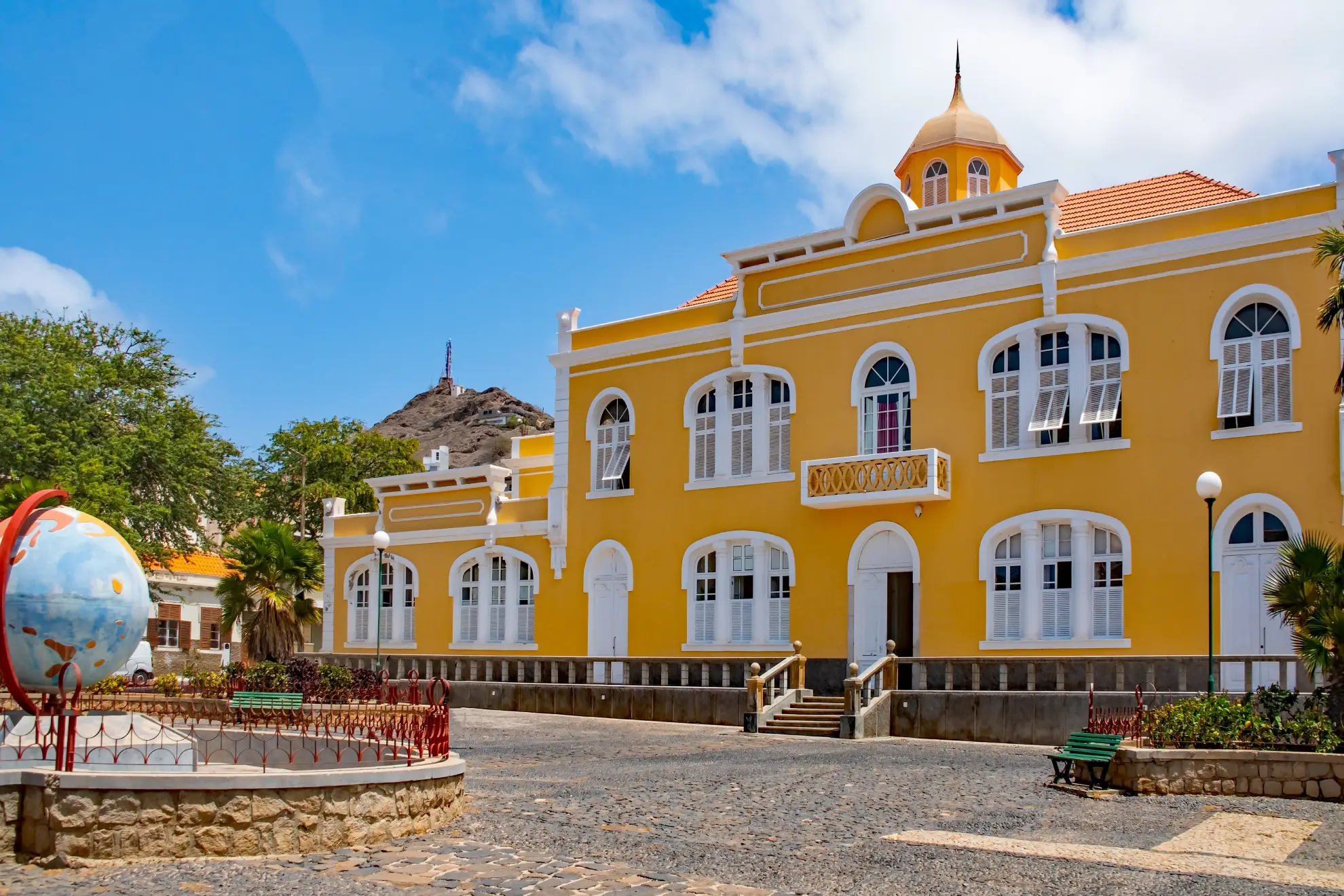
Praça do Pelourinho, the main square at the center of Mindelo's old colonial grid, anchors the city's daytime life. The square is surrounded by buildings in ochre, turquoise, and faded pink, many constructed during the Portuguese colonial period in the 18th and 19th centuries. The Palácio do Povo, originally the British consulate, faces the square and now functions as a cultural center hosting exhibitions, concerts, and workshops. The adjacent streets leading toward the harbor contain the highest concentration of cafés, bookshops, and small galleries in the city.
The Mercado Municipal de Mindelo, the central covered market, operates daily and provides one of the most direct encounters with local food culture available to visitors. Grogue, the Cape Verdean sugarcane spirit distilled primarily on Santo Antão island across the 50-kilometer ferry crossing, is sold alongside dried fish, local cheeses, Creole spices, and hand-crafted items. The market is compact but dense with activity, particularly in the early morning hours when fishing boats have returned to Porto Grande with the night's catch.
Praia de Laginha, a curved beach located within walking distance of Mindelo's center, offers calm swimming conditions inside the bay and a view back toward the colonial waterfront that reinforces the city's unusual combination of urban texture and Atlantic setting. The beach is used daily by local families and is not oriented toward organized beach tourism, which keeps its atmosphere relaxed and unmediated.
For travelers drawn to contemporary art, Mindelo has a growing number of small galleries and artist studios concentrated around the Rua de Lisboa and the streets between Praça do Pelourinho and the harbor. The city's historically cosmopolitan character, produced by centuries of transit trade and migration, continues to generate a creative community disproportionately large for an island of São Vicente's size. ToursXplorer curates guided experiences across these neighborhoods that connect visitors with specific cultural institutions and working artists rather than generic city tours.
What Natural Landscapes Does São Vicente Offer Outside Mindelo?
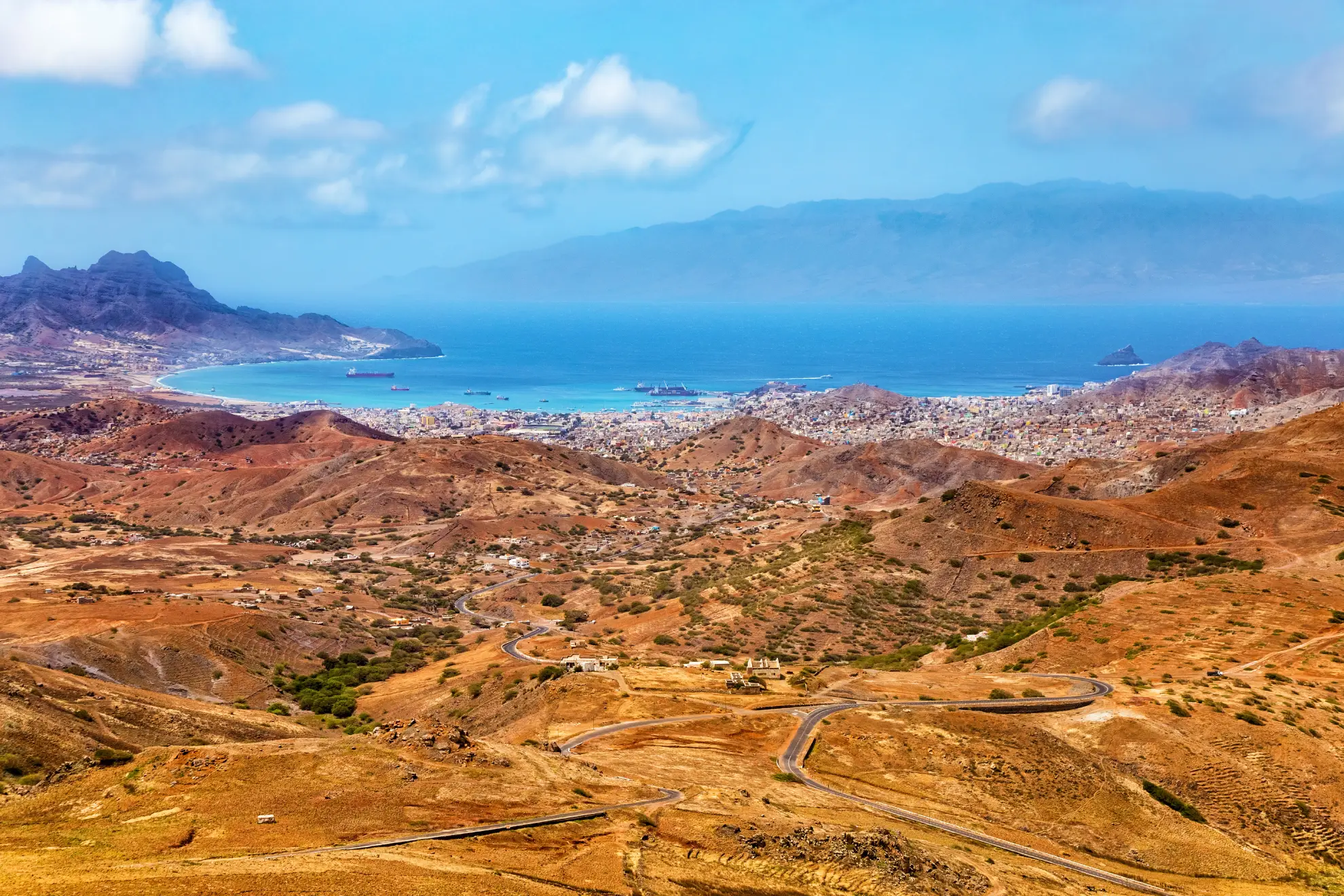
Monte Verde, the island's highest point at 774 meters, rises from the northern interior and is the source of the island's name: occasional cloud cover brings enough moisture for vegetation that contrasts sharply with São Vicente's otherwise arid volcanic terrain. The ascent by road offers panoramic views over Mindelo, the harbor, and on clear days the neighboring island of Santo Antão, whose dramatic mountains are visible across the Canal de São Vicente strait. The summit is accessible by vehicle and on foot, with hiking routes of varying difficulty.
Baía das Gatas, located on the northeastern coast approximately 13 kilometers from Mindelo, is a natural lagoon protected by a reef that produces calm, shallow water suitable for swimming even when Atlantic swells make other coastlines rough. The bay is a fishing community as well as a bathing beach, and its most significant annual event is the Festival de Baía das Gatas, a three-day music festival held each August that draws performers and audiences from across the Cape Verde archipelago and the diaspora. The festival is held on the beach itself, with stages erected facing the lagoon.
Calhau, on the southeastern coast roughly 20 kilometers from Mindelo, is a small fishing village at the base of a volcanic crater. The surrounding coastline is dramatic and largely undeveloped, with black sand beaches and strong Atlantic currents that make it a destination for experienced surfers and landscape photographers rather than casual swimmers. The road from Mindelo to Calhau passes through volcanic plains that give a clear visual sense of the island's geological age and character.
Praia Grande, on the southern coast, is the largest beach on São Vicente and notable for consistent wind conditions that have made the São Pedro area, nearby, a recognized destination for windsurfing and kitesurfing. The beach stretches for several kilometers and is rarely crowded outside the Carnival season, offering the kind of undisturbed Atlantic coastline that is increasingly rare in more developed island destinations.
Guided Tours of São Vicente and Mindelo
Ready to experience São Vicente beyond the beach? Browse all Mindelo tours on ToursXplorer and find the guided experience that fits your time on the island.
Click hereHow to Plan Your Time in São Vicente: Suggested Itineraries
4 Days in São Vicente: Arrive into Cesária Évora Airport and spend the first afternoon walking the harbor area and Avenida Marginal before an evening in one of the live music bars near Praça do Pelourinho. Day two is best used for a full-day island tour covering Monte Verde, Baía das Gatas, and Calhau, returning to Mindelo for dinner at a harbor restaurant. Day three focuses on the city itself: the Mercado Municipal in the morning, the Casa-Museu Cesária Évora before noon, and an afternoon exploring the art galleries around Rua de Lisboa. The fourth day works well for Praia de Laginha and the São Pedro coastline before departure.
6 Days: São Vicente Combined with Santo Antão: Santo Antão, the most mountainous island in the Cape Verde archipelago, sits 50 kilometers northwest of São Vicente and is reachable by ferry from Porto Grande in approximately one hour. The contrast between Mindelo's urban cultural life and Santo Antão's ribeiras (steep valleys), volcanic peaks reaching over 1,900 meters, and traditional agricultural villages makes the combination one of the most rewarding travel pairings in the archipelago. Spend three days in São Vicente as above, then cross by ferry and spend three days hiking the Paul Valley or the ridge trail above Corda, returning to Mindelo for a final night before departure. Ferry services run multiple times daily and tickets cost approximately 1,200 Cape Verdean Escudos (around 11 euros) each way.
Practical Travel Information for São Vicente
Getting There: São Vicente is served by Cesária Évora Airport, which receives direct flights from Lisbon (approximately 3.5 hours), Amsterdam, London, and several other European cities seasonally. TAP Air Portugal and TACV (Cabo Verde Airlines) operate the most frequent routes. From other Cape Verde islands, inter-island flights and the Santo Antão ferry are the primary connections.
Currency and Payments: The Cape Verdean Escudo (CVE) is the local currency and is pegged to the euro at a fixed rate. ATMs are available in Mindelo city center, and larger hotels and restaurants accept card payments. Smaller bars, market stalls, and local taxis typically expect cash. It is practical to carry a moderate amount of escudos for daily expenses.
Safety and Local Character: Mindelo is generally considered one of the safer cities in West Africa for independent travelers. Petty theft around busy market areas and the harbor warrants the usual attention, but the city's atmosphere is notably relaxed and morabeza remains a genuine social norm rather than a tourism slogan. Lone travelers, including women traveling independently, consistently report positive experiences in the city.
Best Time to Visit: Cape Verde's climate is warm year-round, with average temperatures in Mindelo ranging from 22 degrees Celsius in January to 29 degrees Celsius in September. The Carnival period (February or March) is the most culturally intense time to visit and requires advance booking. The Baía das Gatas Festival in August is the second major event on the cultural calendar. The period from November through January brings slightly cooler temperatures and fewer tourists, which many travelers find preferable for unhurried exploration of the city. The harmattan wind, carrying Saharan dust, can reduce visibility during January and February.
ToursXplorer offers tours across São Vicente year-round, with availability confirmed at booking. The full-day island tours and private shore excursions can be booked directly through the tour pages linked in this guide.
Where to Stay and Eat in São Vicente
Accommodation: Mindelo's city center offers the best access to the cultural life of São Vicente, with boutique hotels and guesthouses (pensões) concentrated around Praça do Pelourinho and the streets leading toward the harbor. Properties in this area place visitors within walking distance of the main music venues, the municipal market, and the waterfront. Praia de Laginha, a ten-minute walk from the center, suits travelers who want a beach within reach while remaining in the urban fabric. The São Pedro area, approximately 15 kilometers south of Mindelo near the airport, appeals to windsurfers and travelers seeking a quieter coastal setting.
Food and Drink: Cachupa, the Cape Verde national dish, is a slow-cooked stew of hominy corn, beans, and meat or fish, and is served in some form in nearly every local restaurant. In Mindelo it is often prepared with fresh tuna or wahoo caught in the waters around the island. Grilled fresh tuna with moio sauce, a tomato and onion preparation, is the most recommended single dish for visitors eating in harbor-area restaurants. Grogue, the local sugarcane spirit, is produced on Santo Antão and consumed throughout São Vicente, typically straight or in the ponche cocktail mixed with lime and local honey. The bars along the Avenida Marginal and the side streets near the harbor represent the highest concentration of live morna and coladeira performances accessible without a formal venue ticket.
Arriving by cruise ship at Porto Grande? The private shore excursion lets you cover Mindelo's cultural landmarks and coastal scenery in six hours with a dedicated guide.
Frequently Asked Questions
São Vicente is known primarily for Mindelo, its capital city and Cape Verde's acknowledged cultural capital. The island is the historical home of morna music, the birthplace of singer Cesária Évora, and the site of one of the most celebrated carnivals in the Lusophone world. It is distinct from beach-resort islands like Sal and Boa Vista in its emphasis on music, colonial architecture, and urban cultural life.
Mindelo is widely considered the most culturally rich city in the Cape Verde archipelago. Its colonial harbor district, live music scene, and connection to the morna tradition give it a depth of experience uncommon among Atlantic island destinations. Travelers interested in music, local culture, and authentic urban atmosphere consistently rate it as the most memorable stop in Cape Verde, often above beach-focused islands.
The Mindelo Carnival takes place in February or March, aligned with the Catholic pre-Lenten calendar. It is one of the major carnivals in the Lusophone world, featuring elaborate costumes, African drumming, and samba-influenced choreography. Accommodation in Mindelo fills three to four months in advance during Carnival. Travelers should book early and expect higher prices across hotels and flights during that period.
Praia de Laginha is the closest beach to Mindelo's city center, reachable on foot and offering calm bay swimming with views of the colonial waterfront. Baía das Gatas, approximately 13 kilometers northeast of Mindelo, is a reef-protected lagoon with shallow, calm water suitable for families. Praia Grande on the southern coast is the island's largest beach and, along with the São Pedro area, is favored by windsurfers and kitesurfers.
Ferries between Mindelo's Porto Grande and the port of Porto Novo on Santo Antão operate multiple times daily. The crossing takes approximately one hour and costs around 1,200 Cape Verdean Escudos (roughly 11 euros) each way. Santo Antão is the most mountainous island in Cape Verde and is known for its deep ribeiras and hiking trails, making it a natural extension of a São Vicente itinerary.
São Vicente has a warm, dry climate year-round with temperatures between 22 and 29 degrees Celsius. The Carnival period in February or March is peak cultural season. The Baía das Gatas music festival in August is the second major event. November through January offers cooler weather and fewer tourists, which many independent travelers prefer for exploring Mindelo at a relaxed pace.