




Santiago, Cape Verde: The Most Authentic Island in the Archipelago
Where Creole culture, Atlantic history, and raw island life converge far beyond the resort beaches
Most visitors to Cape Verde land on Sal or Boa Vista, drawn by white sand and calm waters. Santiago, the largest island in the archipelago, offers something harder to package: a living culture shaped by centuries of Atlantic history, African rhythm, and Creole identity. From the UNESCO-listed streets of Cidade Velha to the green valleys of Serra da Malagueta, Santiago rewards travelers willing to look beyond the resort formula.
Why Does Santiago Feel So Different From the Rest of Cape Verde?
Cape Verde is a ten-island archipelago scattered roughly 570 kilometres off the West African coast, and each island carries its own character. Sal and Boa Vista have built their reputations on reliable sunshine, flat terrain, and beach resorts designed for package holidays. Santiago operates on a different register entirely.
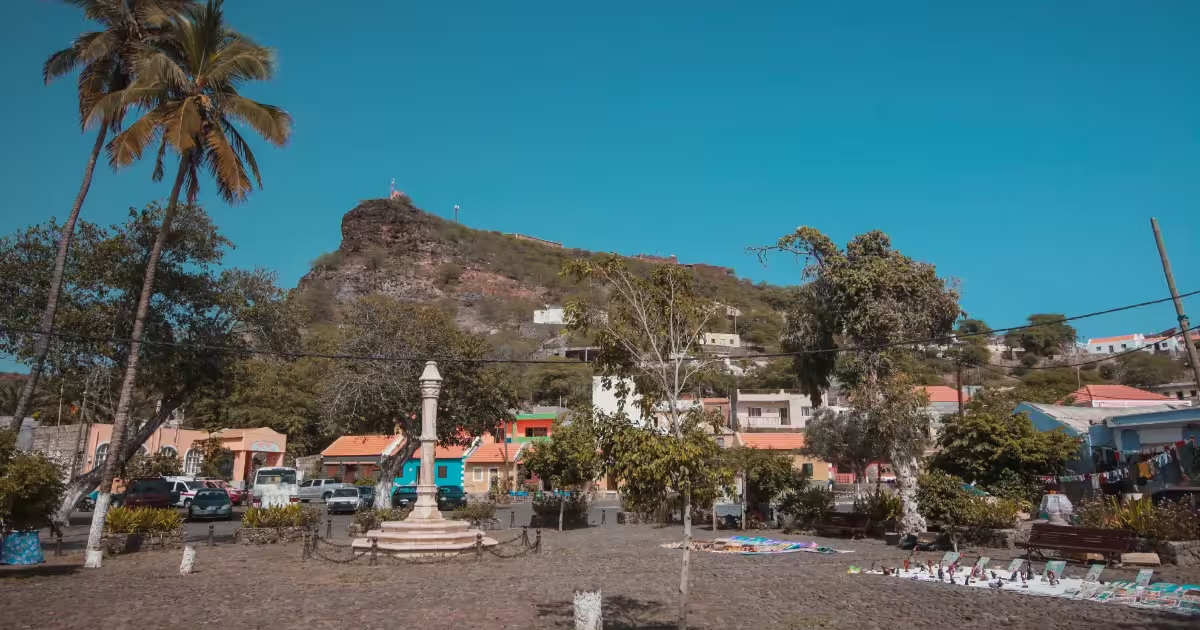
This is the island where the Cape Verdean state was born, where African and Portuguese cultures fused over five centuries, and where the national capital, Praia, still pulses with the contradictions of a city growing fast but rooted deeply in its past. Walking through the Plateau district in the evening, you hear morna drifting from a bar, smell grilled fish from a street vendor, and watch schoolchildren navigate the same cobblestones that colonial traders once crossed.
Santiago is not the most polished island in Cape Verde — and that is exactly what makes it unforgettable.
The contrast with Sal is not subtle. Sal's Santa Maria resort strip is efficient, comfortable, and largely disconnected from local life. Santiago has no equivalent strip. Its tourism infrastructure is thinner, its streets louder and less curated, and its cultural life entirely its own. For travelers seeking meaningful experiences over managed comfort, that difference is the entire point.
What Are the Essential Facts About Santiago Island?
Santiago covers approximately 991 square kilometres, making it the largest island in the Cape Verde archipelago. It is home to around 300,000 people, more than half the national population, and to Praia, the capital city since 1858. The island sits at the southern end of the Sotavento group, roughly 9 degrees north of the equator.
The terrain is volcanic and varied. The interior rises sharply through green valleys and ribeiras to the Pico de António, which reaches 1,394 metres above sea level and is the highest point on the island. The north is wetter and greener, supporting agriculture and small farming communities. The south and east are drier, with dramatic coastal cliffs and quiet fishing villages.
Santiago's international airport, Nelson Mandela International Airport, receives direct and connecting flights from Lisbon, Amsterdam, and several African capitals. Travel time from Lisbon is approximately 3.5 hours. Internal inter-island flights connect Santiago to Sal, São Vicente, and other islands in under 90 minutes.
The best time to visit Santiago for hiking and cultural exploration is between November and June, during the dry season. Temperatures hover between 22°C and 30°C year-round. The rainy season, from July to October, brings brief intense showers and transforms the interior valleys into deep, photogenic green — a period increasingly popular with photographers and slow travelers.
What Makes Cidade Velha One of the Most Significant Sites in the Atlantic World?
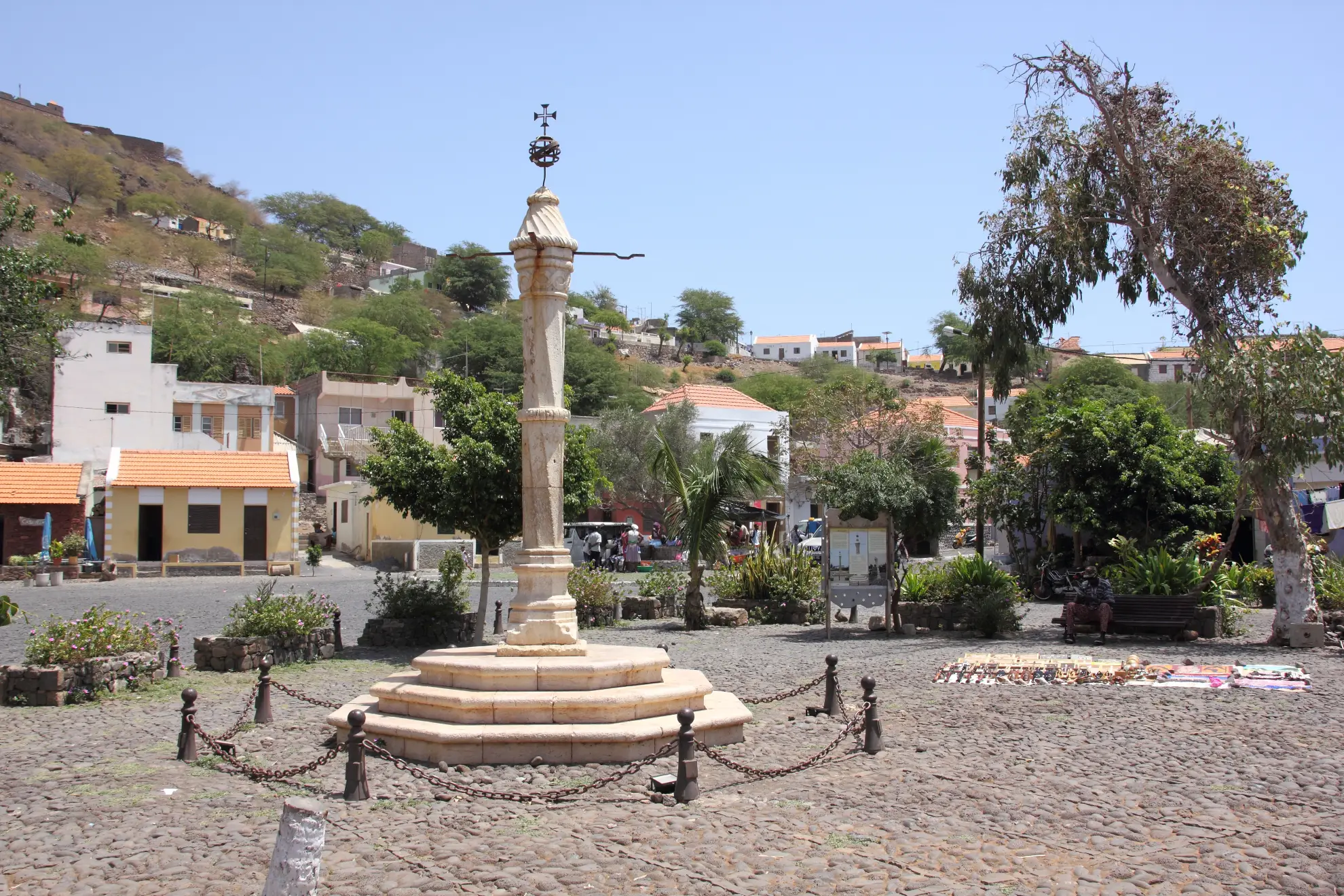
Founded in the 1460s as Ribeira Grande, Cidade Velha holds the distinction of being the first European colonial settlement in the tropics. Located on Santiago's southern coast, approximately 15 kilometres west of Praia, it served as a critical provisioning and trading hub on the Atlantic routes connecting Europe, West Africa, and the Americas for more than two centuries.
UNESCO inscribed Cidade Velha as a World Heritage Site in 2009, recognising its exceptional historical and cultural significance. The site preserves several layers of that history. The Fortaleza Real de São Filipe, constructed between 1587 and 1593 on a commanding hilltop, was built to defend the port from pirate raids, including an attack by Francis Drake in 1585. Its stone ramparts offer a panoramic view of the bay below and remain one of the most intact colonial fortifications in West Africa.
At the heart of the village stands the Pelourinho, a stone pillory dating to the 15th century. It is one of only three surviving examples of its kind in the world, and its presence here carries the full weight of the island's history: this was a site of punishment and public control in a settlement built substantially on enslaved labour from the West African coast, particularly from present-day Guinea-Bissau, Senegal, and Sierra Leone.
Walking through Cidade Velha is not a comfortable experience if you engage with it honestly. The ruins ask questions that the Atlantic world has not yet finished answering.
The Igreja de Nossa Senhora do Rosário, built in 1495, is one of the oldest churches in sub-Saharan Africa still standing. The ruined Sé Catedral, whose construction began in 1556, once served as the seat of one of the most powerful bishoprics in the Portuguese empire. Today only its stone foundations and partial walls remain, gradually returning to the hillside soil.
Guided tours of Cidade Velha typically last between two and three hours and include the fort, the Pelourinho, the church, and the village streets, where local women still wash clothes in the ribeira and fishermen dry their catch in the sun. The combination of living community and historical weight gives Cidade Velha a texture that no museum recreation can replicate.
What Is Life Like in Praia, and Why Should Travelers Spend Time There?
Praia is a city of contradictions and energy. Its old colonial core, the Plateau district (locally called Platô), sits on a flat-topped mesa overlooking the bay. Here, 19th-century administrative buildings stand beside small cafés, neighbourhood barbers, and the Presidential Palace. The streets are narrow, the architecture weathered, and the pace surprisingly unhurried for a capital city.
Below the Plateau, the sprawling suburbs of Achada Santo António, Fazenda, and Tira Chapéu fan out across the hillsides. These are working neighbourhoods, not tourist districts, and visiting them offers a grounded sense of how most Praia residents actually live.
The Sucupira Market in the Tira Chapéu neighbourhood is the city's largest informal market and one of the most vivid street experiences in the archipelago. Traders sell everything from bolts of West African fabric and electronic goods to fresh produce, spices, and live animals. The sounds, colours, and social dynamics of Sucupira make it a more authentic window into daily Cape Verdean life than any curated cultural centre.
For food, the Plateau's small restaurants serve cachupa — the national dish, a slow-cooked stew of corn, beans, and meat or fish — alongside fresh grilled tuna, buzio (conch stew), and fried pastel com diabo dentro (pastries stuffed with tuna and chilli). Family-owned establishments in the backstreets consistently outperform tourist-facing restaurants in both quality and atmosphere.
Praia's nightlife centres on live music venues where funaná rhythms, driven by accordion and iron scraper, keep dancers moving well past midnight. Morna, the melancholic national genre that earned global recognition through the singer Cesária Évora, is performed more formally in bars and cultural spaces. Both genres are alive here in a way that no concert-hall staging elsewhere can match.
What Natural Landscapes Can Travelers Explore in Santiago?
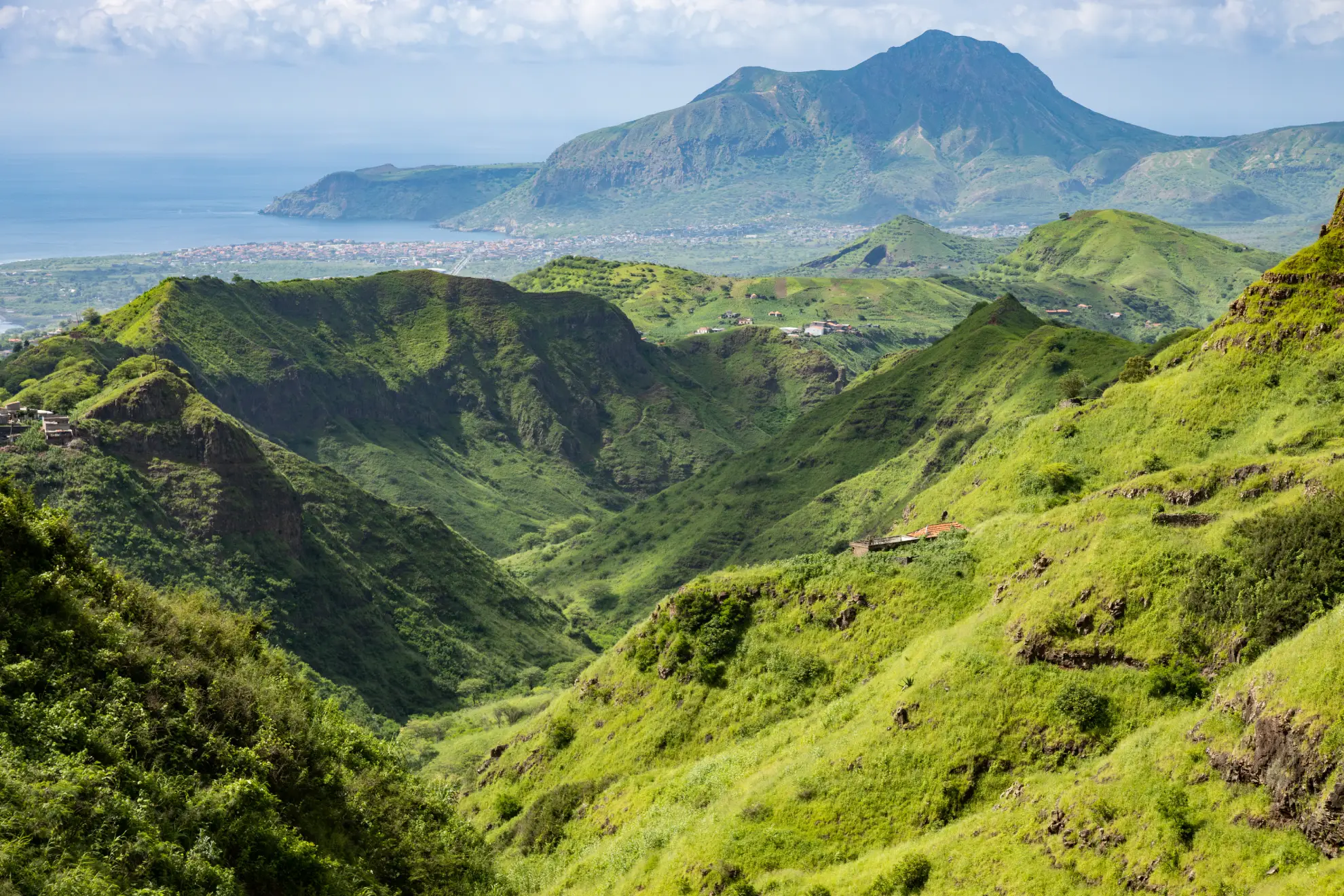
Santiago's interior is one of the least-visited and most rewarding landscapes in the Cape Verde archipelago. The Serra da Malagueta Natural Park, declared a protected area in 2003, covers approximately 774 hectares in the island's northern highlands. At elevations between 900 and 1,064 metres, the park supports cloud forest vegetation unusual in a Sahelian climate, including Dracaena draco (dragon trees), endemic tree spurges, and a rich bird population that includes the Cape Verde warbler (Acrocephalus brevipennis), found nowhere else on earth.
Hiking trails in the park range from short walks between rural villages to full-day traverses through ribeira valleys. The views north toward the coast and east toward Pico de António reward the effort of the climb. Villages along the trails, including Serra Malagueta and Rui Vaz, offer a glimpse of agricultural life that has changed little in generations, with terraced fields of corn and banana plants stepping down the valley sides.
Pico de António is accessible by guided trekking tours and offers the most dramatic volcanic scenery on the island. The summit ridge provides 360-degree views across Santiago and, on clear days, toward the neighbouring islands of Fogo and Maio. Fogo, visible to the west, is home to the still-active Pico do Fogo volcano (2,829 metres), the highest point in Cape Verde.
On the northern coast, Tarrafal Beach is Santiago's most celebrated stretch of sand: a wide, palm-fringed bay with calm, turquoise water sheltered from the Atlantic swell. The town of Tarrafal, approximately 75 kilometres north of Praia, has a relaxed atmosphere shaped more by local fishing life than by tourism development. Near Tarrafal, the ruins of the Campo de Concentração do Tarrafal, a colonial-era prison used by the Portuguese Estado Novo regime between 1936 and 1974 to detain political prisoners, stand as a sobering historical landmark that few international visitors seek out but many find deeply affecting.
Quieter coastal areas, including the beaches near São Francisco and the natural pools at Rincão on the east coast, offer solitude and raw Atlantic scenery without infrastructure or crowds.
What Is the Cultural Identity That Makes Santiago Distinct?
The cultural identity of Santiago is inseparable from the experience of the Atlantic slave trade and the process of creolisation that followed. The island was settled by Portuguese traders and administrators from the 1460s onward, but its population was overwhelmingly shaped by enslaved Africans brought from the mainland. The result, over centuries, was a distinct Creole culture: the Kriolu language spoken in Santiago (distinct from the Creole of São Vicente), the batuque musical tradition performed by women in circular formations, and the deep sense of collective resilience that characterizes Santiago's communities.
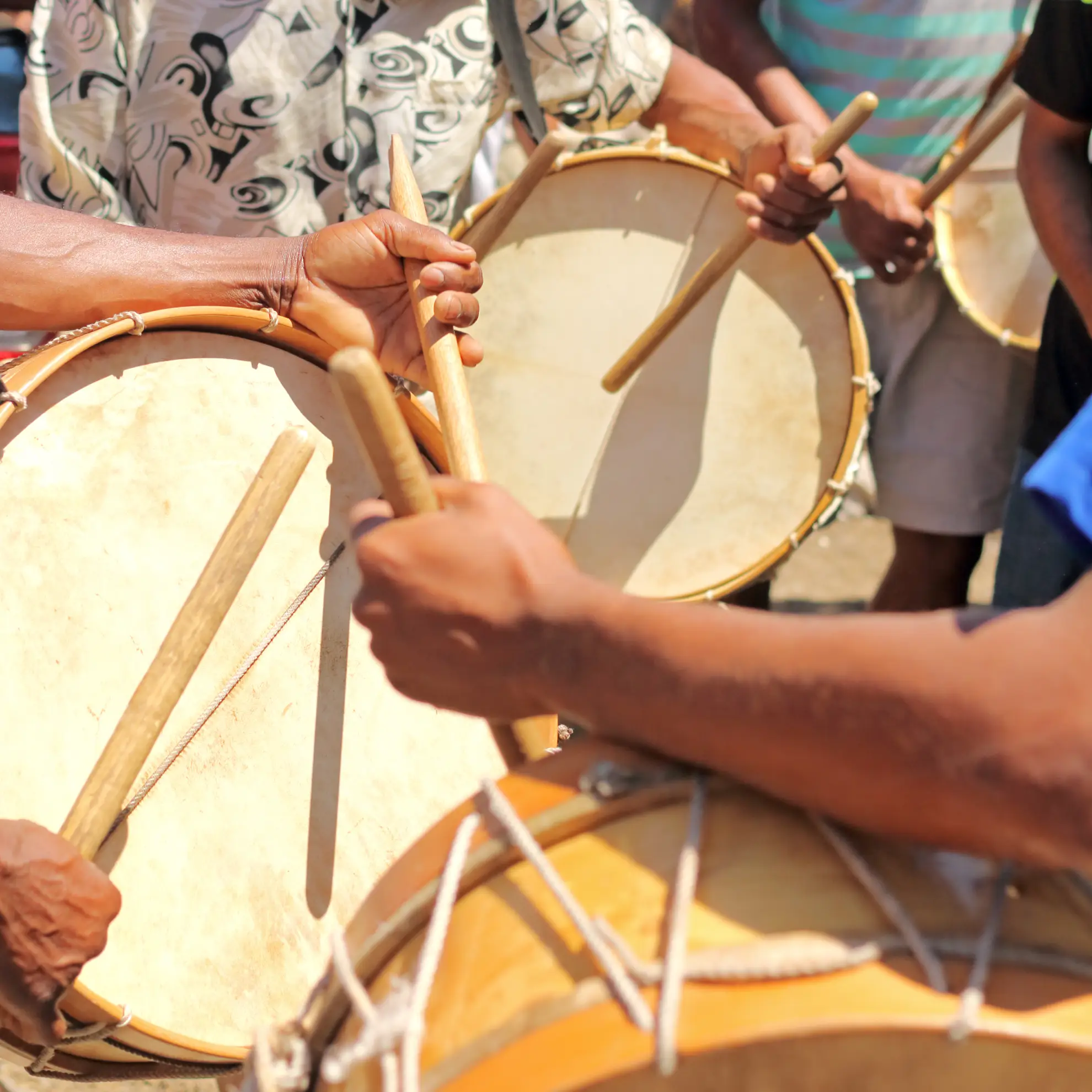
Batuque is perhaps the most distinctively Santiago cultural form: a percussion-based ritual music and dance in which women beat cloth pads on their thighs to create rhythm while a solo dancer performs at the centre of the circle. It is not a performance for tourists; it is a living tradition practiced at celebrations, baptisms, and community gatherings. Witnessing it in its natural context, rather than on a stage, requires time, patience, and respectful curiosity.
Funaná, now popular across the archipelago and in the Cape Verdean diaspora in Lisbon and Rotterdam, originated in Santiago's rural interior as the music of field workers and was suppressed by the Portuguese colonial administration as subversive. Its rehabilitation after independence in 1975 became an act of cultural reclamation. The accordion-driven energy of funaná is as political as it is celebratory.
The Kriolu language of Santiago, also known as Santiago Creole or Badiu Creole, is linguistically closer to its West African substrate languages than the Creole spoken in northern islands. Learning a few phrases — modi bu sta? (how are you?), obrigadu/obrigada (thank you) — is both practically useful and socially meaningful. Cape Verdeans respond warmly to visitors who make the effort.
Guided Experiences in Santiago, Cape Verde
Ready to experience Santiago beyond the surface? Browse ToursXplorer's full selection of guided tours across the island, from UNESCO heritage walks in Cidade Velha to multi-day cultural immersions, and build an itinerary that connects you with the real Cape Verde.
Click hereSuggested Itineraries for Santiago, Cape Verde
4 Days: Arrive in Praia and spend the first day exploring the Plateau district, the National Ethnographic Museum, and a dinner in a local restaurant in the backstreets. Day two: a full-day guided tour of Cidade Velha, covering the Fortaleza Real de São Filipe, the Pelourinho, and the village itself. Day three: travel north to Tarrafal Beach for an afternoon of swimming and a walk through the fishing town. Day four: morning visit to Sucupira Market before departing.
7 Days: Use ToursXplorer's structured 7-day Santiago itinerary as a framework, which adds Serra da Malagueta hiking, the Pico de António trekking route, and evening time in Praia's live music venues to the core historical and beach highlights. This pacing allows for genuine engagement with local culture rather than a rushed monument checklist.
10 Days (Slow Travel): Base yourself in Tarrafal for three nights, Praia for four nights, and a rural guesthouse near Assomada or Rui Vaz for three nights. Use aluguer shared taxis and local transport to move between areas. Attend a batuque gathering if one coincides with your stay, visit the Tarrafal concentration camp memorial, and take a day trip by ferry or light aircraft to the neighbouring island of Fogo to see the Pico do Fogo volcanic crater up close.
Practical Travel Tips for Santiago, Cape Verde
Getting Around: The most characteristically Cape Verdean form of transport on Santiago is the aluguer, a shared minibus or pickup truck that runs fixed routes between towns on a fill-and-go basis. Aluguers are inexpensive, social, and reliable during daytime hours, though less frequent after dark and in rural areas. Car rental is available in Praia through international agencies and offers flexibility for reaching Serra da Malagueta and the east coast. Organized guided tours, bookable through ToursXplorer, include transport and are the most efficient option for day trips to Cidade Velha and the northern highlands.
Money: The Cape Verdean Escudo (CVE) is the local currency, pegged to the euro at approximately 110 CVE to 1 EUR. ATMs are available in Praia and Tarrafal. Card payments are accepted in most Praia hotels and larger restaurants but are unreliable or unavailable in rural areas and small local restaurants. Carry cash when traveling outside the capital.
Safety: Praia, like any capital city, requires standard urban awareness, particularly in the Sucupira Market area and after dark in unfamiliar neighbourhoods. Tarrafal and the island's rural areas are calm and present no significant safety concerns. Petty theft targeting unattended valuables on beaches is occasionally reported; apply the same precautions you would anywhere.
Cultural Respect: Dress modestly when visiting rural communities and churches. Ask permission before photographing individuals. Support local, family-owned businesses over large operators where possible. The Cape Verdean concept of morabeza, a particular warmth and hospitality toward strangers, is genuine and reciprocal: travelers who arrive with openness and curiosity consistently report being welcomed with generosity.
Frequently Asked Questions
Santiago is widely considered the most culturally authentic island in Cape Verde. It is home to the capital Praia, the UNESCO-listed Cidade Velha (the first European colonial settlement in the tropics), and living traditions including batuque music, funaná, and Santiago Creole. Unlike Sal and Boa Vista, which are built around beach resort tourism, Santiago's economy and culture remain rooted in local life.
The top experiences in Santiago include visiting Cidade Velha's UNESCO heritage sites (the Fortaleza Real de São Filipe and the Pelourinho), hiking in Serra da Malagueta Natural Park, swimming at Tarrafal Beach, exploring Praia's Plateau district and Sucupira Market, and attending live morna or funaná music in local bars. Multi-day guided tours allow travelers to combine all of these within a single itinerary.
Sal is oriented toward beach resort holidays with package tourism infrastructure. Santiago offers cultural depth, historical significance, mountainous hiking terrain, and genuine Creole community life that Sal does not. Travelers interested in history, music, food, and human connection consistently find Santiago more rewarding, while those seeking simple beach relaxation may prefer Sal's more polished facilities.
Cidade Velha, founded in the 1460s as Ribeira Grande, was the first European colonial settlement in the tropics and a major hub of the Atlantic slave trade. It was inscribed as a UNESCO World Heritage Site in 2009. Key sites include the Fortaleza Real de São Filipe (built 1587–1593), the 15th-century Pelourinho, and the Igreja de Nossa Senhora do Rosário (1495), one of the oldest churches in sub-Saharan Africa still standing.
The dry season, from November to June, is the best time to visit Santiago for hiking, cultural exploration, and beach travel. Temperatures remain between 22°C and 30°C year-round. The rainy season (July to October) brings short, intense showers and turns the Serra da Malagueta highlands intensely green, which attracts photographers and travelers interested in the island's agricultural landscape.
The main local transport option is the aluguer, a shared minibus running fixed routes between towns for low fares. Car rental is available in Praia for independent travel to remote areas. Guided tours, including those bookable through ToursXplorer, include transport and are the most practical option for day trips to Cidade Velha, Serra da Malagueta, and Tarrafal Beach from the capital.