




Sal Island, Cape Verde: Complete Travel Guide – Best Things to Do, See and Where to Stay
From shark-filled shallows and volcanic salt craters to white-sand beaches and Cape Verdean sunsets, Sal rewards every kind of traveller.
Sal Island sits roughly 570 kilometres off the West African coast, yet it feels like its own universe. Fewer than 36,000 people live here on a 30-kilometre-long strip of flat volcanic rock, salt flats and white-sand shoreline. The sun shines for more than 350 days a year, the Atlantic stays warm, and life in the fishing town of Santa Maria moves at a pace that makes everything else seem unnecessarily rushed.
Where is Sal Island and why do travellers keep returning?
Sal is the easternmost of the Barlavento (windward) islands in the Cape Verde archipelago, positioned at roughly 16.7° N latitude. Its name means salt in Portuguese, a direct reference to the salt mining industry that sustained the island for centuries. The main airport, Aeroporto Internacional Amílcar Cabral, receives direct flights from London, Lisbon, Amsterdam, Manchester and several other European hubs, making Sal one of the most accessible islands in the archipelago.
The island covers approximately 216 square kilometres and rises only 406 metres at its highest point, Monte Grande. That flatness means the trade winds blow without obstruction, which explains why Sal has become one of the top kitesurfing destinations in the Atlantic. The same wind keeps temperatures in a comfortable range between 22°C in January and 29°C in August, with sea temperatures rarely dropping below 22°C even in the coolest months.
Sal is one of those rare places where the landscape feels almost elemental — flat desert meeting open ocean, with nothing between you and the horizon except heat haze and the occasional fishing boat.
Travellers return to Sal for different reasons. Families come for the calm, shallow water at Santa Maria Beach. Kite surfers time their trips between December and April when the Harmattan trade winds blow consistently at 15 to 25 knots. Adventure seekers book the Shark Bay wade-in experience or rent quad bikes for off-road circuits through the volcanic interior. Others simply arrive, find a beach bar, and stay until the flight home forces them to leave.
What are the best things to do in Sal Island, Cape Verde?
Santa Maria Beach and the promenade
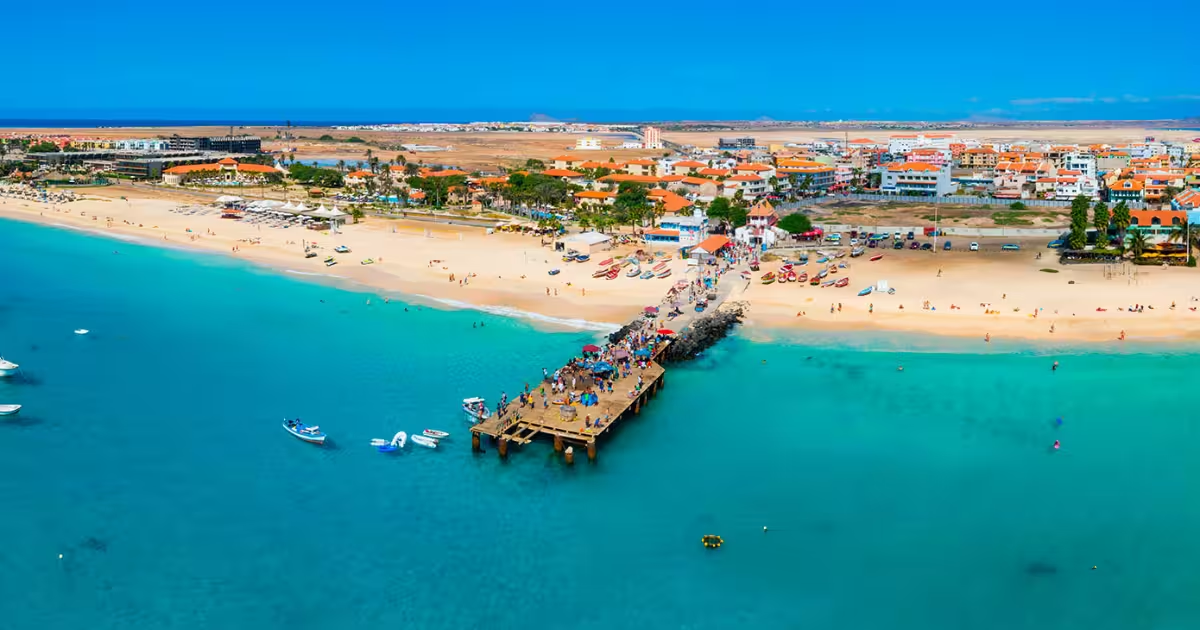
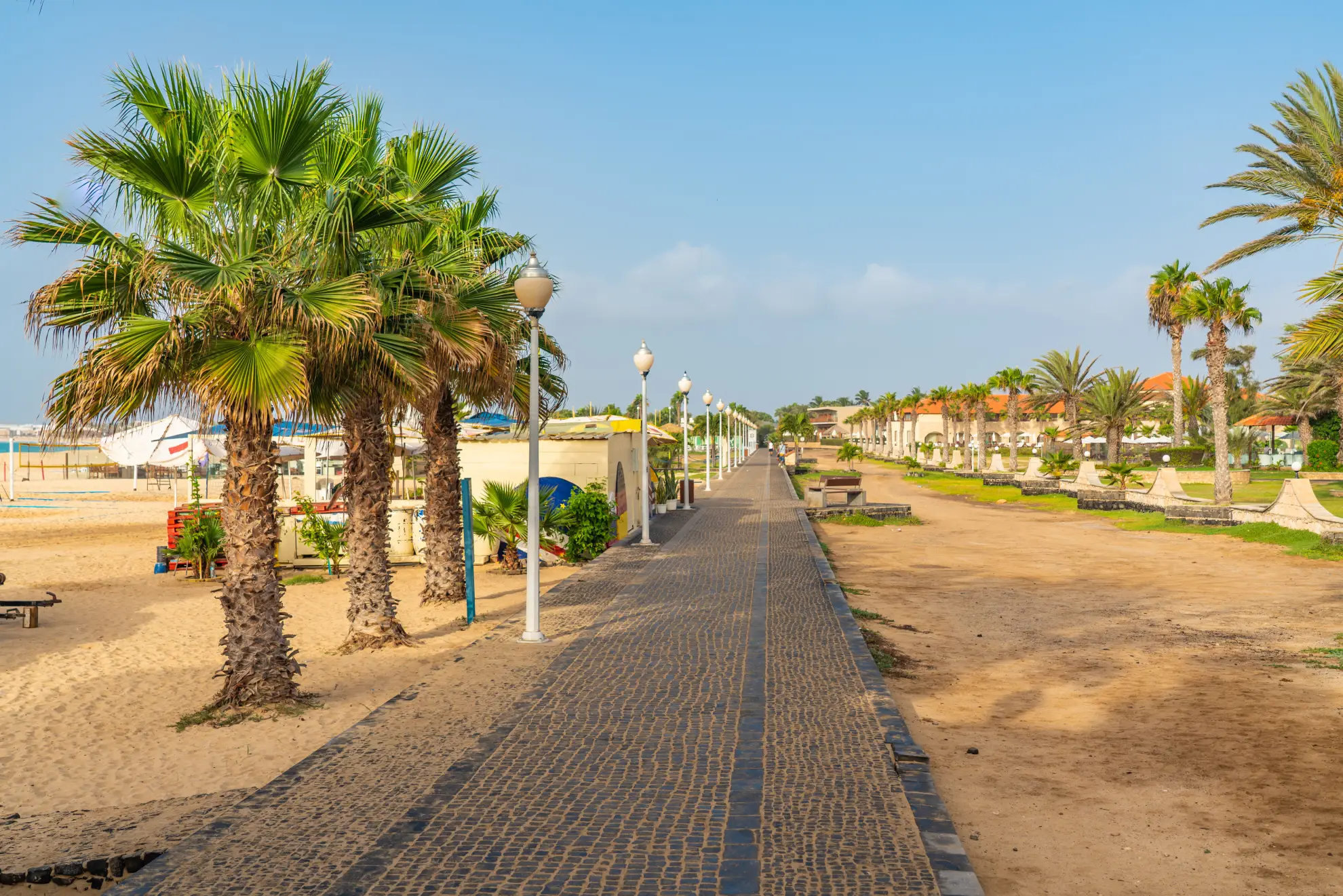
Santa Maria is the island's main tourist hub, a town of brightly painted houses, wooden-decked restaurants and a long pier that juts into the Atlantic. The beach itself stretches for approximately 3 kilometres, curving gently around a bay where the water colour shifts from pale turquoise in the shallows to deep cobalt further out. The promenade running parallel to the sand hosts fish restaurants, rum bars and craft stalls that fill up each evening as the sun drops toward the ocean. Sunsets here are reliably dramatic.
Shark Bay (Baía dos Tubarões)
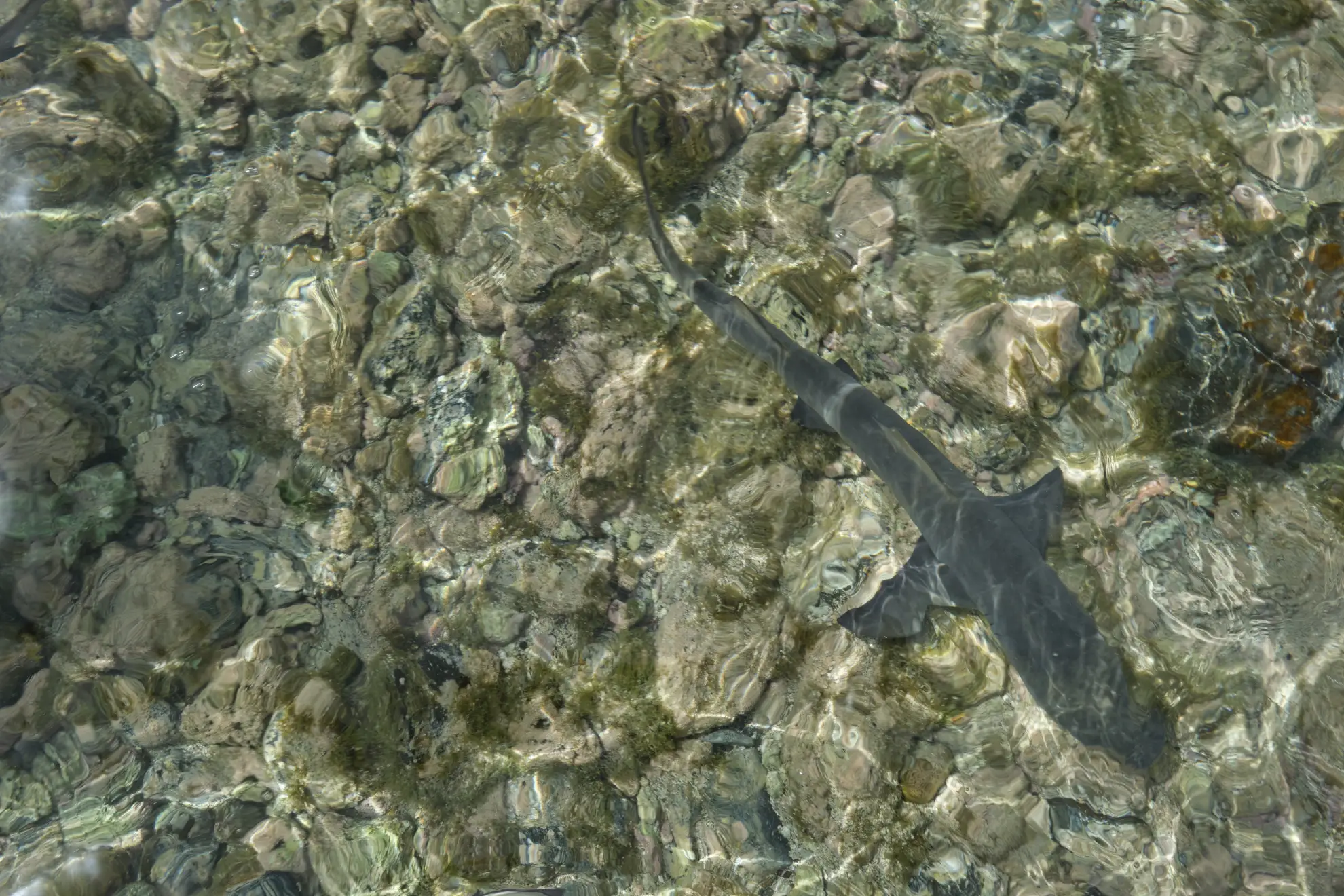
Located on the northwestern tip of the island, Shark Bay is a sheltered lagoon where juvenile lemon sharks (Negaprion brevirostris) gather in numbers that make a sighting virtually guaranteed. Visitors wade into water that rarely exceeds knee-depth and observe the sharks swimming within touching distance. The experience is guided and conducted without feeding the animals, making it one of the more ethically framed wildlife encounters in the region. Lemon sharks in this bay typically measure between 80 centimetres and 1.5 metres. They pose no danger to waders and are not provoked during responsible guided visits.
Pedra de Lume Salt Crater
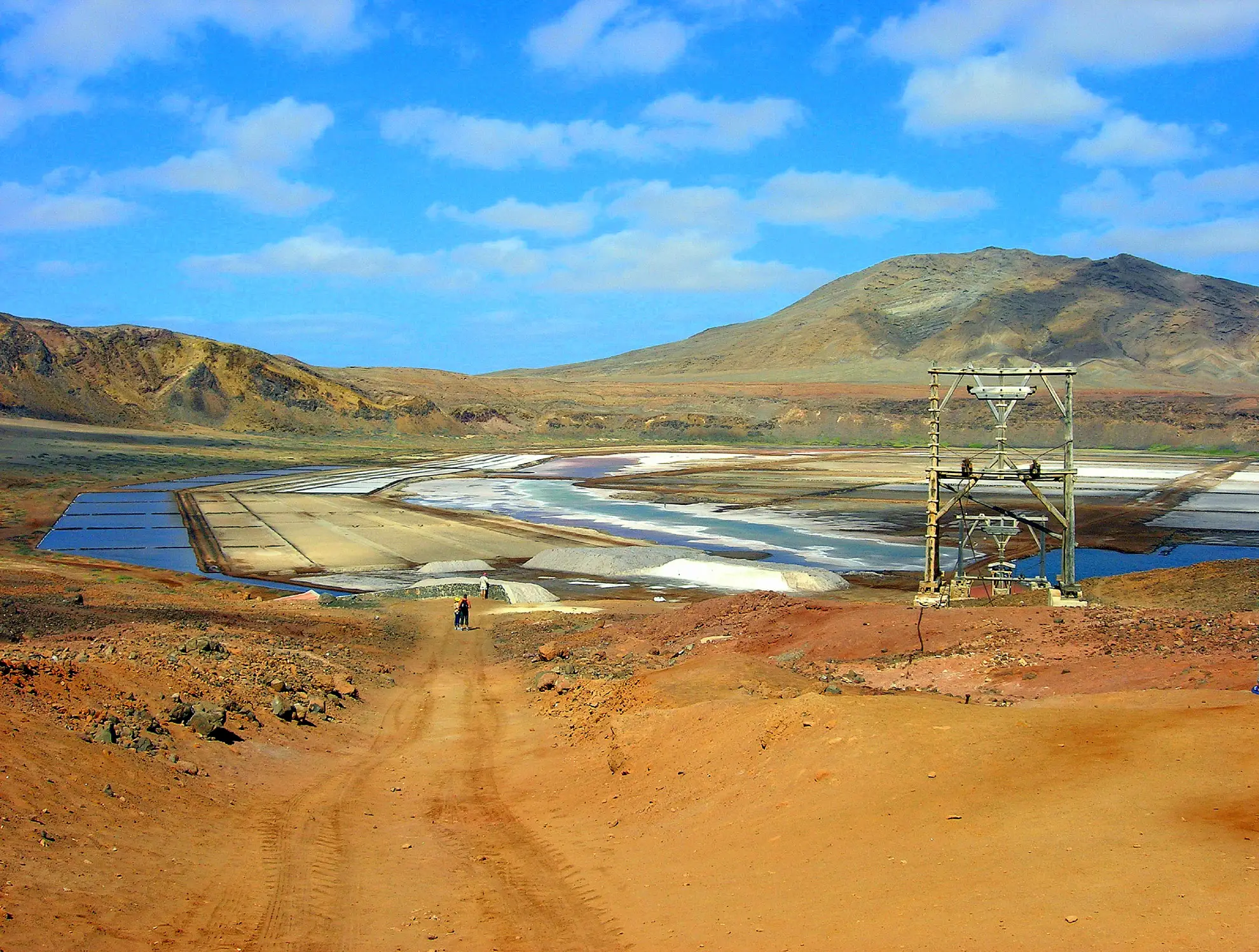
Roughly 8 kilometres northeast of Santa Maria, Pedra de Lume occupies the interior of an extinct volcanic crater. Salt has been extracted here since the 18th century, and the operation was significant enough that a small narrow-gauge railway was once used to transport salt to the coast. Today visitors float in the hyper-saline crater lake, an experience often compared to the Dead Sea, as the salt concentration is high enough to make it almost impossible to sink. The surrounding crater walls and rusting industrial equipment give the site an eerie, photogenic quality that feels genuinely distinct from anything else on the island.
Buracona and the Blue Eye
On Sal's western coast, a series of natural lava pools formed by ancient volcanic activity creates the site known as Buracona. The most visited feature is the Blue Eye, a submerged cave opening where, at specific times of day when sunlight enters the cave at the right angle, the water inside glows an intense electric blue. The effect lasts only a few minutes and depends on calm sea conditions. The surrounding lava formations, shaped by centuries of Atlantic wave erosion, make Buracona worth visiting even when the Blue Eye effect is not visible.
Kite Beach and water sports
Kite Beach (Praia do Kite) lies a short walk east of Santa Maria and is designated specifically for kitesurfing and windsurfing. The consistent trade winds and shallow flat-water lagoon created by an offshore reef make this one of the technically ideal launch points in the Atlantic. Kitesurfing schools operate on the beach year-round, offering lessons to beginners and equipment rental to experienced riders. Between December and April, the sky above Kite Beach is rarely without at least a dozen kites in the air simultaneously.
Quad biking and 4x4 island circuits
Guided quad bike tours typically cover the island's volcanic interior, the salt flats near Pedra de Lume, the coastline north of Santa Maria, and the fishing village of Palmeira on the western shore. The terrain alternates between packed dirt tracks, loose volcanic gravel and sandy coastal paths. Palmeira itself is a working fishing port with little tourist infrastructure, which makes it feel noticeably different from Santa Maria. A circuit of the island by quad takes approximately three to four hours depending on stops.
Floating in the salt crater at Pedra de Lume, surrounded by volcanic walls and industrial ruins, makes you feel briefly like you have landed on another planet entirely.
Snorkeling and boat tours
The reefs around Sal support populations of green sea turtles (Chelonia mydas), octopus, moray eels, trumpet fish and various species of wrasse. Snorkeling directly from Santa Maria Beach is possible but the most interesting sites are reached by boat. Catamaran tours typically combine open-water swimming, reef snorkeling and a cruise along the coastline, with some operators extending their route toward the uninhabited islet of Santa Maria dos Mares. Sunset catamaran cruises are a separate category of experience, combining the social atmosphere of a boat with the particular quality of light that Sal is known for in the late afternoon.
Where should you stay in Sal Island, Cape Verde?
Luxury and all-inclusive resorts
The two dominant all-inclusive properties on Sal are the RIU Palace Cabo Verde and the Meliá Dunas Beach Resort and Spa, both located on the beach south of Santa Maria. Both operate as self-contained resort complexes with multiple pools, direct beach access, evening entertainment and a range of included dining options. They suit families, couples on package holidays and travellers who want to minimise daily planning. The RIU Palace property sits closest to the waterline and offers direct access to Santa Maria Beach.
Boutique and mid-range accommodation
Santa Maria town itself contains a range of smaller hotels and guesthouses that offer a more locally connected experience. Staying within walking distance of the promenade means access to independent restaurants, local bars and the evening market without needing a transfer. Boutique properties in this category typically have between 10 and 30 rooms, communal terraces and staff who can arrange tours and activities directly. Prices are generally lower than the all-inclusive resorts, often by a significant margin outside peak season.
Budget and longer-stay options
Espargos, the island's administrative capital located roughly 15 kilometres north of Santa Maria, offers the most affordable guesthouses and self-catering apartments on the island. The town lacks beach access but has authentic local markets, Creole restaurants and a lived-in atmosphere that is absent from the resort strip. Digital nomads and travellers on extended stays often base themselves in Espargos and commute south by aluguer (shared minibus) for beach days. The village of Murdeira, on the island's western coast, offers quieter self-catering accommodation with direct access to a calm bay popular with snorkelers.
What should you eat and what is nightlife like in Sal?
Cape Verdean cuisine on Sal is built around the ocean. Fresh grilled fish, typically wahoo (Acanthocybium solandri) or grouper, is served in most restaurants along the Santa Maria promenade and costs considerably less than equivalent seafood dishes in European beach resorts. Cachupa, the national dish, is a slow-cooked stew of hominy corn, beans and either fish or meat, and appears on most menus serving local food. Grogue, a rum distilled from sugar cane, is the characteristic local spirit and is sold cheaply in bars throughout town.
For restaurant areas, the Santa Maria promenade concentrates most of the dining options, ranging from basic grilled fish shacks to more formal terrace restaurants overlooking the sea. The Rua 1 de Junho pedestrian street running through the centre of Santa Maria has a higher density of local Cape Verdean restaurants and is generally less expensive than the beachfront establishments.
Nightlife on Sal is relaxed rather than intensive. The dominant musical tradition is morna, a melancholic genre associated with the late singer Cesária Évora who was born in São Vicente but whose music is played throughout the archipelago. Live morna performances are common in Santa Maria bars on weekend evenings. The overall atmosphere is social and communal rather than club-oriented, with most activity concentrated between 9pm and 1am. Families with young children are present in most bars until late evening without it feeling unusual.
Practical travel tips for visiting Sal Island
Getting around
Aluguer minibuses are the primary form of public transport on Sal, connecting Santa Maria, Espargos and the airport on fixed routes for low fixed fares (typically 100 to 150 Cape Verdean Escudos per journey, equivalent to approximately 1 euro). Taxis are widely available from the airport and Santa Maria and operate on metered or agreed fares. Quad bikes and scooters can be rented in Santa Maria for independent exploration, with most operators requiring a standard driving licence. Tour pickups from hotels are standard practice for organised excursions.
Currency and payments
The official currency is the Cape Verdean Escudo (CVE), which is pegged to the euro at a fixed rate of approximately 110 CVE to 1 euro. Euros are accepted in most tourist-facing businesses in Santa Maria, though change is typically given in Escudos. ATMs are available in both Santa Maria and Espargos. Card payments are accepted in larger hotels and restaurants but cash is advisable for markets, aluguers and smaller establishments.
Safety
Sal is generally considered safe for tourists. Petty theft is the primary concern, particularly on the beach and in crowded market areas. Standard precautions such as not leaving valuables unattended on the beach and using hotel safes are sufficient for most travellers. The sea at Santa Maria is calm and suitable for families, but currents can be strong on the northern and western coasts. Lifeguards operate on Santa Maria Beach during peak season.
What to pack
Light breathable clothing, high-factor sunscreen (SPF 50 minimum given the near-equatorial sun intensity), a windbreaker or light jacket for evenings from November to March, reef shoes for rocky snorkel sites, and good-quality sunglasses are the practical essentials. Sal is dusty during Harmattan wind periods and sand can be blown in unexpected directions, so protective cases for phones and cameras are useful.
How should you plan your time in Sal Island?
4-day itinerary
Day one: arrive, settle into Santa Maria, walk the promenade, dinner at a seafront restaurant. Day two: morning at Santa Maria Beach, afternoon tour to Pedra de Lume salt crater and Buracona Blue Eye. Day three: Shark Bay experience in the morning, catamaran cruise in the afternoon. Day four: quad bike circuit of the island including Palmeira fishing village, then final sunset on the beach before departure.
7-day itinerary
The four-day framework above plus an additional day for a full-day excursion to São Vicente island (a 50-minute flight or occasional ferry connection), one full beach and water sports day at Kite Beach, and one slower day for the Santa Maria market, local restaurants on Rua 1 de Junho and an evening morna performance.
10-day slow travel itinerary
Ten days allows for all of the above plus kitesurfing lessons (typically structured as a 3-day beginner course), a return visit to Buracona at a different tide time to see the Blue Eye effect, an evening at the Espargos local market, a morning snorkel from Murdeira Bay, and the kind of unplanned beach days that are, in practice, what most people remember most clearly about Sal.
Book These Sal Island and Cape Verde Tours with ToursXplorer
Sal Island's most popular tours sell out weeks in advance during peak season (December to April). Browse and book all featured experiences directly through ToursXplorer to secure your spot before arrival.
Click hereIs Sal Island, Cape Verde worth visiting in 2026?
The short answer is yes, with context. Sal is not a destination for travellers seeking lush tropical scenery or a complex cultural itinerary. The landscape is flat, arid and in places genuinely sparse. What Sal offers instead is a specific kind of simplicity: reliable sunshine, warm and clean water, a compact resort town that is easy to navigate on foot, and a selection of genuinely distinctive natural sites that are difficult to find elsewhere in one place.
The combination of Shark Bay, Pedra de Lume, Buracona and the consistent kitesurfing conditions at Kite Beach means that Sal has more active outdoor content than its reputation as a package holiday destination might suggest. Travellers who stay only in their resort and spend five days by the pool are seeing a narrow version of what the island offers. Those who book a few structured excursions and spend time in Santa Maria town rather than just on its beach tend to leave with a substantially different impression of the place.
ToursXplorer lists a curated selection of Sal Island tours and Cape Verde experiences designed for travellers who want to move beyond the resort perimeter. Whether the goal is swimming with sharks, floating in a salt volcano, or joining a catamaran for a reef snorkel, booking in advance through ToursXplorer secures the logistics so that the time on the island is spent experiencing it rather than arranging it.
The practical case for Sal in 2026 is also strong. Direct flight access from multiple European cities, a short transfer time from the airport to Santa Maria (approximately 15 minutes), and the year-round predictability of the weather make Sal one of the lowest-friction tropical beach destinations available to European travellers. For a winter sun break, a family holiday or an active water sports trip, it delivers reliably on its promises.
How does Sal compare to other Cape Verde islands?
Cape Verde comprises ten islands, of which nine are inhabited. Each has a different character. Santiago, the largest, is home to the capital Praia and has the most urban infrastructure alongside the UNESCO World Heritage Site of Cidade Velha, the first permanent European settlement in sub-Saharan Africa, established in 1462. São Vicente is the archipelago's cultural centre, with Mindelo's music scene and colonial architecture drawing culturally oriented travellers. Santo Antão, accessible by ferry from São Vicente, offers dramatic mountain hiking through green valleys in striking contrast to the flat aridity of Sal.
Sal sits at the accessible, beach-focused end of the Cape Verde spectrum. It lacks the hiking terrain of Santo Antão, the cultural density of Mindelo and the historical depth of Santiago, but it compensates with the best general beach infrastructure, the most direct international flight connections and the widest range of water-based activities. For a first visit to Cape Verde, Sal is the logical starting point. For a second or third visit, the other islands reward exploration.
A practical option supported by operators listed on ToursXplorer is using Sal as a base and taking a day trip or overnight excursion to São Vicente, covering Mindelo and its surroundings without needing to fully relocate. This approach gives travellers a meaningful introduction to Cape Verdean urban culture while retaining the logistical simplicity of Sal as a home base.
Planning a Cape Verde holiday beyond Sal? ToursXplorer lists guided tours across multiple islands, including full-day excursions to São Vicente and cultural tours of Mindelo. Explore the full Cape Verde collection before you fly.
Frequently Asked Questions
The most distinctive experiences on Sal include wading with juvenile lemon sharks at Shark Bay on the island's northwest coast, floating in the hyper-saline crater lake at Pedra de Lume, visiting the natural lava pool Blue Eye effect at Buracona, kitesurfing at Kite Beach, and taking a catamaran snorkel tour along the coastline. Santa Maria town and its 3-kilometre beach are the social centre of island life.
Sal is worth visiting for travellers seeking reliable sunshine, warm Atlantic water, distinctive natural sites and easy access from Europe. The island has more active outdoor content than its package holiday reputation suggests, including shark encounters, volcanic landscapes and kitesurfing. Travellers who explore beyond the resort strip generally leave with a more positive impression than those who stay within it.
Santa Maria is the most practical base, with options ranging from large all-inclusive resorts such as the RIU Palace Cabo Verde and Meliá Dunas to smaller boutique hotels within walking distance of the promenade. Budget and longer-stay travellers often choose Espargos, the island's capital 15 kilometres north, for its lower prices and local atmosphere. Murdeira Bay suits those wanting quieter self-catering accommodation.
Sal receives sunshine year-round, with average temperatures between 22°C in January and 29°C in August. The best time for kitesurfing and wind sports is December to April when Harmattan trade winds blow consistently at 15 to 25 knots. Beach conditions are good in all months. The peak tourist season runs from December to March, with July and August seeing a secondary peak from European summer holidays.
Yes, at Shark Bay on Sal's northwestern coast, juvenile lemon sharks (Negaprion brevirostris) gather in a shallow lagoon in numbers that make sightings virtually certain. The experience involves wading into knee-deep water rather than scuba diving. The sharks typically measure between 80 centimetres and 1.5 metres and are not fed during responsible guided tours. The encounter is considered low-risk when conducted through a qualified guiding operation.
Aluguer shared minibuses connect Santa Maria, Espargos and the airport for fares of approximately 100 to 150 Cape Verdean Escudos (around 1 euro) per journey. Taxis are available from the airport and Santa Maria. Quad bikes and scooters can be rented in Santa Maria for independent island circuits. Most organised tours include hotel pickup, removing the need for independent transport arrangements on tour days.