




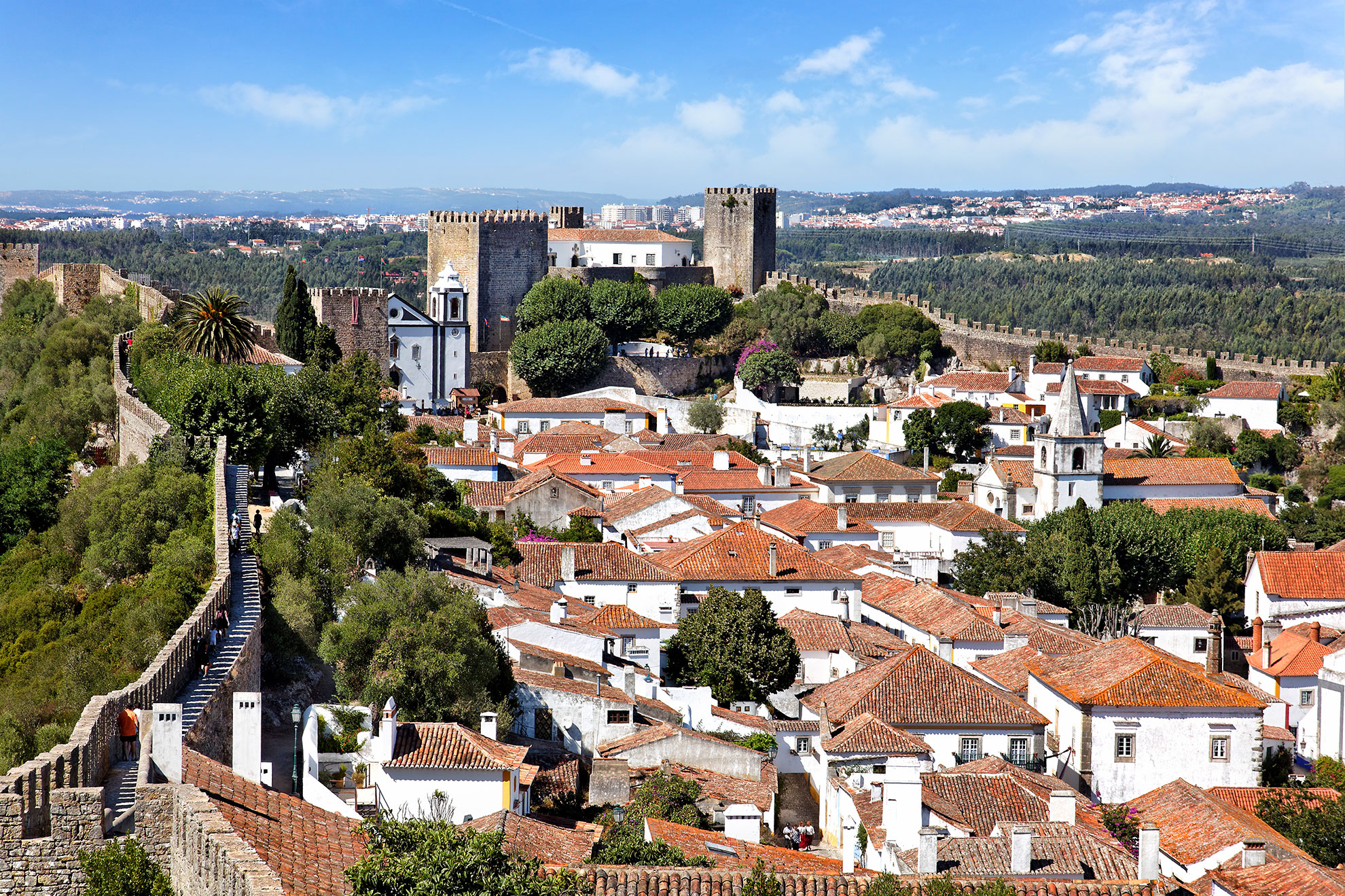
The crenelated walls of Óbidos rise above a mosaic of whitewashed facades and terracotta rooftops in central Portugal.
A Medieval Fairy Tale
Stones and Stories: Why Óbidos Is Portugal's Most Romantic Walled Village
Walk the ancient ramparts, sip cherry liqueur from a chocolate cup, and lose yourself in cobblestone alleys where centuries have left barely a mark.
Roughly 80 kilometres north of Lisbon, the walled village of Óbidos sits atop a modest ridge as if someone composed it deliberately — the kind of place that makes you stop at the gate and look twice before walking in, just to be sure it is real. The medieval stronghold has been inhabited continuously since at least the Bronze Age, yet its character today belongs most convincingly to the 12th and 13th centuries, when Portuguese kings reinforced its Moorish walls and gifted the town to queens as a wedding present.
Inside the walls, daily life unfolds at a pace that seems entirely indifferent to the motorway running a few kilometres to the east. Residents hang their washing between bougainvillea-draped window frames, local women arrange geraniums on whitewashed steps, and the scent of freshly baked travesseiros drifts from bakeries along Rua Direita, the main cobblestone street that bisects the village from the fortified gate to the castle. It takes less than ten minutes to walk from one end to the other — and considerably longer once you start pausing to look at things.
"Óbidos is not a village that performs its history. It simply lives inside it, and visitors are quietly absorbed into that continuum the moment they pass through the gate."
Walking the Walls: The View That Earns Its Reputation
The circuit of the town walls stretches roughly 1.5 kilometres, and the walkway along the top is open to visitors throughout the day. The path is narrow in places, exposed to wind, and unguarded on the outer edge — a combination that has its own appeal. From the highest section of the ramparts, near the keep of Castelo de Óbidos, the land unfolds in flat agricultural tiers toward the coast; on clear days the Atlantic is just distinguishable at the horizon. The castle itself, a solid Moorish structure rebuilt extensively under King Dinis I in the 13th century, now operates as the Pousada Castelo de Óbidos — one of Portugal's most characterful historic hotels, where the nine guest rooms occupy a structure that predates most of Europe's surviving medieval architecture.
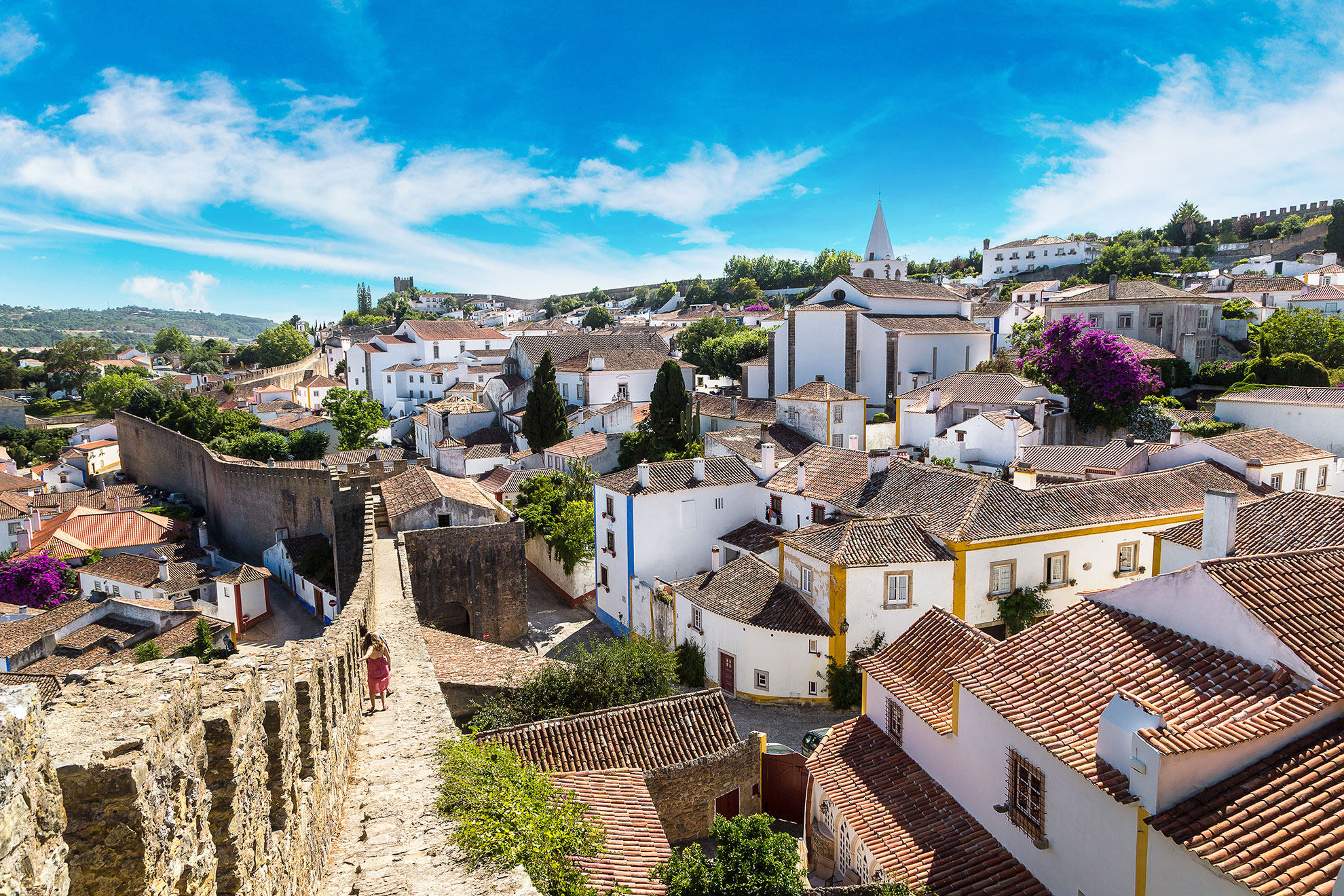
The wall circuit offers unobstructed views over the surrounding farmland and, on clear days, a distant line of Atlantic coast.
Day trips combining Óbidos with the wider Silver Coast region
The Ginjinha Ritual: A Chocolate Cup, a Liqueur, a Custom
No visit to Óbidos is considered complete without a ginjinha — the sour cherry liqueur that has been produced in this region for generations. What distinguishes the Óbidos version from its Lisbon counterpart is the vessel: the liqueur is typically served in a small shell of dark chocolate, which the drinker eats at the end. The practice is unscripted and unceremonious. You buy the cup from one of several small shops along Rua Direita, drink the ginjinha in one or two sips, and eat the chocolate before it melts. The whole transaction lasts perhaps ninety seconds, but it tends to anchor itself clearly in the memory of a visit.
"The chocolate cup is not a gimmick. It is a functional container that happens to double as dessert — and it reveals something precise about how Óbidos understands its own pleasures."
Planning a day trip to Óbidos from Lisbon? Browse all available guided tours and private excursions, including combinations with Fátima, Nazaré, and the Batalha Monastery.
Explore all Óbidos tours →A UNESCO City of Literature Hidden Inside Medieval Walls
In 2015, Óbidos was designated a UNESCO Creative City of Literature — a recognition that prompted the municipality to do something genuinely unusual with its historic buildings. Several deconsecrated churches and old civic spaces were converted into functioning bookshops, each with its own identity. The most frequently cited is the bookstore installed inside the Igreja de São Tiago, a 12th-century church whose stone walls now shelter floor-to-ceiling shelves of Portuguese and international titles. The effect is peculiar in the best possible sense: incense-scented stone, Romanesque windows filtering afternoon light, and paperbacks arranged where the pews once stood.
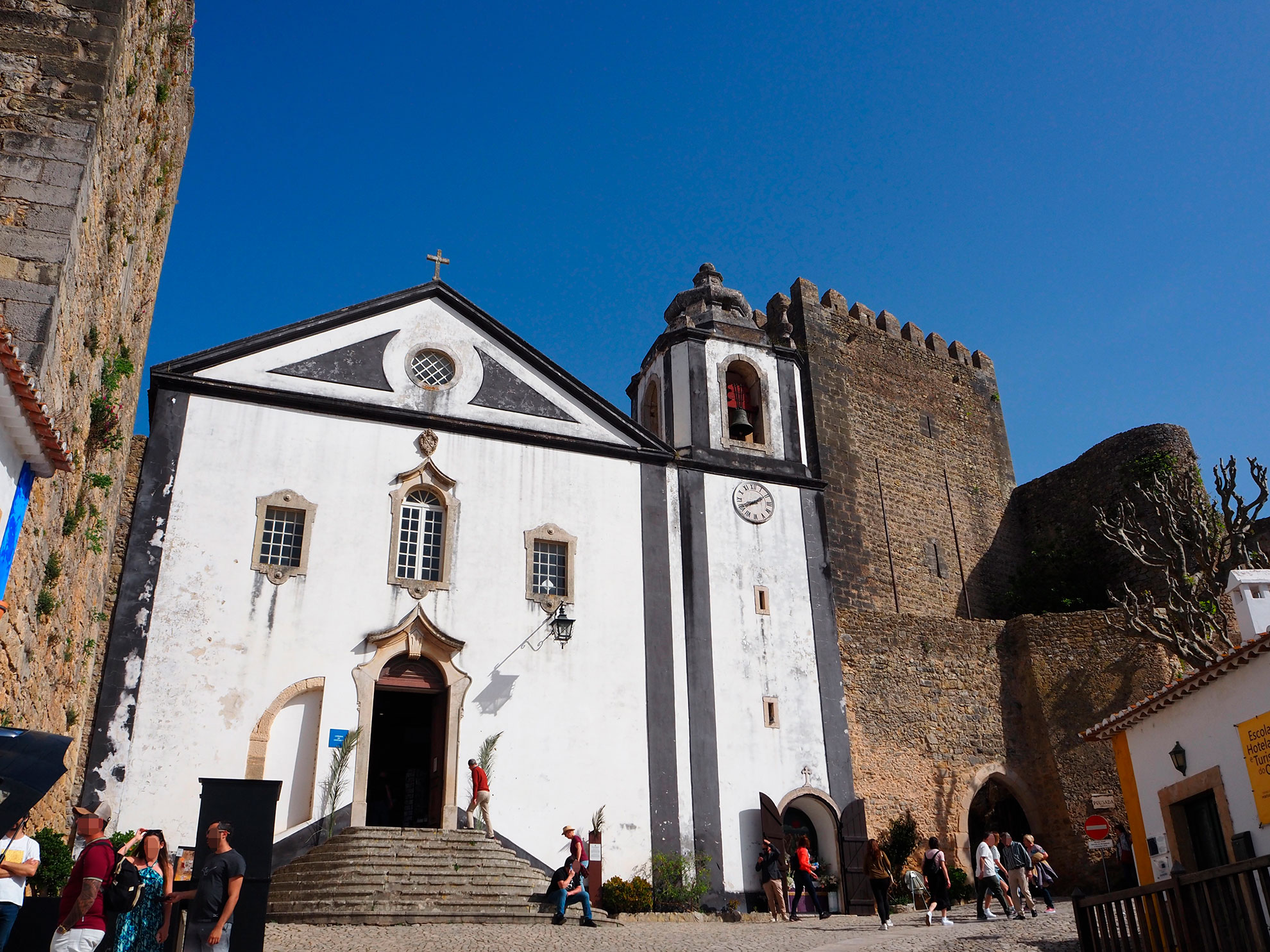
One of Óbidos' celebrated literary bookshops occupies the interior of a medieval church, with shelves fitted between original stone walls.
The literary identity has also shaped the village's calendar. The annual Óbidos Literário festival draws authors and readers over several days in spring, while the town's independent bookshops remain open year-round, making Óbidos a legitimate destination for book collectors looking for Portuguese-language editions unavailable in mainstream retailers. It is a quiet distinction, but a meaningful one — Óbidos is not merely preserved, it is actively inhabited by a particular cultural intention.
Combining Óbidos with broader Portugal itineraries
The Vineyards Beyond the Walls: Óbidos Wine Country
The municipality of Óbidos extends well beyond the walled village into a wine-producing landscape that has received growing attention from Portuguese viticulture writers over the past decade. The Óbidos DOC designation covers a territory of rolling farmland planted primarily with Arinto and Fernão Pires for whites, and Touriga Nacional and Tinta Roriz for reds. Several small family estates have been joined by more commercially oriented wineries, and the combination makes for a rewarding half-day or full-day wine itinerary that most visitors who stop only at the village walls never discover.
Wine experiences around Óbidos
Seasonal Events: When the Village Steps Back in Time
Óbidos maintains an active festival calendar that reflects both its medieval identity and its reputation as a food and culture destination. The Mercado Medieval — held annually in July and August — transforms the streets inside the walls into a functioning reconstruction of a 13th-century market, with period costumes, craft vendors, falconry demonstrations, and musicians performing on instruments authentic to the era. The event draws considerable crowds, and the village takes on a density of atmosphere that differs sharply from its usual quiet character. In February, the Festival Internacional de Chocolate brings a different kind of density: chocolatiers from across Portugal and abroad construct elaborate installations and sell confectionery throughout the village, with workshops and tastings running for ten days. The combination of medieval stone and the smell of tempering chocolate is, by most accounts, an odd pleasure.
Whether you are planning a romantic overnight stay in the castle or a carefully timed day trip from Lisbon, a guided tour is the most efficient way to understand what Óbidos has accumulated over nine centuries.
See all available Óbidos tours →Frequently Asked Questions About Visiting Óbidos
How long does it take to visit Óbidos properly?
Most visitors spend between two and four hours inside the walls. That is enough time to walk the full rampart circuit, explore Rua Direita, visit one or two bookshops, and stop for ginjinha. Extending to a full day makes sense if you plan to visit a winery in the surrounding DOC area or linger over lunch at one of the village restaurants.
Is Óbidos suitable as a day trip from Lisbon?
Yes. Óbidos is about 80 kilometres north of Lisbon, roughly one hour by car or just over one hour by direct coach from the Rodoviária de Lisboa at Campo Grande. Most organised day tours from Lisbon combine it with Nazaré and Fátima, which makes efficient use of the geography and allows three distinct experiences in a single day.
What is ginjinha and where should I try it in Óbidos?
Ginjinha (or ginja) is a Portuguese liqueur made from sour Morello cherries macerated in aguardente with sugar. In Óbidos, it is traditionally served in a small edible dark chocolate cup. Several small shops along Rua Direita sell it; there is no single definitive spot — the practice is consistent enough across vendors that your choice of shop is less important than the ritual itself.
Can you walk along the top of the Óbidos walls?
Yes, the rampart walkway is open to the public and free to access. The path along the top is narrow — typically less than a metre wide — and there are no railings on the outer edge for a significant portion of the circuit. This makes it unsuitable for very young children and anyone with a serious fear of heights. Wear flat, non-slip footwear, particularly in wet weather when the stone becomes slick.
When does the Medieval Market take place in Óbidos?
The Mercado Medieval de Óbidos typically runs for two weeks in July, though the exact dates shift slightly from year to year. The Festival Internacional de Chocolate is held in February. Both events draw significantly higher visitor numbers than usual, so accommodation inside the walls books up quickly. Checking the official municipal calendar before finalising travel dates is advisable.
What makes Óbidos a UNESCO City of Literature?
The designation, awarded in 2015, recognised Óbidos' sustained investment in literary culture — including the repurposing of historic buildings as independent bookshops, the creation of a dedicated literary festival (Óbidos Literário), and initiatives connecting local schools and communities with literary programming. The bookshop installed inside the Igreja de São Tiago is the most visited example of this approach.