




Manaus Wildlife Encounters: Pink Dolphins, Piranhas and the Living Amazon
A practical guide to ethical river excursions and jungle tours departing from Manaus, where the Rio Negro meets the Solimões.
Manaus sits at the confluence of the Rio Negro and the Solimões, one of the most biodiverse river systems on Earth. From this Amazonian capital, travellers can reach boto dolphin habitats, caiman-populated channels and piranha-rich floodplains within a single morning's boat ride. The tours available here range from half-day river excursions to four-day survival and lodge immersions, each offering direct contact with species and ecosystems found nowhere else on the planet.
What makes the waters around Manaus a wildlife hotspot?
Manaus occupies a singular geographic position in the Amazon basin. The city of roughly 2.2 million people stands where the dark, acidic waters of the Rio Negro collide with the pale, sediment-laden Solimões to form the Amazon River proper. This phenomenon, known locally as the Encontro das Águas (Meeting of the Waters), occurs approximately 10 kilometres east of the city centre and is visible from boats and low-altitude aircraft. The two bodies of water flow side by side for around 6 kilometres without mixing, due to differences in temperature, density and flow speed.
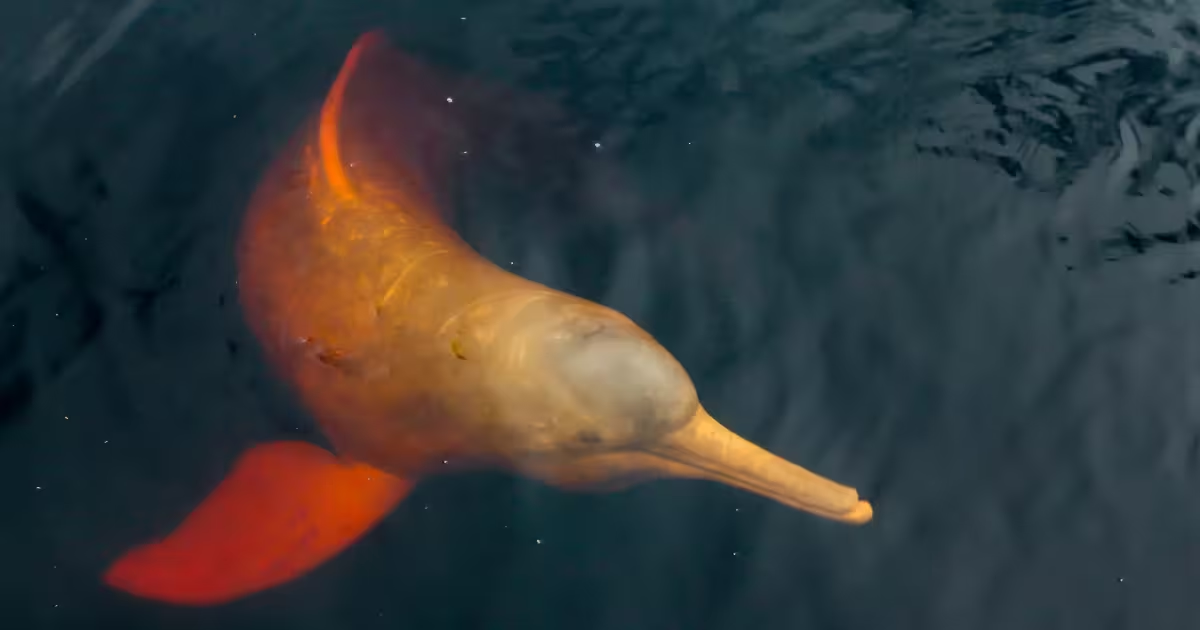
This hydrological complexity creates a layered ecosystem. Flooded igapó forests along the Rio Negro provide shelter for hundreds of fish species, including the Arapaima gigas, one of the world's largest freshwater fish reaching up to 3 metres in length. The Solimões corridor, by contrast, supports the pink river dolphin (Inia geoffrensis, known locally as the boto) and the grey river dolphin (Sotalia fluviatilis, or tucuxi). Both species use echolocation to navigate the silty waters and hunt fish among submerged tree roots.
The boto is the only river dolphin species classified as vulnerable by the IUCN, with population pressures including illegal fishing, dam construction and mercury contamination from gold mining operations upstream.
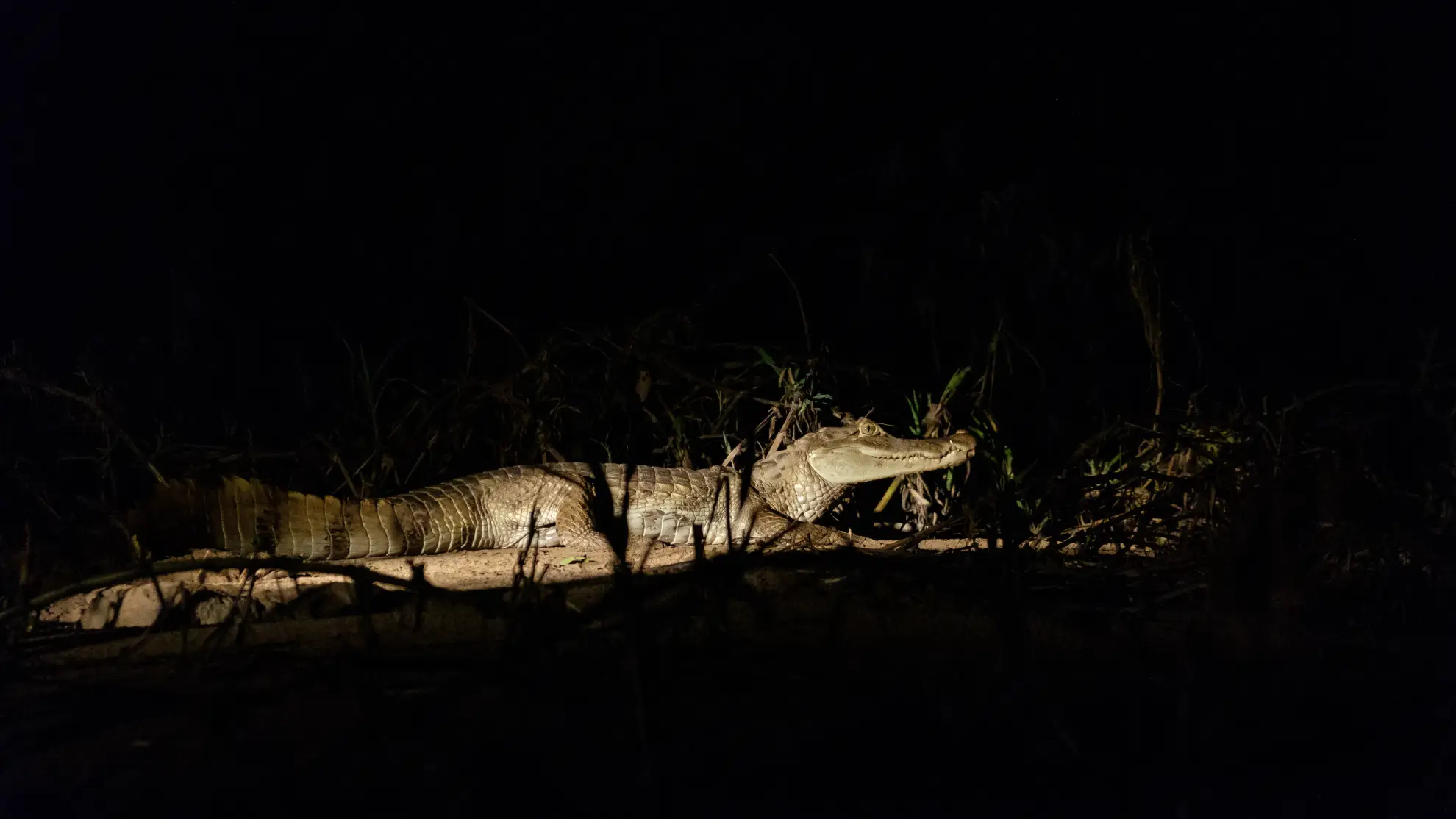
Caiman (primarily Caiman crocodilus) are present throughout the varzea floodplains and are most reliably spotted after dark, when their eyes reflect torchlight. Piranha, meanwhile, are found across multiple species in the Solimões, with the red-bellied piranha (Pygocentrus nattereri) being the most commonly encountered on guided fishing excursions. The diversity of accessible wildlife within 50 kilometres of Manaus's main port, the Porto Flutuante, makes the city one of the most practical bases for Amazon wildlife tourism in Brazil.
Can you ethically swim with pink river dolphins near Manaus?
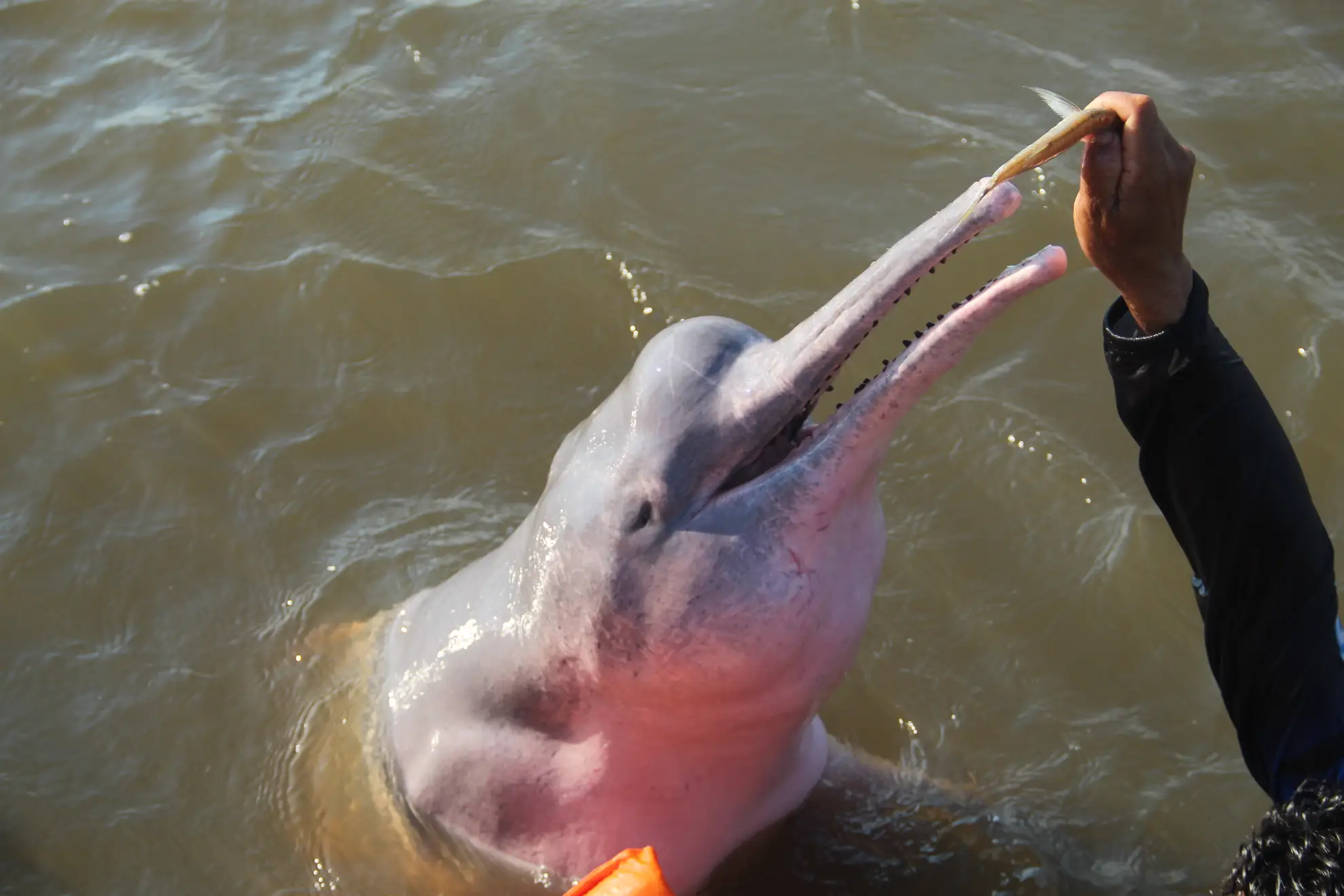
Yes, but the ethical credentials of the operator matter considerably. Pink river dolphin encounters near Manaus typically take place along the Solimões and in the flooded lake systems north of the city, particularly around the Janauarí Ecological Park and the lakes accessible from the community of Nova Esperança. Botos are not trained animals. Responsible tours allow the dolphins to approach the boat or swimmers voluntarily, usually attracted by the vibration of the engine or natural curiosity, rather than baiting them with fish or physically restraining them for photographs.
The key distinctions between ethical and problematic dolphin encounters are straightforward. Reputable operators keep in-water time brief, typically under 20 minutes, and limit the number of swimmers in contact zones to reduce stress on the animals. They do not use fish as bait to lure botos within arm's reach, a practice that has been linked to aggressive dolphin behaviour and dependency on human food sources in several Amazonian communities.
Guided encounters where botos approach voluntarily are the clearest indicator of an ethical operator. When dolphins arrive of their own accord, the interaction reflects natural behaviour rather than conditioning.
Peak season for reliable boto sightings runs from June to November, when the dry season lowers water levels and concentrates dolphins in accessible channels and lake inlets. During the high-water season (December to May), botos disperse deep into flooded forest, making sightings less predictable from standard river routes. Travellers planning encounters specifically around dolphin sightings should therefore time their visit to Manaus between June and October for the highest probability of a meaningful interaction.
Brazilian federal law protects the boto under the National Policy for the Conservation of Aquatic Mammals. Capturing, harassing or commercially exploiting botos is illegal. Operators listed on ToursXplorer follow guidelines consistent with this framework, combining dolphin habitat with broader river ecology programming so that the encounter sits within a fuller understanding of the Solimões ecosystem.
What other wildlife can you encounter on a river excursion from Manaus?
Beyond the boto, a river excursion from Manaus provides access to a range of species across vertebrate and invertebrate groups. Night boat trips along the Solimões and its tributaries are particularly productive for caiman spotting, with experienced guides using handheld spotlights to locate Caiman crocodilus resting at the water's edge. Adults typically measure between 1.5 and 2.5 metres and are approached slowly by canoe to minimise disturbance.
Piranha fishing is a standard component of many day and multi-day excursions from Manaus, conducted from small wooden boats using simple rod-and-line setups with raw meat as bait. The activity is both practical and ecologically informative. Guides explain the role of piranhas in the Amazon food web as scavengers and predators, and most operators follow a catch-and-release protocol for species not consumed at camp.
Bird life along the river corridors is substantial. The Amazon kingfisher (Chloroceryle amazona), the hoatzin (Opisthocomus hoazin) and multiple species of heron and egret are regularly sighted from boats. On multi-day lodge itineraries that include forest walks, travellers may encounter troops of common squirrel monkeys (Saimiri sciureus), three-toed sloths (Bradypus tridactylus), and the distinctive call of the red howler monkey (Alouatta seniculus) before dawn.
| Species | Scientific Name | Best Encounter Method | Optimal Season |
|---|---|---|---|
| Pink River Dolphin (Boto) | Inia geoffrensisRiver boat / in-water | June – November | |
| Spectacled Caiman | Caiman crocodilusNight canoe | Year-round | |
| Red-Bellied Piranha | Pygocentrus nattereriRod fishing from boat | June – October | |
| Amazon Kingfisher | Chloroceryle amazonaRiver boat | Year-round | |
| Three-Toed Sloth | Bradypus tridactylusForest walk | Year-round | |
| Red Howler Monkey | Alouatta seniculusDawn forest walk | Year-round |
Featured Manaus Wildlife and River Tours
Ready to explore the Amazon from Manaus? Browse ethical wildlife encounters, river excursions and multi-day lodge tours on ToursXplorer and book with verified local operators.
Browse all Manaus tours on ToursXplorerHow to choose the right Manaus wildlife tour for your trip
The tours available from Manaus divide broadly into two categories: day or half-day river excursions and multi-day jungle immersions. The right choice depends on your available time, physical comfort level and the depth of wildlife experience you are looking for.
For travellers with one or two days in Manaus, a guided river excursion on the Solimões provides a genuine introduction to Amazon wildlife without requiring extended time away from the city. These tours typically depart from the Porto Flutuante or from marinas in the neighbourhood of Ponta Negra and last between six and ten hours. They cover piranha fishing, boto habitat and caiman spotting within a single itinerary and are manageable for families with children aged eight and over.
Multi-day programmes, particularly those based at floating lodges or deep-forest camps, offer a qualitatively different experience. Spending three or four nights on the water or in the forest allows guides to time activities around wildlife behaviour, taking advantage of the pre-dawn chorus for primate sightings and the low-light hours of dusk for river wildlife. These programmes also provide the time to learn about the Amazon ecosystem in context, including its hydrology, ethnobotany and the communities that depend on it.
ToursXplorer lists vetted operators for both categories, with tour details including duration, physical requirements and wildlife focus clearly specified. When comparing options, look for itineraries that specify guide credentials, group size limits (smaller groups generally produce better wildlife sightings) and explicit policies on animal interaction, particularly for dolphin encounters.
Practical information for wildlife travellers visiting Manaus
Manaus is served by Eduardo Gomes International Airport (IATA: MAO), located approximately 17 kilometres north of the city centre. International connections include São Paulo (GRU), Bogotá, Miami and Lisbon, with domestic routes operating to most major Brazilian cities. The airport was expanded significantly for the 2014 FIFA World Cup, for which Manaus hosted four matches at the Arena da Amazônia.
The city operates on Amazonas Time (AMT), which is UTC-4, and does not observe daylight saving time. Travellers arriving from São Paulo or Rio de Janeiro gain one hour on arrival during Brazil's summer months. The local currency is the Brazilian real (BRL). Most tour operators in Manaus accept payment in reais, and many accept credit cards at point of booking, though cash remains useful for incidental expenses at riverside markets and smaller establishments.
Health preparations for Amazon travel should be discussed with a travel medicine clinic at least four to six weeks before departure. Yellow fever vaccination is strongly recommended and required for entry to some countries if travelling onward from Brazil. Malaria prophylaxis is advisable for extended stays in rural Amazonas, as the state carries a significant proportion of Brazil's malaria burden. DEET-based repellents are the standard insect protection for river and forest environments.
ToursXplorer recommends packing lightweight long-sleeve clothing, a waterproof layer, closed-toe shoes or waterproof sandals for boat use, and a dry bag for electronics and documents. River water levels vary significantly between seasons, which can affect boat access to certain areas, so confirming current conditions with your operator within two weeks of travel is standard practice.
Frequently Asked Questions
Yes. Boto encounters take place on the Solimões and in lake systems accessible from Manaus, including areas around Janauarí Ecological Park. Ethical operators allow dolphins to approach voluntarily rather than baiting them with fish. In-water time is typically kept under 20 minutes. The best season for reliable sightings is June to November, when lower water levels concentrate botos in accessible channels.
June to November is the dry season and the peak period for wildlife encounters around Manaus. Lower river levels concentrate dolphins, piranhas and other aquatic species in accessible channels. Caiman and bird sightings are reliable year-round. The wet season (December to May) brings flooded forests and different landscape dynamics, but sightings of specific river species become less predictable.
Most wildlife excursion areas are within 20 to 60 kilometres of the Porto Flutuante in central Manaus. The Encontro das Águas confluence is approximately 10 kilometres east of the city. Boto and caiman habitats on the Solimões tributaries are typically reached within 30 to 90 minutes by motorised boat, depending on the specific destination and water levels on the day of travel.
Day river excursions are generally suitable for families with children aged eight and over. Activities like piranha fishing and caiman spotting from a boat are manageable for older children with basic supervision. Multi-day jungle survival programmes are better suited to older teenagers and adults due to the physical demands and remote conditions. Check with individual operators regarding minimum age requirements before booking.
Bring lightweight long-sleeve clothing for insect protection, a waterproof jacket, closed-toe shoes or waterproof sandals, DEET-based insect repellent and a dry bag for electronics and documents. Sunscreen with high SPF is essential for open-boat river time. For multi-day programmes, operators typically provide a specific packing list. Yellow fever vaccination documentation may be requested by your guide or lodge on arrival.
Yes, piranha fishing is a standard and safe activity on guided river tours from Manaus. The species most commonly targeted is the red-bellied piranha (Pygocentrus nattereri), caught using simple rod-and-line gear from small boats. Guides manage the activity and handle the fish. Most operators follow catch-and-release practices for specimens not consumed at camp. Piranha bites are rare when standard handling protocols are observed.