




Lisbon on Foot: The Best Miradouros, Historic Neighborhoods, and Fado Nights
A street-level guide to Lisbon's seven hills, from Alfama's Moorish lanes to Bairro Alto's candlelit taverns and live fado stages.
Lisbon is built across seven hills, and walking between them is the most direct way to understand how the city works. Each hilltop miradouro opens onto a distinct neighborhood with its own architectural character, culinary tradition, and social rhythm. From the medieval lanes of Alfama to the Moorish legacy of Mouraria and the nocturnal energy of Bairro Alto, the city rewards walkers who look beyond its famous tram lines.
What makes Lisbon's miradouros worth visiting on foot?
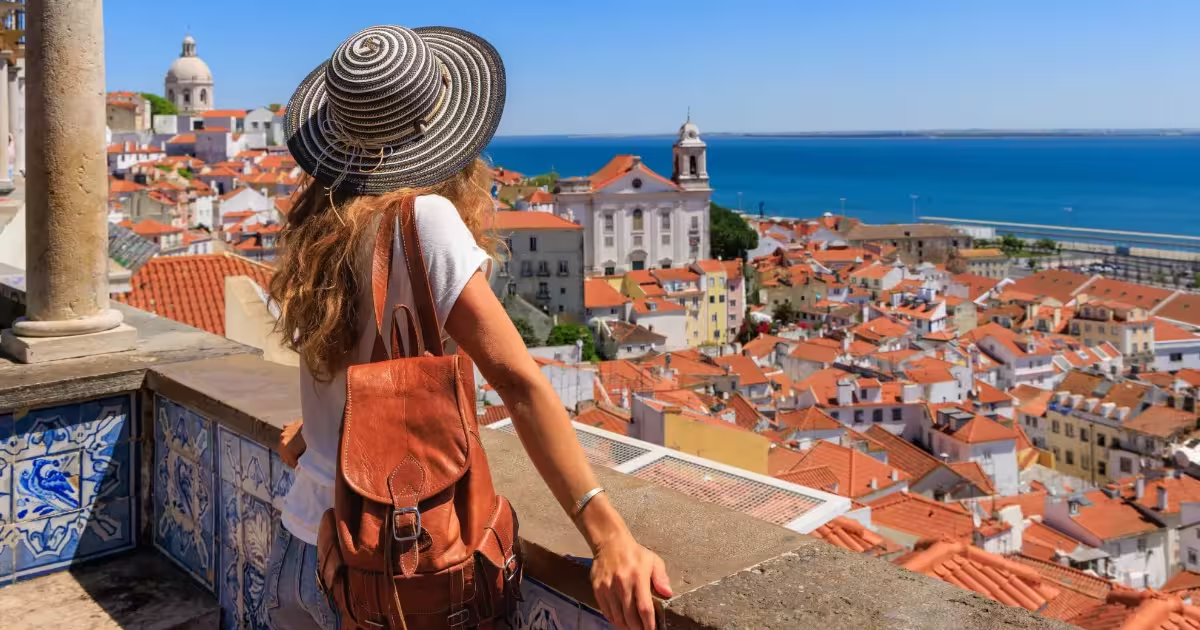
Lisbon has more than 30 official viewpoints, known locally as miradouros, but the most historically significant cluster around the eastern hills above the Tagus River. Miradouro das Portas do Sol sits directly above Alfama at roughly 80 metres elevation, offering an unobstructed line of sight over the parish church of Santo Estêvão and down to the river. Santa Luzia, just 150 metres west along the same ridge, is framed by bougainvillea and features two large azulejo tile panels depicting pre-1755 Lisbon and the expulsion of the Moors in 1147.
Miradouro da Graça, situated on one of the highest points in the city at approximately 100 metres, is considerably less visited by tourists than Portas do Sol despite commanding a broader view that takes in São Jorge Castle, the Baixa grid, and on clear days the Serra de Sintra range some 28 kilometres to the northwest. Local residents use the esplanade cafe here throughout the day, making it one of the more authentic social spaces in the city.
The value of a miradouro is not only in what you see from the top but in the streets you walk to reach it. In Alfama, every staircase is a shortcut through six centuries of urban history.
Miradouro do Castelo, positioned within the walls of Castelo de São Jorge, dates the viewpoint tradition back to Moorish occupation prior to 1147. The castle itself was substantially rebuilt by the Portuguese royal family after the Christian reconquest and again after the 1755 Lisbon earthquake, which destroyed roughly 85 percent of the city's lower quarters. Walking up from Alfama through Rua de Santa Cruz do Castelo gives direct access to the ramparts without using the main ticket entrance.
Which Lisbon neighborhoods best reward a walking itinerary?
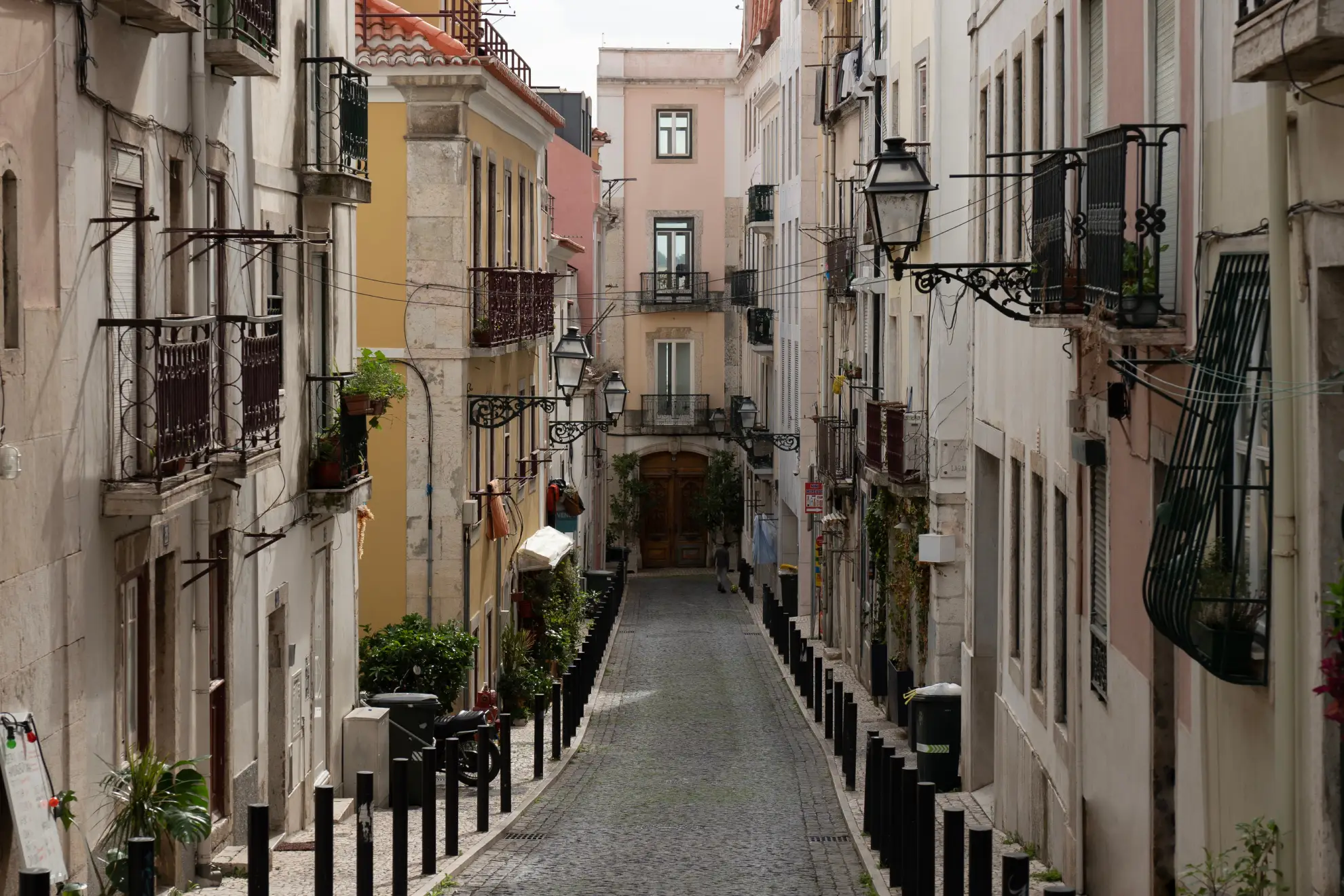
Alfama is Lisbon's oldest continuously inhabited quarter and the neighborhood most directly associated with the city's identity. Its street pattern follows a pre-Roman and Moorish urban logic, with narrow stepped lanes called vielas connecting small squares at irregular intervals. The neighborhood survived the 1755 earthquake largely intact due to its position on harder bedrock, which distinguishes it structurally from the Pombaline grid of Baixa built in the decades following the disaster. Key landmarks within a 30-minute walk include the Sé Catedral (founded 1147), the Igreja de Santo António (birthplace of St Anthony of Padua in 1195), and the Museu do Fado on Largo do Chafariz de Dentro.
Mouraria, immediately northwest of Alfama, carries the most layered multicultural history in Lisbon. After 1147, the Moorish population was confined to this quarter by Afonso Henriques, the first king of Portugal, giving the neighborhood its name. Today it is home to communities from Cape Verde, Bangladesh, and China alongside long-established Portuguese families, and the weekly market at Intendente has become a reference point for food-focused visitors. The street art programme around Rua do Capelão, initiated in 2011, has added a contemporary visual dimension to the neighborhood without displacing its existing character.
Mouraria does not perform its history for visitors. The spice shops, the Cantonese grocery stores, and the fado birthplace of Severa all occupy the same few blocks without apparent contradiction.
Bairro Alto sits on the western hill and operates on a different rhythm from Alfama and Mouraria. Laid out in the late 16th century as one of Lisbon's first planned residential extensions, it is a compact grid of approximately 1 square kilometre where printing houses, pharmacies, and small restaurants share the same narrow streets. After 21:00, the neighborhood transitions into the city's most concentrated area for tascas (traditional taverns) and fado houses. Walking the grid in the early evening before venues open gives a clearer sense of the architecture, including several surviving 17th-century facades, than arriving later when foot traffic is dense.
The table below summarises the key characteristics of each neighborhood for walkers planning a half-day or full-day itinerary.
| Neighborhood | Best Time to Walk | Key Landmark | Walking Distance from Baixa | Notable Feature |
|---|---|---|---|---|
| Alfama | Morning (08:00–11:00) | Sé Catedral / Museu do Fado | ~1.2 km | Pre-earthquake street plan, fado origins |
| Mouraria | Late morning | Largo do Intendente | ~1.0 km | Multicultural market, Moorish heritage |
| Bairro Alto | Early evening (18:00–21:00) | Igreja de São Roque | ~1.5 km via Chiado | 17th-century grid, fado houses, tascas |
| Graça | Late afternoon | Miradouro da Graça | ~2.0 km uphill from Alfama | Least-touristed major viewpoint |
| Castelo | Mid-morning | Castelo de São Jorge | ~1.5 km uphill from Rossio | Moorish fortification, panoramic ramparts |
How does fado fit into a walking route through Lisbon?
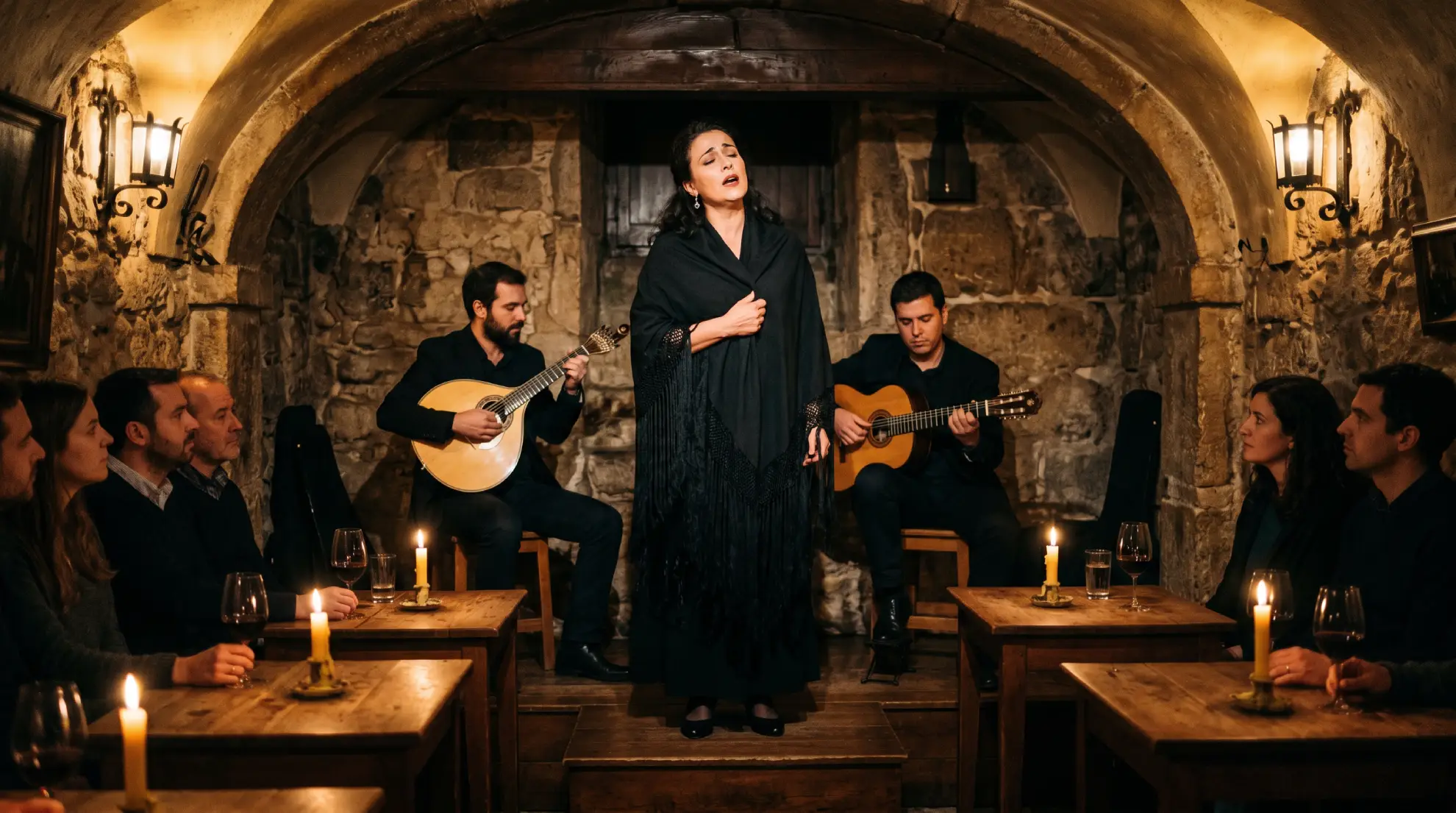
Fado emerged as a distinct musical form in Lisbon during the early 19th century, with Alfama and Mouraria identified as the two principal neighborhoods of origin. The genre is characterised by the guitarra portuguesa, a 12-string instrument derived from the English cittern, alongside a standard guitar and a vocalist whose repertoire draws on themes of longing, fate, and urban life. UNESCO recognised fado as Intangible Cultural Heritage in 2011, citing its continued practice within specific Lisbon communities rather than purely as a performance art for tourists.
A walking route that ends in Alfama or Bairro Alto after dark connects naturally to a fado dinner experience. Most casas de fado in Alfama open between 19:30 and 20:00 and combine a traditional Portuguese dinner with live performances running two to three hours. The Museu do Fado on Largo do Chafariz de Dentro provides essential context before attending a live show and is located at the foot of the Alfama hill, making it a logical starting point for an evening itinerary. Entry costs approximately 5 euros for adults as of 2025. ToursXplorer lists several structured fado dinner experiences that pair the musical tradition directly with the neighborhood walking context described in this guide.
Fado Dinner Experiences in Alfama and Lisbon
Ready to end your Lisbon walk with live fado? Browse all fado dinner experiences on ToursXplorer and book your evening in Alfama.
Browse all Lisbon tours on ToursXplorerPlanning your Lisbon walking route: practical notes
Lisbon's hills present genuine physical challenges for walkers unfamiliar with the terrain. The climb from Baixa to Miradouro da Graça covers approximately 2 kilometres with an elevation gain of around 90 metres, mostly on cobblestoned streets called calçada portuguesa that become slippery when wet. Flat-soled shoes without grip are not recommended. The city's public funiculars, including the Ascensor da Bica (operating since 1892) and the Ascensor da Glória (opened 1885), provide legitimate alternatives for sections of the western hills and are covered by the standard Viva Viagem transport card.
The best walking months are April through June and September through October, when temperatures range between 18 and 26 degrees Celsius and the light quality in late afternoon favours photography at the miradouros. July and August bring sustained heat above 30 degrees Celsius and significantly higher visitor numbers in Alfama, with the Festas de Lisboa in June representing the single busiest period of the year. Morning starts before 09:00 in summer months allow walkers to cover Alfama and the castle area before crowds and heat peak.
ToursXplorer's listings for Lisbon cover the full range of cultural experiences described in this guide, from structured neighborhood walks to fado dinner shows with wine pairing. Filtering by category on the search page allows independent travellers to combine self-guided exploration with specific guided or hosted experiences at key points on their itinerary.
What to know before attending a fado show in Lisbon
Fado houses in Alfama and Bairro Alto vary considerably in format, price, and authenticity. The most established venues, including those in operation for more than 30 years, typically charge between 40 and 80 euros per person for dinner and show, with wine included or offered separately. Venues that charge below 25 euros are generally tourist-oriented operations with less experienced performers. The distinction matters less for first-time visitors than for those who have attended fado before and want to assess a venue's standing within the local community.
Etiquette within a casa de fado is specific: conversation stops when the fadista begins, mobile phones should not be raised for recording during performance, and applause is held until a song concludes rather than offered mid-piece. The guitarra portuguesa player and the viola baixo (bass guitar) player are integral to the performance and should be acknowledged as soloists rather than accompanists. Knowing these conventions in advance makes the experience more comfortable for both guests and performers.
Reservations are strongly recommended for fado dinners in Alfama, particularly on Friday and Saturday evenings between June and September when venues fill to capacity by 20:00. Most operators accept bookings two to four weeks in advance through platforms including ToursXplorer, which lists verified fado dinner experiences across multiple Alfama and Bairro Alto venues.
Frequently Asked Questions
The most historically significant miradouros reachable on foot are Portas do Sol and Santa Luzia in Alfama (both at approximately 80 metres elevation), Miradouro da Graça at around 100 metres, and the ramparts of Castelo de São Jorge. Graça offers the broadest panorama and the fewest tourists. All four are connected by walkable routes through Alfama and take roughly 90 minutes to visit in sequence.
Alfama is the standard starting point for first-time walkers due to its concentration of landmarks within a small area. The Sé Catedral (1147), the Museu do Fado, and Miradouro das Portas do Sol are all within a 15-minute walk of each other. Mouraria, directly adjacent, adds multicultural context and the Largo do Intendente market. Together they cover the core of Lisbon's pre-earthquake urban history in a half-day.
Most fado dinner shows in Alfama run between two and three hours from the start of the meal, with the musical performance beginning around 45 minutes after guests are seated and continuing in sets until approximately 23:00. The total duration including dinner is usually around two and a half hours. Venues typically open between 19:30 and 20:00, and late arrivals may miss the first set.
Alfama and Mouraria are considered safe for pedestrians at night, including in the lanes away from main streets. The areas around Largo do Chafariz de Dentro and Largo do Intendente are well-lit and populated with residents and visitors throughout the evening. Standard urban precautions apply: keep valuables out of sight and avoid deserted stairways after midnight. The Policia de Segurança Pública maintains a visible presence in Alfama on weekends.
April to June and September to October offer the best combination of mild temperatures (18 to 26 degrees Celsius), good light for viewpoints, and manageable visitor numbers. July and August are significantly hotter and more crowded, particularly in Alfama during the Festas de Lisboa in June. Winter months are mild by northern European standards (average 12 to 15 degrees Celsius in January) but bring more frequent rain, making cobblestoned streets slippery.
Yes, and this combination is one of the most practical ways to structure an evening in Lisbon. A walk through Alfama starting at the Sé Catedral around 17:00, covering Miradouro das Portas do Sol and descending through the Mouraria lanes, takes approximately two hours and ends naturally near the fado venues around Largo do Chafariz de Dentro. Most fado dinner shows open at 19:30 to 20:00, which aligns with the end of a late-afternoon walking itinerary.