




Kusadasi and Ephesus Guided Tours: Archaeological Experiences in Turkey's Aegean
Discover ancient ruins, temples, and coastal heritage through expertly guided day trips and multi-day itineraries across the Aegean region.
Ephesus ranks among the world's best-preserved ancient Greek and Roman cities, attracting approximately 1.5 million visitors annually. Kusadasi, located 19 kilometers from Ephesus, serves as the primary cruise-port gateway and base for independent travellers exploring the Aegean's archaeological wealth. Guided tours from Kusadasi and nearby Izmir offer flexible options for cruise passengers with limited shore time and independent explorers seeking deeper historical context across multiple ancient sites.
Why Choose Guided Tours for Ephesus and the Aegean Region?
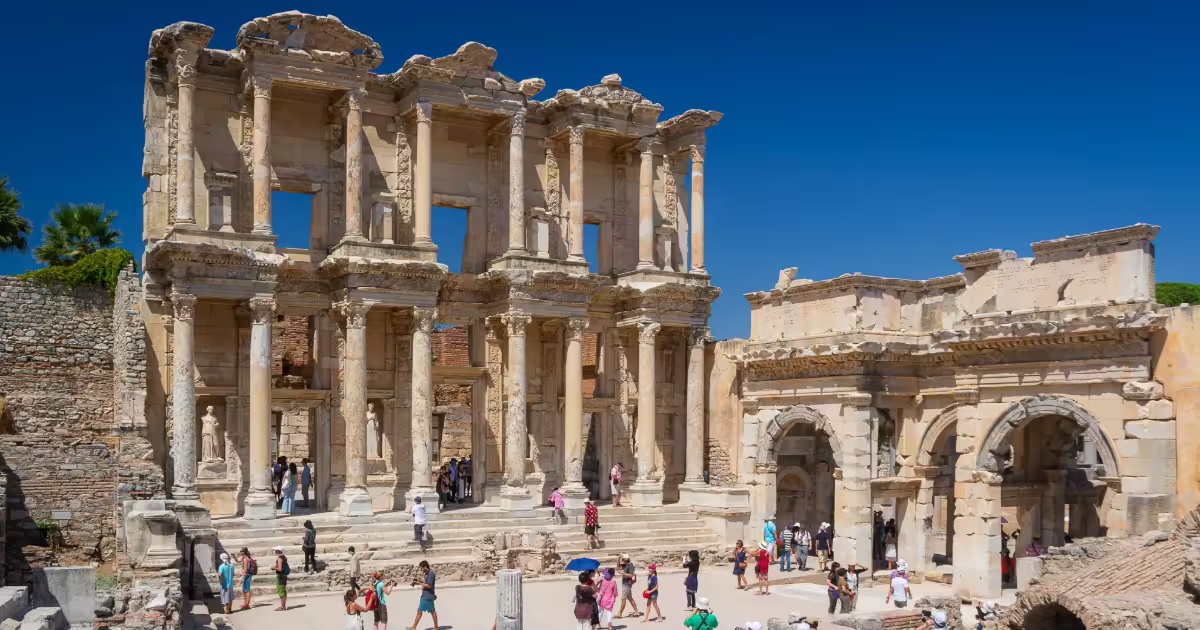
Self-directed exploration of Ephesus is possible, but guided tours add irreplaceable context to the 2,000-year-old ruins. A licensed archaeologist or trained guide can illuminate why the Library of Celsus, built in 110 CE, served as an ancient repository for up to 12,000 scrolls, or explain the Roman administrative hierarchy visible in the amphitheater's seating tiers. Cruise passengers with narrow port windows typically have 6 to 8 hours ashore; pre-booked shore excursions guarantee return to the ship on schedule, eliminating the logistical anxiety of independent transport.
Ephesus covers approximately 3.5 square kilometers of excavated terrain. Covering this distance on foot without guidance often results in missed contextual details (such as the former location of the Temple of Artemis, one of the Seven Wonders of the Ancient World) or inefficient routing. ToursXplorer's curated tour marketplace includes private tours for couples or small families seeking flexible pacing, group excursions for solo travellers or cost-conscious visitors, and multi-day itineraries combining Ephesus with Sardis, Troy, or Aegean coastal towns like Cesme and Alacati.
Guided tours transform scattered stone foundations into living narratives of trade, religion, governance, and daily Roman life.
How Far Is Ephesus from Kusadasi, and What's the Travel Time?
Ephesus lies 19 kilometers (approximately 12 miles) northeast of Kusadasi port. Direct minibus or private car transfer takes 25 to 35 minutes depending on traffic and port congestion. Most shore excursions depart between 08:00 and 09:00 local time, allowing guides to begin the site tour by 09:30 or 10:00, when morning light is optimal for photography and thermal comfort is highest.
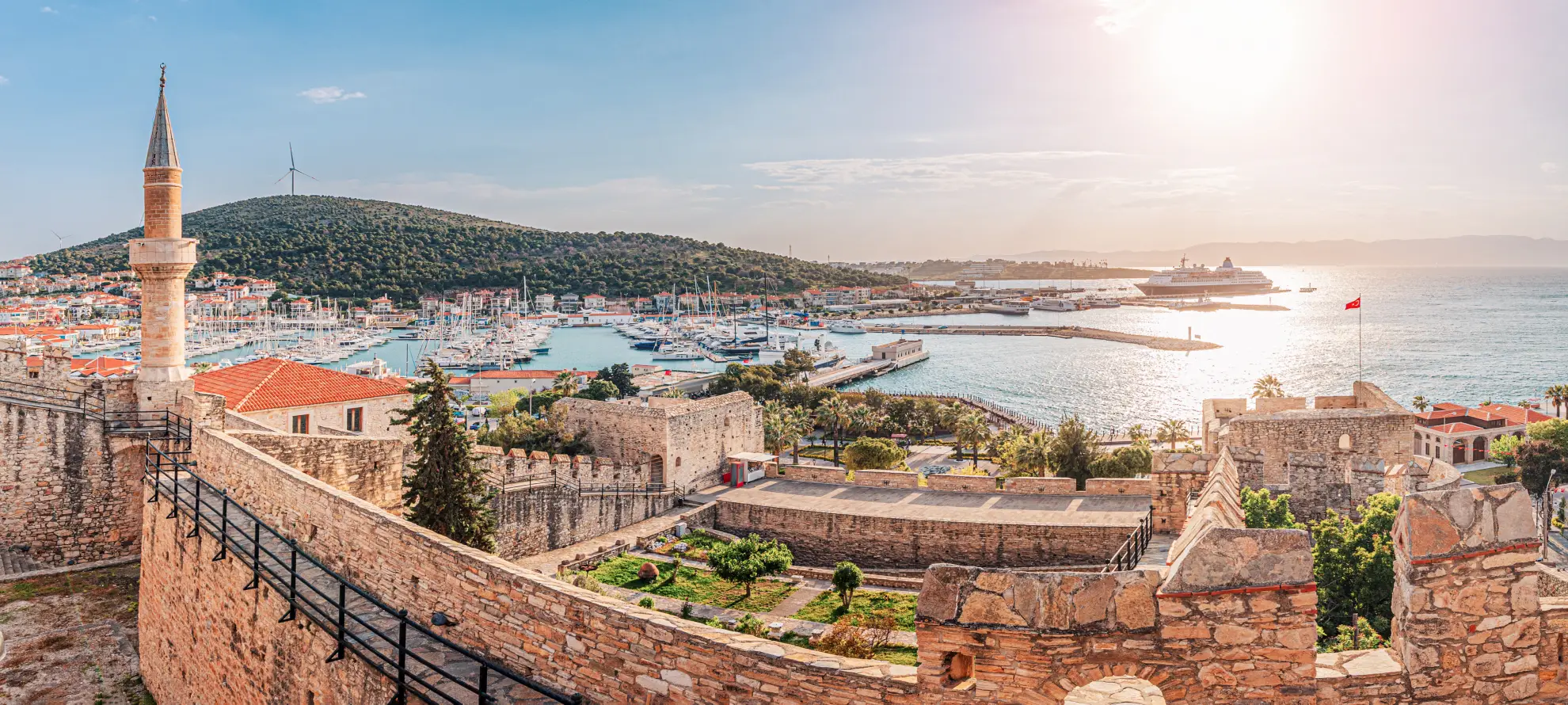
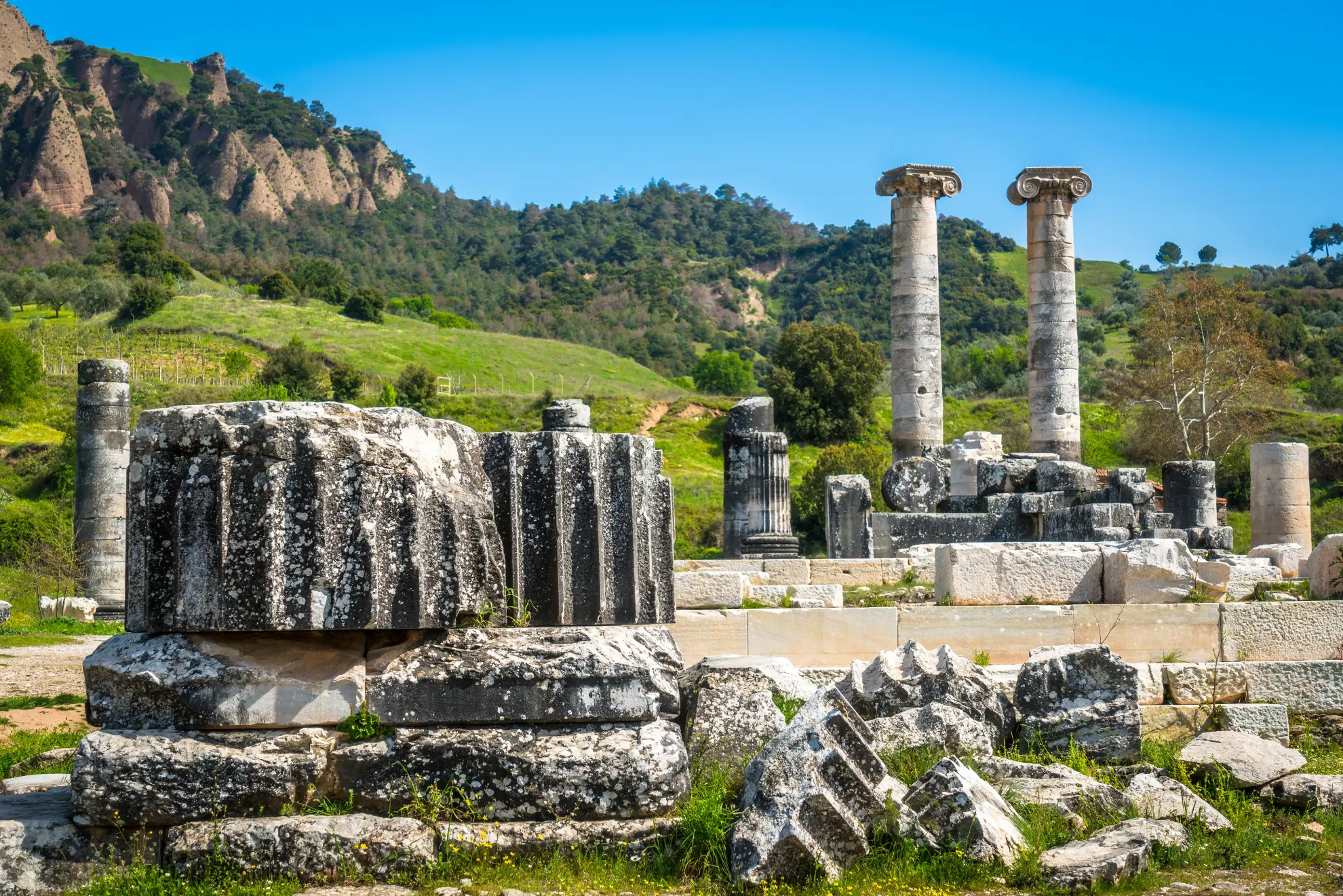
Sardis ancient city, featuring the Temple of Artemis and a well-preserved Roman gymnasium and Jewish synagogue, sits approximately 100 kilometers south of Kusadasi (roughly 90 minutes by car). Combined Ephesus and Sardis day trips require early departure (typically 07:00) and return by 18:00 or 19:00. Cesme and Alacati coastal towns, known for their Ottoman-era architecture and beaches, are located 80 kilometers west of Kusadasi (60 to 75 minutes drive) and appeal to travellers prioritizing coastal scenery over dense archaeological sites.
Archaeological Sites and Cultural Highlights Across the Aegean Region
The Aegean Turkey circuit encompasses several UNESCO World Heritage and significant historical zones. Ephesus's core attractions include the Library of Celsus (reconstructed facade), the Grand Theater (capacity 25,000), the Temple of Domitian, and the House of the Virgin Mary, a pilgrimage site associated with Christian tradition. The amphitheater's seating plan and inscriptions reveal the Roman social hierarchy and the city's role as a major trading hub under emperors such as Trajan and Hadrian.
Sardis, the former capital of the Lydian Empire (600 BCE), showcases the Temple of Artemis and a Byzantine-era synagogue featuring elaborate marble work and Hebrew inscriptions. The gymnasium complex dates to the Roman Imperial period and illustrates bathing and athletic cultures. Cesme features Ottoman fortifications, traditional stone houses, and proximity to Greek Chios Island (visible across the straits). Alacati, 15 kilometers south of Cesme, is a restored Ottoman village now popular with wind sports enthusiasts and offers cultural immersion without archaeological depth.
The ruins of Ephesus and Sardis preserve thousands of inscriptions, architectural fragments, and artifacts that document not only emperors and elites but the everyday transactions and religious beliefs of ordinary Romans and Greeks.
| Site | Distance from Kusadasi | Travel Time | Primary Attractions | Best For |
|---|---|---|---|---|
| Ephesus | 19 km | 25-35 min | Library of Celsus, Grand Theater, temples, amphitheater | Cruise passengers, all budgets |
| Sardis | 100 km | 90 min | Temple of Artemis, gymnasium, synagogue, royal tombs | Full-day explorers, history enthusiasts |
| Cesme | 80 km | 60-75 min | Ottoman castle, harbor, nearby Greek islands | Coastal and cultural mix |
| Alacati | 95 km | 75-90 min | Ottoman houses, village atmosphere, windsurf beach | Cultural travelers, resort-based guests |
Multi-Day Turkey Itineraries Featuring Ephesus
Specialized Archaeological and Coastal Day Excursions
Compare private and group tour formats on ToursXplorer to match your budget, schedule, and preferred group size. Cruise passengers should confirm shore excursion return times with their vessel operator before booking.
Browse all Kusadasi / Ephesus tours on ToursXplorerPrivate Tours vs. Group Tours: Which Format Suits Your Travel Style?
Private guides offer flexibility in pacing and depth of inquiry. A couple or small family can spend 45 minutes examining the House of the Virgin Mary or the marble inscriptions in Sardis's synagogue without time pressure. Private tours from Kusadasi typically cost 200 to 400 USD for two to four people; ToursXplorer lists vetted private guides with verified credentials and tourist-board certifications.
Group tours (8 to 25 participants) reduce per-person cost to 60 to 120 USD for a full-day Ephesus excursion, making them economical for solo travellers or pairs. Group guides often inject storytelling flair and historical context tailored to broad audiences; however, bathroom stops and photo clusters can extend itineraries beyond advertised timings. Many cruise passengers prefer pre-booked group shore excursions because ship operators and local tour operators have reciprocal guarantees for on-time return.
Multi-day itineraries, such as the 7-Day Guided Tour of Turkey, combine coach transport with accommodation and meals, eliminating daily logistics while accumulating economies of scale. These tours suit independent travellers comfortable with shared rooms or couples seeking curated experiences without daily re-planning.
Practical Planning: Seasons, Crowds, and Tour Duration
Peak cruise season runs April through October, with maximum crowds in July and August. Ephesus attracts over 100,000 visitors monthly during summer, requiring early-morning tours (07:00 to 09:00 departure) to avoid afternoon congestion. Shoulder seasons (April, May, September, October) offer 20 to 25 degrees Celsius temperatures and moderate crowds; winter (November to March) brings rainfall and occasional site closures but fewer tourists.
Standard Ephesus day tours run 4 to 6 hours including transport. Sardis excursions typically span 7 to 8 hours due to longer travel distance. Cesme and Alacati combined tours occupy 8 to 10 hours with lunch and leisure time included. Cruise passengers should verify their ship's shore-excursion policy; many require return to the vessel 30 to 45 minutes before departure.
Footwear and hydration are non-negotiable on Aegean archaeological tours. Ephesus requires walking over uneven stone surfaces and climbing amphitheater steps; wear closed-toe hiking shoes with arch support. Summer temperatures exceed 35 degrees Celsius; carry at least two liters of water per person. Most tours include 30 to 60 minutes of shade rest time in the museum or a covered pavilion, and ToursXplorer tour listings note water-station accessibility and rest-stop frequency.
| Tour Format | Typical Group Size | Cost per Person (USD) | Best For | Cancellation Policy |
|---|---|---|---|---|
| Private Guide (4-6 hours) | 2-6 people | 200-400 total (50-100 per person) | Couples, families, specialized interests | 72-hour notice typical |
| Small-Group Shore Excursion (4-5 hours) | 8-20 people | 80-150 | Cruise passengers, solo travelers | 24-48 hours typical |
| Large Coach Tour (6-8 hours) | 20-50 people | 60-120 | Budget-conscious groups, multi-site combinations | 48 hours typical |
| Multi-Day Itinerary (7 days) | 15-40 people | 1200-2000 | Independent explorers, comprehensive cultural immersion | 7-14 days typical |
How ToursXplorer Helps Match the Right Ephesus Tour to Your Needs
ToursXplorer's search and filtering system allows travellers to narrow down Kusadasi and Ephesus tours by departure point (Kusadasi, Izmir, or hotel pickup), group size, duration, price range, and thematic focus (archaeology, coastal culture, photography, religious sites). Each tour listing includes verified customer reviews, guide credentials, cancellation terms, and equipment provision details (headsets for large groups, transportation class, meal inclusions).
The platform's integration with local operators in Kusadasi and Izmir ensures real-time availability and transparent pricing; booking through ToursXplorer adds travel insurance options and 24-hour customer support in English, Turkish, and German. For cruise passengers, ToursXplorer's partnerships with port operators provide early-bird discounts (5 to 10 percent) when booked 48 hours in advance and guarantee return-to-ship protocols coordinated with vessel schedules.
Independent day-trippers can combine two or three tours (for example, Ephesus in the morning and Sardis in the afternoon via private driver) through ToursXplorer's itinerary-builder feature, which calculates travel times and lunch windows. Multi-day travellers benefit from curated collections grouping compatible tours (e.g., the 7-Day Turkey Express and shorter add-on city tours in Istanbul or Antalya) at bundled rates.
Secure your Ephesus or Sardis tour 24 to 48 hours in advance to guarantee guide availability and preferred departure times, especially during peak cruise season (April through October).
Frequently Asked Questions
A typical 5 to 6 hour Ephesus tour includes hotel or port pickup, minibus or private car transport, a licensed guide (English, German, or French), entry to the archaeological site, and often a brief museum visit. Lunch, beverages, and gratuities are usually separate. Some ToursXplorer-listed tours bundle a meal at a local restaurant; verify inclusions before booking. Parking, restroom access, and shade facilities are standard.
Yes, independent visits are possible but carry logistical risk. Public dolmus minibuses connect Kusadasi to Ephesus (30 to 40 minutes, approximately 5 USD) every 20 to 30 minutes, but return schedules are unpredictable during peak hours. Taxis cost 60 to 80 USD for a 3 to 4 hour round trip. Pre-booked shore excursions eliminate uncertainty and guarantee ship coordination; independent travel suits passengers with 10+ hours ashore and flexible return windows.
A comprehensive Ephesus visit requires a minimum of 4 to 5 hours of guided walking, plus 1 to 2 hours for the on-site museum and rest breaks. Serious archaeologists or classical history scholars benefit from hiring a private Ephesus specialist for 6 to 8 hours, allowing deep engagement with inscriptions, architectural sequences, and comparative Roman urban planning. Most cruise passengers complete the essential sites (Library of Celsus, Grand Theater, temples) in 4 to 5 hours.
Yes, Sardis offers distinct archaeological value. While Ephesus showcases Roman imperial urban life (2nd to 3rd centuries CE), Sardis emphasizes pre-Roman Lydian culture (600 BCE) and regional religious diversity (Byzantine synagogue with Hebrew inscriptions). The Temple of Artemis at Sardis ranks among ancient Greece's largest temples; the gymnasium complex illustrates Roman bathing and athletic customs. Sardis suits historians prioritizing chronological depth or those with 8+ hours available and appetite for fewer crowds than Ephesus.
Private guide tours with family-friendly pacing and flexible rest stops suit young children best; groups can rest in the museum or shade pavilions without time constraints. The Cesme and Alacati combo tour includes beach and leisure time, appealing to children. Large group tours may overwhelm younger children due to noise and pace. ToursXplorer listings note child-friendly features; confirm guide experience with children and water/snack availability before booking. Average fitness level should match ages 6 to 8; ages 9 to 12 can handle most Ephesus routes.
Closed-toe hiking shoes with arch support are essential; wear lightweight, breathable clothing and a wide-brimmed hat. Bring at least two liters of water per person, sunscreen (SPF 30+), and insect repellent. Most tours offer shade breaks in the museum or pavilions; however, walking between sites (approximately 1.5 kilometers total) occurs in full sun. Avoid flip-flops or sandals; marble and stone steps are slippery. Many tours provide complimentary water station access; verify with ToursXplorer tour description.