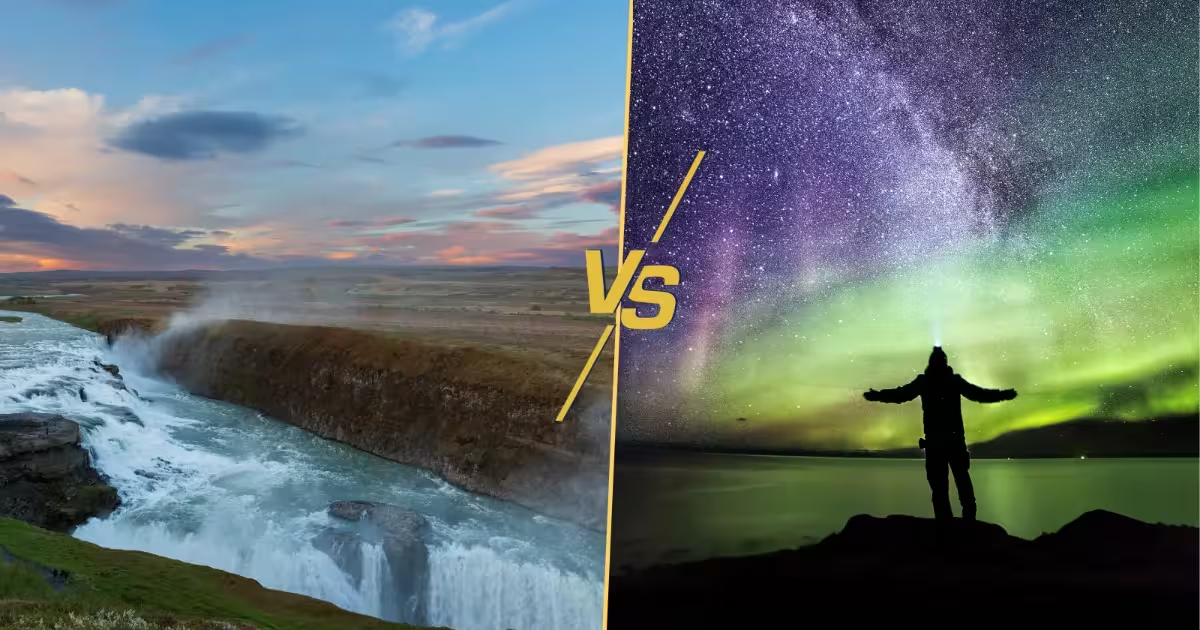
One season gives you twenty-four hours of golden light and puffins on rocky islands. The other gives you a frozen landscape under a curtain of green and violet fire. Iceland is extraordinary in both — but they are not the same Iceland.
The question most people ask before booking a trip to Iceland is some version of the same thing: when should I go? The answer depends entirely on what you want to see. Iceland in summer and Iceland in winter are not simply the same country at different temperatures. They are two different experiences, offering two different sets of phenomena, two different landscapes, and two entirely different moods.
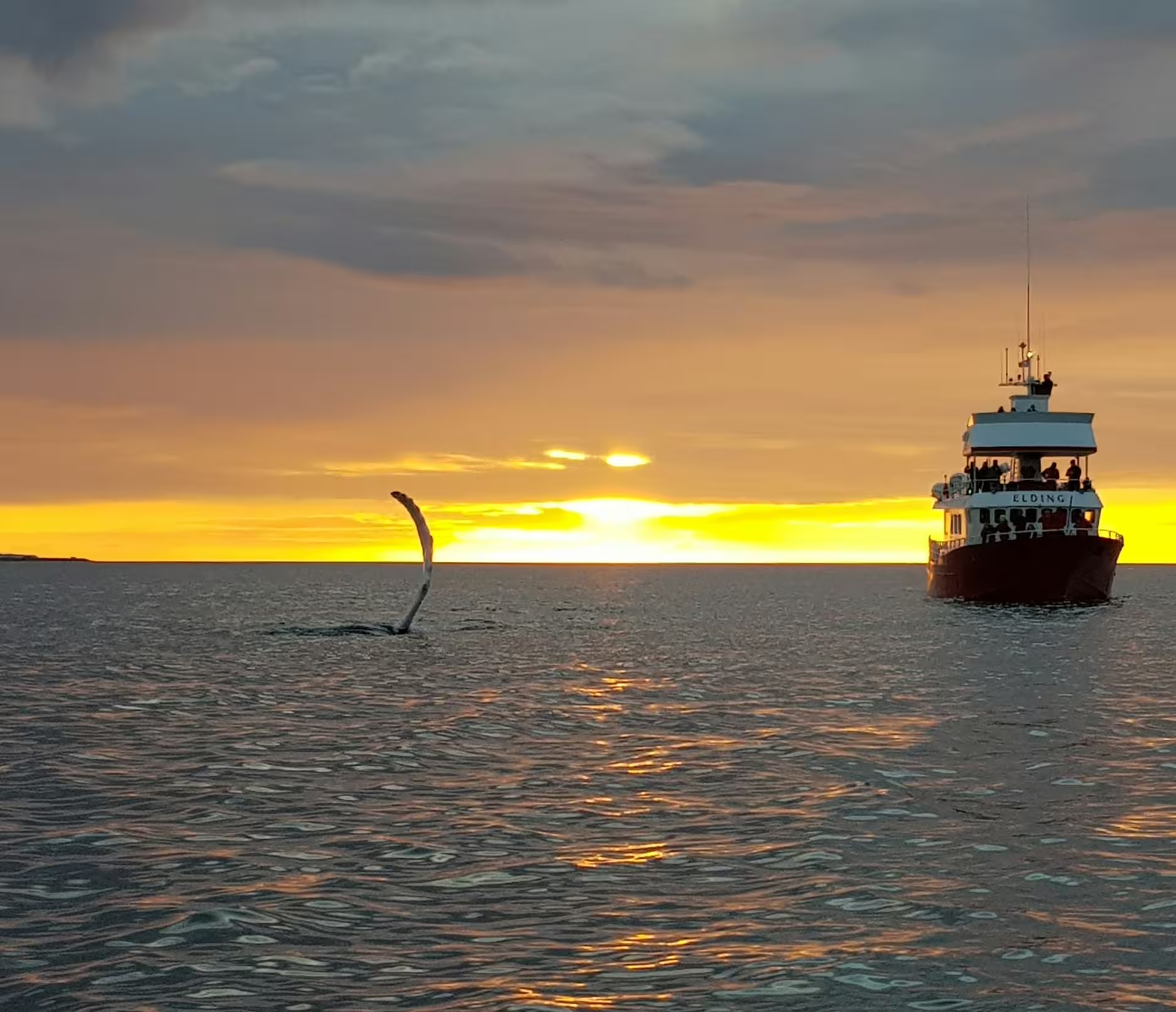
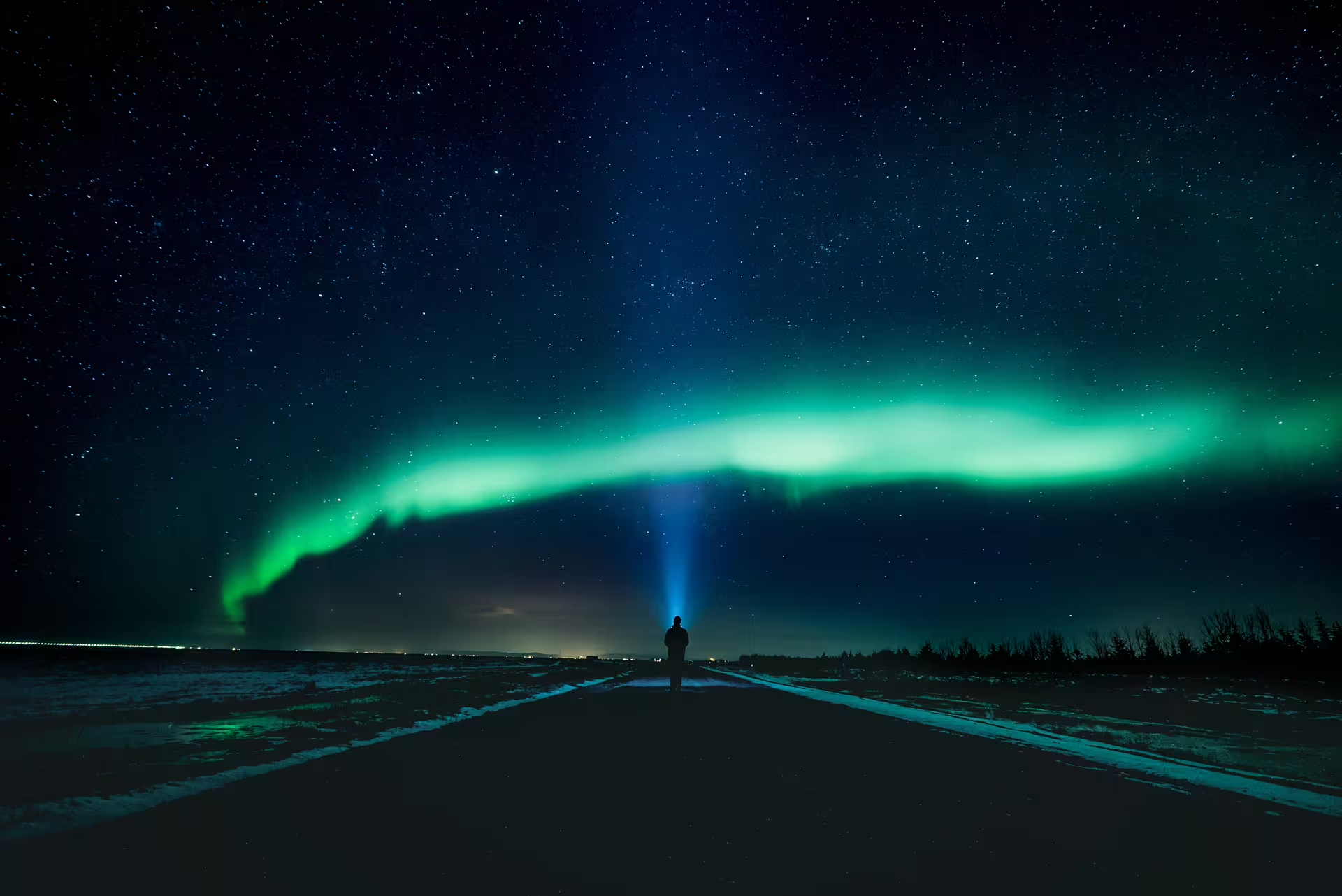
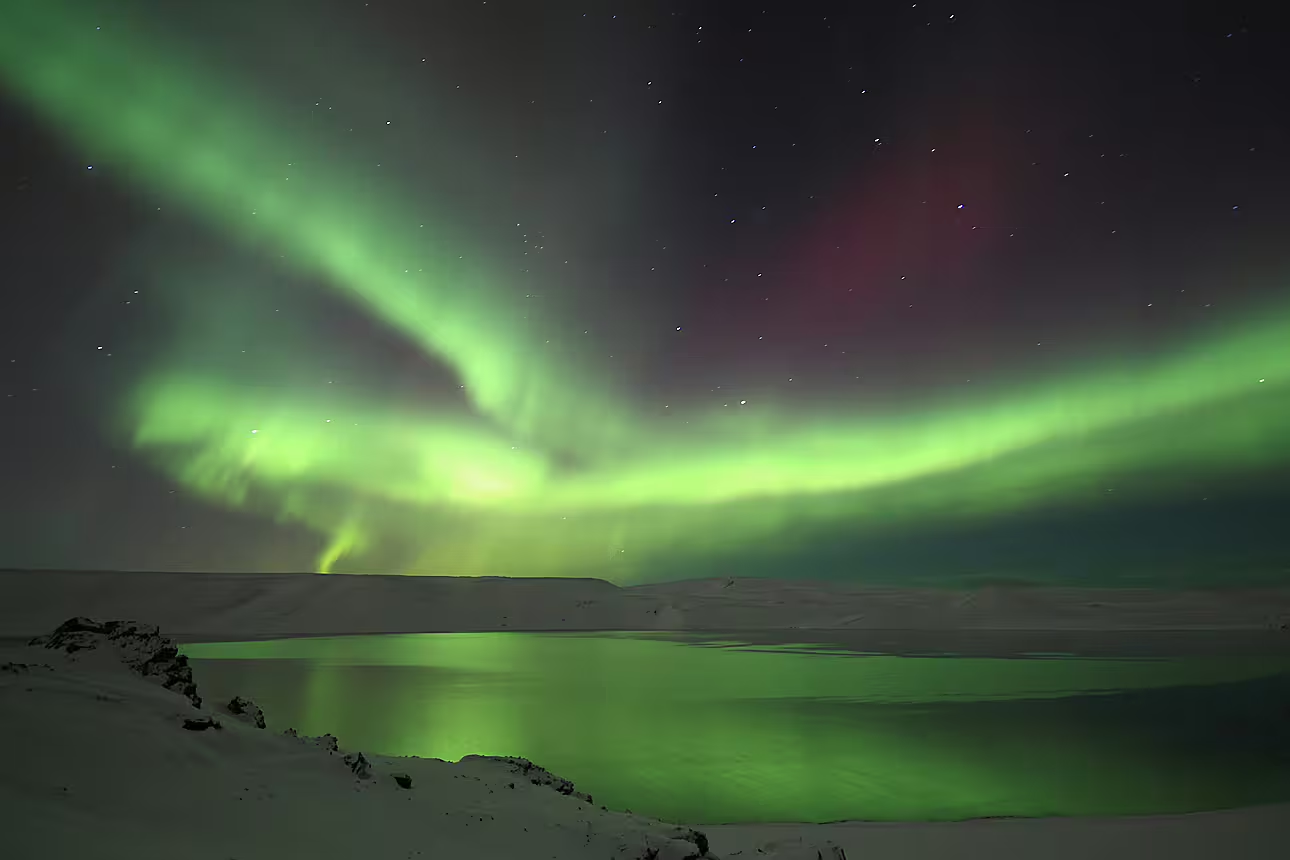
Summer brings the midnight sun — a period from mid-May through late July when the sun never fully sets, the sky glows gold and amber at midnight, the highland roads open, puffins nest on the islands near Reykjavík, and you can hike, ride horses, or watch whales at 11pm in open daylight. Winter brings the northern lights — the aurora borealis dancing across a dark arctic sky in green, violet, and red — along with ice caves inside Vatnajökull glacier, snowmobile rides across the Langjökull icecap, and the deeply atmospheric quality of Iceland at its most elemental.
This guide compares both seasons honestly across every dimension that matters, so you can choose the one that fits your trip.
| Factor | ☀️ Summer (Jun – Aug) | ✨ Winter (Sep – Apr) |
|---|---|---|
| Daylight | ~24 hrs around solstice | 4–6 hrs at midwinter |
| Midnight Sun | Yes — mid-May to late July | No |
| Northern Lights | No — sky never dark enough | Yes — Sep to Apr |
| Temperature (Reykjavík) | 8 – 15 °C | -3 – 5 °C |
| Puffins | Yes — late Apr to mid-Aug | No |
| Ice Caves (Vatnajökull) | No — ice unstable in summer | Yes — Nov to Mar |
| Highland Roads (F-roads) | Open — late Jun to Sep | Closed |
| Crowds & Prices | Peak season — busier & pricier | Quieter & more affordable |
| Outdoor Comfort | High — mild temperatures | Challenging — requires gear |
| Photography | Long golden hours, vivid green landscapes | Aurora, snow, frost, dramatic dark skies |
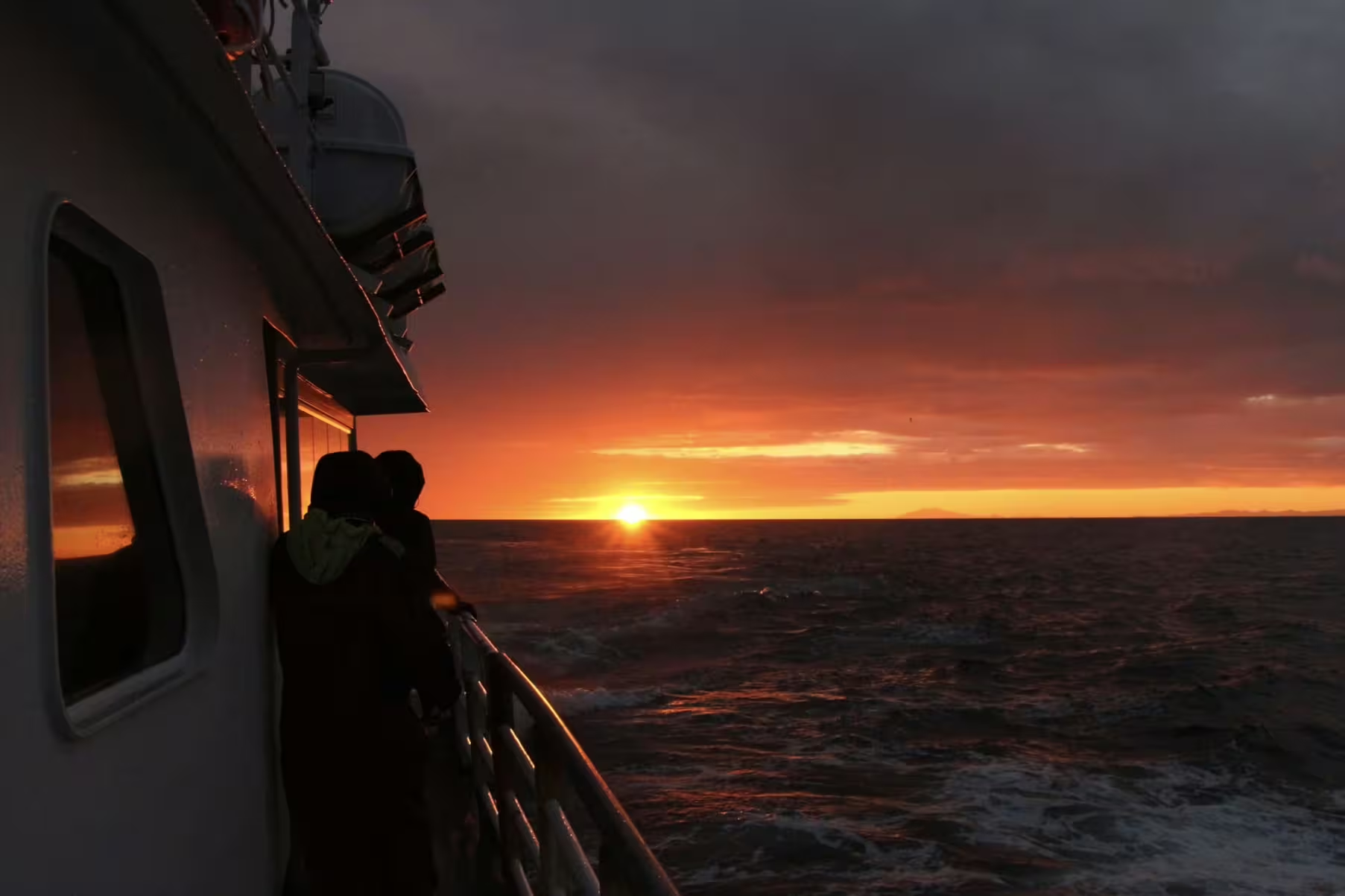
The midnight sun is not simply "daylight at night." It is a specific quality of light that Icelandic summer produces — low-angle, golden, warm in colour, and seemingly endless. Around the summer solstice on 21 June, Reykjavík sees approximately 24 hours of continuous daylight. But the effect that most visitors describe is not the brightness: it is the way the sun refuses to descend, hanging at a permanent late-afternoon angle that bathes everything in the kind of light that photographers spend the rest of the year chasing for forty minutes at golden hour.
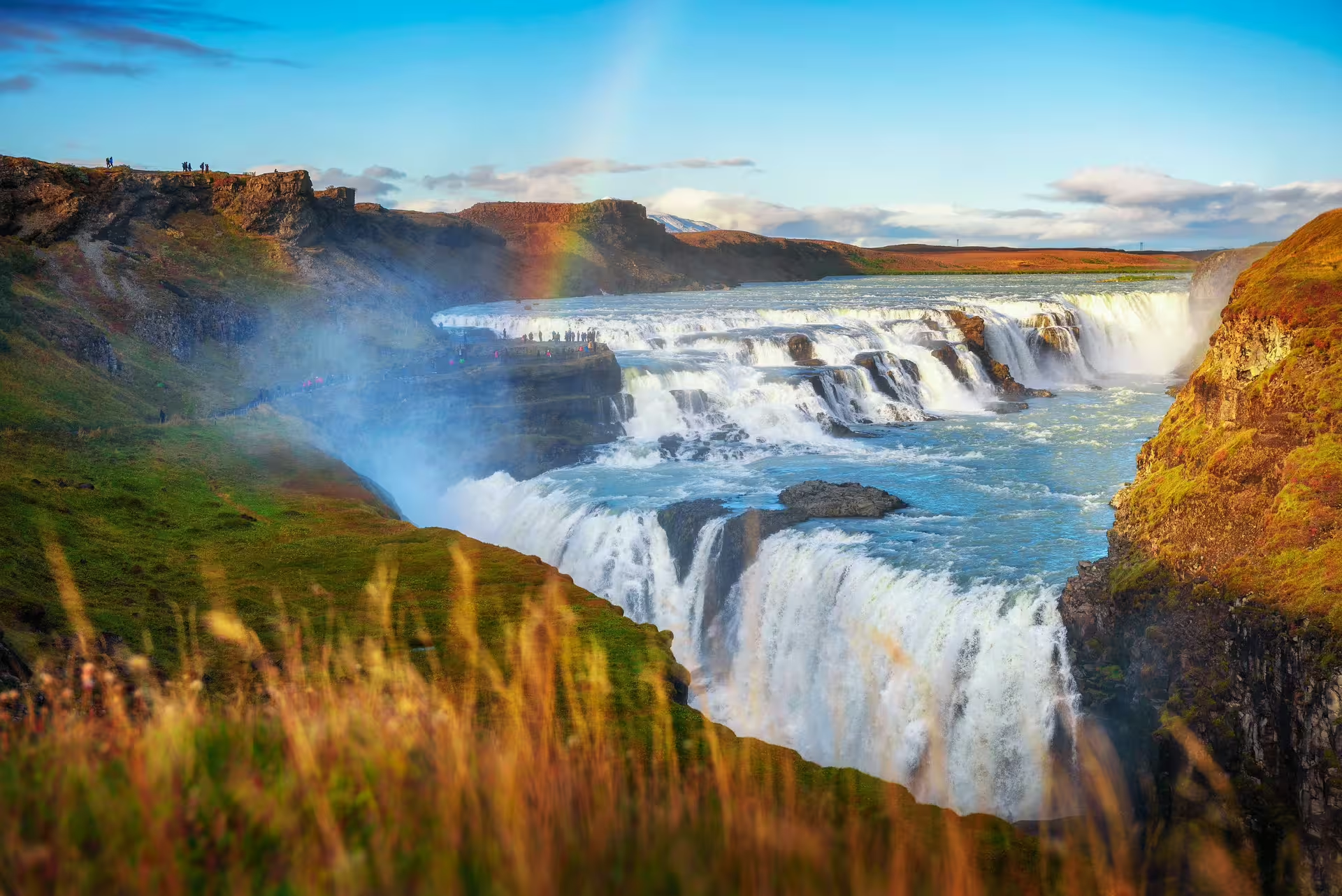
Practically, this changes everything about how you experience Iceland. You can stand at Gullfoss waterfall at 11pm watching glacial meltwater plunge into the canyon in full, warm light. You can board an evening whale watching cruise and spend three hours on Faxaflói Bay in a golden glow with minke whales surfacing around you. You can drive the Golden Circle at midnight on an empty road and have Þingvellir National Park to yourself. The question is not what to do — the question is whether to sleep at all.
Summer also unlocks Iceland's full ecological calendar. Puffins are at their nesting islands from late April through mid-August. The highland interior — Landmannalaugar, Þórsmörk, and the Kjölur route — is accessible only in summer, when the F-roads open. Lupine fields turn parts of the countryside purple. Rivers swell with glacial meltwater. The landscape is alive in a way that winter's frozen silence simply cannot match.
The trade-off is crowds and cost. June through August is Iceland's peak season, and Reykjavík's most popular tours, guesthouses, and restaurants operate at full capacity and full price. The Golden Circle in midsummer is genuinely busy by midday. Booking several weeks in advance is not a precaution — it is a requirement for the most sought-after experiences.
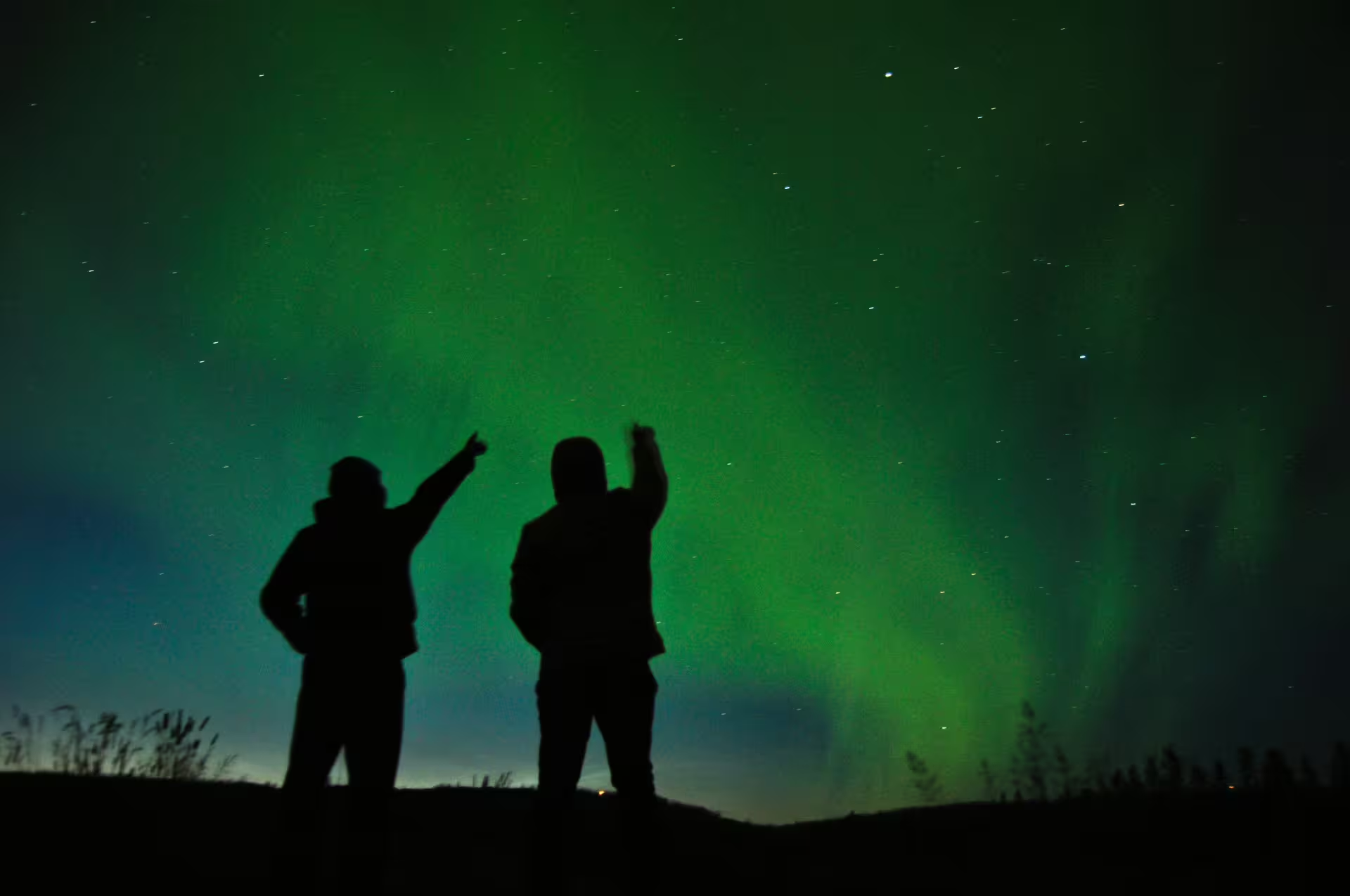
The northern lights are a genuinely unpredictable natural phenomenon, which is both their frustration and their appeal. They cannot be scheduled. They depend on solar activity, on clear skies, on a Kp index high enough to push the aurora to southern latitudes, and on the absence of cloud cover — which in Iceland is never guaranteed. What this means in practice is that seeing the aurora requires patience, flexibility, and ideally a guide who monitors real-time forecasts and repositions your group toward clear patches of sky when they appear.
When it works, the experience is difficult to describe in terms that don't sound exaggerated. The aurora borealis in full display is not static. It moves — rippling, pulsing, shifting from pale green to deep violet to rose and back again in patterns that feel almost deliberate. Standing beneath it in a silent Icelandic lava field, geothermal steam rising from the ground nearby, is one of those moments that people describe for the rest of their lives.
Winter Iceland is not only about the northern lights. Ice caves inside Vatnajökull — the largest glacier in Europe — are only accessible from November through March, when sub-zero temperatures stabilize the ice formations and the caves take on their signature deep blue and translucent violet colours. Snowmobile rides across Langjökull glacier are most spectacular in winter when the snowfield is at its fullest. The South Coast's famous waterfalls — Skógafoss and Seljalandsfoss — develop ice formations and partial freezing in deep winter that makes them look entirely different from their summer selves. And Iceland in the dark has an atmosphere all its own: quiet, elemental, steaming, otherworldly.
The practical considerations are real. Daylight is limited — around the December solstice, Reykjavík sees roughly four hours of usable daylight. Road conditions require attention, with ice, snow, and occasional closures on the Ring Road. The cold demands proper clothing. But the reward for these challenges is a version of Iceland that the summer crowds never see.
→ Want to see puffins on their nesting islands
→ Dream of experiencing the midnight sun firsthand
→ Plan to hike or explore the highland interior
→ Are travelling with children who need comfortable conditions
→ Prefer long evenings for outdoor activities and photography
→ Want the full wildlife calendar — whales, puffins, Arctic terns
→ Enjoy wildflower meadows, green hillsides, and glacial rivers in full flow
→ Are doing multi-day hiking in reserves like Þórsmörk
→ Have seeing the northern lights as a bucket-list priority
→ Want to visit ice caves inside Vatnajökull glacier
→ Prefer quieter roads and fewer tourists at every site
→ Are travelling on a tighter budget (outside Christmas)
→ Love the drama of snow-covered waterfalls and lava fields
→ Enjoy snowmobiling, glacier truck rides, or ice activities
→ Find the raw, elemental quality of Iceland in darkness appealing
→ Are planning to soak in geothermal pools surrounded by cold and snow
Neither season is objectively better. Summer gives you Iceland at its most accessible, most alive, and most photogenic in the warm tones of perpetual golden hour. Winter gives you Iceland at its most dramatic, most atmospheric, and most private — and offers the one experience that summer cannot: the northern lights. If you are visiting for the first time and your dates are flexible, late May or September offer the best of both worlds — longer days, moderate prices, and in September, your first real chance of an aurora sighting after the summer hiatus. But if the midnight sun or the northern lights is your single defining reason to go, let that be your answer.
Late April to May and September to October are Iceland's most underrated travel windows. In May, the midnight sun is building, puffins are arriving, and the landscape is greening after winter — all without the midsummer crowds. In September, the nights return dark enough for aurora sightings while the days are still long enough for comfortable sightseeing, and the highland roads are still open. Both shoulder periods offer lower prices, better availability, and a version of Iceland that feels less like a tourism event and more like genuine discovery.
No operator can guarantee a northern lights sighting. The aurora depends on solar activity, a clear sky, and sufficient darkness — none of which can be pre-arranged. Expert guides in Iceland consult real-time Kp index readings and cloud cover forecasts to maximise your chances on any given night, repositioning the group toward clear patches of sky as conditions evolve. Most reputable northern lights tours offer a free rebooking option if the lights do not appear, which is the most practical safety net available. Staying in Iceland for at least three to four nights during the aurora season significantly improves your statistical odds of a sighting.
Winter Iceland demands proper layering: a thermal base layer, an insulating mid-layer, and a waterproof and windproof outer shell. Warm hat, gloves, and waterproof boots with grip are non-negotiable. For northern lights tours, which involve standing still outdoors in Icelandic countryside at night, add hand warmers and an extra layer — standing still is significantly colder than moving. For ice cave tours, the operator will typically provide appropriate safety gear and helmets, but thermal underlayers are your responsibility.
Summer demand in Iceland — particularly June and July — is intense. Popular tour slots, guesthouses outside Reykjavík, and campsites along the Ring Road fill weeks or months ahead. If you are visiting in peak summer and have specific tours in mind (midnight sun whale watching, private Golden Circle, puffin boat tours), booking two to four weeks in advance is the minimum. For accommodation in the most sought-after locations, eight to twelve weeks ahead is more realistic for the best options.