




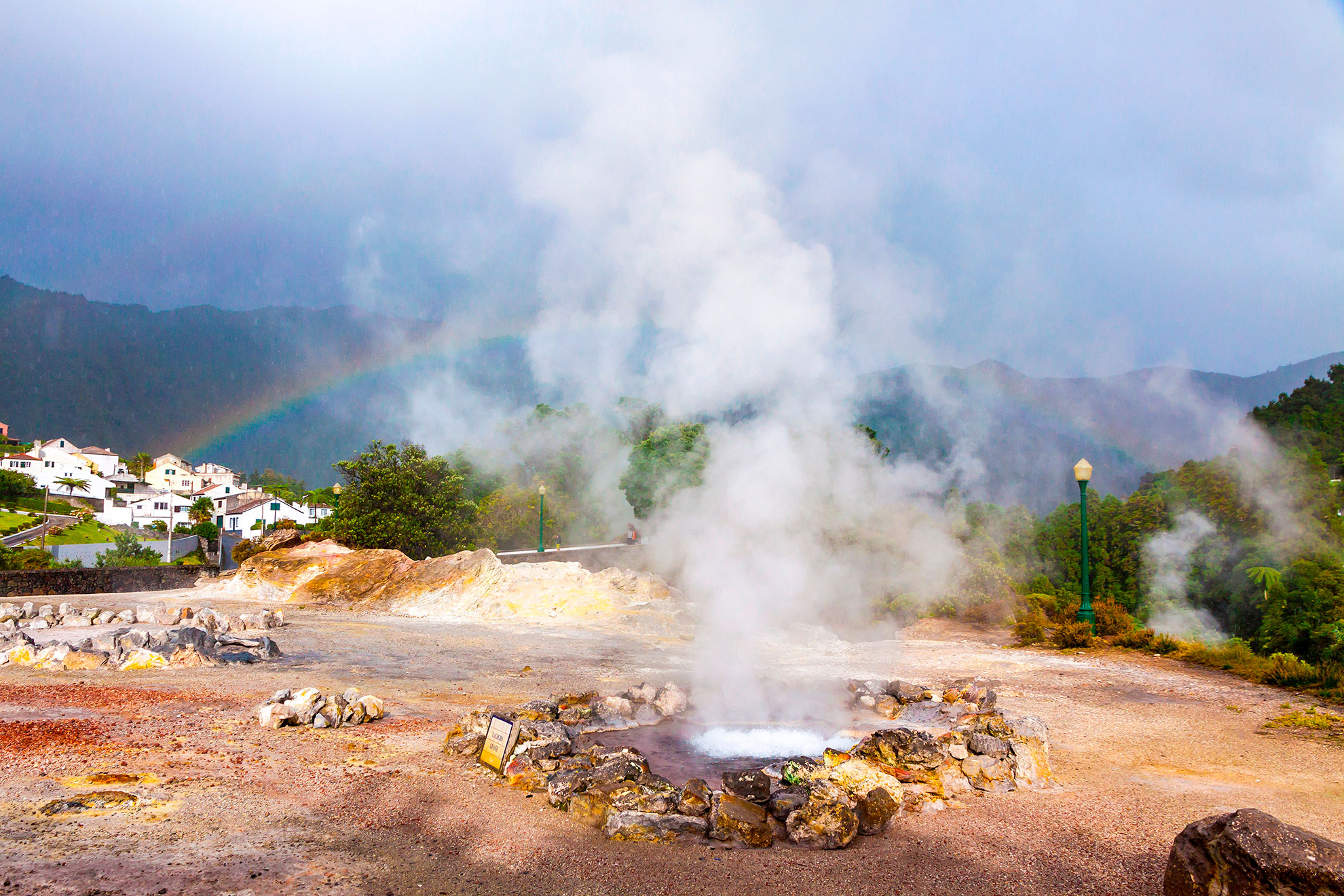
The caldeiras of Furnas village — where geothermal vents pierce the surface of a 30,000-year-old crater floor.
The Volcanic Heart
Boiling Earth and Emerald Valleys: A Journey into the Steaming Soul of Furnas
Inside a dormant caldera on São Miguel island, sulfurous vents hiss, mud pools bubble, and a stew cooks underground for seven hours. Furnas is not a destination — it is a geological encounter.
There is a moment, walking through the village of Furnas, when the ground beneath your feet feels less like solid earth and more like a lid pressed down over something immense and restless. Steam rises from cracks in the soil. The air carries the faint, mineral tang of sulfur. Mud churns in caldron-like pools at temperatures near 100°C. This is not spectacle for tourists — this is the planet at work, and Furnas is one of the few places in Europe where you can stand close enough to feel it.
The village sits inside the Furnas caldera, a collapse crater roughly 8 kilometers wide on the eastern flank of São Miguel, the largest island in the Azores archipelago. The caldera was formed by successive volcanic events over tens of thousands of years, and what visitors encounter today — the thermal baths, the boiling fumaroles, the iron-stained fountain waters — are surface expressions of the same geothermal engine that shaped this island chain in the middle of the Atlantic. Furnas offers something increasingly rare: an unmediated encounter with the forces that built the world.
The caldeiras do not perform on schedule. They simply continue, as they have for millennia — indifferent to visitors, utterly absorbed in the business of moving heat from the planet's interior to its surface.
Beyond the dramatic geology, the valley rewards slower attention. Terra Nostra Park, established in the 18th century, is one of the oldest botanical gardens in the Atlantic region, sheltering ancient tree ferns, Ginkgo biloba specimens, and a thermal pool fed by iron-rich waters that tint the stone a vivid orange-brown. Soaking in those waters — heated to around 35–40°C by geothermal energy — is a particular kind of warmth: not a spa invention but a direct inheritance from the earth below. Nearby, Poça da Dona Beija offers a more informal series of thermal pools set within dense vegetation, where the same iron-laden water flows between stone basins under an emerald canopy of tree cover.
Geothermal Alchemy: What Makes Furnas Different
Most volcanic destinations offer the spectacle from a distance — a crater rim viewpoint, a flow of old lava. Furnas is different because the activity is woven into the fabric of daily life. Walk through the village center and the caldeiras are simply there, fenced off from the footpath by a low barrier, close enough to feel the radiant heat. Locals have cooked using geothermal energy for generations: the famous Cozido das Furnas, a slow-braised stew of meat, blood sausage, chouriço, and root vegetables, is sealed in individual pots and buried in the volcanic soil near Furnas Lake each morning. Seven hours later, it is dug up and carried to restaurant tables — one of the most literal expressions anywhere of food as a cultural collaboration with geology.
The lake itself, Lagoa das Furnas, adds another register to the valley's elemental vocabulary. On its northern shore, a cluster of additional fumaroles vents directly from the lakebed mud, and it is here that the iconic neo-gothic Chapel of Nossa Senhora das Vitórias stands — a small, white structure against the dark water, framed by hydrangeas. The combination of sacred architecture and active geothermal landscape is peculiarly affecting: humans have been building meaning in this valley for centuries, choosing to live and worship within a caldera that remains, technically, alive.
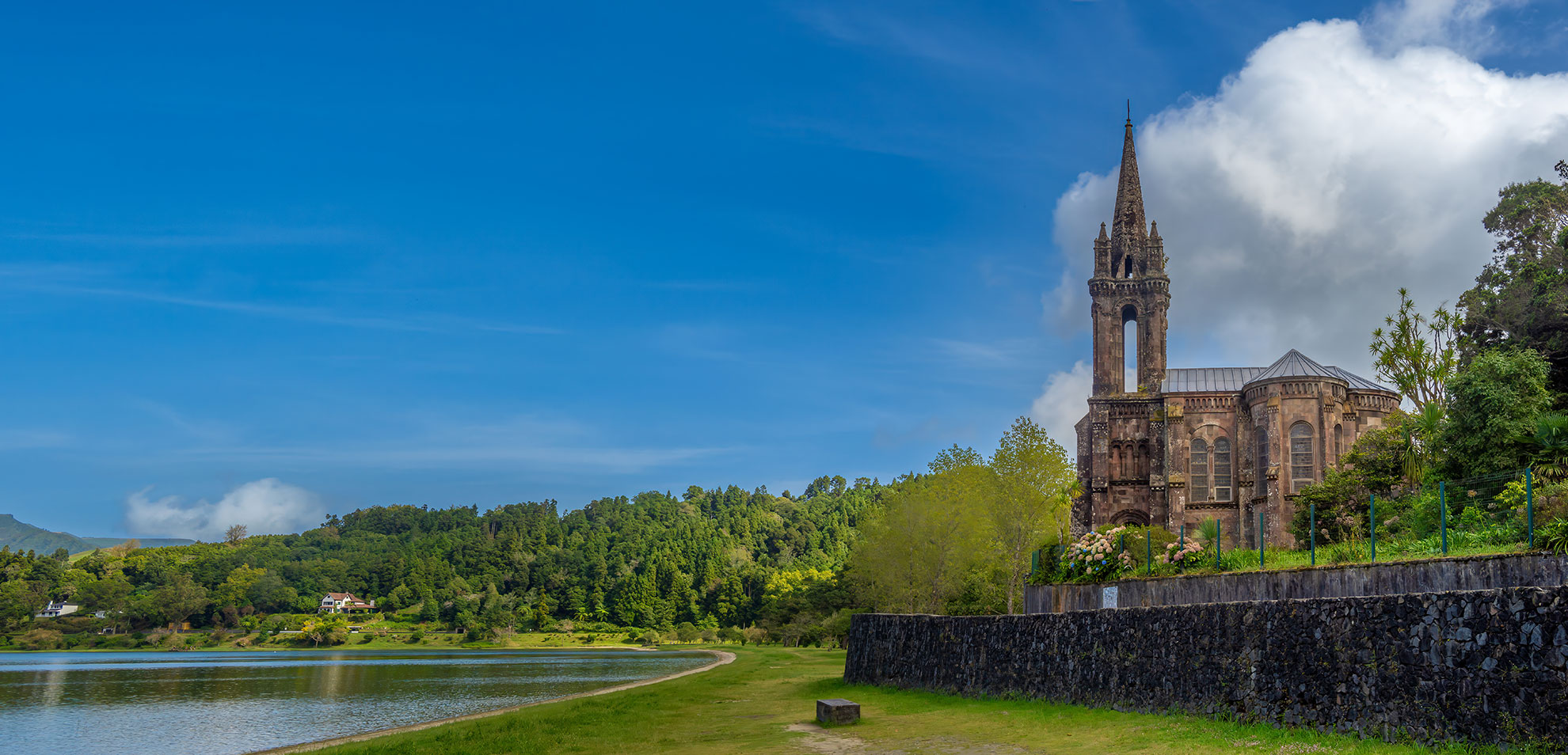
Lagoa das Furnas: the neo-gothic chapel on the northern shore sits within walking distance of active geothermal vents.
On the Water — Canoeing & Thermal Lakes
Into the Crater — Jeep & 4×4 Experiences
Active Terrain — Cycling & Canyoning
The full range of Furnas tours — from canoeing and cycling to jeep safaris and guided valley walks — is available to browse and book directly. All tours include local guide expertise and most offer hotel pickup from Ponta Delgada.
Browse all Furnas experiences →Thermal Sanctuary: Terra Nostra and the Waters of the Valley
Terra Nostra Park occupies a position in Furnas that is both botanical archive and thermal sanctuary. The garden dates to the 1780s, when Thomas Hickling, an American merchant, established the first structures on the site. Over the following two centuries, successive owners expanded the plantings to include specimens from across the Atlantic and Pacific worlds — now home to one of the largest collections of tree ferns in the northern hemisphere. The thermal pool at the garden's center is fed by geothermal springs; the iron oxide content turns both the water and the pool floor a deep amber-orange. Swimming here — unhurried, surrounded by the garden's canopy — is a different experience from most thermal bathing, closer to geology than wellness tourism.
For visitors interested in the valley's mineral waters on a more direct level, the village has a series of public fountains supplying waters of distinct mineral compositions: ferruginous, bicarbonated, sulfurous. Each has a different flavor profile, and locals treat the act of tasting through them with some seriousness. The Bolos Lêvedos of nearby Ribeira Grande — soft, slightly sweet bread rolls made with a slow-risen yeast dough, a recipe unchanged for over a century — make a proper counterpoint to the mineral sharpness of the water. These details accumulate into something that no single jeep tour or paddle trip fully captures: the sense that Furnas is a place with its own internal logic, one that predates tourism entirely.
To walk from the fumaroles at the lake's edge to a table where a pot of Cozido has just been lifted from the ground is to understand, in one afternoon, why people have chosen to live inside a volcano for four hundred years.
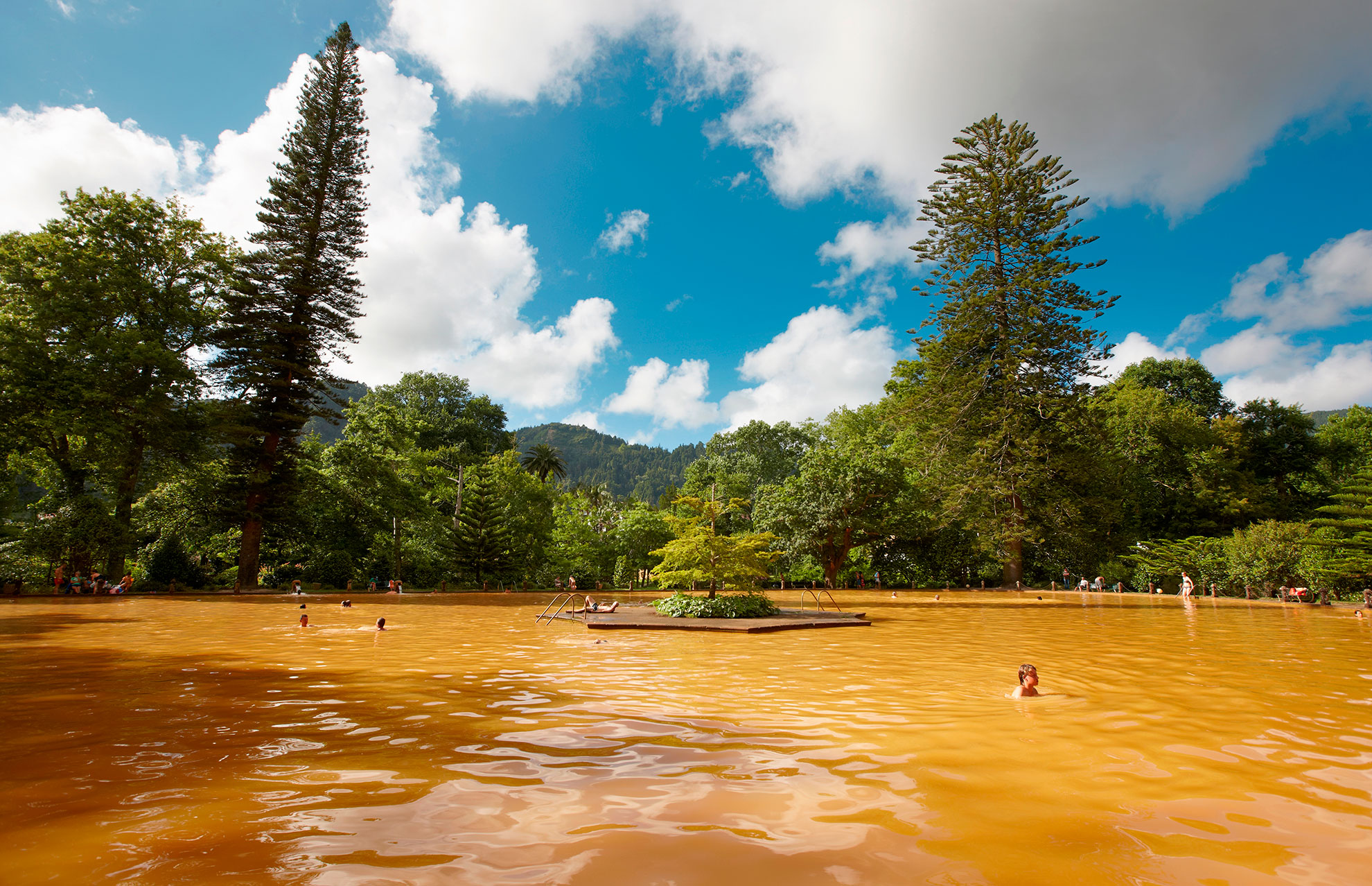
Terra Nostra's thermal pool — the orange tint comes from dissolved iron oxide in the geothermally heated water.
The Crater Rim Perspective: Why the Jeep Routes Matter
The Furnas caldera, when viewed from within, reads as a broad, lush valley — easily mistaken for simply a beautiful piece of countryside. The perspective shifts entirely from the crater rim. At Pico do Ferro, a miradouro on the northern edge of the caldera, the full geometry becomes clear: the steep inner walls, the emerald floor threaded with water, the village barely visible through the steam. This is the viewpoint that contextualizes everything else seen at ground level, and reaching it typically requires a 4×4 vehicle on unpaved forest tracks — which is precisely why the jeep tour routes through this terrain offer something not accessible to independent visitors in rental cars. The guides who run these routes combine geological knowledge with local familiarity, identifying which thermal areas are currently most active and which hidden viewpoints remain unmarked on standard maps.
Whether you are planning a single afternoon or a full day in the valley, Furnas has experiences suited to different paces and physical comfort levels. Use the search page to filter by duration, activity type, or group size.
See all available Furnas tours →Frequently Asked Questions About Furnas
How far is Furnas from Ponta Delgada, and how do you get there?
Furnas is approximately 40 kilometers east of Ponta Delgada, around 45–55 minutes by car via the EN1-1A highway. Most organized tours include pickup and return transport from Ponta Delgada hotels, which removes the need for a rental car on the day.
What is the Cozido das Furnas, and where can you eat it?
Cozido das Furnas is a slow-cooked meat and vegetable stew prepared in sealed pots buried in the volcanic soil near Lagoa das Furnas. It is served daily at several restaurants in the village, including Restaurante Tony's and O Miroma. It is typically ready for lunch, from around midday onward. No advance reservation is required for individual diners, though groups should book ahead.
Is swimming in the Terra Nostra thermal pool open to visitors who are not staying at the hotel?
Yes. Day visitors can purchase entry to Terra Nostra Park, which includes access to the thermal pool. The pool is open daily and can become crowded in the early afternoon during high season. Arriving before 11:00 or after 15:00 typically offers a quieter experience.
What is the best time of year to visit Furnas?
The valley is accessible year-round. Spring (April–May) and autumn (September–October) offer moderate temperatures and fewer visitors. Summer months bring the fullest tour schedules but also more crowding at the caldeiras and thermal pools. Winter visits are quieter and the vegetation remains green, though some tours operate on reduced schedules.
Are the fumaroles dangerous to approach?
The public caldeiras in the village center are fenced and have maintained walkways. Temperatures in some pools reach or exceed 100°C, and the sulfurous gases can be pungent. Staying on marked paths and keeping children close to adults is sufficient precaution. The fumarole areas near Lagoa das Furnas are also fenced with visitor access routes clearly marked.
Which Furnas tour is best for first-time visitors who want to cover the main highlights in one day?
The Full-Day Guided Tour to Furnas Valley and Terra Nostra Park is a well-structured starting point, combining the caldeiras, the lake, the botanical garden, and cultural context. Visitors who prefer a more active experience might opt for the Full-Day Jeep Tour, which adds the crater rim perspective at Pico do Ferro.