




Multi-Day Guided Tours from Fez: The Complete Cultural Heritage Route
Explore Fez's medieval medina, traverse the Sahara, and discover imperial cities and Roman ruins on structured multi-day journeys.
Fez stands as the cultural heart of Morocco, home to Fes el-Bali, the Arab world's best-preserved medieval medina and a UNESCO World Heritage Site. Multi-day guided tours departing from Fez unlock an archaeological corridor stretching south to the Sahara and west to imperial Meknes and the Roman site of Volubilis. These structured itineraries combine desert camel treks, medina walks, and heritage site visits, ideal for history-focused travellers and first-time Morocco visitors seeking expert-guided context and efficient ground coverage.
Why Start a Morocco Multi-Day Tour from Fez?
Fez offers distinct advantages as a multi-day tour departure point. The city sits at the historical and geographical crossroads of Morocco's imperial triangle, positioning travellers to explore the country's richest concentration of cultural assets in a single journey. Unlike Marrakech-based itineraries, Fez routes provide direct access to the northern imperial cities of Meknes and the Roman archaeological site of Volubilis, both within a two-hour drive of the medina.
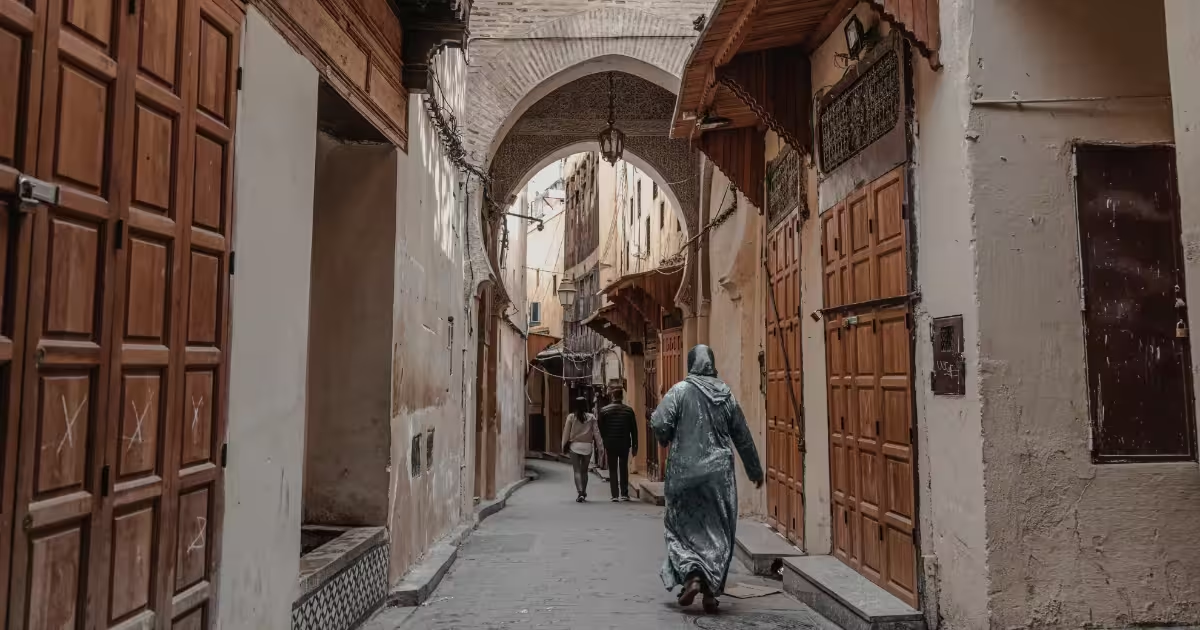
Fes el-Bali, dating to the 9th century, contains over 9,400 streets and alleyways, making independent navigation challenging. Multi-day guided tours from Fez typically include expert-led medina walks that decode the city's spatial logic, historical layers, and craft traditions. Local guides provide critical context on leather tanneries using centuries-old vegetable-dye techniques, brass workshops producing traditional musical instruments, and the Bou Inania Madrasa (built 1357), one of the finest examples of Marinid architecture in North Africa.
Fez represents the medieval Islamic city in its purest form, untouched by the colonial urban planning that reshaped other Moroccan centres.
Road infrastructure and distances make self-driving between Fez, the Sahara, Meknes, and Marrakech logistically complex. Multi-day tours eliminate navigation uncertainty and provide value through local drivers familiar with secondary routes and cultural protocols at heritage sites. ToursXplorer's curated multi-day offerings ensure travellers access both canonical sites and less-trafficked medina quarters, reducing the crowds that often overwhelm standard city tours.
What Does a Typical Fez-to-Sahara Multi-Day Itinerary Include?
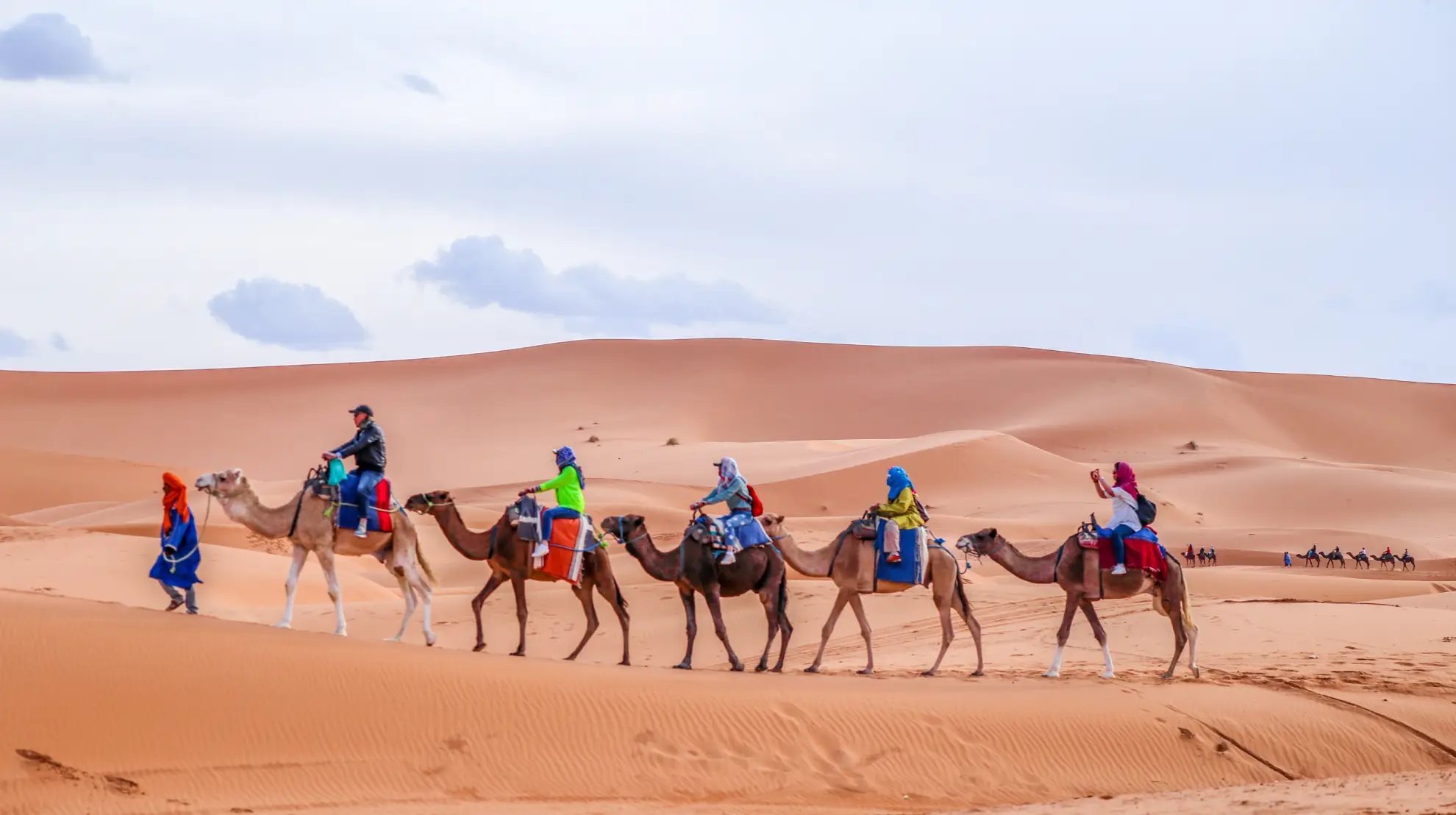
Standard multi-day tours from Fez typically unfold across five to eleven days, beginning with immersive medina exploration before heading south and east toward the Sahara, then westward to Marrakech. A five-day Fez-to-Marrakech itinerary via the Sahara usually allocates Day One to Fez medina walks and artisan visits. Days Two and Three involve a drive to Merzouga (470 kilometres south-southeast, approximately 9 hours including stops) and overnight stays at desert camps near Erg Chebbi, the Sahara's largest sand dune field in eastern Morocco. These camps typically offer camel treks at dawn and sunset, traditional Berber dinners, and stargazing. Days Four and Five focus on westbound travel through the Atlas Mountains to Marrakech (540 kilometres, roughly 10 hours including stops for the Tizi n'Tichka pass at 2,260 metres elevation).
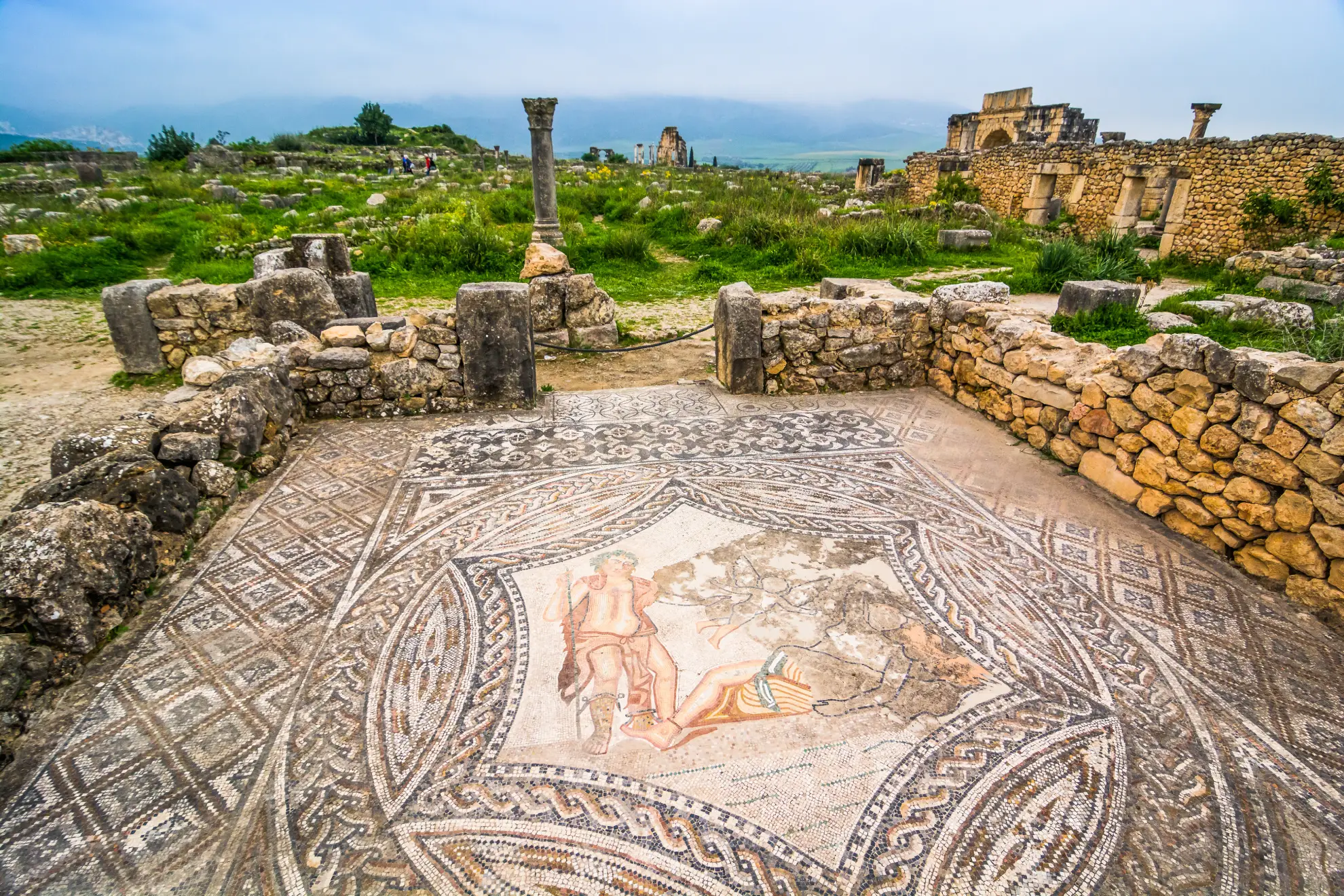
Eleven-day itineraries expand to include dedicated stops at Meknes and Volubilis. The Roman site of Volubilis, occupied from the 3rd century BCE through the 18th century CE, contains the largest concentration of Roman mosaics and inscriptions in North Africa. Expert guides contextualize the site's evolution under Berber, Punic, Roman, and Islamic rule. Travellers typically spend two to three hours at Volubilis before continuing to nearby Moulay Idriss, the holiest pilgrimage city in Morocco and home to the shrine of Moulay Idriss I, who brought Islam to the region in the 8th century.
| Tour Duration | Primary Route | Key Sites | Estimated Distance |
|---|---|---|---|
| 5 days | Fez (Medina) to Sahara to Marrakech | Fes el-Bali, Merzouga, Erg Chebbi, Atlas crossing | 1,010 km |
| 11 days | Fez to Meknes, Volubilis, Sahara, Marrakech | All above plus Meknes medina, Volubilis, Moulay Idriss | 1,600+ km |
| Extension | Add Essaouira or Anti-Atlas | Coastal or mountain variations | Variable |
Most tours include two to three overnight stays in the Sahara, with lodging ranging from mid-range guesthouses to luxury desert camps equipped with ensuite facilities. Camel treks typically last three to four hours at walking pace (approximately 5 kilometres per hour). Group size on multi-day tours generally ranges from four to sixteen travellers, balancing personalization with operational efficiency.
Which Historical and Archaeological Sites Are Covered?
Multi-day Fez tours provide structured access to five major heritage anchors, each representing distinct historical epochs. Fes el-Bali, founded in 808 CE by Idris II, serves as the medina's centrepiece. The district contains the Al-Qarawiyyin Mosque and University (founded 859 CE, making it the world's oldest continuously operating university) and the Bou Inania Madrasa. Meknes, designated an imperial capital under Sultan Moulay Ismail (ruled 1672-1727), contains the royal palaces, city walls spanning 40 kilometres, and the Mausoleum of Moulay Ismail, where 10,000 workers laboured for 15 years on the sultan's burial complex.
Volubilis, sited on a hilltop 33 kilometres north of Fez, displays Roman civic infrastructure including a basilica, triumphal arch (erected 217 CE), and private residences with intact mosaics depicting marine life and mythological scenes. The site's Arab-Islamic period (8th-18th centuries) layers directly atop Roman foundations, making it a unique palimpsest of civilizations. Nearby Moulay Idriss, built around the 8th-century Islamic scholar's tomb, presents the spiritual core of Moroccan Islam and remains an active pilgrimage site attracting tens of thousands of devotees annually, especially during the moussem (festival) season in August.
Volubilis's mosaics and inscriptions tell the story of a provincial Roman city deeply connected to trade networks spanning the Mediterranean and the Sahara.
The Erg Chebbi sand dunes, part of the Sahara's southeastern reaches near the Algerian border, rise to heights of 160 metres and stretch across approximately 20 square kilometres. Multi-day tours position overnight camps at Merzouga, a small oasis village 50 kilometres north of the dunes, providing access to dramatic sunrise and sunset views across the golden landscape.
Recommended Multi-Day Tours from Fez
Ready to explore Fez's medieval medina and the Sahara in one journey? Browse multi-day guided tours on ToursXplorer and book your immersive Morocco itinerary today.
Browse all Fez tours on ToursXplorerBest Time to Book a Multi-Day Fez Tour
October through April represents the optimal window for multi-day tours departing from Fez, with daytime temperatures ranging from 15 to 22 degrees Celsius in the medina and dropping to 2 to 8 degrees Celsius in the Sahara at night. Summer months (June-August) bring medina temperatures exceeding 30 degrees Celsius and can push Sahara lows to 15 degrees Celsius, making extended walking and camel trekking less comfortable. Spring (March-April) and autumn (September-October) offer additional advantages of reduced tourist density and clearer skies for stargazing at desert camps. Most tour operators run regular departures on fixed schedules year-round, though April-May and September-October typically offer the most frequent group options. ToursXplorer's search filters allow travellers to compare multi-day tours by date, group size, and included amenities, helping match personal preferences with available departures.
What Should Travellers Expect Logistically?
Multi-day tours from Fez operate on structured timelines with fixed pick-up points, usually the traveller's Fez accommodation or a central meeting location at 07:00 to 08:00. Daily driving segments range from 4 to 10 hours, with breaks at lunch, viewpoints, and artisan workshops. Most tours provide air-conditioned minivans or larger coaches depending on group size, and the same driver typically remains with the group throughout the itinerary, creating continuity and local knowledge sharing. Accommodation includes a mix of medina riads (traditional guesthouses with central courtyards) in Fez and Marrakech, mid-range hotels in smaller towns, and desert camps or guesthouses in Merzouga. Meals are typically included for breakfast and dinner, with lunch often at traveller's choice, allowing flexibility. Travel insurance covering medical evacuation and cancellation is strongly recommended, particularly given remote Sahara sections and road conditions on mountain passes.
Physical fitness requirements are moderate to moderate-high. Medina walks involve navigating narrow, uneven alleys for two to three hours daily. Sahara camel trekking requires minimal experience but demands balance and comfort with slow-paced movement. Desert camps may have basic facilities (shared or private bathrooms, no air-conditioning, outdoor showers), which should be confirmed during booking. Guides speak French and English on most tours, with Arabic available on specialized heritage-focused offerings. ToursXplorer's tour descriptions specify language availability, pace, and accommodation standards, allowing informed pre-booking assessment.
Frequently Asked Questions
Yes, solo travellers are welcome on group multi-day tours from Fez. Most tours accommodate four to sixteen participants, creating built-in social opportunities. Single room supplements apply where private accommodation is chosen. ToursXplorer filters allow you to search by group composition and review recent traveller feedback on group dynamics and interaction.
The eleven-day itinerary from Marrakech typically routes through Fez first, then proceeds to Meknes (100 kilometres west), Volubilis (33 kilometres north), down to Merzouga and the Sahara (470 kilometres southeast), and back to Marrakech. This sequence balances geography with acclimatization and reduces backtracking. The five-day Fez-to-Marrakech route abbreviates this by skipping Meknes and Volubilis.
Camel trekking requires no prior experience. Guides assess fitness levels and adjust itineraries accordingly. Treks proceed at walking pace (5 kilometres per hour), typically lasting three to four hours. Proper footwear (closed-toe hiking boots), sunscreen, and water are essential. Pregnant travellers or those with severe back issues should consult guides before booking.
Pack lightweight, breathable clothing for medinas (loose-fitting, covering shoulders and knees for cultural respect), sturdy hiking boots, a fleece or warm jacket for cool Sahara nights (2-8 degrees Celsius), high-SPF sunscreen, a head covering, and a daypack. Most operators provide bedding at accommodations. Bring medications in original containers and copies of important documents.
A two to three-hour guided tour covers major landmarks (Bou Inania Madrasa, Al-Qarawiyyin, tanneries, brass workshops). Independent exploration of secondary quarters typically requires another two to four hours. Multi-day tours usually allocate one full day to Fez, balancing structured guidance with free time for medina wandering and shopping.
Multi-day guided tours are strongly recommended over self-driving due to road complexity (secondary routes lack clear signage), driving distances (470-540 kilometres daily), vehicle rental costs, and the value of expert guides at heritage sites. Local drivers navigate mountain passes (Tizi n'Tichka at 2,260 metres) safely and provide cultural context unavailable to self-drivers.