Last updated:
UNESCO added the Sanctuary of Asklepios at Epidaurus to the World Heritage List in 1988, under criteria (i), (ii), (iii), (iv) and (vi). UNESCO's World Heritage List entry for the Sanctuary of Asklepios at Epidaurus explains why.
The sanctuary sits in a small valley in the Peloponnese. Its cult of Asklepios, the god of medicine, grew from an older worship of Apollo Maleatas and took shape by the sixth century BC at the latest. Over time it became the leading place of healing in the ancient world, and its methods spread through Greek and Roman lands, which is why UNESCO calls it the cradle of medicine.
UNESCO also describes it as the earliest organised sanatorium, a place where you can follow the shift from faith in divine healing towards medicine as a science. One method was enkoimesis, a dream-like sleep that patients were led into as part of their cure.
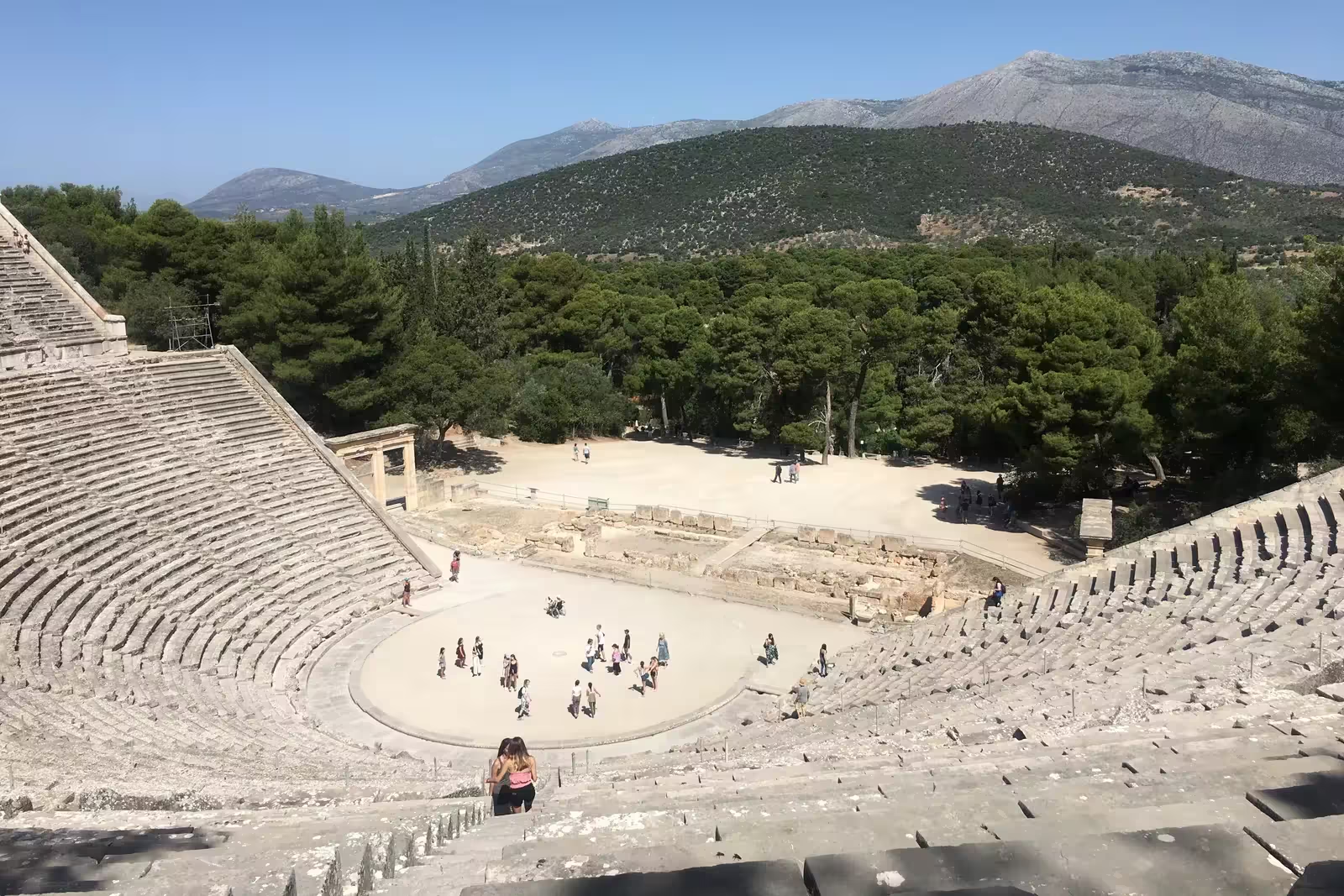
The best-known monument is the theatre, admired for its perfect proportions and its acoustics. UNESCO credits its design to Polykleitos the Younger, an architect from Argos. It is not only a ruin: ancient drama is still staged there, and an annual festival has filled the theatre since 1955.
The Stadium is well kept too, with almost ninety per cent of its ancient form and material still in place.
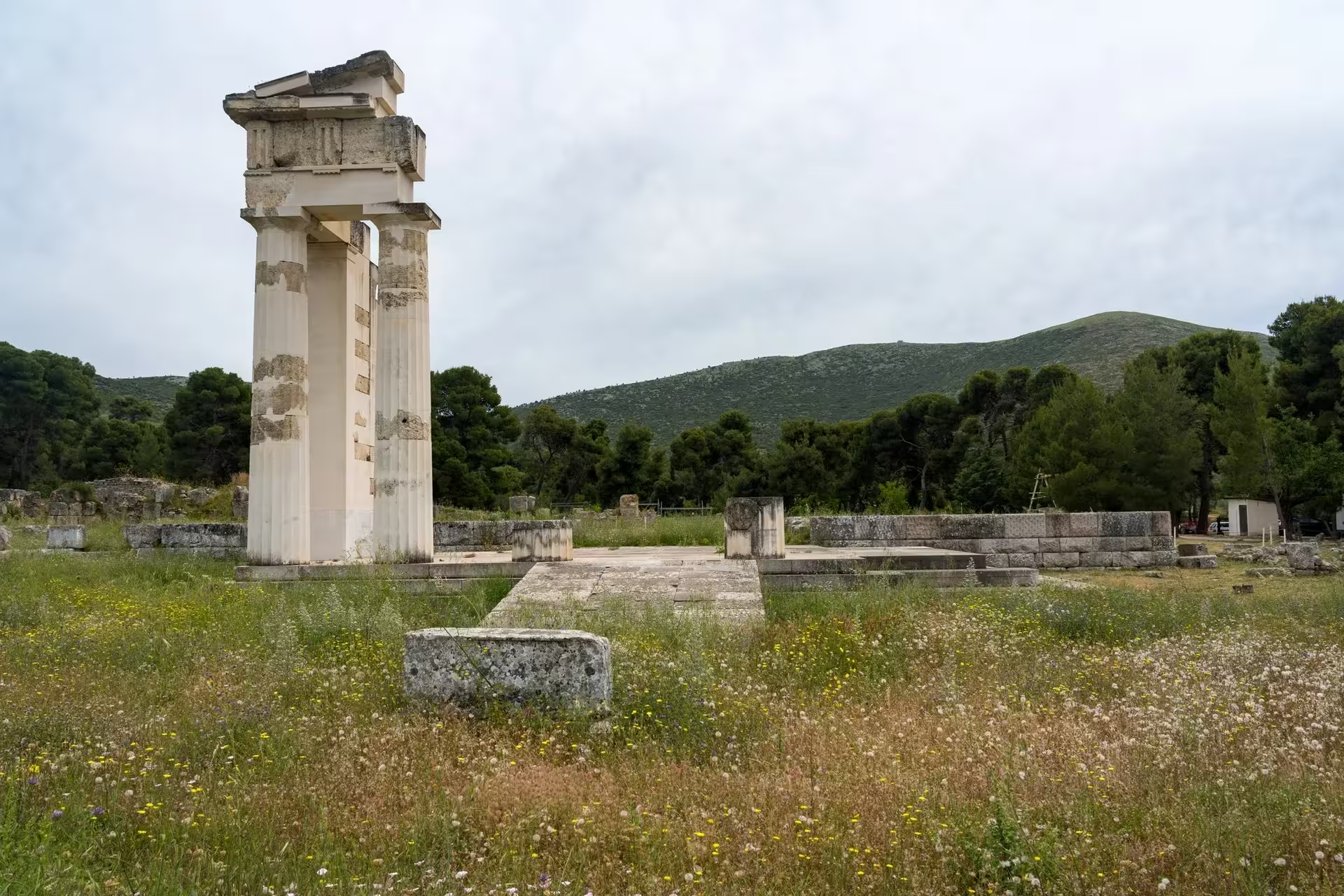
The monuments stand on two terraces in a landscape that has stayed largely natural. Beside the theatre stand the Tholos, the Propylaia, the Enkoimeterion and temples to Artemis and to Asklepios, and together they make an outstanding Greek ensemble of the fourth century BC.
In its classical heyday the sanctuary had buildings for every need: rituals, a library, baths, sports, rooms for guests, a hospital and the theatre. The Tholos shaped later Greek and Roman building, especially the Corinthian order, and an elaborate water system handled supply and drainage on a large scale.
Carved stelai kept in the site's Museum record the healing that went on here. Since 1984 the whole area has been protected from any new building, so the setting still feels calm and spiritual.
From Athens, the Private Tour: Epidaurus, Ancient Corinth & Isthmus Canal is a private day, says its operator. It stops at the Corinth Canal, climbs to Acrocorinth and visits Ancient Corinth before ending at Epidaurus, where the theatre's acoustics close the day and the sanctuary adds a quieter hour.
The Corinth Canal, Epidaurus & Nafplio Guided Tour Athens is a guided full day for a small group, according to its operator. It takes in the Corinth Canal and Ancient Corinth, then the theatre and the healing sanctuary at Epidaurus, and finishes in Nafplio, which its operator calls Greece's first modern capital.
For a private day that adds Mycenae, the Private Tour Athens: Mycenae Epidaurus and Nafplio crosses the Corinth Canal to the citadel of Mycenae, then goes on to the theatre at Epidaurus and the harbour town of Nafplio, says its operator.
Yes. UNESCO listed the sanctuary in 1988.
UNESCO names Polykleitos the Younger, from Argos.
Yes. Ancient drama returns every year with a festival held since 1955.
Yes. Several operators run day trips from Athens, as described above.