Last updated:
UNESCO added the Rangiri Dambulla Cave Temple to the World Heritage List in 1991, under criteria (i) and (vi). It sits in the Matale District of the Central Province of Sri Lanka. UNESCO's World Heritage List entry for the Rangiri Dambulla Cave Temple gives the official account.
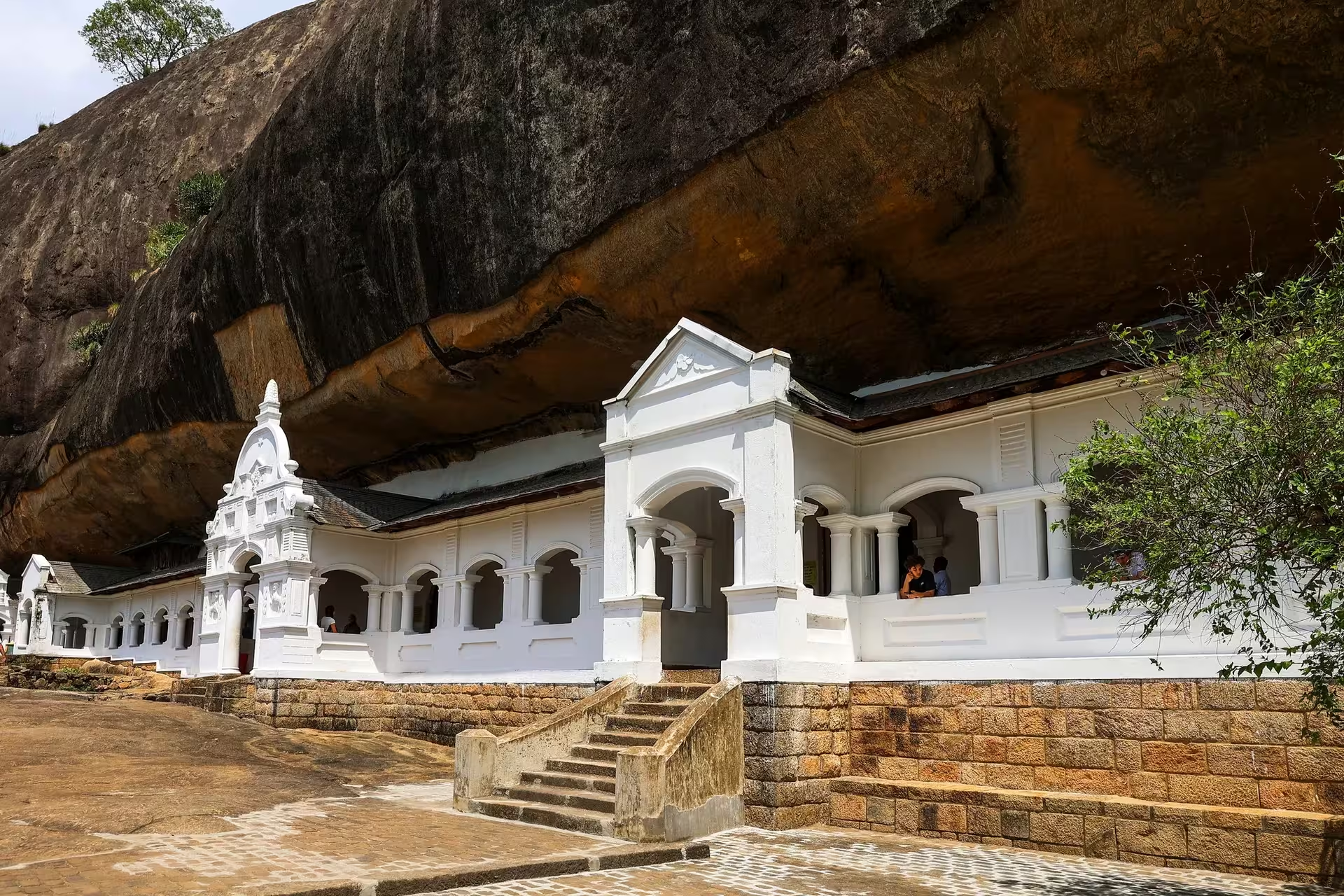
Pilgrims have been coming here for 22 centuries. The monastery is made up of five sanctuaries in the rock, and UNESCO calls it the largest and best-preserved group of cave temples on the island. Its story begins with forest-dwelling Buddhist monks, who have lived in these natural caves since the third century BCE.
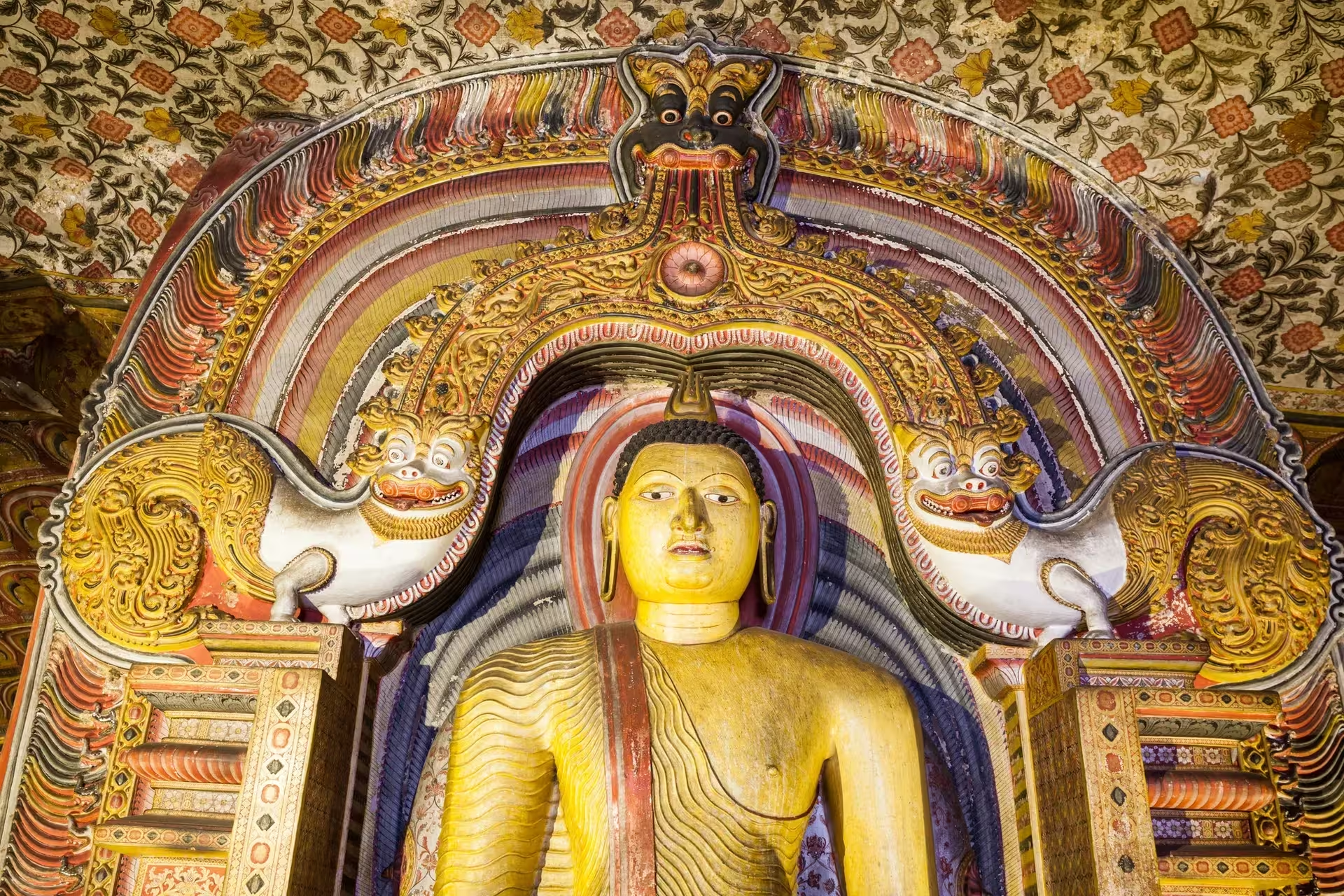
The walls and ceilings carry Buddhist murals over some 2,100 square metres, and the caves hold 157 statues. Some of the statues are moulded in stucco or clay, others are cut straight from the rock, and all of them are painted.
There are no walls between the spaces. Instead, the statues and the paintings mark out each area, guiding worshippers from one ritual to the next as they move through the cave.
What you see today took shape in the eighteenth century, after several rounds of renovation. UNESCO counts some of the work among the great pieces of eighteenth-century art of the Kandy school.
Dambulla is not a museum. Pilgrims still come to pray and make offerings inside the caves, as they have for more than two thousand years. The site belongs to the Asgiriya Chapter of Buddhist monks, who lead the daily rituals and look after the caves, and part of what foreign visitors pay at the gate goes to the monks for that work.
The whole area around the rock is a declared sacred area. One operator's notes ask visitors to cover their shoulders and knees and to take their shoes off in the sacred areas; keep your voice low too. UNESCO notes that the caves get much busier during religious festivals, so expect more pilgrims then.
For a short visit, the Private 2-Days Tour: Kandy, Sigiriya and Dambulla Trip is a private tour from the beach hotels, says its operator. After a tea plantation and an afternoon in Kandy, the second day climbs Sigiriya and ends inside the painted caves of Dambulla.
With more time, the Private 4-Days Tour of Kandy Sigiriya and Dambulla covers the same region at a very easy pace with a driver-guide, according to its operator, and closes with the cave complex and its painted ceilings.
For a full loop of the island, the 10-Days Private Tour of Sri Lanka from Colombo is a private round trip from Colombo, says its operator. It passes through Dambulla on the way from the ancient cities of the north to Kandy, the tea hills, Yala and Galle.
Yes. UNESCO listed it in 1991.
There are five cave shrines, filled with statues and murals.
Yes. Monks look after it and pilgrims pray there every day.
Yes. Several private tours link them, as described above.